Canada’s recreational real estate market, which experienced an unprecedented surge in demand and impressive double-digit price gains over the past two years, is poised for a significant cool-down in 2023. A recent report by Royal LePage indicates that waning activity and pervasive economic uncertainty are key factors contributing to this softening trend, bringing a degree of normalization after a period of exceptional growth.
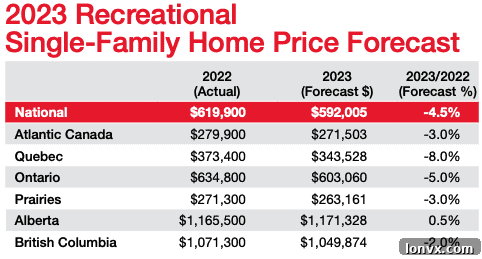
The aggregate price of a single-family home in Canada’s coveted recreational regions is forecast to decrease by 4.5 percent, settling at an estimated $592,005 in 2023 compared to the previous year. While this represents a notable dip from recent highs, it’s crucial to put this into perspective: the national aggregate price is still projected to remain more than 32 percent above its 2020 levels, underscoring the substantial gains made during the pandemic-era boom. This suggests a market correction rather than a collapse, as it adjusts to new economic realities.
Understanding Canada’s Shifting Recreational Real Estate Markets
Across the country, most provincial recreational markets are anticipating a decrease in single-family home prices for 2023. This widespread adjustment signals a national trend of moderation, as buyer enthusiasm cools and affordability challenges become more pronounced. However, the degree of this deceleration will vary significantly from one region to another, reflecting unique local dynamics and economic resilience.
Quebec and Ontario, two of Canada’s most populous provinces and home to some of the nation’s most sought-after cottage and cabin country, are expected to witness the largest recreational property price decreases in 2023. Forecasted declines stand at 8.0 percent for Quebec and 5.0 percent for Ontario, respectively, when compared to 2022 figures. These regions, which saw some of the most dramatic price increases during the pandemic, are now experiencing a more pronounced recalibration. Factors such as a higher concentration of urban buyers affected by interest rate hikes and broader economic anxieties likely contribute to these more significant adjustments.
Interestingly, Alberta stands as an exception, with its recreational market potentially seeing more stability or even continued modest growth. This resilience could be attributed to a healthier provincial economy, driven by energy sector performance, and a different migration pattern that has seen more inter-provincial relocations into Alberta, bolstering various segments of its housing market, including recreational properties.
Source: Royal LePage
Property Type Performance: Waterfront Homes vs. Condominiums
When analyzing the market by housing type, a nuanced picture emerges for 2022. Single-family waterfront properties, always a premium segment of the recreational market, saw their aggregate price increase by 9.5 percent year-over-year, reaching an impressive $736,900. The enduring appeal of direct water access, privacy, and the unique lifestyle it offers continues to drive demand for these highly desirable assets, even as the broader market begins to cool.
Meanwhile, the aggregate price of a condominium in recreational areas experienced an even more robust surge, rising by 16.6 percent to $432,000 during the same period. This accelerated growth for condos highlights a shifting preference among some buyers, potentially driven by a desire for lower maintenance, shared amenities, or a more accessible price point compared to detached homes. As urban living became more restrictive during the pandemic, the convenience and often resort-like atmosphere of recreational condos offered an attractive alternative for those seeking a getaway without the full responsibility of a standalone property.
Unpacking the Softening Market: Economic Headwinds and Supply Constraints
The primary catalysts behind the current softening in the recreational property market are a confluence of reduced demand, largely spurred by escalating economic uncertainty, and a persistent lack of available housing stock. While decreased buyer activity typically leads to price drops, the stubbornly low inventory levels have played a crucial role in preventing a steeper decline, acting as a stabilizing force on pricing.
“After two years of relentless year-round competition, Canada’s recreational property markets have decisively slowed, returning to more traditional seasonal sales patterns,” noted Phil Soper, President and CEO of Royal LePage. This return to seasonality suggests that the frantic, often bidding-war-driven environment of the pandemic years is largely behind us, replaced by a more considered and cautious approach from buyers.
Soper further elaborated on the economic impact, stating, “While interest rate hikes typically have less of an immediate impact on the recreational market compared to primary residences in urban settings – largely because families often make larger down payments and consequently borrow less – the cumulative effect of general consumer inflation combined with a severe lack of inventory has undeniably dampened overall sales activity.” This insight is critical: even if the direct impact of higher mortgage rates is mitigated by larger down payments, the broader economic pressure of inflation on household budgets reduces discretionary spending, making big-ticket purchases like vacation homes less feasible or appealing.
The current market environment has also transformed buyer behavior. Soper observes, “Buyers who are active in today’s market appear willing to wait for the right property – a sharp contrast to what we experienced during the pandemic.” This patience signals a significant shift from the urgent, ‘buy-at-any-cost’ mentality that characterized the peak of the market. While low inventory continues to pose challenges for potential buyers, the coinciding contraction in demand has paradoxically created a more balanced, albeit slower, market landscape, inching closer to what might be considered “normal” conditions.
Expert Opinions and Market Sentiment
Reinforcing these observations, a comprehensive survey of over 200 Royal LePage recreational real estate professionals across Canada revealed a clear consensus. A significant 57 percent of respondents reported less inventory this year compared to the previous year, highlighting the ongoing supply crunch that continues to characterize the market. Simultaneously, 51 percent of experts noted a discernible decrease in demand for recreational properties in their respective regions when compared to the same period last year.
These figures paint a picture of a market where both sides – supply and demand – are recalibrating. Sellers are holding onto properties, perhaps waiting for more favorable conditions, while buyers are becoming more selective and less rushed. However, Soper offered an important distinction regarding buyer motivation: “Recreational homebuyers tend to purchase for leisure and life-enriching purposes, fundamentally different from many city buyers who may need to acquire a principal residence quickly out of necessity.” This difference in motivation means that recreational buyers can afford to be more patient and strategic, less susceptible to market whims or urgent deadlines, which further contributes to the current measured pace of transactions.
The Lingering Impact of the Pandemic on Lifestyle Choices
The COVID-19 pandemic profoundly reshaped how many Canadians viewed their homes and lifestyles, leading to a significant migration from urban centers to more rural or recreational areas. However, as the pandemic recedes and life returns to a semblance of normalcy, a new trend is emerging: the movement of some homeowners back to urban or suburban communities after their full-time relocation to recreational regions. Nationally, 28 percent of recreational property experts surveyed indicated that this trend is “somewhat common,” while a larger proportion, 56 percent, reported it was “not common” in their specific market.
Atlantic Canada, which became a prominent pandemic relocation hotspot due to its relative isolation, natural beauty, and perceived affordability, recorded the highest percentage of experts who observed this “return to urban” trend. A notable 46 percent of professionals in the region reported that homeowners moving back to city or suburban areas was “somewhat common.” This suggests that while the allure of rural living was strong during lockdowns, the practicalities of permanent relocation – such as access to specific jobs, healthcare, education, or cultural amenities – might have proven challenging for some.
Phil Soper articulated this dynamic perfectly: “During the pandemic, with offices closed and people working from home, Canadians discovered that a recreational property could effectively double as a principal residence, complete with potential capital gains exempt status.” This dual functionality made the investment even more appealing, offering both a lifestyle upgrade and a potential financial benefit.
However, the long-term reality has tempered some of that initial enthusiasm. Soper concluded, “For many, living in cottage country full-time has lost some of its romantic shine, meaning we are largely back to viewing the cottage, cabin, and chalet primarily as a cherished weekend and summer escape from urban living.” This normalization of purpose signals a shift back to traditional patterns of recreational property ownership, where these homes serve as retreats rather than primary residences.
Outlook and Future Considerations for Canada’s Recreational Market
As Canada’s recreational real estate market navigates this period of adjustment, both buyers and sellers will need to adapt to evolving conditions. For prospective buyers, the current environment presents a unique opportunity. With less competition and a slower pace, there’s more time for due diligence, and potentially, more room for negotiation on prices. Patience will be a virtue, as waiting for the “right” property rather than settling for what’s available becomes the prevailing strategy.
Sellers, on the other hand, may need to temper their expectations regarding timelines and pricing. The days of multiple offers above asking price may be behind us for the immediate future. Realistic pricing, professional staging, and effective marketing will be crucial to stand out in a market with more inventory and more discerning buyers. While prices are softening, the underlying demand for recreational properties remains robust in the long term, driven by Canadians’ deep appreciation for nature and the desire for respite from city life. The current slowdown is best viewed as a healthy recalibration, ensuring the market remains sustainable and accessible for future generations of cottage, cabin, and chalet enthusiasts.
For a detailed analysis and provincial breakdowns, please refer to the full report from Royal LePage, available here.