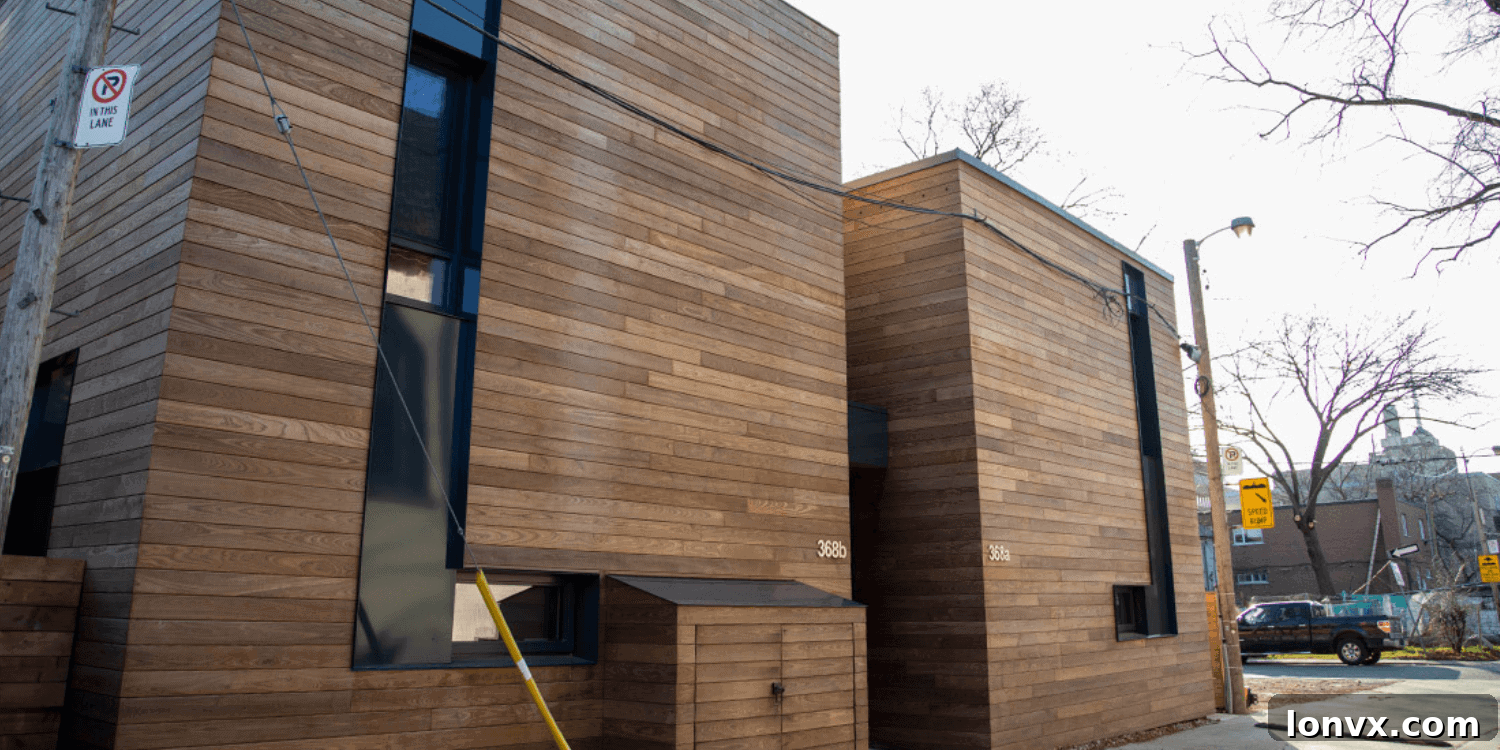
A successful laneway house pilot project by the University of Toronto on the St. George campus (photo by Lisa Lightbourn, image courtesy of the University of Toronto)
Toronto’s urban landscape is constantly evolving, and at the forefront of this transformation are laneway houses – those charming, self-contained residential units that are becoming increasingly popular in the city’s vibrant alleyways. These unique structures offer creative solutions for urban living, providing additional space, generating rental income, and contributing to the densification of established neighborhoods.
Since 2019, laneway houses have been officially permitted in Toronto, marking a significant shift in urban planning and opening up a world of possibilities for homeowners and developers alike. These “alleyway treasures,” as many call them, share a lot with a primary dwelling and are situated adjacent to a public laneway, making them an integral part of Toronto’s push for more diverse and accessible housing options.
For many homeowners, a laneway house serves as an invaluable extension of their property. It can transform into a private in-law suite for aging parents, a separate living space for adult children or teenagers, or even a dedicated home office or studio. Beyond personal use, these secondary dwellings present a lucrative opportunity for rental income, providing a steady revenue stream for property owners. Developers, too, appreciate the flexibility of building two distinct structures on a single lot, maximizing land use in a competitive real estate market.
The regulatory framework for laneway houses in Toronto stipulates that these buildings are typically serviced through the primary dwelling rather than being severed as independent structures. Paul Johnston, a distinguished realtor with Unique Urban Homes in Toronto, whose company name itself speaks to his specialization in distinctive urban properties, including laneway houses, explains this crucial aspect. This integration means that utilities like water, sewer, and electricity usually connect through the main house, streamlining the development process while maintaining a connection to the original property.
Unlocking Value: How Laneway Houses Impact Property Worth
One of the most frequently asked questions regarding these innovative structures is, “What value does a laneway house add to a property?” Pinpointing an exact monetary figure can be complex, as it introduces a new dynamic to traditional property valuation. In Vancouver, a city with a longer history of laneway houses, realtor Keith Roy of Re/Max Select Realty notes that “the value is difficult to pin down.” He suggests that the current method often involves pegging the added value to the new laneway house’s construction cost.
Toronto-based broker and non-active appraiser Barry Lebow echoes this sentiment, calling laneway houses “a new frontier” in real estate. He states, “I’ve been getting calls like crazy asking, ‘What value does a laneway house add?’ The cost of construction is the logical way to do it, and the cost is the only way to do it at the moment that’s equitable.” This approach provides a practical starting point, acknowledging the tangible investment made in creating the secondary dwelling.
Paul Johnston offers a more nuanced perspective on valuation, distinguishing between income properties and single-family homes. For properties primarily purchased for rental income, the calculation is relatively straightforward. “If there are two rental units in the house and the laneway adds a third, it is income based and a fairly easy exercise,” he explains. The added rental potential directly translates into increased property value, making it an attractive investment.
However, the valuation becomes more intricate for a single-family home where the laneway house acts as a bonus amenity. Johnston highlights a critical consideration: parking. If the laneway house replaces a vehicular garage, the value generated by the new dwelling might be significantly diminished, or even nullified, by the loss of essential parking space. In urban environments like Toronto, where parking is at a premium, this can be a major factor for potential buyers. Conversely, if the laneway house is built above an existing garage, its value becomes more subjective, influenced by factors such as the calibre of construction, design aesthetics, and overall functionality.
There isn’t a universally “hard and fast number” for the value a laneway house adds, but Johnston asserts that it is generally “higher than replacement cost.” This premium stems from the unique nature of these properties: “Not every lot will accommodate such housing, so that adds value.” The scarcity of suitable lots, coupled with the specialized planning and construction required, positions laneway houses as distinct assets in the market. Agents are “still figuring it out,” he admits, but as the market matures and more examples emerge – from exquisitely designed, high-end units to more modest, functional dwellings – it will become easier to accurately assess their long-term value proposition.
Understanding Construction Costs and Practicalities
Embarking on a laneway house project involves a significant financial commitment, with construction costs varying widely based on size, materials, and specific site conditions. A common consensus among experts places the starting cost at around $250,000 and climbing upwards from there. Laneway houses are typically limited by the dimensions of the lot, meaning most are designed to be modest in scale. Johnston draws a compelling comparison, noting that they can offer a living experience comparable to some high-rise condos, with the added advantage of being self-contained, having direct ground access, and often a stronger sense of community.
Building a laneway house simultaneously with a new primary residence often proves to be the most cost-effective approach. When constructed alongside an existing main home, additional expenses frequently arise, such as upgrading existing sewer lines, electrical services, and water connections. These utility upgrades can substantially inflate the overall project cost, as they require careful planning, permits, and specialized labor. Integrated construction allows for shared trenching and coordinated utility installations, leading to significant savings in both time and money.
Another practical consideration for prospective owners is the trade-off between the potential benefits and the impact on existing property features. While the rental income generated by a laneway house might help offset construction costs, it may not necessarily translate into a significant profit center, especially in the short term. Furthermore, constructing a laneway house often means sacrificing a portion of the backyard space. This loss of private outdoor area needs to be weighed carefully against the advantages of the new dwelling, as it can impact the overall lifestyle and amenity value of the property for the primary residents.
Critical Considerations for Laneway House Development
Before diving into a laneway house project, several critical factors warrant careful consideration, extending beyond mere construction costs and potential income. The property’s location and the specific neighborhood context play a pivotal role in determining the true value and desirability of a laneway house.
Realtor Keith Roy highlights a pertinent example: for a homeowner with a $4-million house and two luxury cars, converting a tight one-car garage into a laneway house might not make financial or practical sense. “These homeowners don’t want to park their $100,000 car on the street” in exchange for a few thousand dollars in monthly rental income. In high-value neighborhoods, the loss of coveted private parking can be a significant detractor, potentially outweighing the benefits of a secondary dwelling.
Moreover, a laneway house, if built in an unsuitable neighborhood or without proper integration, could even become a detraction rather than an asset. Roy cautions, “Not a lot of homeowners want to have a dinner party and have a stranger sitting and reading a book in the backyard.” Privacy concerns, perceived increases in density, and the potential for noise or activity from tenants can be points of friction in some communities. Therefore, understanding the neighborhood’s character and the expectations of surrounding residents is paramount.
For most individuals contemplating a laneway house, the primary motivation extends beyond pure financial gain. It’s often about the extra space – how they can use and enjoy the new building to enhance their lifestyle. Whether it’s for family, a home office, or a personal retreat, the intrinsic value of added functionality often takes precedence. While recouping the investment and ideally achieving a profit is a goal, it’s frequently not the sole or even primary reason for building.
Building a laneway house purely for speculative purposes may not be the best strategy for the average homeowner. Roy advises that “the full value of speculation is best left to the professionals.” While a seasoned builder might undertake such an investment with the expectation of significant profit, leveraging their expertise and market knowledge, it might not be a sensible venture for an individual with limited experience in real estate development.
Another significant consideration is accessibility. Paul Johnston points out that “most laneway houses are on the second level and have stairs (a mobility challenge), and are too small to have an elevator.” This design constraint can limit their appeal to a broader demographic, particularly older individuals or those with mobility issues. Barry Lebow, however, notes that many designs incorporate a garage or carport at ground level, which also typically includes storage and stairs leading to the second-floor living space. He offers a glimmer of hope for accessibility, suggesting that “an elevator may be a possibility because there are small models available,” indicating that innovative design solutions are emerging to address this challenge.
The Potential of the Lot: Promoting Value Through Laneway Houses
If a laneway house is permitted and the owner is selling, the value of the lot ought to be promoted, Johnston says. The potential or existing secondary dwelling significantly enhances the property’s overall appeal and market value, making it a key selling point.
Despite some challenges, laneway houses generally receive a positive reception from neighbors. Johnston hasn’t encountered a “not-in-my-backyard” (NIMBY) attitude in his experience. On the contrary, he finds that neighbors often appreciate these new additions, as laneway houses tend to “bring more life to the alley, making them safer,” and act as an asset when dilapidated or poorly maintained garages are replaced with attractive, functional structures. This revitalization contributes to the overall aesthetic and safety of the neighborhood.
Drawing a comparison, Johnston notes that in Montreal, laneways are commonly used as vibrant public spaces where “kids play sports in them.” While this level of public use is less common in Toronto, the presence of laneway houses encourages greater activity and interaction, transforming neglected service corridors into lively passages. “They’re neat places. People wander up and down the lanes and take pictures of new laneway houses,” Johnston observes, highlighting their role in enhancing the urban fabric and fostering a sense of community.
Ultimately, a laneway house offers a multifaceted opportunity to add substantial value, improve the functionality of the lot, and contribute positively to the neighborhood’s character and vibrancy. It represents an evolution in urban living, responding to the growing demand for flexible, sustainable, and community-oriented housing solutions.
For prospective buyers or existing homeowners considering a laneway house, thorough due diligence is essential. Johnston strongly advises agents and homeowners alike to “do their homework” to determine if a specific property qualifies for such a development. This involves meticulously researching local zoning bylaws, understanding setback requirements, lot coverage limits, and other specific regulations that govern laneway house construction. Once the feasibility is established, seeking a reliable, professional opinion is crucial. This means consulting with a builder who specializes in laneway houses or an experienced architect who can navigate the complexities of design, permits, and construction, ensuring the project is both compliant and successful.
When it comes time to sell a property that either has an existing laneway house or the potential for one, Johnston reiterates the importance of actively promoting “the value of the lot.” Highlighting the approved status or the inherent possibility of adding a secondary dwelling can significantly enhance the property’s market appeal and command a higher price.
Finally, Barry Lebow offers a practical tip for ensuring the long-term maintainability and value of a laneway house: “look for one with a name, and a civic address, which means the city will look after the laneway.” A city-maintained laneway provides assurance that infrastructure will be cared for, contributing to better access, cleanliness, and overall safety, which are vital factors for any property investment.