Augmented Reality: Revolutionizing Real Estate Marketing and Buyer Engagement
In an increasingly digital world, traditional print media might seem like a relic of the past. However, an innovative application of Augmented Reality (AR) technology is breathing new life into brochures, magazines, and other physical marketing materials within the real estate sector. This cutting-edge approach is not only revitalizing the way properties are presented but also equipping real estate professionals with unprecedented insights into prospective buyers, fundamentally reshaping the landscape of property marketing.
Debbie McGrath, the astute Marketing Director at Toronto-based Chestnut Park Real Estate, a firm that has enthusiastically embraced this transformative AR technology, highlights its dual benefits. “An app that provides information through videos about a property, its neighborhood, the listing agent, and the realty company is bringing new life to print publications and other print formats,” she explains. Furthermore, this intelligent application empowers real estate professionals with crucial data on potential buyers, offering a strategic advantage in competitive markets.
McGrath emphasizes the strategic importance of AR, particularly in bustling urban centers like Toronto, where the real estate market is notoriously “very congested.” In such an environment, AR provides sales representatives and brokers with a significant “competitive edge,” allowing them to stand out and engage with clients in a more dynamic and memorable way.
Bridging Worlds: How Augmented Reality Transforms Print
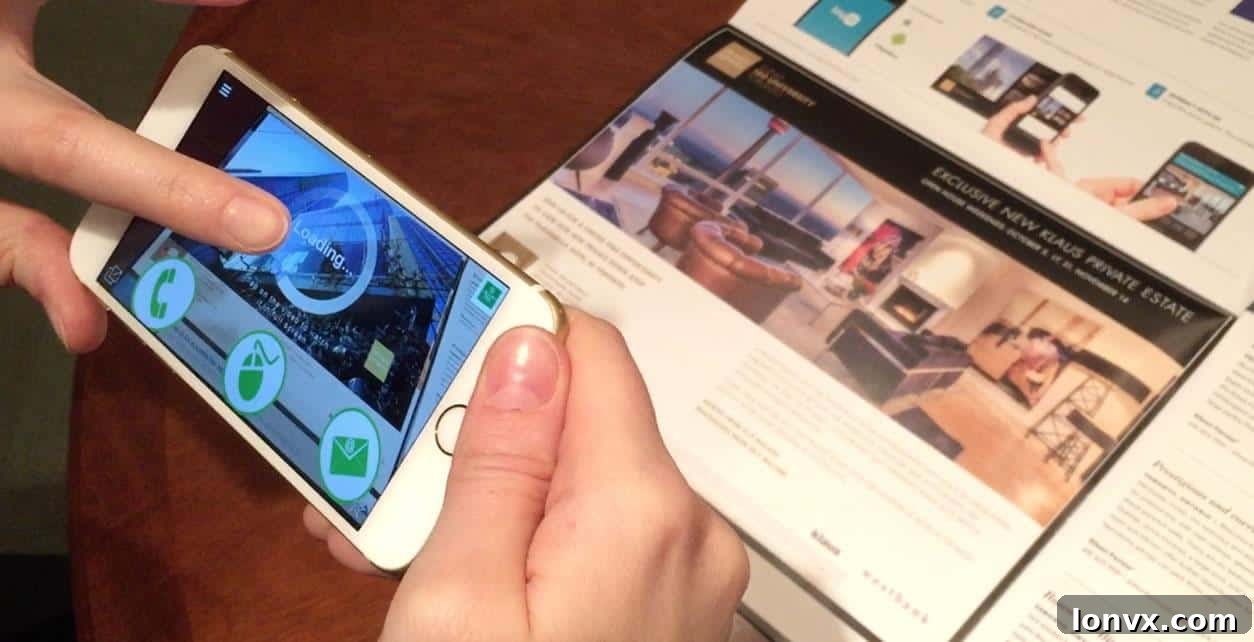
Chestnut Park Real Estate, an esteemed affiliate of Christie’s International Real Estate, leverages an AR application known as Layar, introduced to them by Commersive Solutions. Jason Elmaleh, President of the Toronto-based technology firm, elaborates on Layar’s seamless functionality. Users simply need to hover the camera of their smartphone (compatible with iOS, Android, or BlackBerry10 devices) or tablet over an “enabled image” within a print format. This simple action instantly activates a digital layer of rich, interactive content.
These “trigger images” can range from a captivating photograph of a property to a professional headshot of the listing agent. As McGrath details, these images serve as gateways, providing readers with “layers of information” that delve deeper than static text or pictures. This could include comprehensive details about Chestnut Park itself, stunning visual tours of properties for sale at exclusive locations like the Shangri-La Toronto luxury condos, or an in-depth profile of a listing agent.
Elmaleh encapsulates the core power of this technology: “The most amazing part of AR is bridging the gap between real life and virtual life. Now users can see more than what is conveyed in print.” This integration creates an immersive experience that traditional print alone could never offer, transforming a flat page into a dynamic portal of information.
Elevating the Real Estate Experience for Agents and Buyers
Chestnut Park recently integrated the Layar app into the print editions of its prestigious property listing magazine, Invest in Style. While still in its early stages at the time of the initial rollout, McGrath expressed optimistic projections for its success. She suggests that an adoption rate of 30 to 35 percent among readers would signify a remarkable achievement, demonstrating the significant impact of this innovative technology.
Beyond captivating visuals, the AR app offers invaluable data collection capabilities. It meticulously gathers user engagement statistics on a weekly or monthly basis, providing agents with a wealth of information. This includes precise data on where a listing was viewed, the duration of engagement, and even insights into the demographics of the viewers. “Suddenly that connection with the consumer becomes so much smoother and more efficient,” McGrath observes. This granular understanding of consumer interaction empowers agents to refine their strategies and personalize their outreach.
The financial benefits of implementing AR are equally compelling. “The cost benefit becomes very clear because you can use it on a number of different (print format) platforms,” McGrath states. This versatility ensures that the investment yields returns across various marketing channels. Furthermore, Layar provides immediate clarity on the effectiveness of advertisements. “We know immediately whether anyone has interacted with it, unlike direct mail in which you hope someone is going to call you,” she adds. This tangible feedback mechanism allows for agile adjustments and optimized ad spending, replacing guesswork with data-driven decisions.
Debbie McGrath
Unlocking Immense Potential: Beyond the Page
Jason Elmaleh envisions “huge potential” for AR technology within the broader real estate industry. “The beautiful thing about AR is that it can be tailored to anything. Real estate is an excellent venue with limitless possibilities – making a home buying and selling experience interactive, seamless and more informative,” he explains. This adaptability means AR can be customized to suit diverse marketing needs, from luxury properties to entry-level homes, enhancing the journey for every buyer and seller.
A key advantage of the app is its ability to provide “immediate information.” This means prospective buyers no longer have to invest extensive time in online research, sifting through countless websites. Instead, rich, contextual data is delivered directly to them as they engage with print materials. “The more educated the buyer is, the better it is for the buyer and the seller,” Elmaleh emphasizes, highlighting how informed buyers lead to more efficient transactions and greater satisfaction for all parties involved.
The utility of the AR app extends powerfully to the sales of projects that are yet to be constructed. For instance, in the Toronto neighborhood of Leaside, Chestnut Park is selling units in an upcoming condo development. McGrath explains how AR is utilized in this context: “It shows you a video of renderings – what’s to come.” These immersive videos go beyond static blueprints, offering a vibrant glimpse into the future property. Crucially, the video also provides consumers with a comprehensive “flavor for the neighborhood,” showcasing everything from nearby retail establishments to main transportation routes, helping them visualize their future lifestyle.
Accessibility, Cost, and Global Adoption of AR
While the Layar app is remarkably easy to set up and entirely free for end-users, there is a cost associated for real estate agents. Elmaleh notes that the expense for agents is comparable to the price of designing a basic website. The final cost, he clarifies, is ultimately determined by the volume of content and the specific features an agent wishes to incorporate, allowing for scalable investment based on individual needs and marketing ambition.
Augmented reality is not a nascent technology; it has been in development and gaining traction for many years. Its popularity in Europe, particularly across various marketing sectors, serves as a testament to its effectiveness. A prominent example is IKEA’s catalogue, which skillfully employs AR technology. This allows users to experience a form of virtual reality, helping them determine precisely how a piece of furniture might best fit into their home’s layout before making a purchase.
McGrath illustrates IKEA’s innovative application: “You can take a scan from the catalogue and hold your iPod up in your room and move the furniture around with your finger to fit in your room, and change the colors.” She further notes that IKEA has recently extended this cutting-edge AR technology to its catalogues available in Toronto, demonstrating the global movement towards interactive print experiences.
Elmaleh confirms his company’s long-standing interest in AR, stating that they had been monitoring its evolution for years. Following extensive research, they identified Layar as a global leader in the field. He points out that “key bugs have been fixed and it allows for a smoother user experience,” indicating a mature and reliable platform ready for widespread adoption.
Embracing the Future: Beyond Skepticism
While some brokers and agents might initially approach new technologies like AR with a degree of caution, potentially viewing them as a mere gimmick rather than a genuine business enhancement, McGrath firmly believes in its inherent value. She contends that, in the right hands, AR can prove to be an exceptionally valuable tool. “When you think of our market of buyers, we have the luxury condo group but we also have a ton of millennials and we all know that they are digitally focused so it is a very easy adoption for that group,” she explains. This highlights AR’s ability to cater to diverse demographics, particularly the tech-savvy younger generations who expect interactive and rich media experiences.
McGrath envisions a future where the perception of print media is fundamentally altered. “I think the next generation will grow up knowing that print has become more dynamic than what is flat on the page,” she adds, underscoring the paradigm shift AR brings to traditional publishing, transforming it into an engaging and immersive medium.
Looking ahead, Elmaleh forecasts even more sophisticated capabilities for AR technology as camera technology and operating software continue their rapid advancements. “I see interactive 3D models of homes popping out of the page, allowing for a potential homebuyer to click to view various rooms of the house or condos,” he predicts. This vision of fully interactive, three-dimensional property walkthroughs from a simple print ad represents the zenith of AR’s potential in real estate, offering an unprecedented level of engagement and detail.
While some advanced AR functionalities, such as detailed interactive 3D models, are technically achievable today, Elmaleh acknowledges current limitations. He notes that the reliability of these cutting-edge features can be hindered by the existing capabilities of smart devices. Nevertheless, he maintains a profoundly optimistic outlook: “I see a bright future for AR, especially as people become more accustomed to the technology.” As devices evolve and user familiarity grows, Augmented Reality is poised to become an indispensable tool, seamlessly integrated into the fabric of the real estate industry, making property discovery more intuitive, informative, and engaging than ever before.