
The Canadian housing market has navigated a complex landscape this year, characterized by a notable slowdown in sales activity alongside a significant surge in property listings. While these dynamics have largely contributed to a stabilization of prices across many regions, a recent study by Zoocasa, leveraging data from the Canadian Real Estate Association (CREA), reveals a nuanced picture. Despite broader market cooling, certain pockets of the country continue to experience remarkable price appreciation, particularly within the single-family home segment.
This article delves into the latest trends shaping Canada’s diverse real estate markets, exploring the factors driving price movements in different property types and regions. From the surprising resilience of single-family homes in specific areas to the evolving dynamics of the condominium market, we uncover the underlying forces influencing buyer and seller behavior in this fluctuating environment.
Single-Family Home Prices Show Surprising Gains Across Canada
While the overall narrative often points to a cooling market, the benchmark prices for single-family homes in certain Canadian cities tell a story of robust growth. Of the 26 cities meticulously analyzed in the Zoocasa report, three stood out with more than a 10 percent increase in benchmark single-family home prices since the start of the year: North Bay, Sault Ste. Marie, and Sudbury. These Northern Ontario communities have become unexpected hotbeds of real estate activity, largely due to a critical imbalance between supply and demand.
Unlike many major urban centers that have seen an influx of new listings, these three markets have maintained a tighter supply, fueling competitive bidding and upward price pressure. CREA’s data for June underscores this trend, reporting new listings significantly below the five-year average: Sault Ste. Marie at 11.2 percent below, Sudbury at 6.6 percent below, and North Bay at 9.5 percent below. This scarcity has allowed these markets to defy the broader national trend of price stabilization.
Sault Ste. Marie, in particular, exemplifies this consistent price growth, coupled with enduring affordability. Since January, its benchmark single-family home price has surged by an impressive 12.6 percent, reaching approximately $305,000. This makes it an attractive destination for buyers seeking more bang for their buck, whether they are local residents, first-time homebuyers, or those migrating from more expensive provinces in search of better value and quality of life.
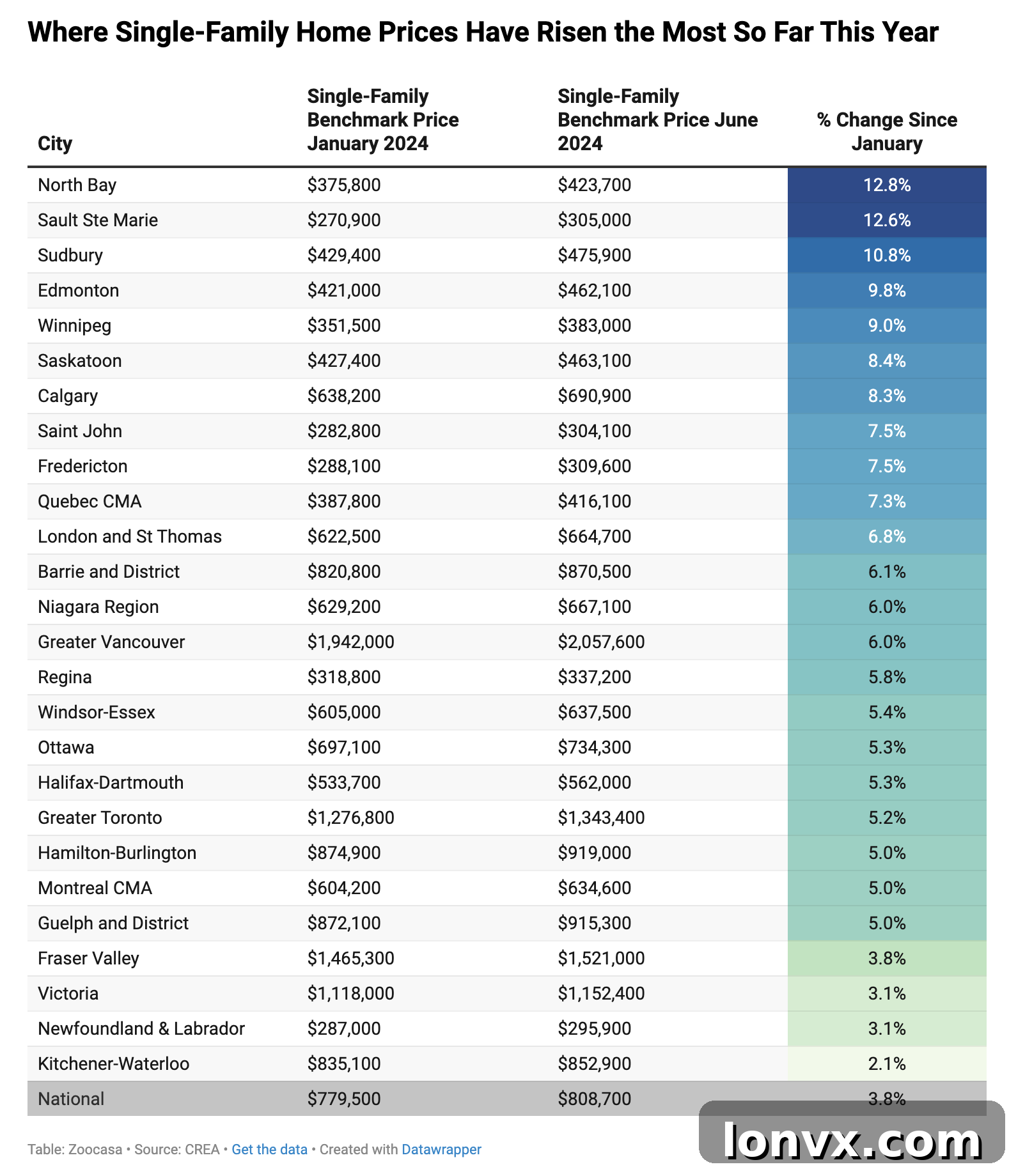
Beyond Ontario, the Prairie provinces have also emerged as strong contenders in the single-family home market. Edmonton, Alberta, witnessed a substantial 9.8 percent increase in prices since January. Winnipeg, Manitoba, followed closely with a 9.0 percent rise, and Saskatoon, Saskatchewan, recorded an 8.4 percent gain. What makes these markets particularly noteworthy is that despite these significant increases, home prices across these cities have largely remained below the $500,000 mark. This relative affordability, combined with robust local economies and a growing appeal for inter-provincial migration, continues to draw buyers seeking spacious homes without the prohibitive price tags seen in Canada’s largest metropolitan areas.
The strength in these regional markets highlights a broader shift in buyer preferences, driven by factors such as the rise of remote work, the desire for larger living spaces, and the pursuit of more affordable homeownership opportunities. This dynamic decentralization of demand is reshaping the conventional understanding of Canada’s housing hotspots.
Home Prices Ascend Despite a Soft Spring Market
The spring market, traditionally a period of heightened activity, unfolded with a more subdued pace this year, marked by fewer transactions and increased buyer caution. Yet, paradoxically, single-family home prices continued their upward trajectory in many regions. The majority of markets analyzed experienced more than a 5.0 percent jump in single-family home prices since January. This includes some of Canada’s most expensive real estate regions, such as the Greater Toronto Area (GTA) and Greater Vancouver, where the fundamental scarcity of land and persistent demand continue to exert upward pressure on detached housing values.
This resilience in single-family home prices, even amidst a slower overall market, can be attributed to several factors. For many families, detached homes remain the preferred choice for their space, privacy, and long-term investment potential. The limited supply of these properties in desirable urban and suburban areas means that even with fewer buyers, competition for available homes can still be fierce, leading to consistent price gains. Moreover, persistent inflation and a general increase in construction costs contribute to higher baseline prices for new builds, which in turn influences the resale market.
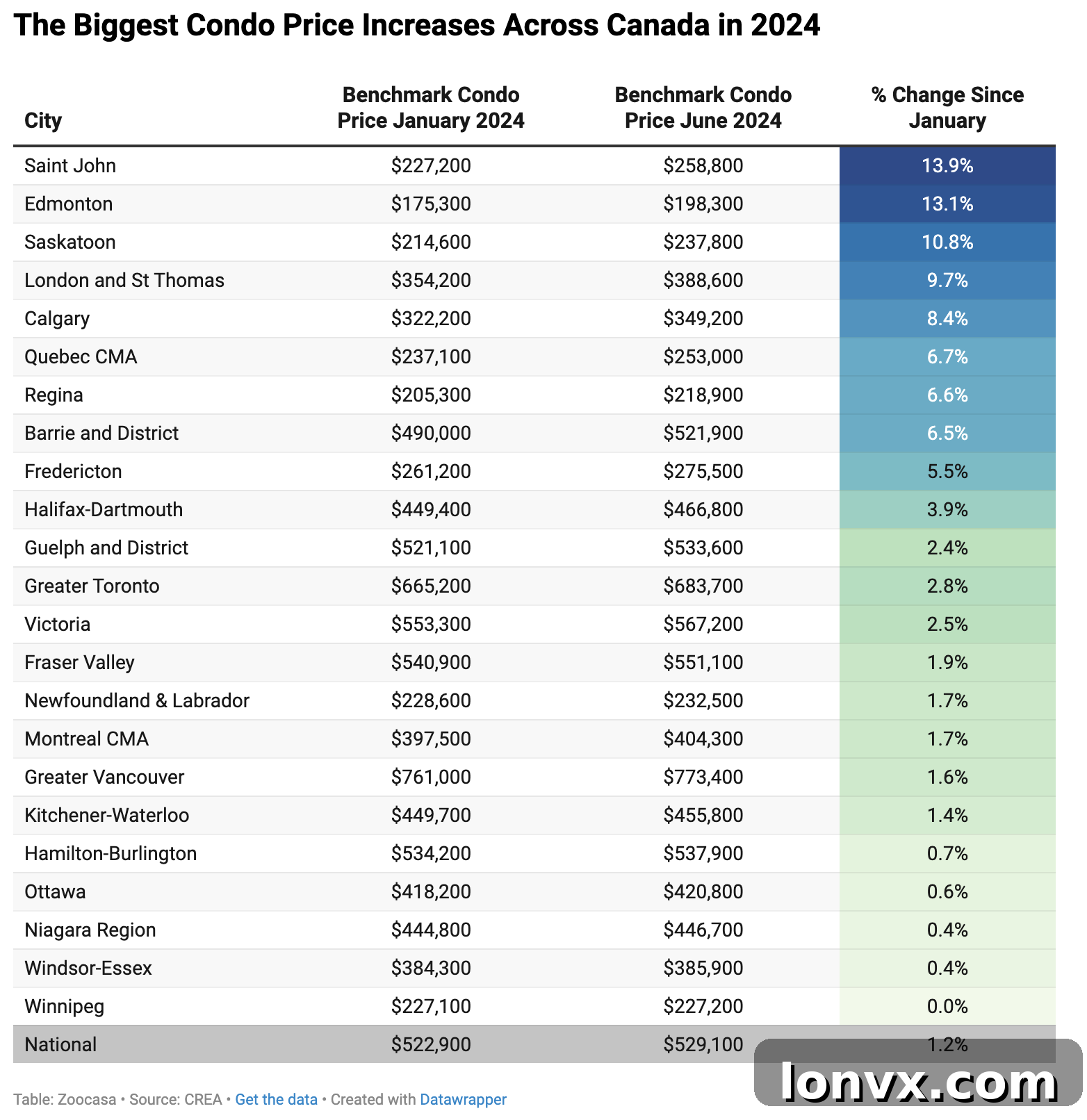
In contrast to the single-family segment, benchmark condominium prices have not seen the same robust growth. The condo market, often considered a more accessible entry point into homeownership, has experienced a more tempered performance. Out of 23 condominium markets examined, a significant 12 saw less than a 2.5 percent increase in benchmark prices since January. Five markets recorded particularly minimal growth, with increases below 1.0 percent: Hamilton-Burlington, Ottawa, Niagara Region, Windsor-Essex, and Winnipeg.
This divergence in performance between single-family homes and condominiums highlights the varying market dynamics at play. While detached homes often appeal to established families and those seeking more space, condos tend to attract first-time buyers, investors, and those prioritizing urban living and convenience. The slower growth in condo prices could reflect increased supply in some urban centers, a shift in buyer priorities, or simply a plateau in demand after a period of rapid appreciation.
Affordability Concerns Drive Condo Demand and Price Growth in Key Markets
A fascinating trend emerging from the current market data is the strong link between affordability and condominium price growth. Canada’s most affordable condominium markets are paradoxically experiencing some of the highest rates of price appreciation. This indicates a clear demand-driven phenomenon where buyers, priced out of the single-family home market, are increasingly turning to condominiums as a viable and more accessible path to homeownership.
Units in Saint John, New Brunswick, led this trend with an impressive 13.9 percent increase in prices since January. Edmonton, Alberta, followed closely with a 13.1 percent rise, and Saskatoon, Saskatchewan, saw a 10.8 percent gain. These cities offer a compelling value proposition, attracting buyers who might otherwise struggle to enter the housing market in more expensive metropolitan areas. The growing demand for condominiums in these locations is so pronounced that their price growth is actually outpacing that of single-family homes – a reversal of the trend observed in more established, high-cost markets. This pattern is also evident in London and St. Thomas, Ontario; Calgary, Alberta; and Regina, Saskatchewan.
This shift in buyer behavior is corroborated by recent survey data. A separate Zoocasa survey revealed that a significant 42.3 percent of respondents identified rising home prices as their primary concern in the current market. This widespread anxiety over affordability is a powerful catalyst, effectively redirecting demand towards more attainable property types like condominiums. As a result, the increased competition for these relatively lower-priced units contributes directly to their rising values.
The implication here is that affordability isn’t just a buzzword; it’s a critical driver of market dynamics. As the cost of detached homes continues to climb, even in a slower market, condominiums in more affordable regions are becoming highly sought after. This trend suggests a strategic recalibration by homebuyers, prioritizing financial feasibility over traditional preferences for larger, detached properties. It also underscores the importance of regional analysis in understanding the broader Canadian housing landscape, as national averages can often mask these critical local variations.
Navigating a Dynamic Canadian Housing Market
The Canadian housing market in the current year presents a fascinating paradox of stabilization and growth. While overall sales may be cooling and listings increasing, regional and property-specific dynamics reveal a complex and often contradictory picture. Single-family homes in certain undersupplied markets, particularly in Northern Ontario and the Prairies, continue to see significant price hikes, driven by strong demand and relative affordability. Meanwhile, the condominium market shows more modest overall growth, yet experiences remarkable surges in its most affordable segments, directly influenced by consumer concerns over rising home prices.
This intricate interplay of supply, demand, affordability, and buyer sentiment underscores the need for a granular understanding of the market. Whether you’re a potential buyer, seller, or investor, recognizing these nuanced trends is crucial for making informed decisions in Canada’s diverse real estate landscape. The market is not monolithic; its health and trajectory are determined by a multitude of localized factors that continue to evolve.
As we move forward, monitoring interest rate policies, inflation trends, and regional economic performance will be key to anticipating future shifts. The enduring quest for affordable homeownership will continue to reshape demand, pushing buyers towards regions and property types that offer the best value. Staying updated on these developments will be essential for anyone involved in the Canadian real estate sector.
Enjoying this article?
Get the latest REM articles in your inbox 3x week so you stay up to date on the latest in the Canadian real estate industry