
Navigating Canada’s Evolving Housing Market: A Deep Dive into Homeowner Selling Intentions
The Canadian real estate market is perennially a hot topic, with recent discussions among realtors swirling around the potential for “panic selling.” This speculation stems from the persistent rise in homeownership costs and a significant uptick in mortgage rates, prompting questions about how homeowners might respond to these financial pressures. A recent comprehensive survey has offered valuable insights, shedding light on the intentions of Canadian homeowners regarding their properties and painting a nuanced picture that goes beyond initial fears of a market flood.
Unveiling Selling Intentions: Key Findings from a National Survey
A collaborative survey conducted by Nerdwallet and The Harris Poll, encompassing 1,099 Canadian adults including 749 homeowners, has brought forth compelling data. The findings indicate that a substantial segment of homeowners – more than 20 percent – are contemplating selling their primary residences within the next three years. This figure, if materialized, could represent a monumental shift in the housing landscape, potentially ushering in a historic surge in property listings across the country.
However, the underlying motivations for these selling intentions are more complex than simple financial distress. While the rising cost of living and mortgage payments are undoubtedly factors for some, they are not the primary drivers for the majority. Only 22 percent of those planning to sell cite saving money as their main motivator, and a smaller 7.0 percent specifically attribute their decision to an inability to afford their current mortgages. This suggests that while economic pressures are certainly present, they are not the sole or even dominant force behind these widespread selling plans.
Beyond Financial Strain: The Predominance of Downsizing
Instead, the survey reveals that the most common and compelling motivation for selling a primary residence is a desire to downsize. A significant 34 percent of respondents listed downsizing as their primary reason. This trend could signify a broader demographic shift or a strategic realignment of living situations, rather than a forced market exit. Downsizing can be driven by various life stages, such as empty-nest syndrome, a desire for reduced maintenance, or a preference for a more minimalist lifestyle as individuals approach retirement or seek to optimize their financial resources in different ways.
Understanding these motivations is crucial for real estate professionals, policymakers, and prospective buyers alike. It suggests that while there may be an increase in listings, the nature of these listings might be less indicative of market distress and more reflective of homeowners making deliberate, lifestyle-driven choices. This distinction is vital for accurately forecasting market behaviour and avoiding overly alarmist interpretations.
The Scale of Change: Projecting New Listings
The prospect of more than one in five homeowners intending to sell their primary residence within a three-year window raises a critical question: what does this mean for the sheer volume of properties entering the market? The numbers are potentially staggering. This intention could translate into approximately 5.4 million new listings hitting the Canadian market by 2026, averaging an estimated 1.8 million listings annually.
To put this into perspective, the team at Nerdwallet highlights that over the past decade, Canada’s highest number of new listings in a single year barely exceeded one million homes, a benchmark reached in 2015. A consistent annual influx of 1.8 million listings would represent an unprecedented surge, potentially transforming market dynamics from a seller’s advantage to a more balanced or even buyer-favoured environment in many regions.
Beyond Primary Residences: Other Property Types Also in Play
The survey’s scope extends beyond primary residences, revealing intentions to sell other types of properties as well. Approximately 9.0 percent of Canadians indicated plans to sell a vacation home within the next three years, while 12 percent expressed intentions to offload investment properties during the same timeframe. These figures, much like those for primary residences, substantially exceed recent averages for these property categories, suggesting a broader movement among property owners to reassess their real estate portfolios.
This potential increase in listings across various property types could significantly impact market liquidity, pricing, and the overall supply-demand balance. It prompts further analysis into whether these intentions reflect a strategic divestment in response to changing economic conditions, a desire to unlock equity, or simply a natural evolution of property ownership cycles.
A Measured Pace: Homeowners Not Rushing to Sell
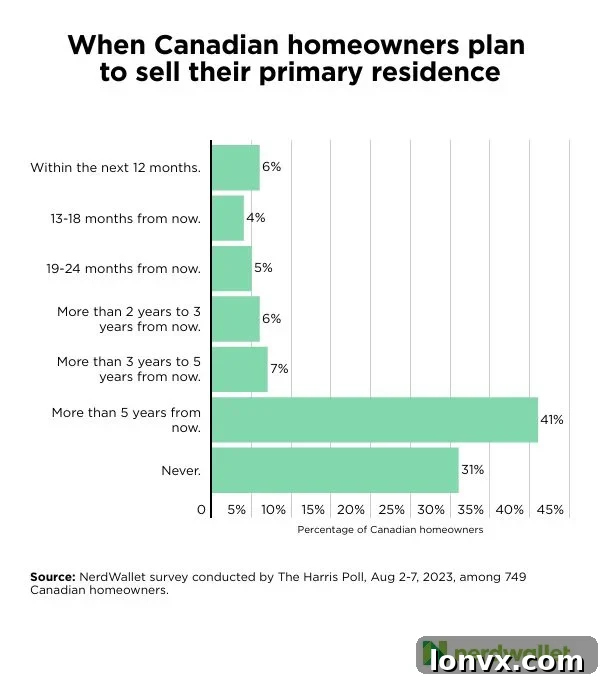
Despite the notable percentage of homeowners planning to sell, the survey also reveals a cautious and unhurried approach to market entry. Only a small fraction, 6.0 percent, plan to sell their homes within the next 12 months. The timeline extends further for others, with 4.0 percent targeting sales between 13 and 18 months from now, and 5.0 percent looking at a window of 19 to 24 months.
A significant majority, 41 percent, are eyeing a timeline exceeding five years for their selling plans. This long-term perspective strongly suggests that homeowners are not acting out of immediate desperation. Instead, they appear to be adopting a strategic and patient stance, likely waiting for optimal market conditions, the culmination of personal life events, or a more favorable interest rate environment for prospective buyers.
This cautious approach could mitigate the immediate impact of a sudden deluge of listings, allowing the market to absorb new inventory more gradually. It also underscores the importance of ongoing market analysis, as homeowner intentions, while indicative, are often subject to change based on evolving economic forecasts, personal circumstances, and policy adjustments.
Market Uncertainty Fuels Sellers’ Concerns
Homeowners who are planning to sell within the next three years are not without their anxieties. The survey highlights a common set of worries that weigh heavily on their minds, reflecting the inherent complexities and emotional toll associated with selling a significant asset like a home in an unpredictable market.
The Stress of Transition: Beyond the Transaction
The logistical and emotional burden of moving stands out as a primary concern, with 41 percent of potential sellers citing the stress of relocating as a major worry. This goes beyond the financial transaction itself, encompassing the challenges of packing, coordinating logistics, settling into a new environment, and the emotional ties associated with leaving a cherished home. For many, the decision to sell is intertwined with significant life changes, amplifying the emotional impact of the process.
Buyer Affordability and Mortgage Rate Headwinds
A significant 37 percent of homeowners are concerned about higher mortgage rates impacting potential buyers’ budgets. This concern is well-founded, as elevated interest rates directly reduce purchasing power, potentially shrinking the pool of eligible buyers and prolonging the selling process. Sellers are acutely aware that a less affordable market for buyers could mean longer listing times or necessitate price adjustments to attract offers, directly affecting their selling strategy and expected returns.
Valuation Concerns: Selling for Less Than Perceived Worth
The fear of selling their homes for less than they believe they’re worth is another prominent worry for 27 percent of potential sellers. Home values often carry significant personal and financial weight, and the prospect of a sale price falling short of expectations or perceived market value can be a source of considerable anxiety. This concern is particularly acute in markets where values have seen fluctuations or periods of stagnation, making it challenging for sellers to gauge the optimal timing and price point for their property.
Re-entering the Market: The Supply-Demand Conundrum
The uncertainties of navigating a competitive market also weigh heavily, especially for those who plan to sell one home and purchase another. About 26 percent of respondents expressed concerns about limited housing supply and high mortgage rates when they themselves re-enter the market as buyers. This “move-up” dilemma highlights a critical challenge for many families: the desire to sell their current home for a good price is often balanced against the difficulty of finding an affordable and suitable replacement in a challenging buying environment. The paradox of the current market—where high intent to sell coexists with buyer affordability issues and concerns about limited inventory for sellers who are also buyers—creates a complex landscape for all participants.
Conclusion: A Balanced Outlook on Canada’s Housing Future
The Nerdwallet and The Harris Poll survey provides a vital lens through which to view the future of Canada’s housing market. While a significant portion of homeowners intend to sell, the motivations are diverse, with lifestyle choices like downsizing often outweighing immediate financial distress. The potential for a substantial increase in listings across primary residences, vacation homes, and investment properties is real, yet homeowners appear to be exercising caution and patience regarding their selling timelines.
These intentions, coupled with a nuanced understanding of seller concerns—ranging from the stress of moving and buyer affordability to fears of undervaluation and the challenges of re-entering the market—paint a picture of a dynamic and evolving real estate landscape. Rather than an imminent wave of panic selling, the data suggests a more measured, strategic repositioning by Canadian homeowners. This ongoing reassessment of housing needs and financial portfolios will undoubtedly shape the market’s trajectory in the coming years, requiring adaptability and informed decision-making from all stakeholders.
For more detailed insights into the survey findings and Nerdwallet’s methodology, you can explore the full report here.