Ontario is currently grappling with an unprecedented housing crisis, characterized by soaring prices, dwindling supply, and a profound lack of affordability that is eroding the dream of homeownership for countless residents. Amidst this challenging landscape, the Ontario Real Estate Association (OREA) has stepped forward with a compelling new report, “Building More, Building Faster.” This comprehensive document doesn’t just diagnose the problem; it presents a robust, innovative solution: factory-built housing. Often referred to as modular or prefabricated construction, OREA champions this method as a pivotal strategy to rapidly increase housing supply, improve affordability, and modernize Ontario’s construction industry. This article delves into OREA’s vision, exploring how factory-built housing can effectively address Ontario’s housing challenges, foster economic growth, and pave the way for a more sustainable and accessible future.
The Deepening Crisis: Affordability and Supply in Ontario
The statistics are stark, reflecting a growing sentiment of despair among Ontarians. A recent survey cited by OREA reveals a sobering reality: nearly half of aspiring homeowners have either abandoned their hopes of owning a home (25%) or are deeply pessimistic about ever achieving it (24%). This loss of confidence isn’t arbitrary; it’s a direct consequence of systemic issues that have plagued the province’s housing sector for years. The crisis is multifaceted, rooted in a perfect storm of regulatory complexities, outdated zoning bylaws, and critical resource shortages.
OREA’s report meticulously outlines the key impediments contributing to this crisis. Lengthy municipal approval processes, often bogged down by bureaucratic hurdles and red tape, significantly delay new construction projects, adding substantial costs and uncertainty for developers. Restrictive zoning regulations, which often limit development to single-family homes and inhibit increased density, further exacerbate the supply shortage by preventing diverse housing types from being built where they are most needed. Furthermore, a severe shortage of developable land within urban and suburban areas, coupled with a shrinking pool of skilled tradespeople, creates bottlenecks that stifle housing starts. These factors collectively push housing prices beyond the reach of many, making homeownership an elusive dream rather than an attainable goal. OREA’s message is clear: without bold, transformative action, Ontario’s affordability challenges will continue to intensify, with far-reaching social and economic consequences.
Demystifying Factory-Built Housing: A Modern Approach to Construction
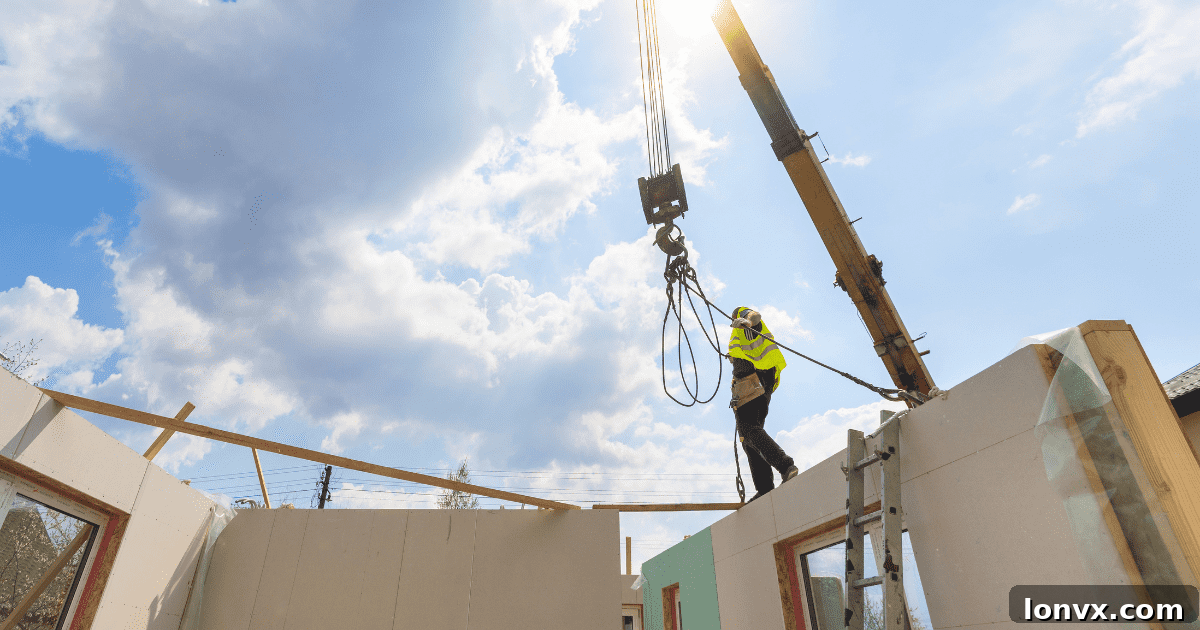
To understand OREA’s proposed solution, it’s essential to grasp what factory-built housing entails. The term “factory-built” encompasses a range of construction methods where components or entire sections of a home are manufactured off-site in a controlled factory environment before being transported and assembled at their final location. This broad category includes modular homes (where complete volumetric sections are built), panelized homes (pre-assembled wall, floor, and roof panels), kit homes (pre-cut components delivered for assembly), and advanced manufactured mobile homes. It’s crucial to distinguish modern factory-built housing from outdated stereotypes; these are not “trailer homes” but sophisticated structures built to rigorous standards.
A significant advantage of this approach lies in its efficiency. OREA’s report highlights research from McKinsey & Company, demonstrating that modular building techniques can achieve a remarkable 20-50% reduction in construction time compared to traditional methods. This acceleration is possible because site preparation and foundation work can occur concurrently with off-site module fabrication. The controlled factory environment minimizes weather-related delays, ensures consistent quality, and allows for precise material management, significantly reducing waste. Crucially, factory-built homes are designed to meet or exceed national building standards, ensuring durability, safety, and energy efficiency. Moreover, these versatile structures can be customized to match local architectural styles, seamlessly integrate into existing communities, and accommodate various formats, from single-family dwellings to multi-unit residential complexes, dispelling any misconceptions about limited design flexibility.
Real-World Success: Adoption Across Ontario and Beyond
The effectiveness of factory-built housing is not merely theoretical; it’s being proven through successful initiatives across Ontario and nationwide. OREA’s report proudly showcases several municipalities that have embraced this innovative construction method to deliver much-needed affordable housing at an accelerated pace.
For instance, the City of Toronto’s groundbreaking Modular Housing Initiative has already yielded more than 200 affordable housing units, providing rapid solutions for vulnerable populations. In Peterborough, the Modular Bridge Housing Project saw the swift construction of 50 tiny homes within an impressive seven-month timeframe, offering transitional housing solutions. London, Ontario, adopted a hybrid modular-traditional construction method to expedite a 61-unit affordable housing development, demonstrating the flexibility and complementary nature of factory-built components.
Beyond provincial borders, federal investment has further underscored the viability of modular construction. Canada’s Rapid Housing Initiative (RHI), launched in 2020, has leveraged factory-built methods to deliver over 15,000 new units nationwide, many of which are modular. This federal endorsement highlights the strategic importance of off-site construction in achieving national housing targets and addressing homelessness with speed and efficiency. These examples serve as powerful testaments to the practical benefits and scalability of factory-built housing, demonstrating its capacity to deliver quality housing solutions in diverse contexts.
A Dual Dividend: Economic Development and Environmental Stewardship
OREA positions factory-built housing not just as a construction solution but as a significant engine for economic development and environmental sustainability. The economic advantages are considerable. Premier Doug Ford’s February 2025 pledge of $50 million to invest in prefabricated housing and building technologies signals a strong government commitment, recognizing the sector’s potential. This investment is poised to stimulate growth in Ontario’s advanced manufacturing sector, fostering innovation and creating new job opportunities across the supply chain—from design and manufacturing to logistics and on-site assembly. OREA envisions Ontario becoming a leader in this growing industry, with the potential to scale production, standardize processes, and even export factory-built housing solutions to other provinces and regions facing similar housing pressures. This not only boosts the provincial economy but also diversifies its industrial base.
Environmentally, factory-built housing offers substantial benefits that align with Ontario’s ambitious greenhouse gas reduction targets. The controlled environment of a factory allows for precision manufacturing, which dramatically reduces material waste compared to traditional on-site construction. Off-cuts and excess materials can often be recycled or repurposed directly within the factory. Furthermore, the ability to tightly control building envelopes and integrate high-performance insulation and energy-efficient systems during the manufacturing process leads to homes with superior energy efficiency, translating into lower utility costs for residents and a reduced carbon footprint over the building’s lifespan. By minimizing transportation of materials to multiple job sites and optimizing resource use, factory-built housing stands as a truly sustainable alternative, contributing positively to both local economies and global environmental goals.
Meeting the Needs of Ontario’s Aging Population
As Ontario’s demographic landscape continues to shift, with projections from the Ministry of Finance indicating that seniors aged 65 and older will constitute a significant portion of the population by 2046, the need for appropriate housing solutions becomes paramount. Factory-built housing offers a unique and timely answer to this challenge. The flexibility and speed of modular construction enable the rapid development of accessible, “ground-oriented” communities specifically designed for seniors. These homes can be easily customized to include features like wider doorways, single-story layouts, grab bars, and accessible bathrooms, promoting independent living and aging in place.
The ability to quickly deploy these specialized housing units can significantly ease demand pressures on the broader resale market, as seniors find suitable, purpose-built alternatives rather than staying in larger family homes that no longer meet their needs. This creates a ripple effect, freeing up existing housing stock for younger families and first-time buyers. By proactively addressing the evolving housing requirements of its aging population through efficient, adaptable, and accessible factory-built solutions, Ontario can ensure its seniors live comfortably and with dignity, while also contributing to the overall stability and fluidity of its housing market.
Navigating the Hurdles: Challenges to Scaling Up Factory-Built Housing
Despite its immense promise, factory-built housing faces several entrenched barriers that hinder its widespread adoption and scalability in Ontario. OREA’s report candidly identifies these challenges, emphasizing the need for targeted policy interventions to overcome them.
One primary issue is the inconsistency in definitions across different municipalities and provincial regulations. The absence of a standardized definition for factory-built housing leads to confusion, with some bylaw officers mistakenly classifying modern modular homes as “mobile homes.” This often subjects them to additional, inappropriate zoning requirements and stigma, complicating the permitting process and increasing development costs. This regulatory ambiguity creates a fragmented landscape that discourages investment and innovation.
Outdated regulations, including aspects of the provincial building code and local bylaws, often fail to account for the unique characteristics and advantages of off-site construction. These regulations can inadvertently create unnecessary hurdles, slowing down projects that are inherently designed for speed. Furthermore, a general lack of public awareness and lingering misconceptions about the quality and durability of factory-built homes can lead to community resistance and slow acceptance.
A particularly salient logistical challenge is the “spring thaw” road restrictions under Ontario’s Highway Traffic Act. These regulations temporarily limit the transportation of heavy loads on certain provincial roads during periods of thaw to prevent damage. While intended to protect infrastructure, these restrictions can significantly impact the timely delivery of large prefabricated modules, causing costly delays in construction schedules and disrupting the efficient supply chain that is central to factory-built housing’s appeal. OREA argues that these cumulative issues create an environment of uncertainty and disincentivize crucial investment in a sector poised to revolutionize housing delivery.
A Roadmap for Progress: Five Policy Recommendations
To unlock the full potential of factory-built housing and accelerate its integration into Ontario’s housing strategy, OREA has put forth five critical policy recommendations. These proposals are designed to create a more supportive regulatory environment, foster collaboration, and stimulate investment:
- Create a Standardized Definition of Factory-Built Housing: OREA advocates for a clear, uniform definition of factory-built housing at both provincial and municipal levels. This standardization would eliminate ambiguity, streamline permitting processes, facilitate financing, and ensure consistent application of building codes, fostering greater clarity and predictability for developers and municipalities alike.
- Pursue Cross-Provincial Collaboration: Recognizing the need for broader impact, OREA recommends that Ontario take a leadership role in collaborating with other provinces to establish national standards for factory-built housing and its transportation. Such collaboration would unlock economies of scale for manufacturers, promote inter-provincial trade, and create a more integrated and efficient national housing market for off-site construction.
- Reduce Regulatory Barriers: This recommendation calls for a comprehensive review and reform of existing regulations. Key suggestions include aligning CSA (Canadian Standards Association) standards for modular construction directly with the Ontario Building Code, streamlining complex permit application processes, and developing a system for pre-approved blueprints. These measures would significantly cut down on administrative delays and development costs, making projects faster and more affordable.
- Invest in Public-Private Partnerships (P3s): OREA proposes a robust P3 model to significantly boost housing supply. By leveraging surplus government land and combining it with standardized designs, P3s could aim to build an ambitious target of 5,000 to 10,000 factory-built homes annually. This approach would de-risk projects for private partners, accelerate development, and ensure a consistent pipeline of affordable housing units.
- Amend the Highway Traffic Act: To mitigate the impact of “spring thaw” restrictions, OREA recommends exempting factory-built modules from these temporary load limitations. This exemption would prevent unnecessary delays in the transportation and assembly of housing components, ensuring projects stay on schedule and costs remain predictable, thereby optimizing the logistical advantages of modular construction.
In conclusion, OREA’s “Building More, Building Faster” report unequivocally demonstrates that factory-built housing is not just a niche alternative but a vital, scalable solution with the potential to fundamentally transform Ontario’s housing landscape. By embracing these strategic policy recommendations, Ontario can overcome existing barriers, drive rapid growth in housing supply, create thousands of new jobs, boost its economy through advanced manufacturing, and unlock unprecedented economic opportunities. This forward-thinking approach offers a clear path towards a future where affordable, high-quality housing is accessible to all Ontarians, reinforcing the province’s commitment to building thriving, sustainable communities for generations to come.