
Navigating the Canadian Real Estate Market Recession: Outlook and Opportunities
The Canadian real estate market is currently entrenched in a prolonged recession, a state it has experienced for well over a year. This persistent contraction signifies a significant reduction in the available earnings within the industry, largely independent of trends observed in other sectors of the broader economy. This downturn has prompted significant discussions among market analysts, real estate professionals, and potential homebuyers alike, all eager to understand its depth and potential duration.
Prominent figures within the Canadian real estate community, such as popular YouTuber Jon Flynn, have highlighted the severity of the situation. He notes that Canadian home sales have consistently remained below their 10-year moving average for an unprecedented period. This long-term trend reversal is a critical indicator of sustained weakness in the market. Most recently, November saw a further decline of 0.9 percent in home sales, extending the ongoing streak of underperformance and deepening concerns about the market’s immediate future.

Finding the Silver Lining: Prospects for Recovery
While the current outlook may appear bleak, it is crucial to consider all angles and search for potential signs of stabilization or recovery. In the typical annual sales cycle for Canadian real estate, sales volumes naturally trend downwards as the year concludes. December and January are historically the slowest months for home transactions, primarily due to the impact of the holiday season and reduced buyer activity. This seasonal pattern offers a glimmer of hope amidst the recessionary environment.
On this optimistic note, it is plausible that December 2023 and January 2024 could represent the absolute nadir in sales volume for the Canadian real estate market. Should this hypothesis prove true, it would imply that a much-anticipated volume recovery could commence thereafter. Historically, the recovery of sales volume often serves as a precursor to price recovery, typically leading it by an estimated 12 to 16 months. Based on this historical precedent, we might anticipate that Canadian house prices could find their bottom sometime in 2025, initiating a gradual recovery phase extending into 2026. This projection, of course, is contingent on the absence of major unforeseen “black swan” events impacting either the Canadian or global economies, which could significantly alter market trajectories.
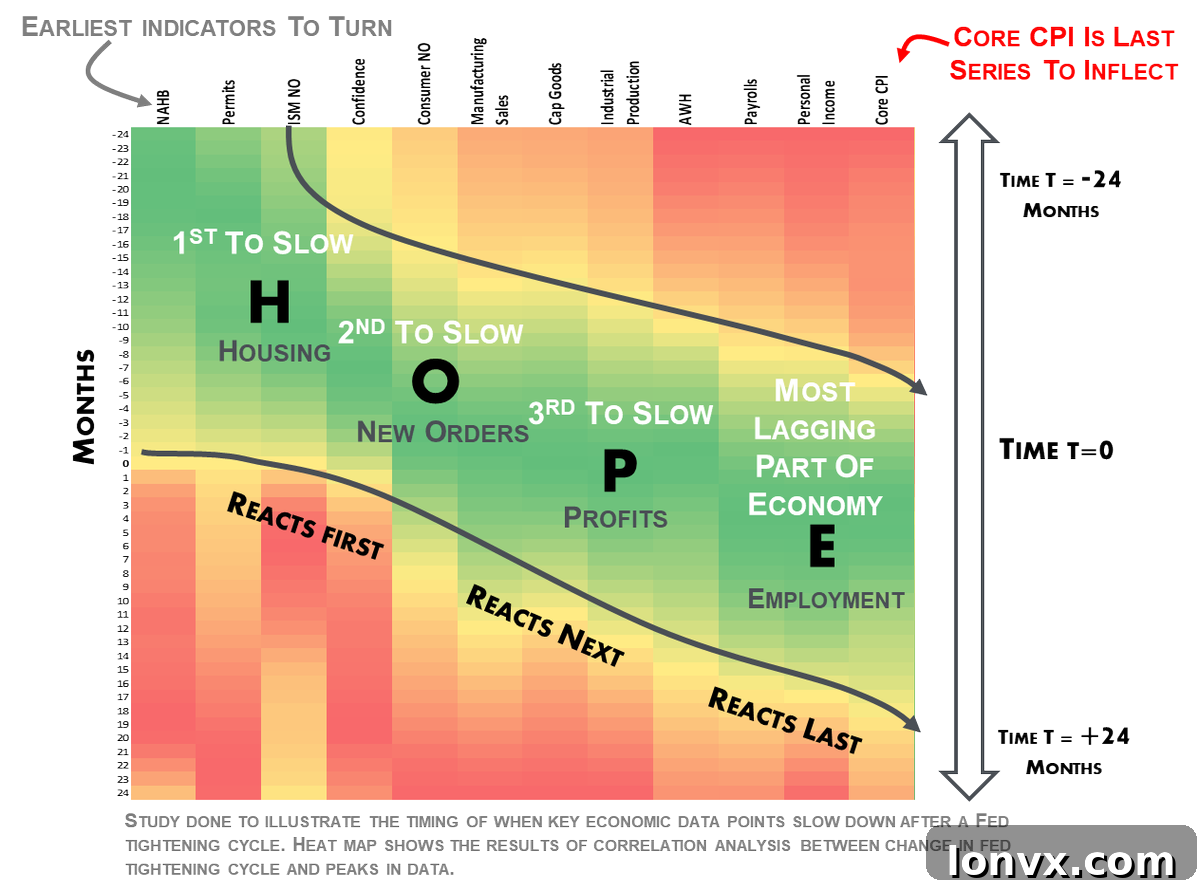
Further supporting this long-term perspective is economist Michael Kantro’s widely recognized HOPE model, which posits a distinct relationship between economic downturns and recoveries. According to this model, the contractions observed in the housing market are often leading indicators that will ultimately materialize as broader economic contraction across the entire Canadian economy. Conversely, the same model suggests that housing will also lead the economy’s recovery once the period of contraction subsides. For professionals within the real estate sector, this offers a compelling reason for cautious optimism and an understanding that the current challenges are part of a larger, predictable economic cycle. Anticipating housing’s role as a recovery leader provides a strategic framework for planning for the upturn.
Setting Realistic Expectations: Lessons from History
To truly understand the potential magnitude and duration of the current downturn, it is imperative to examine historical parallels. The last time Canada’s housing market experienced a counter-cyclical event of this power and scale was during the 1990s. That period was characterized by a profound and prolonged slump, leading to a massive exodus of real estate professionals from the industry. Many found the economic climate unsustainable, forcing them to seek opportunities elsewhere.
During the subsequent recovery phase of the 1990s, it took an arduous and extended period – over 10 years, specifically from 1989 to 2002 – for nominal house prices to reach their previous peak. This demonstrates that while recovery is eventual, it is not always swift or direct. This prolonged recovery period underscores the resilience required by both the market and the professionals operating within it. However, a critical lesson emerged from that era: after 1995, once sales volume and prices began their slow climb back, the number of real estate professionals actively trading in the market was significantly smaller than during the downturn. History, therefore, teaches us that those professionals who possess the tenacity and foresight to weather the current storm will find themselves operating in a far more opportune and less crowded market during the eventual recovery phase. This period of contraction, while challenging, can thus be viewed as a weeding-out process, creating better prospects for those who endure.
Price Growth Tapped Out: A Reversal in Trend
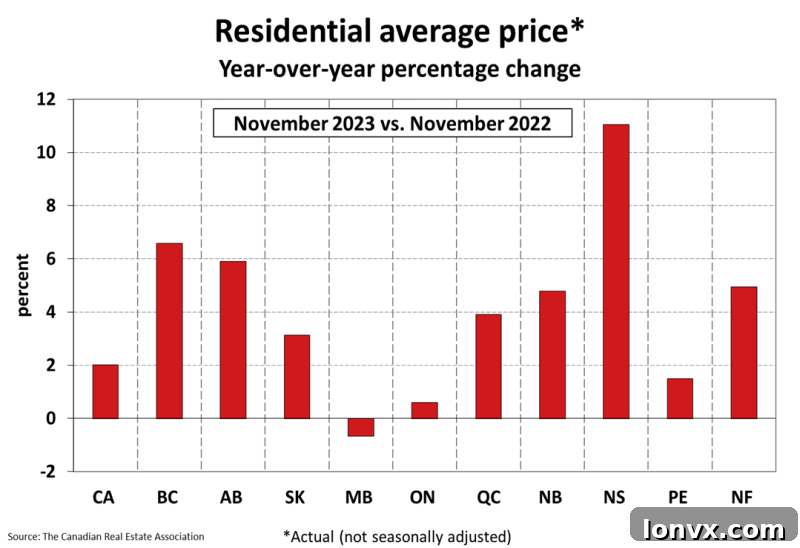
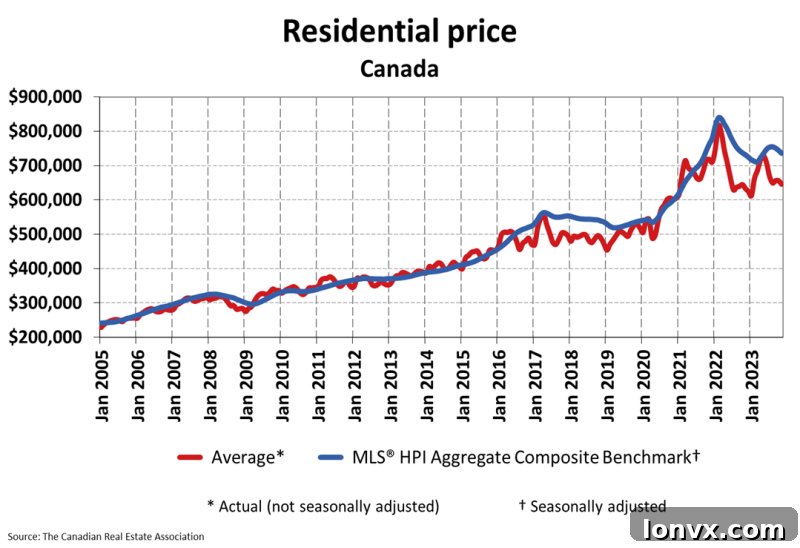
A significant consequence of the declining sales volume narrative is the clear indication that price growth in Canadian real estate has effectively “tapped out.” While many provinces still report year-over-year price increases, this trend is largely a statistical artifact, commonly known as a “base effect.” It is crucial to understand that this apparent growth is expected to reverse in the coming year, based on the comprehensive data currently available. The reason for the year-over-year increase stems from comparing current prices to those in November and December of 2022. These months marked the tail end of the largest and most rapid price drop in Canadian history, which occurred after the market peaked in Q1 2022. This peak coincided directly with the Bank of Canada’s aggressive rate-hiking cycle, which swiftly dampened buyer demand and affordability.
Now, however, the underlying trend reveals a clear reversal. For several months, prices have been consistently trending downwards across both key metrics: the Home Price Index (HPI) and the Average Price. The HPI, a measure that adjusts for property type and features, and the more straightforward average price, both confirm a sustained deceleration and subsequent decline. This indicates that the temporary year-over-year boost, due to the low base of late 2022, is fading, and the market is once again reflecting current economic realities and tighter monetary conditions. This downward trajectory across both primary price indicators solidifies the assessment that sustained price appreciation is no longer occurring and that further adjustments are likely.
Saved by the Sell: Shifting Supply Dynamics
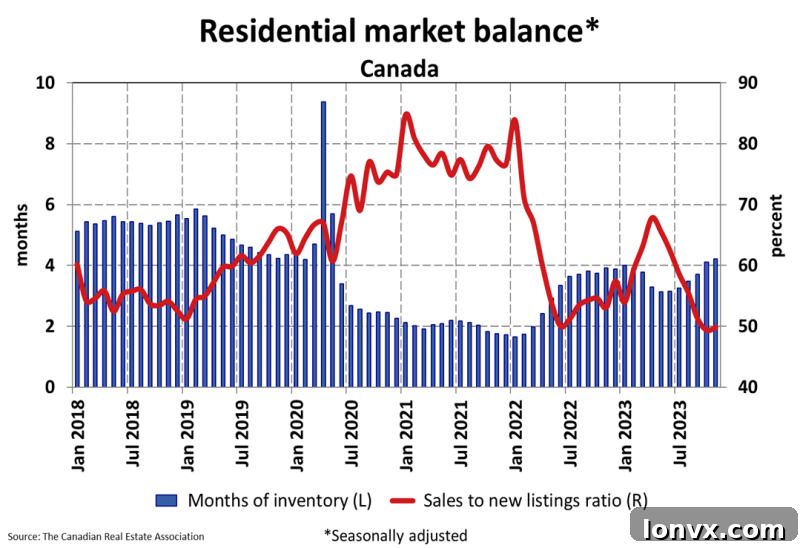
Despite the prevailing challenges, there is one crucial mitigating factor that offers a degree of stability to the Canadian housing market: the supply side. A critical development is that supply is no longer outpacing demand at an accelerating rate. While inventory continues to accumulate, with the “months of supply” metric climbing further into what is typically considered buyer’s market territory, a more positive underlying shift has occurred: the sales-to-new-listings ratio has reversed its trend. This reversal is a significant indicator.
It illustrates that sellers are no longer flooding the market with new listings at the aggressive pace seen during earlier stages of the downturn. The previous environment saw a surge in supply coinciding with decreasing prices and dwindling sales volumes, creating a vicious cycle. The current moderation in new listings indicates a more considered approach from sellers, perhaps an unwillingness to list at steeply discounted prices or a recognition that the market cannot absorb an unlimited influx of new properties. This adjustment in seller behavior helps prevent a further rapid deterioration of prices and stabilizes the supply-demand imbalance, even if overall inventory remains high. It suggests a move towards a more rational and less panicked market environment, offering a subtle but important element of resilience.
The Path Ahead: Gearing Up for Spring 2024
Considering the complex interplay of declining sales volumes, tapped-out price growth, and the nuanced shift in supply dynamics, all set against the backdrop of two traditionally slow winter months, the Canadian real estate market is poised for a critical period of observation. We will likely need to await the arrival of spring 2024 to gain a clearer understanding of the market’s trajectory. The performance during the typically busier spring selling season will be instrumental in determining whether the Canadian real estate market will spend the majority of 2024 firmly entrenched in a buyer’s market, where purchasers hold significant leverage, or if it will transition towards a more balanced market, characterized by a healthier equilibrium between supply and demand.
Key factors that will influence this outcome include future interest rate decisions by the Bank of Canada, the overall health and growth of the Canadian economy, consumer confidence levels, and the ongoing impact of immigration on housing demand. For both real estate professionals and prospective homeowners, remaining informed and adaptable will be paramount. The coming months, though slow, offer a valuable opportunity to strategize, understand underlying trends, and prepare for whatever market conditions spring 2024 may bring. While challenges persist, the market’s inherent cyclicality and subtle signs of stabilization suggest that opportunities will eventually re-emerge for those prepared to seize them.
Enjoying this article?
Get the latest REM articles in your inbox 3x week so you stay up to date on the latest in the Canadian real estate industry