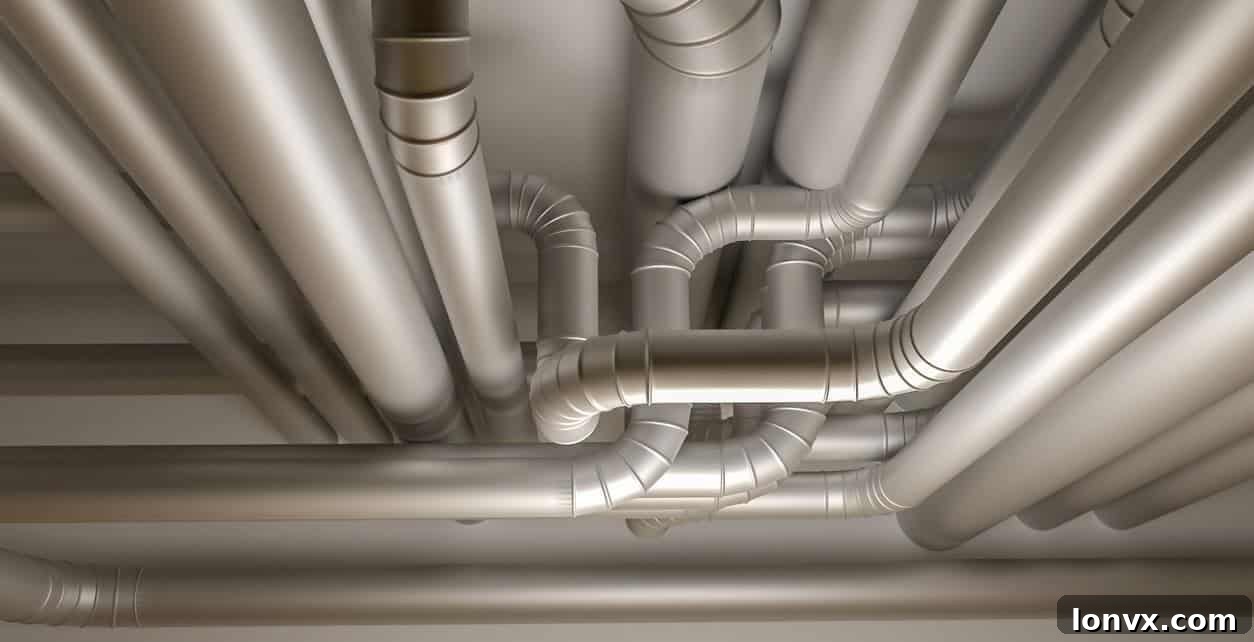
Ventilation is a fundamental process in maintaining a healthy and comfortable indoor environment. At its core, it involves the systematic removal of stale, polluted, and moisture-laden air from inside a building and its replacement with fresh, often drier, outdoor air. In recent decades, a significant shift has occurred in residential building practices, with a strong emphasis on creating more energy-efficient homes. This trend has led to houses being constructed with increasingly tighter envelopes, effectively sealing them off from the outside world to minimize energy loss. While beneficial for heating and cooling costs, this sealing significantly reduces the natural airflow that older homes once relied upon. Consequently, ensuring proper ventilation has become more critical than ever for the well-being of a home’s occupants, as well as for the long-term integrity of the structure itself.
The Indispensable Role of Ventilation: Why it Matters for Your Home and Health
Modern homes, designed for maximum energy efficiency, can inadvertently trap a host of indoor air pollutants. Without adequate ventilation, these contaminants can accumulate to unhealthy levels, posing risks to both human health and the building’s fabric. Common indoor air pollutants include volatile organic compounds (VOCs) off-gassing from furniture, cleaning products, and building materials; carbon dioxide (CO2) from human respiration; particulate matter from cooking and outdoor sources; allergens like pollen and dust mites; pet dander; and potentially dangerous gases such as radon and carbon monoxide (CO) from combustion appliances. Additionally, moisture generated from daily activities like showering, cooking, and even breathing can lead to condensation, promoting mold and mildew growth if not properly managed.
The health implications of poor indoor air quality are wide-ranging. They can manifest as respiratory problems, allergies, asthma attacks, headaches, fatigue, and in severe cases, more serious long-term health issues. For the home itself, excessive moisture can lead to structural damage, rot, and the degradation of insulation, undermining the very energy efficiency the tight construction aimed to achieve. Effective ventilation, therefore, acts as a crucial defense mechanism, diligently expelling these pollutants and excess moisture, thereby safeguarding both the inhabitants’ health and the durability of the home.
How Much Ventilation is Actually Necessary? Establishing Optimal Air Exchange
Determining the ideal amount of ventilation for a home is a complex science, influenced by various factors specific to each dwelling and its occupants. While there are different theories and approaches, a widely accepted guideline in residential construction aims for an air exchange rate of approximately 0.3 air changes per hour (ACH). In simpler terms, this means that the entire volume of indoor air should be completely replaced with fresh outdoor air roughly once every three hours. This rate serves as a general benchmark for continuous background ventilation.
However, modern building codes and standards, such as ASHRAE Standard 62.2 (Ventilation and Acceptable Indoor Air Quality in Residential Buildings), provide more nuanced and comprehensive guidelines. These standards often recommend a minimum continuous ventilation rate based on the home’s size and number of bedrooms, typically expressed in cubic feet per minute (CFM). For instance, ASHRAE 62.2 often suggests a continuous mechanical ventilation rate of 7.5 CFM per occupant plus 0.01 CFM per square foot of conditioned floor area. In addition to continuous ventilation, these standards also mandate intermittent, spot ventilation for areas with high moisture or pollutant generation, such as bathrooms and kitchens, requiring exhaust fans capable of moving specific volumes of air (e.g., 50-100 CFM for bathrooms, 100-200 CFM or more for kitchen range hoods).
Factors influencing the optimal ventilation rate extend beyond simple square footage or occupancy numbers. Climate plays a significant role; homes in humid climates might require different moisture management strategies compared to those in arid regions. The types of activities regularly performed in the home, the number of pets, and even the presence of indoor plants can all impact indoor air quality and, consequently, ventilation needs. A careful assessment of these variables is essential to establish a truly effective and efficient ventilation strategy.
What is Natural Ventilation and How is it Measured? Understanding Uncontrolled Airflow
Despite diligent efforts to create an airtight building envelope, some air inevitably leaks in and out of a structure. This uncontrolled movement of air through unintended openings in the building envelope—such as cracks, gaps around windows and doors, and penetrations for plumbing and electrical systems—is referred to as natural ventilation or, more precisely, infiltration (air entering) and exfiltration (air exiting). While it contributes to air exchange, natural ventilation is inherently unpredictable and unreliable, making it an insufficient standalone solution for maintaining consistent indoor air quality in modern, energy-efficient homes.
The amount of natural ventilation occurring in a home is entirely specific to that particular structure and depends on several key factors:
- Building Envelope Sealing: The primary determinant is how well the building’s thermal envelope was sealed during construction. High-quality construction with meticulous attention to detail and air-sealing techniques will naturally result in less uncontrolled leakage.
- Stack Effect: This is a pressure effect primarily caused by temperature differences between the inside and outside of a house. In winter, warmer, less dense indoor air rises and escapes through leaks in the upper parts of the house (exfiltration). This creates a negative pressure at lower levels, drawing colder, denser outdoor air in through leaks in the foundation and lower walls (infiltration). The opposite can occur in very hot climates, where cooler indoor air can “fall” out. The stack effect is most pronounced in taller buildings and during significant temperature differentials.
- Wind Effect: Wind creates pressure differences around a house. On the windward side, positive pressure can push outdoor air into the home through cracks and openings. On the leeward side, negative pressure can pull indoor air out. The direction, speed, and prevailing patterns of wind significantly influence the rate and location of natural ventilation.
- Building Materials and Construction Quality: The type of materials used and the overall quality of craftsmanship also play a role. Older homes with less advanced materials and construction techniques typically exhibit higher levels of natural ventilation.
The precise amount of natural ventilation a home experiences is commonly measured by completing a blower door test. This diagnostic tool is indispensable for assessing a home’s airtightness and identifying specific leakage points. During a blower door test, a powerful fan is mounted in an exterior doorway, temporarily sealing it. The fan then either depressurizes (pulls air out) or pressurizes (pushes air into) the house to a specific pressure level, typically 50 Pascals (Pa), which simulates a constant 20 mph wind. The fan measures the rate at which air needs to be moved to maintain this pressure difference. The results are commonly expressed in Air Changes per Hour at 50 Pascals (ACH50) or Cubic Feet per Minute at 50 Pascals (CFM50). A lower ACH50 or CFM50 value indicates a tighter, more energy-efficient, and less leaky home. For example, a result of less than 0.2 ACH (at natural pressure, not 50 Pascals) in a well-sealed new house often prompts recommendations for installing balanced mechanical ventilation equipment to ensure adequate and controlled fresh air supply.
Mechanical Ventilation: Taking Control of Your Indoor Air Quality
As homes become increasingly airtight due to energy-efficiency initiatives, relying solely on natural ventilation becomes impractical and often insufficient. This is where mechanical ventilation systems step in, providing controlled and reliable air exchange. Mechanical systems can be categorized into three main types:
- Exhaust-Only Systems: These systems work by continuously or intermittently pulling stale air out of the house, typically from areas with high moisture or pollutant generation like bathrooms, kitchens, and utility rooms. Common examples include standalone exhaust fans or a central exhaust fan ducted to multiple locations. As air is exhausted, fresh outdoor air is passively drawn into the house through existing leaks in the building envelope, or through intentional, passive fresh air inlets. While relatively simple and inexpensive to install, exhaust-only systems can lead to depressurization of the house, potentially drawing in unconditioned air through uncontrolled pathways and increasing heating/cooling loads. They are generally effective for spot ventilation but less ideal for whole-house continuous ventilation in very tight homes.
- Supply-Only Systems: Conversely, supply-only systems actively bring fresh outdoor air into the house, often integrating with the existing HVAC ductwork. These systems typically use a fan to push filtered outdoor air into the living space. As fresh air is supplied, indoor air is forced out through leaks in the building envelope or through intentional exhaust vents. Supply-only systems tend to slightly pressurize the house, which can help prevent the infiltration of unconditioned air and pollutants from the outside. However, they introduce unconditioned air directly, which can impact comfort and increase energy consumption if not pre-treated. They also don’t actively remove stale air from specific problem areas.
- Balanced Ventilation Systems: These are considered the most sophisticated and effective solution for modern, airtight homes. Balanced systems simultaneously and equally draw fresh air from the exterior and discharge stale air from the interior, maintaining a neutral pressure balance within the house. The most common types are Heat Recovery Ventilators (HRVs) and Energy Recovery Ventilators (ERVs).
- Heat Recovery Ventilators (HRVs): HRVs are designed for colder climates. They transfer heat from the outgoing stale air to the incoming fresh air, pre-warming the fresh air before it enters the living space. This significantly reduces the energy required to heat the incoming cold air, making them highly energy-efficient. They primarily manage sensible heat.
- Energy Recovery Ventilators (ERVs): ERVs are suitable for both cold and humid climates. In addition to transferring heat (sensible energy), they also transfer a portion of the moisture (latent energy) from the outgoing air to the incoming air. In winter, they recover humidity, preventing excessive dryness indoors. In summer, they remove humidity from incoming fresh air, reducing the load on the air conditioning system. This makes ERVs particularly valuable in regions where humidity control is crucial.
Balanced ventilation systems, especially HRVs and ERVs, offer numerous advantages. They provide a continuous and controlled supply of fresh, filtered air, effectively remove pollutants and excess moisture, and minimize energy waste by recovering heat or energy. They are often recommended for installation in new houses with extremely well-sealed thermal envelopes (e.g., blower door test results of less than 0.2 ACH50 or very low natural ACH) to ensure consistent indoor air quality without compromising energy efficiency or comfort.
Choosing the Right Ventilation Strategy for Your Home
Selecting the optimal ventilation strategy involves a comprehensive assessment of various factors, including your home’s age, construction type, airtightness levels, local climate, budget, and the specific needs and health concerns of its occupants. While older, leakier homes might benefit from a combination of natural ventilation (by opening windows when conditions allow) and targeted spot exhaust fans, modern, energy-efficient homes almost invariably require a robust mechanical ventilation system to guarantee consistent indoor air quality.
It is often advisable to consult with a qualified HVAC professional or an energy auditor. They can perform a thorough assessment, including a blower door test, to accurately determine your home’s airtightness and ventilation requirements. Based on these findings, they can recommend the most appropriate and cost-effective ventilation solutions, whether it’s upgrading existing exhaust fans, installing a continuous exhaust or supply fan, or integrating a sophisticated balanced ventilation system like an HRV or ERV. A well-designed ventilation system is an investment in your health, comfort, and the long-term sustainability of your home, ensuring a fresh, clean, and healthy living environment for years to come.