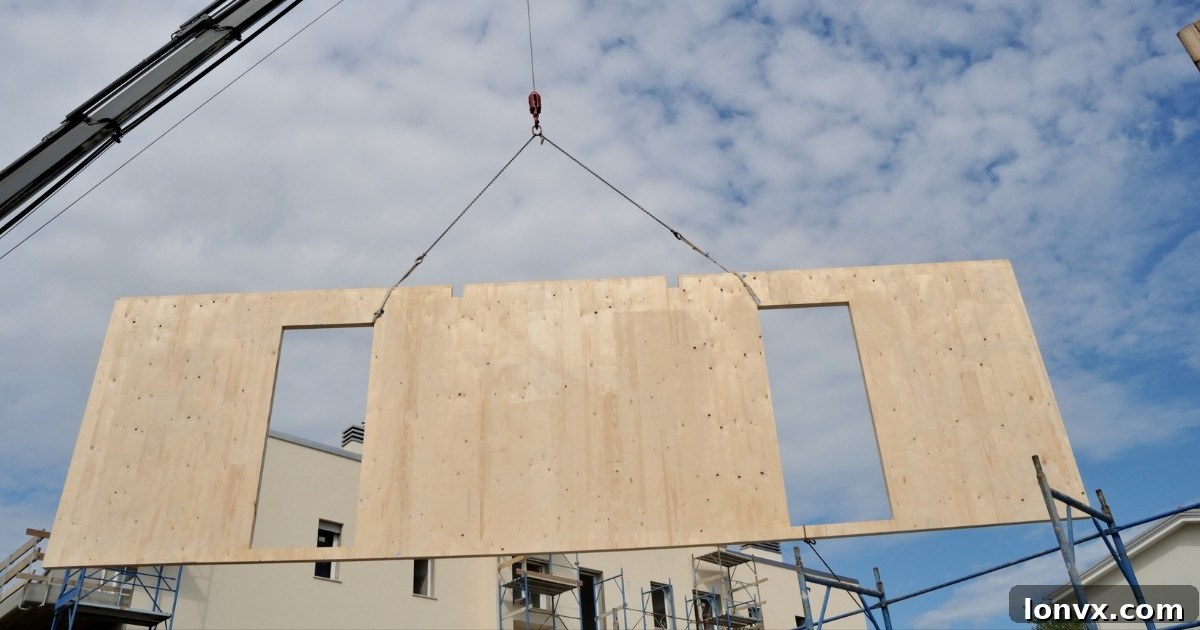
The landscape of the Canadian housing market is undergoing a significant transformation, marked by an undeniable surge in interest for prefabricated homes. As a lender deeply embedded in this evolving sector, we’ve observed a palpable increase in inquiries about financing options for these innovative housing solutions. This trend has prompted us to delve extensively into the complexities and challenges clients face, allowing us to better understand their needs and refine our support mechanisms.
From the perspective of real estate agents, the past few years have presented a formidable set of hurdles. Fluctuations in housing demand, volatile interest rates, and escalating home prices have collectively created a difficult environment, particularly for first-time buyers and those looking to upgrade or relocate. Compounding these market dynamics are persistent obstacles such as restrictive zoning laws, bureaucratic regulatory red tape, and occasional neighbourhood resistance, all of which contribute to a widening gap in housing supply and affordability across the nation.
However, amidst these challenges, a promising new trend has emerged: factory-built prefabricated homes, including modular constructions. These modern housing solutions are gaining significant traction, primarily due to their promise of faster construction timelines and reduced costs compared to traditional on-site building methods. This makes them an attractive proposition for both developers seeking efficiency and buyers striving for affordability.
The growing momentum behind prefab housing is not merely market-driven; it receives substantial impetus from governmental initiatives. The federal government’s new ‘Build Canada Homes’ program, supported by recent budget commitments, exemplifies this push. This ambitious program aims to facilitate the financing and installation of 4,000 prefab units on federal land, with an impressive capacity to expand to another 45,000 units. Such initiatives are widely lauded as a critical step toward alleviating Canada’s severe housing crisis.
While a significant portion of these initial units are intended for non-market, public housing, the scalability and efficiency gains achieved through mass production are expected to have a trickle-down effect on the private market. This could lead to an increasing number of prefabricated homes appearing on MLS listings in communities nationwide, presenting new opportunities for real estate professionals and expanding choices for homebuyers.
Despite the immense inventory potential these homes offer to agents, lenders must meticulously assess the inherent risks associated with financing prefabricated properties. Unlike conventional site-built homes, prefab units come with a unique set of conditions that can introduce complexity into the mortgage approval process. Understanding these nuances is crucial for both agents and clients navigating this evolving market.
To provide clarity, let’s explore how financing for prefabricated homes compares to traditional on-site builds. This detailed comparison will equip you to guide your clients effectively, whether they pursue a straightforward financing path or one that requires more intricate maneuvering.
Understanding the Foundation: Owned vs. Leased Land
A fundamental question that dictates the financing trajectory for any prefabricated home buyer is whether the home will be situated on land they own outright or on leased land. This distinction is paramount for lenders and has significant implications for the type of mortgage available.
If the prefabricated home is placed on land that the buyer owns, classifying it as real property akin to a typical house, the mortgage approval process can mirror that of a site-built home. In these scenarios, lenders assess factors such as the home’s location, the borrower’s creditworthiness and financial profile, and crucial prefab-specific requirements. A key condition often includes adherence to recognized building compliance standards, such as CSA certification in Canada, ensuring the unit meets rigorous safety and construction benchmarks. When these conditions are met, buyers can typically access a broader range of traditional mortgage products, offering competitive rates and terms.
Conversely, prefabricated homes erected on leased land are treated very differently from a financing perspective. In such instances, buyers commonly require a ‘chattel mortgage.’ A chattel mortgage is essentially a personal property loan, bearing more resemblance to auto financing than a traditional real estate mortgage. The primary reason for this distinction is that the land, which is typically the most substantial form of collateral in a real estate transaction, is not owned by the buyer and therefore cannot be part of the loan’s security. This significantly limits the number of lenders willing or able to offer such loans, often resulting in less favourable terms for borrowers.
Many mobile, manufactured, or modular homes are frequently located on leased land. This arrangement often arises when landowners choose to generate revenue by developing communities that offer more affordable and efficient housing options, or by catering to a modern lifestyle choice, such as in certain recreational or retirement communities. While these arrangements can lower the initial barrier to entry for homebuyers, they introduce distinct challenges in securing long-term financing and building equity.
Navigating Mortgage Options: Standard vs. Chattel
For buyers considering a prefabricated home on owned land (real property), securing a standard mortgage is often achievable, provided the home satisfies several critical conditions. These criteria are designed to ensure the property meets lending standards for long-term real estate investment:
- The unit must be permanently affixed to a robust foundation, making it non-movable. This ensures its classification as real property rather than a temporary structure.
- It must meet stringent CSA (Canadian Standards Association) certification standards for construction, safety, and energy efficiency. This guarantees the home’s quality and compliance with national building codes.
- The home must be either already installed or within a clear, defined timeframe for completion, typically within 120 days, similar to the requirements for conventional site-built construction loans.
- An independent appraisal must confirm the home’s market value and demonstrate strong resale potential, assuring the lender of its long-term investment viability.
Ultimately, the buyer’s overall financial profile—including credit score, income, and debt-to-income ratio—remains a pivotal factor in the final approval process, regardless of the property type.
Clients whose prefab homes meet these conditions benefit from access to a wider array of financing providers, including major banks, diverse non-bank lenders, and local credit unions. Engaging an experienced mortgage broker in these situations can be invaluable, as they can navigate the various options to find the most advantageous solution tailored to the buyer’s specific circumstances.
It is worth noting that while traditional big banks offer mortgages for well-qualified prefab properties on owned land, they might exhibit less flexibility or have more rigid requirements. In contrast, non-bank lenders, such as our in-house THINK Financial—a CMHC-approved lender—are often better positioned to consider a broader spectrum of borrower and property situations. These specialized lenders frequently offer competitive mortgage rates and features, providing vital alternatives in a rapidly evolving market.
A chattel loan, required for a prefab home situated on leased land, represents a fundamentally different financial product and is not typically part of standard mortgage brokerage offerings. The characteristics of chattel financing include:
- Such loans are generally not available through conventional mortgage broker channels, due to their nature as personal property loans rather than real estate mortgages.
- Some large banks may offer this type of personal loan, but usually on a very limited basis, often reserved for specific client segments or in conjunction with other banking relationships.
- Buyers may find chattel financing options directly through the landowner or developer of the leased community, or through highly specialized lenders who focus on personal property loans for manufactured homes.
- These loans typically come with higher interest rates and shorter repayment terms compared to traditional mortgages. The terms can also be significantly influenced by the length and conditions of the land lease agreement, adding another layer of complexity for the borrower.
Addressing the Prefab Financing Gap
A significant hurdle that often arises in the prefab housing market is a critical financing gap, particularly during the initial stages of construction. We’ve encountered this challenge firsthand at True North, with a striking example from one of our brokers. A client required a substantial upfront payment to the manufacturer to place an order for her factory-built home, which would then be fabricated and later installed on her chosen site.
The core issue here is that without a completed or nearly completed unit permanently affixed to land, traditional or even many alternative mortgage lenders are unable to provide financing. Their lending models are predicated on the existence of a tangible asset—the completed home and the land it sits on—as collateral. Securing financing through a private lender for this pre-installation phase is also highly unlikely, as the risk profile is simply too high without a physical asset to secure the loan.
This situation powerfully illustrates the limitations in production funding and the restrictive financing options currently available to both prefab builders and buyers. These gaps create bottlenecks that significantly impede the wider adoption and growth of the prefabricated housing market, despite its potential to address housing shortages. Bridging this gap requires innovative financial products, such as specialized construction loans or escrow arrangements, that can support the unique payment schedules of factory-built homes.
Are Prefab Homes the Definitive Answer to Canada’s Housing Crisis?
From a strategic vantage point, prefabricated homes present a compelling array of advantages that position them as a potent solution for Canada’s ongoing housing crisis. Their inherent benefits include often superior cost and energy-efficient designs, dramatically quicker assembly times due to factory-controlled environments, and the practical ease of installation in challenging locations, such as remote communities or dense infill urban sites. On paper, they appear to be the ideal housing fix, offering scalability and efficiency previously unseen in traditional construction.
However, as any seasoned professional in real estate or lending understands, the transition from theory to practice is rarely seamless. The challenges are multi-faceted. Prefab manufacturers and builders cannot simply scale up their operations overnight to meet the monumental demand and significantly alter housing market conditions. There are inherent limitations in production capacity, skilled labor availability, and logistical infrastructure. Furthermore, existing governmental regulations, often designed with traditional construction in mind, frequently need extensive overhaul to reduce friction in both housing development and lending processes, preventing the full potential of prefab from being realized.
Despite these complexities, the trajectory of prefabricated housing is undeniably upward. For real estate professionals—often the first point of contact for aspiring homebuyers—a comprehensive understanding of prefab financing is no longer optional; it is a distinct competitive advantage. By mastering the intricacies of how these non-traditional builds are financed, agents can expertly guide buyers through emerging trends and practical realities. This knowledge empowers them to provide informed advice on what a prefab home could mean for a client’s budget, timeline, and long-term financial goals, ultimately helping to navigate the path toward homeownership in a changing market.