
Navigating the Modern Rental Landscape: Strategies for Property Managers to Enhance Tenant Satisfaction and Community Amid Rising Rents
The global rental market is undergoing significant transformation, with a staggering 75% of tenants worldwide reporting that escalating rental costs have negatively impacted their quality of life. This presents a critical opportunity for property managers to distinguish themselves, not only through competitive pricing but also by strategically leveraging technology to cultivate superior tenant satisfaction and enduring loyalty.
A comprehensive global survey conducted by Capterra, encompassing 4,800 tenants across 12 countries (including 400 respondents from Canada), delved into tenants’ experiences and perceptions. The findings reveal a complex interplay of factors shaping the contemporary rental landscape, from the pervasive issue of rising rental costs to localized challenges such as neighborhood disturbances and fundamental tenant satisfaction concerns. Crucially, the survey underscores an urgent need for property managers to embrace innovative technologies and advanced property management tools to enrich the tenant experience, especially as external economic pressures continue to fuel rent increases.
Rising Rents Driven by Short-Term Rentals: A Global Concern
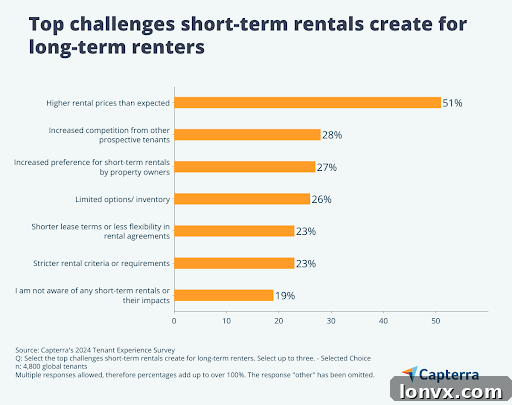
A significant proportion of the global tenant population, specifically 51%, expresses deep concern that the proliferation of short-term rental properties is directly contributing to an upward spiral in rental prices. This sentiment is notably mirrored within Canada, where a comparable level of apprehension exists.
Among Canadian tenants who are intimately familiar with this issue, a substantial 44% firmly believe that the expansion of short-term rental options has acted as a potent catalyst, substantially driving up local rent prices. This perception highlights a growing tension within communities as long-term residents face increasing pressure from market forces driven by transient occupancy.
Escalating Rent Dissatisfaction Among Canadian Tenants
The challenge of high rental costs is a widespread global issue, impacting 34% of tenants worldwide. This translates into considerable dissatisfaction, with 36% globally expressing unhappiness with their current rent payments. In Canada, this dissatisfaction is even more pronounced, with 39% of tenants reporting unhappiness with the amount they pay for rent, indicating a particularly acute affordability crisis in the region.
Further compounding this, a resounding 76% of tenants globally concur that the continuous rise in rental prices has had a tangible, negative impact on their overall standard of living. These figures serve as a stark reminder of the financial strain tenants endure. For property managers, this data underscores the critical imperative of cultivating robust, long-term relationships with tenants. This can be achieved through unwavering transparent communication regarding pricing and policies, coupled with the implementation of fair and competitive pricing strategies designed to foster trust and stability within the rental community.
Impact of Short-Term Rentals on Neighbourhood Dynamics and Community Wellbeing
Beyond the financial strain, the growth of short-term rentals also exerts considerable pressure on the social fabric and daily life within residential neighborhoods. The Capterra report sheds light on several key areas of concern:
- Noise Issues: A significant 30% of tenants globally report experiencing increased noise disturbances directly attributable to short-term rental activities. This often stems from transient guests with different expectations of residential living, leading to disrupted peace and quiet for long-term residents.
- Parking Problems: Approximately 29% of tenants cite growing parking difficulties. The influx of vehicles from short-term renters frequently overwhelms existing parking infrastructure, leading to congestion, competition for spaces, and frustration among permanent residents.
- Safety Concerns: Around 24% of tenants express heightened safety concerns. A constant turnover of unfamiliar faces can diminish the sense of security and community vigilance that residents rely on, potentially impacting neighborhood safety.
- Changes in Neighbourhood Character: A notable 23% of tenants observe significant alterations in the fundamental character of their neighborhoods. This can manifest as a loss of community cohesion, the replacement of local services with tourist-oriented businesses, and an overall shift from residential tranquility to a more transient, commercialized atmosphere.
These findings strongly suggest that property managers must adopt proactive community engagement strategies to effectively address these multifaceted issues. By fostering open dialogue, implementing clear guidelines, and actively seeking solutions, property managers can play a pivotal role in preserving a sense of community, mitigating disruptions, and ultimately enhancing overall tenant satisfaction for their long-term residents.
Other Key Findings Shaping the Rental Market Dialogue
The Capterra report also illuminated several other crucial insights that speak to tenant priorities and potential solutions in the current rental climate:
- Support for Rent Control: A substantial 40% of tenants worldwide advocate for the implementation of rent control measures. This widespread support reflects a deep-seated desire for greater stability and affordability in housing, signaling that many tenants feel vulnerable to unchecked market forces. While rent control remains a contentious policy, its broad appeal underscores the urgency of addressing rental affordability.
- Incentives for Timely Payments: Approximately 30% of tenants express a preference for discounts or incentives for making timely rent payments as a strategy to combat inflation. This highlights a practical approach that benefits both tenants (through savings) and property managers (through consistent cash flow and reduced administrative burden of arrears). Such programs can foster positive tenant behavior and strengthen the landlord-tenant relationship.
- Value of Home Security Systems: A significant 31% of tenants indicate a willingness to pay higher rent for properties that are equipped with robust home security systems. This finding emphasizes the high premium tenants place on safety and peace of mind. For property managers, investing in modern security solutions is not just an amenity but a value-added feature that can justify slightly higher rents and attract more desirable tenants, demonstrating a commitment to tenant well-being.
These additional findings provide property managers with actionable intelligence, suggesting avenues for developing tenant-centric policies, innovative incentive programs, and property enhancements that directly address the most pressing needs and desires of today’s renters.
How Property Managers Can Strengthen Neighbourhood Communities and Enhance Tenant Life
The report offers actionable strategies for property managers to not only mitigate the negative impacts of rising rents and short-term rentals but also actively cultivate stronger, more harmonious residential communities. By focusing on these six pillars, property managers can significantly enhance tenant satisfaction and foster long-term loyalty:
1. Enhance Security Measures and Foster Community Watch
Prioritizing the safety and security of residents is paramount. Property managers should invest in state-of-the-art security systems, including high-resolution surveillance cameras in common areas and at entry points, and robust access controls such as keyless entry or smart lock systems for individual units. Beyond technology, actively foster a “community watch” culture by encouraging residents to report suspicious activities, perhaps through a dedicated app or communication channel. Regular security audits and visible patrols can also deter crime and provide residents with peace of mind, making the community feel safer and more cohesive.
2. Address Congestion and Optimize Parking Solutions
Congestion, particularly related to parking, is a common source of tenant frustration. Implement effective traffic calming measures within the property grounds, such as speed bumps or clear signage. Develop and enforce designated parking spots, which might include resident-only parking, guest parking areas, and potentially a permit system. For larger properties, consider smart parking solutions that can guide residents to available spots or even offer car-sharing options. Clear communication regarding parking rules and regular enforcement can significantly alleviate stress and improve daily living for tenants.
3. Minimize Noise Disturbances Through Proactive Management
Noise is a major contributor to tenant dissatisfaction, especially in areas with mixed long-term and short-term rentals. Property managers should clearly enforce quiet hours, making sure all tenants and guests are aware of the rules upon moving in. Investing in soundproofing solutions, such as double-paned windows or improved wall insulation, in common areas or between units can be a significant enhancement. Establish a clear, responsive process for tenants to report noise complaints and ensure timely intervention and resolution, demonstrating that their comfort is a priority.
4. Improve Waste Management and Promote Environmental Responsibility
Efficient and responsible waste management is crucial for maintaining a clean and healthy living environment. Ensure that trash collection services are regular and adequate for the number of residents. Provide easily accessible and clearly marked recycling facilities, and where possible, consider implementing composting programs. Educate tenants on proper waste sorting and disposal practices. Organized community clean-up days or incentives for reducing waste can also instill a sense of shared responsibility and pride in the property’s appearance.
5. Preserve Neighbourhood Character Through Resident Engagement
The unique character of a neighborhood contributes significantly to its appeal and residents’ sense of belonging. Property managers can engage tenants in beautification projects, such as community gardens, murals, or landscaping initiatives, fostering a shared sense of ownership. Organize community events that celebrate local culture, history, or holidays, which can help reinforce the neighborhood’s identity. Encourage respectful interaction among residents and work to maintain the aesthetic and social values that define the community, especially in the face of transient populations.
6. Build Strong Community Ties and Foster Inclusivity
A thriving community is built on strong relationships. Property managers can facilitate this by partnering with local businesses to offer exclusive discounts or services to tenants, creating a symbiotic relationship between the property and the surrounding area. Organize diverse community service projects, such as food drives or environmental clean-ups, that allow residents to work together for a common cause. Promote diversity and inclusivity through events, communications, and policies, ensuring that all residents feel welcome and valued. Establishing a central communication platform (e.g., a community app) can also facilitate interactions, announcements, and group activities, truly building a welcoming and interconnected environment.
The Indispensable Role of Technology in Modern Property Management
In today’s dynamic rental market, technology is not just an advantage but a necessity for property managers striving to meet the evolving demands of tenants and operational efficiency. Integrated property management software (PMS) platforms are central to streamlining operations, from automated rent collection and lease management to efficient maintenance request systems and tenant communication portals. These systems drastically reduce administrative burdens, allowing property managers to focus more on strategic initiatives and tenant relations.
Furthermore, smart home technology within rental units is becoming an expectation, not a luxury. Smart thermostats, lighting controls, and integrated security systems enhance tenant convenience, reduce utility costs, and provide an added layer of safety. Property managers can leverage these technologies to offer premium amenities, justifying competitive rent prices and attracting tech-savvy tenants. Beyond the units themselves, community apps and online platforms foster real-time communication, enabling instant announcements, event scheduling, and a forum for residents to connect and report issues efficiently. This digital infrastructure enhances community cohesion and streamlines problem-solving.
Data analytics, powered by technology, offers property managers unparalleled insights into market trends, tenant preferences, and operational performance. By analyzing this data, managers can make informed decisions on pricing strategies, identify areas for improvement in services, and even predict potential tenant turnover. The judicious application of technology allows property managers to not only react to market changes but proactively shape a positive and sustainable living experience for their tenants, ensuring long-term success and tenant loyalty in an increasingly complex real estate landscape.
Conclusion: Seizing the Opportunity for Excellence in Property Management
The contemporary rental market presents both significant challenges and unparalleled opportunities for property managers. While rising rents and the impact of short-term rentals underscore the financial and social pressures facing tenants globally, these very challenges highlight the critical role property managers play in shaping positive living experiences. By embracing a tenant-centric approach, characterized by transparent communication, fair pricing, and proactive community engagement, property managers can build trust and foster lasting relationships.
The Capterra report unequivocally demonstrates that tenants value security, efficient neighborhood management, and a strong sense of community. Property managers who strategically invest in technology—from advanced property management software and smart home solutions to robust communication platforms—are best positioned to meet these evolving expectations. By integrating these technological advancements with thoughtful, human-centered strategies for enhancing security, addressing congestion, minimizing disturbances, improving waste management, preserving neighborhood character, and actively building community ties, property managers can transform properties into thriving, desirable homes.
Ultimately, the future of successful property management lies in a holistic approach that leverages innovation to create efficient operations, while simultaneously prioritizing the well-being and satisfaction of its residents. Those who adapt to these shifting dynamics will not only navigate the complexities of the modern rental landscape but will also emerge as leaders, building vibrant communities and securing enduring tenant loyalty.
Review the full Capterra report here.
Enjoying this article?
Get the latest industry articles in your inbox 3x week so you stay up to date on the latest in the Canadian real estate industry.