
The real estate landscape across Quebec presented a tale of two distinct markets last month, with significant divergence observed between the province’s two largest metropolitan areas. While the Quebec City Census Metropolitan Area (CMA) experienced one of its most robust Octobers in over two decades, characterized by tight conditions favoring sellers and consistently rising prices, the Montreal CMA encountered a more challenging period, registering its second-lowest transaction volume for the month in 23 years. This contrast underscores the varied economic and demographic factors influencing regional housing markets within Canada, offering critical insights for prospective buyers, sellers, and investors.
Quebec City CMA: A Bastion of Market Strength Amidst National Headwinds
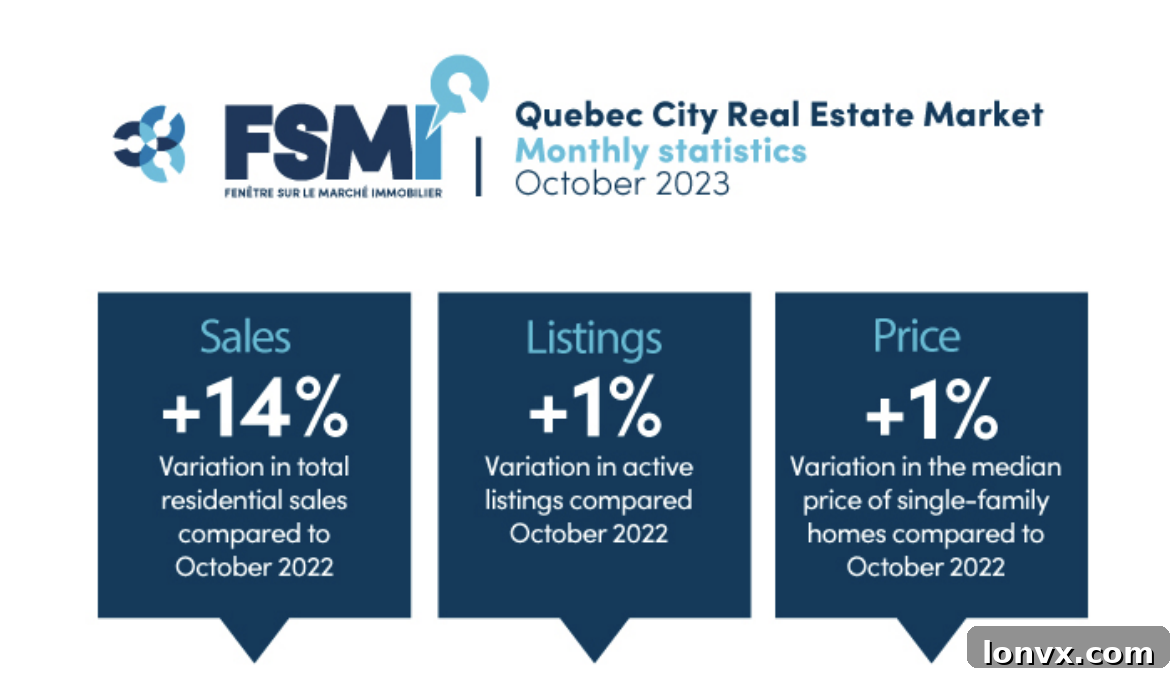
The Quebec City real estate market continues to defy broader economic slowdowns, showcasing remarkable resilience. According to the Quebec Professional Association of Real Estate Brokers (QPAREB), the Quebec City CMA recorded an impressive 729 residential sales in October, marking a substantial 14 percent increase compared to the same period last year. This performance represents the third-best October in the past 23 years, solidifying its position as a vibrant seller’s market.
This enduring strength, as highlighted by Charles Brant, QPAREB market analysis director, is deeply rooted in the region’s robust economy. Unlike some other major Canadian markets grappling with affordability crises, Quebec City benefits from property prices that remain comparatively accessible, experiencing more gradual and sustainable growth. However, Brant cautions that sustained aggressive price increases could alter this dynamic, potentially attracting speculative investment despite elevated interest rates, which could be detrimental to long-term market stability and affordability for primary homebuyers.
Impressive Growth Across Property Categories
The most striking growth was observed in small income properties, which saw a remarkable 42 percent jump in sales with 61 transactions. This surge suggests a strong interest from investors or individuals looking for multi-unit dwellings, potentially driven by stable rental demand in the region. Active listings in the Quebec City CMA totaled 3,029, a modest 3 percent increase year-over-year, indicating that supply remains relatively constrained despite the slight uptick. The average selling time for small income properties extended slightly to 65 days, five days longer than October 2022, suggesting a nuanced shift in buyer behavior or property specific factors.
Source: QPAREB
Median prices in Quebec City continued their upward trajectory, albeit with some variation across property types. Single-family homes saw a 1 percent increase from October 2022, reaching a median price of $350,000. Condominiums experienced a more significant 4 percent rise, with a median price of $249,000, underscoring their growing appeal, particularly for first-time buyers or those seeking more compact living solutions. In contrast, plexes registered a 9 percent decrease in their median price, settling at $385,000. This could be an anomaly or reflect specific localized market adjustments within the multi-unit segment.
Montreal CMA: Navigating a Period of Rebalancing and Caution
In stark contrast to Quebec City, the Montreal Census Metropolitan Area (CMA) experienced a significant slowdown in its real estate market. October marked the second-lowest transaction level for the month in 23 years, signaling a period of adjustment. A key development was the return of active listings to pre-pandemic levels for the first time, offering buyers more choices than in recent years. Despite this increase in inventory, the market still largely favors sellers, as evidenced by continued price appreciation across most categories.
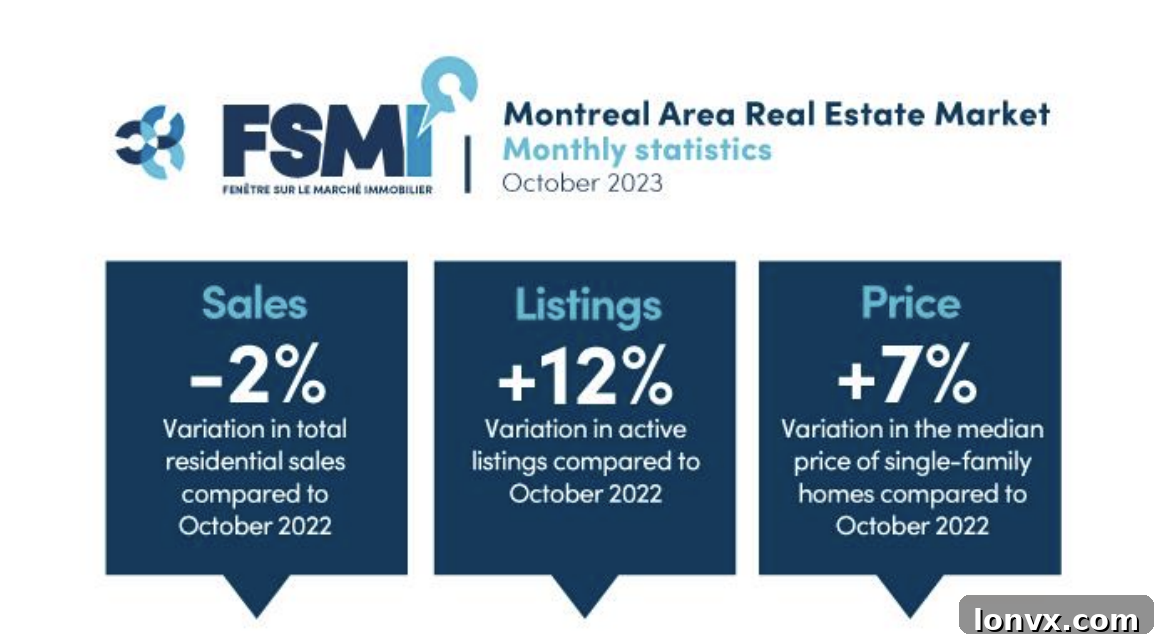
QPAREB reported a total of 2,675 sales in the Montreal CMA for October, representing a 2 percent decrease compared to the previous year. Charles Brant attributes this deceleration to a confluence of factors, including fewer active buyers, a sense of heightened caution, and a deferment of purchasing plans among potential homeowners. Economic uncertainties, the rapid slowdown of the economy, and increased difficulty in accumulating or maintaining sufficient savings have all contributed to this cautious sentiment.
Impact of Interest Rates and Economic Uncertainty
The elevated interest rate environment has played a pivotal role in shaping buyer behavior in Montreal. Fixed interest rates, now the preferred choice for most new mortgages, have remained well above 6 percent for shorter-term mortgages since September. This significantly restricts the ability of many prospective buyers to qualify for conventional lending, thereby dampening demand. Brant further noted that the Bank of Canada’s decision to pause its key rate increases did not have the stimulating effect on demand that was observed during previous pauses. This suggests that the current market dynamics are influenced by deeper structural factors and consumer confidence issues beyond just the immediate interest rate adjustments.
The resultant increase in the number of properties on the market, reaching levels not seen since before the pandemic, is a significant shift. This higher inventory is conducive to market rebalancing, potentially leading to a plateauing or even a decline in prices in the coming months. It also creates a more favorable environment for experienced buyers who possess sufficient equity to mitigate the need for substantial mortgage financing, allowing them greater choice and stronger negotiating positions.
Regional Variations and Property Performance
While the overall Montreal CMA saw a decline in sales, certain sub-regions bucked the trend. The Island of Montreal and the South Shore of Montreal registered transaction increases of 7 percent (1,022 transactions) and 8 percent (654 transactions), respectively, compared to the same period last year. This suggests sustained demand in core urban areas and established suburban hubs. In contrast, other regions experienced notable sales declines: the North Shore of Montreal (607 sales, down 12%), Laval (235 sales, down 17%), Vaudreuil-Soulanges (105 sales, down 19%), and Saint-Jean-sur-Richelieu (52 sales, down 30%). These regional disparities highlight the uneven impact of market conditions and economic pressures across the vast Montreal CMA.
Source: QPAREB
Total active listings across the Montreal CMA surged by 12 percent year-over-year, reaching 17,518. This inventory level is the highest recorded since the summer of 2019, signifying a substantial increase in choices for potential buyers. The average selling time for small income properties increased to 60 days, seven days longer than in October 2022, aligning with the trend of a slower market. Despite the slowdown in sales and rising inventory, median prices in all property categories continued to grow compared to the previous year. Single-family homes saw a 7 percent increase, reaching $545,000. Plexes jumped by 5 percent to $735,000, and condominiums rose by 3 percent to $390,000. This sustained price growth in a market with increased inventory and fewer transactions indicates that while buyer activity has decreased, underlying demand and seller expectations remain strong, contributing to the “seller’s market” designation despite changing dynamics.
Broader Implications and Future Outlook for Quebec’s Real Estate
The contrasting performances of the Quebec City and Montreal CMAs offer a microcosm of the diverse real estate trends often seen across Canada. Quebec City’s relative affordability, stable economic base, and perhaps a less intense speculative environment have allowed it to maintain strong momentum. Its gradual price growth and robust sales figures paint a picture of sustainable demand, though experts rightly point to the need for vigilance against the risks of overheating.
Montreal, on the other hand, is navigating a more complex period. As a larger, more international market, it is more susceptible to the ripple effects of national economic policies, particularly interest rate hikes, and global uncertainties. The return of pre-pandemic inventory levels is a crucial development, signaling a potential shift towards a more balanced market. While prices continue to climb, the increasing days on market and the decline in transaction volumes suggest that the pace of growth is decelerating. This could offer a window of opportunity for buyers who have been sidelined by the frenzied competition of recent years, particularly those with strong equity positions.
For prospective homeowners and investors in both regions, understanding these nuanced market conditions is paramount. In Quebec City, careful consideration of price sustainability and the potential for increased competition from investors will be key. In Montreal, patience and strategic planning may yield better outcomes, as increased inventory could lead to more negotiation power and a wider selection of properties. The influence of the Bank of Canada’s monetary policy, inflation trends, and overall consumer confidence will continue to be significant determinants of market direction in the coming months. As these dynamics unfold, both CMAs will offer valuable insights into the adaptability and resilience of the Quebec real estate market.