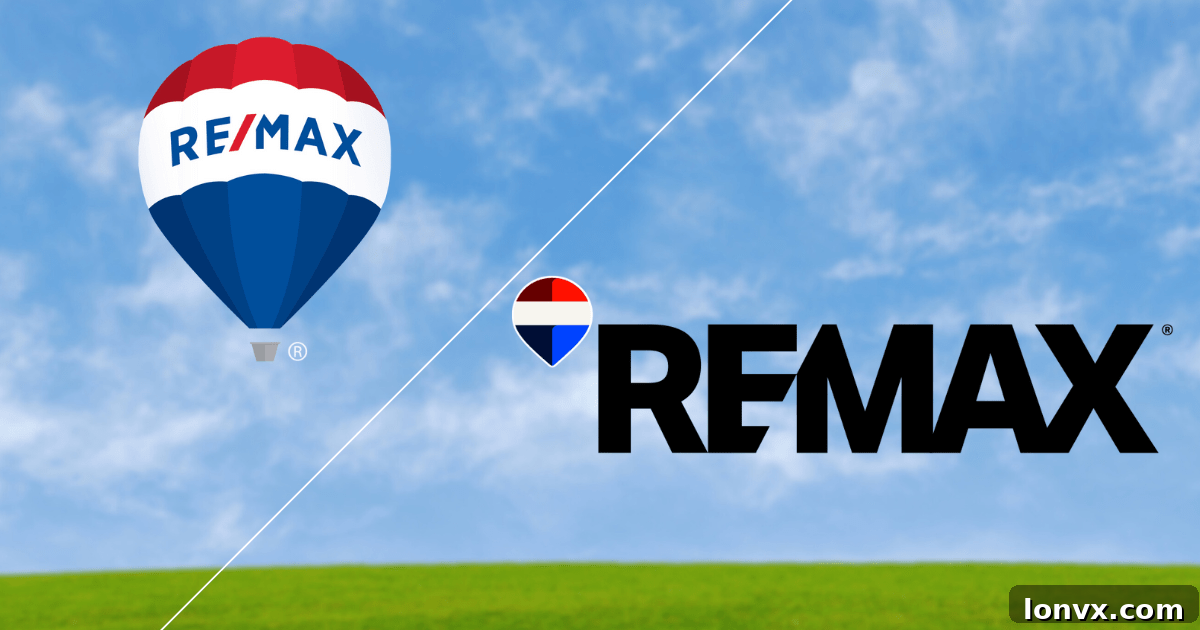
Out with the old and in with the new; Re/Max recently debuts new digital-first logo (right)
The real estate giant Re/Max has navigated a period of significant transformation and strategic recalibration, marking a pivotal start to the year. Moving beyond a series of legal challenges and a complex financial landscape, the company is actively repositioning itself for future growth and market leadership. This strategic pivot underscores a commitment to innovation, adaptability, and an enhanced presence in the digital age, reflecting broader shifts within the competitive real estate industry.
In a concentrated week in February 2025, Re/Max made several significant announcements that collectively paint a picture of a company undergoing profound change. Among these, the most notable were the resolution of a prominent class-action lawsuit concerning commission structures, the strategic launch of a comprehensive digital rebrand, and the disclosure of its 2024 earnings report. The financial results revealed a nuanced performance, including a notable decrease in overall revenue and a decline in its North American agent count, predominantly in the United States.
These corporate developments were closely preceded by news of a key leadership transition. President Christopher Alexander announced his decision to step down from his role, effective March 3. However, Alexander will maintain an advisory capacity, continuing in a consulting role through June 30, ensuring a smooth transition and continuity during this critical period of change. This series of events highlights Re/Max’s proactive approach to addressing both internal and external pressures, setting the stage for a revitalized future.
Despite the recent turbulence, industry veterans maintain a strong belief in the foundational strength and enduring appeal of the Re/Max brand. Braden Wheatcroft, a seasoned broker/owner of Re/Max Camosun in Victoria, B.C., expressed confidence in the company’s trajectory. He noted, “Under the leadership in place…and the rest of the team, we have done a great job with our region being as much on the cutting edge as possible.” Wheatcroft further emphasized the brand’s solid reputation among consumers: “When you read the stats, it’s just empirically true; the home buying and home selling population look at Re/Max agents in a really nice light.” This sentiment underscores the inherent value of the Re/Max network, even as the corporation adapts to a dynamic market environment and navigates its ongoing evolution.
Legal Challenges and Financial Turbulence: Navigating Industry Headwinds
The real estate industry has faced increasing scrutiny over its traditional commission structures, leading to significant legal challenges for many established brokerage firms. Re/Max found itself at the forefront of this shift, undertaking a move that sent ripples across the industry. In a surprising development, the company announced a settlement in two class-action lawsuits related to commission structures, agreeing to pay $5.5 million USD (approximately $7.8 million CAD). While the settlement aims to resolve these legal distractions and allow the company to focus on its core business, Re/Max has firmly maintained its stance, strongly denying any wrongdoing in the matters. This settlement reflects a broader industry trend towards re-evaluating and potentially reforming agent compensation models, indicating a complex future for real estate transactions.
This legal resolution arrived after a fiscally challenging year for the company. Re/Max’s 2024 financial report painted a picture of economic headwinds, with the company reporting a 5.5 percent decrease in revenue, bringing the total to $307.7 million. This downturn reflects the broader market slowdown experienced across North America, characterized by higher interest rates, reduced housing affordability, and more cautious consumer spending. The earnings report also highlighted a decline in the combined agent count across Canada and the U.S., which fell by approximately 5 percent to just under 76,000 agents. This reduction in the agent workforce is particularly noteworthy, signaling potential shifts in agent retention and recruitment strategies amid a tightening market.
A more granular look at the agent count reveals a distinct geographical disparity: all reported agent losses occurred within the United States market, indicating specific challenges or saturation in those regions. In contrast, Canada experienced a marginal gain of three agents, suggesting a more stable, or even slightly growing, presence north of the border. This localized resilience in Canada offers a glimmer of optimism amidst the broader agent attrition. Despite the revenue challenges and agent count fluctuations, the financial report was not without its silver linings. It detailed positive indicators such as slightly improved profitability and stable operating efficiency. These metrics suggest that while top-line growth faced obstacles, Re/Max’s underlying operational health remained sound, with management effectively controlling costs and maintaining a lean infrastructure, positioning the company for a potential rebound as market conditions stabilize.
Rebranding for a Digital-First Future: A Strategic Vision
Against a backdrop of leadership transitions, significant legal settlements, and a mixed financial performance, Re/Max’s decision to launch a comprehensive digital rebrand appears exceptionally well-timed and strategically astute. This rebrand is far more than a simple aesthetic update; it represents a forward-looking commitment to a digital-first strategy, acknowledging the paramount importance of online presence and mobile accessibility in today’s consumer-driven real estate market. It’s a clear signal that Re/Max is adapting its visual identity to resonate with a new generation of buyers and sellers who primarily interact with brands through digital platforms.
The core of this rebrand lies in a refreshed logo and a simplified typeface. The iconic Re/Max balloon graphic, a symbol instantly recognizable worldwide, has been subtly modernized, adopting a sleeker, more minimalist aesthetic. Simultaneously, the logotype has been condensed, moving towards a cleaner, more contemporary sans-serif font that enhances readability across various digital screens and formats. This strategic update marks the second major rebrand for Re/Max within the last decade, following a previous update in 2017, demonstrating the company’s continuous effort to evolve its image. Notably, it signifies only the third time the typeface has been altered and the fourth iteration of the famous Re/Max balloon since its inaugural debut in 1978, highlighting the significance and careful consideration behind each brand evolution.
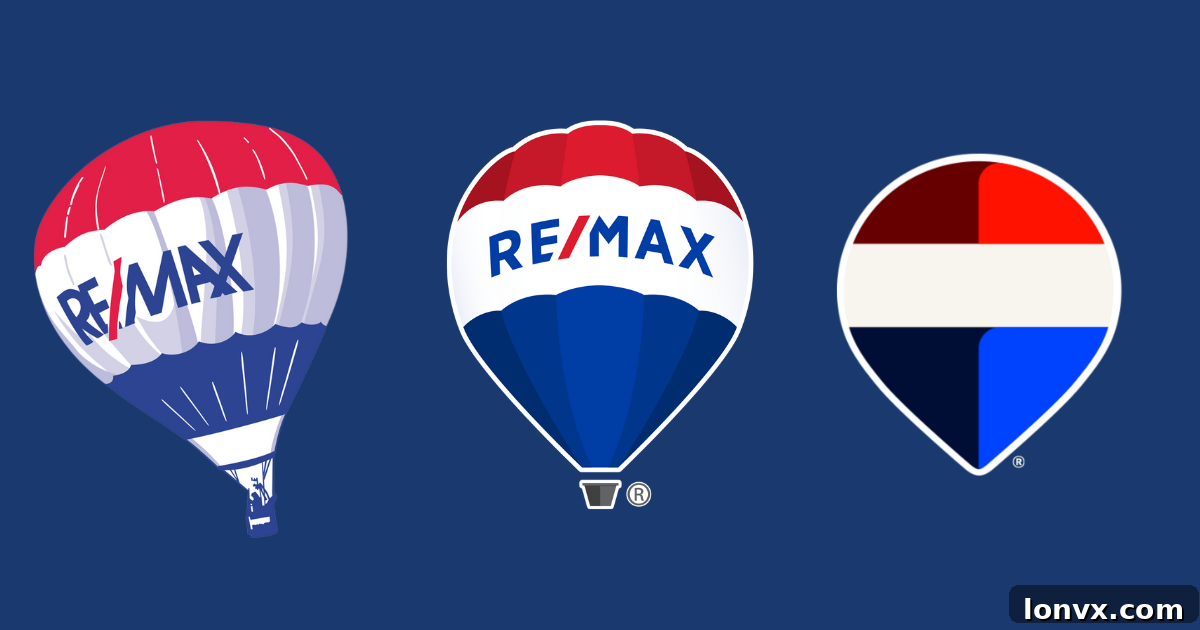
The evolution of the Re/Max brand
Industry experts are quick to point out that this new visual identity, while timely, has been meticulously crafted to connect with modern consumers. Jenna Jacobson, an assistant professor at Toronto Metropolitan University’s Ted Rogers School of Retail Management, offered insights into the rationale behind the rebrand. She emphasized the strategic focus on brand presence, stating, “The rebrand speaks to the brand presence and what consumers are going to be seeing.” Jacobson also highlighted the potential for the rebrand to strategically divert attention from recent challenges: “The vast majority may not be aware or concerned with the legal challenges.” This suggests that a strong, refreshed brand image can help maintain positive consumer perception even when the company faces internal or external hurdles.
Jacobson further elaborated on the extensive research and consumer psychology that underpin such a significant design overhaul. She noted the rebrand’s alignment with prevailing visual trends, specifically citing the adoption of sans-serif typography, flat icons, and high-contrast visuals. These elements are not merely stylistic choices; they are functional decisions designed for optimal performance on digital and social media platforms, where crispness, clarity, and rapid recognition are key. “It’s pretty obvious that it’s not a whole total rebrand that you wouldn’t recognize. It’s updating its existing rebranding to be more modern, to reflect current typographic and visual trends,” Jacobson explained. She concluded with an affirmative assessment of the execution: “These are things that look good on social and digital platforms. The rebrand does look good. It’s well-executed,” underscoring its efficacy in a digitally-dominated landscape. This digital-first approach ensures that Re/Max’s brand assets are optimized for maximum impact and engagement across all online touchpoints, from social media campaigns to agent websites and mobile applications.
Agents Embrace Refreshed Identity: Boosting Morale and Market Presence
The launch of Re/Max’s revitalized branding effort follows closely on the heels of similar strategic moves within the competitive real estate landscape. Less than a year prior, competitor Sutton Realty introduced its own refreshed logo, aiming to inject new energy and innovation into its long-established market presence. This trend underscores a broader industry recognition of the importance of modernizing brand identity to remain relevant and attractive to both consumers and real estate professionals alike. Such updates are crucial for maintaining a competitive edge in a rapidly evolving market, where visual appeal and brand perception significantly influence client choice.
For local broker/owners like Braden Wheatcroft, the timing of Re/Max’s rebrand proved to be particularly serendipitous. His office was already in the midst of considering its own branding refresh, making the corporate-level update a welcome and timely development. Wheatcroft immediately embraced the new design, noting a palpable eagerness among his agents to integrate the refreshed identity into all aspects of their marketing and outreach. This enthusiasm highlights the practical benefits of a modernized brand for individual agents, providing them with updated tools and a renewed sense of pride in their affiliation. Agents are quickly adopting the new look across a wide array of materials, including digital marketing campaigns, prominent physical signage, park benches, and promotional posters, ensuring a cohesive and contemporary market presence.
Wheatcroft articulated the delicate balance involved in updating a legacy brand while preserving its inherent recognition. “It’s a much fresher, modern take on what is quite an old logo,” he observed. He further elaborated on the complexities: “It’s tricky to navigate. How do you take a brand that has 50 years of brand identity behind it that is extremely well-recognized but modernize it so it doesn’t look out of place in the marketplace and going forward?” His assessment is that Re/Max has successfully navigated this challenge. “I think they’ve accomplished that,” he stated, commending the thoughtful execution that allows the brand to retain its storied heritage while projecting a contemporary and forward-looking image. This acceptance and enthusiasm from the agent network are vital, as they are the front-line representatives who ultimately carry the brand’s message to the consumer.
Rebrand Alone Doesn’t Solve Underlying Challenges: The Human Element of Success
Despite his obvious enthusiasm for the refreshed brand identity, Braden Wheatcroft offered a critical caveat, emphasizing that branding alone is not a panacea for fundamental business concerns. While a new logo can invigorate perception, it cannot magically resolve deep-seated operational issues or market challenges. “I think there can sometimes be too much hype around a rebrand,” he wisely cautioned. This perspective underscores the importance of a holistic approach to business strategy, where visual identity supports, rather than replaces, sound operational practices and robust service delivery. A brand is only as strong as the business it represents.
Wheatcroft elaborated on this crucial distinction, stating, “If you have a broken business, a rebrand is not going to fix it.” He quickly clarified that Re/Max does not fall into this category, reassuring that the company possesses a strong foundation. Instead, he views the rebrand as an accelerant for ongoing progress: “We don’t have a broken business. I see this as an opportunity to continue to push forward.” This perspective highlights that a successful rebrand acts as a catalyst, enhancing the efforts of an already sound organization by improving visibility, modernizing appeal, and reinforcing confidence among stakeholders, including agents and clients. It provides a fresh wrapper for existing excellence.
Ultimately, Wheatcroft stressed that success in the highly competitive real estate market remains deeply rooted in the individual efforts and reputations of the agents themselves. While the corporate brand provides a powerful platform and a recognizable framework, it is the dedication, expertise, and client relationships fostered by individual agents that truly drive success. He articulates this philosophy clearly to his team: “I tell my team, ‘It’s about you, it’s how you build your brand on top of the Re/Max brand.’ That’s what this is all about.” This emphasis on agent empowerment and personal branding within the larger corporate umbrella is a testament to Re/Max’s understanding that even the most robust corporate identity must be complemented by strong, independent professionals to thrive in an increasingly personalized and service-oriented industry. The rebrand, therefore, is not an endpoint but a refreshed starting line for Re/Max and its vast network of agents, enabling them to build on a modern foundation while continuing to deliver unparalleled service.