Mastering Real Estate Market Intelligence: Your Competitive Edge in Today’s Information Age
In today’s dynamic and information-saturated real estate landscape, the ability to effectively communicate your unique value proposition has never been more critical or more challenging. The digital revolution has empowered buyers and sellers alike, granting them unprecedented access to a wealth of data with just a few clicks. Consequently, a common perception has emerged: that many consumers feel they possess as much, if not more, knowledge than the average real estate professional. This shift fundamentally alters the traditional agent-client dynamic, pushing agents to evolve beyond mere information providers.
So, how does a real estate agent not only rise above this prevailing mindset but truly distinguish themselves as an indispensable expert? The answer lies in a strategy that is conceptually simple yet profoundly impactful in its execution: transforming raw data into invaluable, actionable market intelligence. Your primary objective must be to deliver insights that transcend readily available information, offering a depth of understanding and strategic guidance that cannot be replicated by a quick online search.
This article will delve into a powerful methodology for achieving this distinction: learning to convert readily accessible local market statistics into sophisticated real estate market intelligence. By mastering this skill, you can equip your clients with a foresight that empowers their decisions and cements your position as their trusted advisor.
The Evolving Role of the Real Estate Professional: Beyond Data Dissemination
For decades, real estate agents were the primary gatekeepers of market information. Access to listings, pricing data, and neighborhood specifics was largely controlled by professionals, making their role central to nearly every transaction. However, the advent of powerful online platforms, syndicated listing services, and readily available public records has democratized access to much of this data. Today’s clients often arrive at an initial consultation armed with property alerts, recent sale prices, and even some neighborhood trend analyses they’ve conducted themselves.
This paradigm shift means that simply providing a list of available homes or reciting average sale prices is no longer sufficient. Agents who continue to operate solely as information conduits risk becoming redundant. The modern real estate professional must embrace a new identity: that of an analyst, a strategist, and a market interpreter. Their value proposition must pivot from “what” the market is doing to “why” it’s doing it, and crucially, “what that means” for their client’s specific goals.
The challenge, therefore, is not a lack of information, but an overwhelming abundance of it. Sifting through this deluge, identifying relevant trends, and translating complex data points into clear, understandable narratives is where the true value of an expert lies. This transformation from data provider to market intelligence specialist is not merely an enhancement of service; it’s a fundamental necessity for sustained success and differentiation in a competitive industry.
From Statistics to Strategy: The Power of Market Intelligence
Market intelligence is the systematic collection and analysis of data about a market, combined with an understanding of its implications. In real estate, this means taking raw numbers—like the number of active listings, pending sales, or median price changes—and interpreting them within the broader economic and local context. It’s about discerning patterns, forecasting potential shifts, and providing strategic advice that goes beyond surface-level facts.
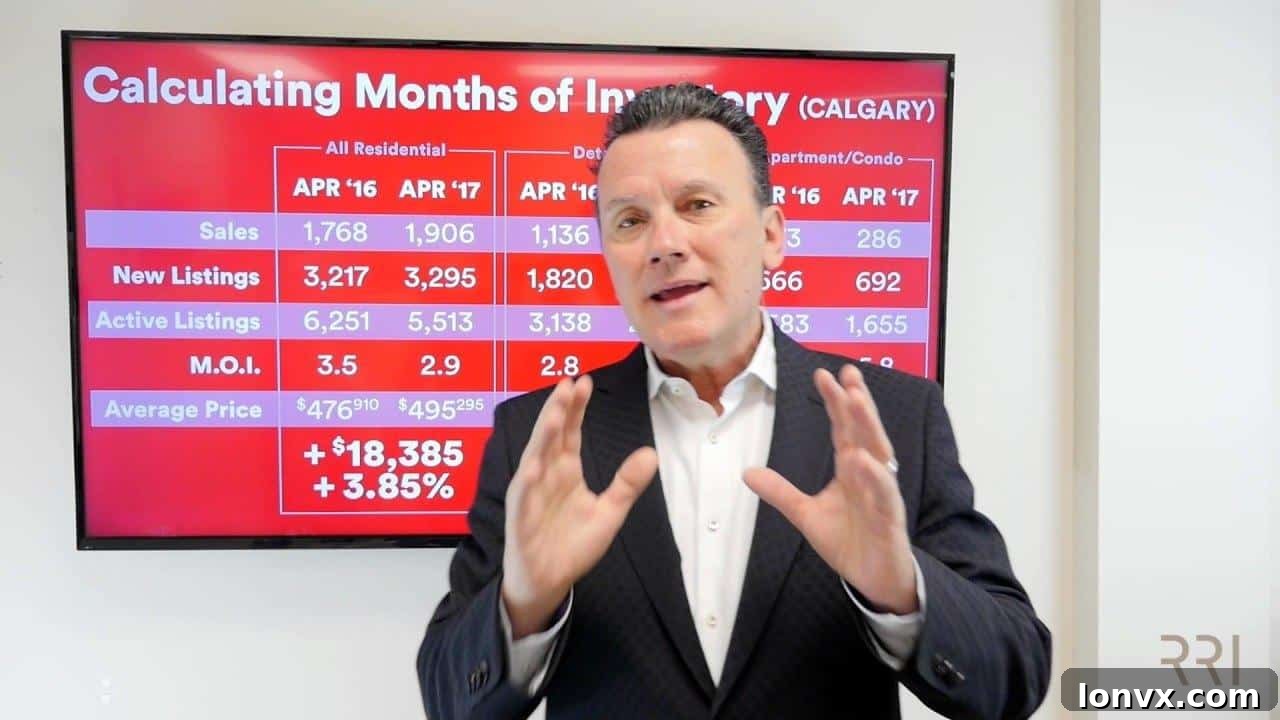
One of the most potent examples of converting readily available statistics into invaluable market intelligence is the calculation and interpretation of the **Months of Inventory (MOI)** in your local market. While the number of active listings or recent sales are important statistics, MOI offers a much deeper insight into the supply-demand dynamics of an area, painting a clearer picture of whether it’s a seller’s market, a buyer’s market, or a balanced market.
Understanding and Calculating Months of Inventory (MOI)
Months of Inventory is a simple yet incredibly powerful metric that quantifies how long it would take for all currently available homes on the market to be sold, given the current rate of sales, assuming no new homes came onto the market. It provides a snapshot of market equilibrium, or lack thereof.
How to Calculate MOI:
- Identify the Number of Active Listings: This is the total number of homes currently for sale in your target market (e.g., a specific neighborhood, zip code, or city). This data is typically available through your Multiple Listing Service (MLS).
- Identify the Number of Homes Sold: Determine the total number of homes that have successfully sold and closed in the same market area over a specific period. A common practice is to use the past 30 days of sales data to capture recent trends, or the past 90 days for a more stable average.
- Calculate the Monthly Sales Rate: If you used 90 days of sales data, divide that number by 3 to get an average monthly sales rate. If you used 30 days, that’s your monthly rate.
- Divide Active Listings by Monthly Sales Rate: The formula is:
Months of Inventory (MOI) = (Number of Active Listings) / (Average Number of Homes Sold Per Month)
Let’s illustrate with an example: If there are 150 active listings in a particular neighborhood and an average of 50 homes sold per month in that same neighborhood, the MOI would be 150 / 50 = 3 months. This number, on its own, is just a statistic. Its true power emerges when you interpret what it signifies.
Interpreting Months of Inventory (MOI) for Strategic Advice
The interpretation of MOI is where an agent truly transforms into a market intelligence expert. Generally, MOI values are categorized as follows:
- 0-4 Months of Inventory: Seller’s Market
In a seller’s market, supply is low relative to demand. Homes typically sell quickly, often with multiple offers and sometimes above asking price. Sellers have more leverage in negotiations. For buyers, this means acting swiftly, making strong offers, and potentially facing competitive bidding situations. - 5-7 Months of Inventory: Balanced Market
A balanced market indicates a relatively equal supply and demand. Homes sell at a reasonable pace, and price negotiations are more equitable between buyers and sellers. This environment often offers a good opportunity for both parties without excessive pressure. - 8+ Months of Inventory: Buyer’s Market
A buyer’s market signals an oversupply of homes relative to demand. Homes tend to sit on the market longer, and buyers have more negotiation power, potentially leading to lower sale prices or more favorable terms. Sellers may need to be more flexible with pricing and incentives to attract buyers.
By understanding and communicating these implications, you provide your clients with tangible insights:
- For Sellers: You can advise on optimal pricing strategies, the urgency of repairs or staging, and realistic expectations for time on market. In a seller’s market, you might push for aggressive pricing and minimal contingencies. In a buyer’s market, you’d counsel on competitive pricing, compelling marketing, and the need for patience or flexibility.
- For Buyers: You can guide them on negotiation tactics, the speed at which they need to make decisions, and the potential for securing a favorable deal. In a buyer’s market, you might encourage bolder offers and more contingencies. In a seller’s market, you’d emphasize preparedness and swift, strong bids.
This level of analysis moves beyond simply stating “prices are up” or “inventory is low.” It explains *why* these conditions exist and, more importantly, *how* your client should strategically navigate them to achieve their specific goals. It transforms abstract numbers into concrete, actionable advice.
Beyond MOI: Expanding Your Market Intelligence Toolkit
While MOI is a foundational metric, a comprehensive market intelligence toolkit includes other statistics that, when interpreted, provide a holistic view of the market:
- Average Days on Market (DOM): Indicates how long properties are typically staying on the market before selling. A declining DOM often points to increasing demand and a hotter market.
- List-to-Sale Price Ratio: Compares the final sale price to the original asking price. A ratio close to 100% or above suggests a strong seller’s market, while a lower ratio indicates more buyer negotiation power.
- Median Sale Price vs. Average Sale Price: Understanding the difference and significance of these two metrics can reveal if a few high-value sales are skewing the overall market perception. Median price often gives a more accurate picture of typical home values.
- Price Per Square Foot: A crucial metric for comparing properties of different sizes and for understanding value density within a specific area.
- Inventory Levels by Price Point and Property Type: Drilling down to specific segments (e.g., condos vs. single-family homes, luxury vs. starter homes) can reveal micro-markets behaving differently from the overall macro market.
- Interest Rate Trends: Explain how changes in mortgage rates impact affordability, buyer demand, and overall market activity.
- Local Economic Indicators: Connect real estate trends to broader economic factors such as employment rates, new business development, population growth, and major infrastructure projects. These provide context and hint at future market direction.
The key is not just to collect these numbers but to weave them into a coherent narrative. How do rising interest rates affect MOI? What does a decreasing DOM alongside a high list-to-sale price ratio tell us about buyer urgency? How might a new corporate headquarters impact future demand and MOI in a specific submarket?
Communicating Intelligence: Becoming the Trusted Advisor
Having brilliant insights is only half the battle; effectively communicating them to your clients is the other. Your goal is to simplify complexity without oversimplifying the message. Here are some strategies:
- Storytelling: Instead of just presenting charts, tell a story with the data. “Based on the 2 months of inventory in this neighborhood, we’re seeing intense buyer competition, similar to what happened in [previous market cycle]. This means we need to position your home aggressively for multiple offers.”
- Visual Aids: Utilize clear, easy-to-understand charts, graphs, and infographics. Visuals can make complex data digestible and memorable. Show trends over time rather than just a single data point.
- Personalized Reports: Tailor your market intelligence reports to each client’s specific needs and goals. A first-time buyer will need different insights than an investor looking for rental properties.
- Empower, Don’t Overwhelm: Present the insights clearly, explain their implications, and then offer your strategic recommendations. Empower clients to make informed decisions, rather than just telling them what to do.
- Proactive Communication: Don’t wait for clients to ask for market updates. Proactively share relevant intelligence. This reinforces your expertise and keeps you top-of-mind.
By consistently delivering this level of nuanced analysis, you build trust and confidence. Clients will see you not just as an agent, but as a knowledgeable partner who understands the intricate forces shaping the market and can guide them through its complexities.
The Path to Becoming an Intelligence-Driven Agent
Embracing this intelligence-driven approach requires commitment and a willingness to continuously learn. Here’s how you can cultivate this essential skill:
- Leverage Your MLS: Your Multiple Listing Service is a treasure trove of data. Learn to navigate its reporting features and extract the raw numbers needed for your analysis.
- Explore Local Data Sources: Beyond the MLS, look to local government planning departments, economic development agencies, university research centers, and reputable real estate news outlets for broader economic and demographic trends.
- Utilize Analytics Tools: Explore real estate analytics platforms or even simple spreadsheet software (like Excel or Google Sheets) to organize, analyze, and visualize your data.
- Stay Curious and Educated: The market is constantly evolving. Dedicate time each week to review new data, read market reports, and understand economic forecasts. Attend webinars and workshops on market analysis.
- Practice, Practice, Practice: Regularly calculate and interpret MOI and other metrics for different areas and property types within your service region. The more you do it, the more intuitive it becomes.
It’s true that transforming raw data into market intelligence takes time and effort. However, the investment pays immense dividends. It elevates your service, strengthens your client relationships, enhances your negotiation prowess, and ultimately establishes you as an indispensable authority in your local real estate market.
Conclusion: Your Invaluable Edge in a Competitive World
In an era where information is abundant and readily accessible, the real estate professional who can distill that information into actionable intelligence possesses an unparalleled advantage. Moving beyond the role of a simple data provider and embracing the role of a strategic market interpreter is no longer optional; it is the cornerstone of sustainable success. By mastering the art of converting statistics like Months of Inventory into clear, client-centric insights, you not only differentiate yourself but also provide a level of value that is truly invaluable.
This commitment to deep market understanding and thoughtful communication will not only help your clients achieve their real estate goals but will also solidify your reputation as a trusted, knowledgeable, and indispensable expert—the agent everyone wants by their side when navigating the complexities of buying or selling property.