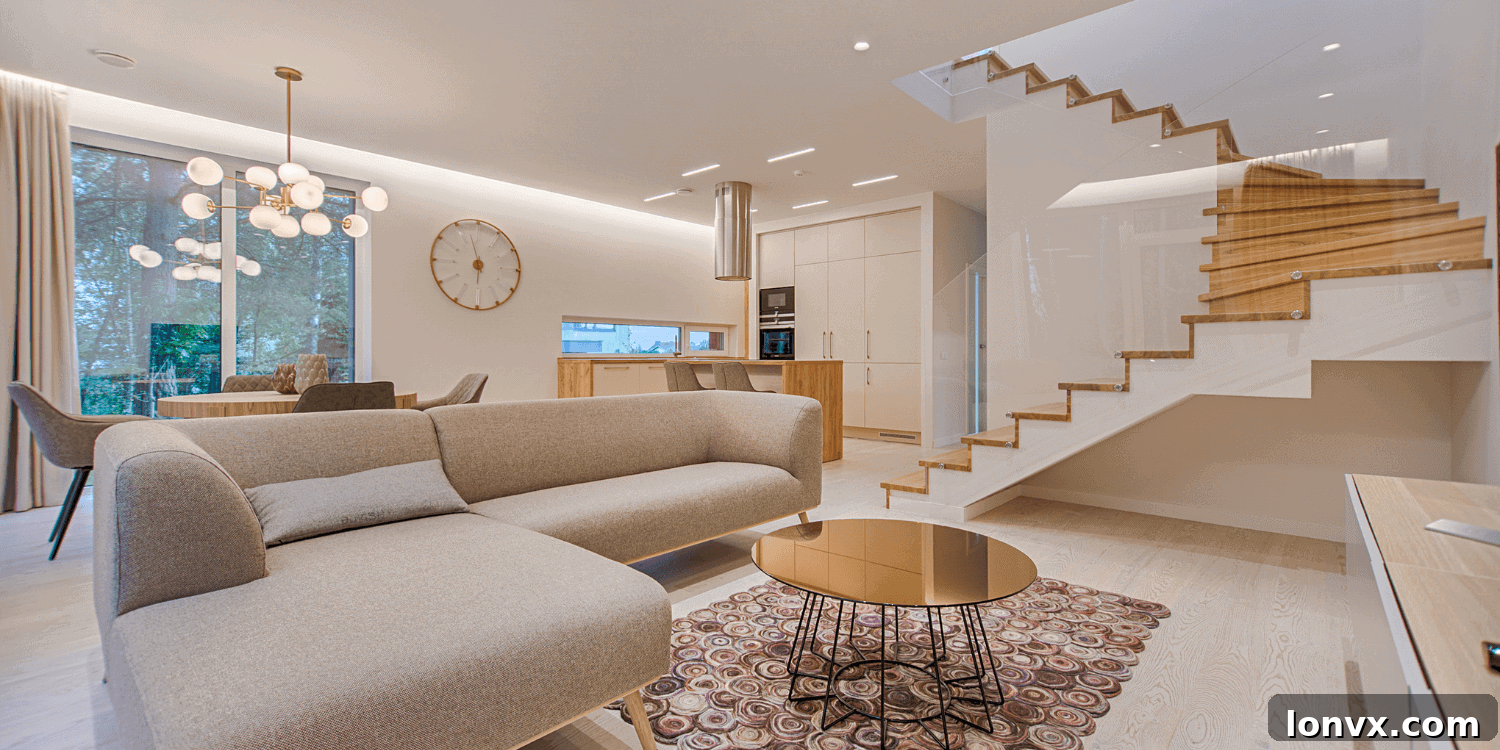
In an increasingly digital and interconnected world, industries across the board are undergoing profound transformations. The real estate sector, traditionally rooted in physical viewings and tangible assets, is no exception. At the forefront of this digital revolution, reshaping how properties are presented and perceived, is virtual staging. This innovative technology is not merely a trend; it’s a fundamental shift in how real estate professionals market properties, offering unparalleled advantages in a competitive market.
Virtual staging is a sophisticated digital technique designed to elevate the presentation of any property. It involves transforming photographs of empty, sparsely furnished, or even outdated spaces into stunning, fully furnished, and aesthetically pleasing environments. Leveraging advanced 3D rendering software and the expertise of skilled interior designers, virtual staging creates hyper-realistic visualizations that allow prospective buyers to instantly grasp a property’s full potential, fostering a deeper emotional connection long before a physical visit.
The Evolution of Real Estate Presentation: Why Virtual Staging Matters
For decades, real estate agents relied on traditional staging methods, which involved physically furnishing a property with rented furniture and decor. While effective, this approach is often prohibitively expensive, time-consuming, and logistically complex. Virtual staging emerged as a powerful alternative, offering a flexible, cost-effective, and remarkably efficient solution. It addresses the critical need to help buyers visualize themselves living in a space – a key factor in their purchasing decision.
In today’s digital age, the first showing often happens online. High-quality, engaging visuals are paramount to capturing a buyer’s attention and compelling them to inquire further or schedule a viewing. An empty room, no matter how spacious, can feel cold, uninviting, and difficult to gauge in terms of scale and functionality. Virtual staging breathes life into these spaces, showcasing their possibilities and transforming them from mere structures into aspirational homes.
How Virtual Staging Works: A Seamless Digital Transformation Process
The virtual staging process is a meticulous blend of photography, interior design, and cutting-edge digital rendering technology. It’s designed to be efficient for real estate professionals while delivering breathtaking results for potential buyers.
1. High-Quality Property Photography
The foundation of any successful virtual staging project is exceptional photography. Professional photographers capture high-resolution images of the property, focusing on key rooms and angles. These photographs serve as the canvas upon which the virtual staging will be applied. The quality of the initial photos directly impacts the realism and appeal of the final staged images.
2. Collaborative Design Consultation
Following the initial photography, the virtual staging team engages in a crucial design consultation with the real estate agent, homeowner, or property developer. This collaborative phase is where the vision for the staged property takes shape. Discussions cover desired aesthetic styles (e.g., modern, minimalist, traditional, bohemian), target buyer demographics, color palettes, and specific furniture preferences. This ensures the staging aligns perfectly with the property’s unique characteristics and market appeal.
3. Digital Design and Furniture Curation
With the design brief established, expert virtual stagers and 3D artists utilize specialized software suites. They digitally insert furniture, decor, lighting fixtures, artwork, and even greenery into the existing photographs. This isn’t merely about dropping in random items; it’s a careful process of selecting furniture and accessories from extensive digital libraries that match the chosen style and scale perfectly with the room’s dimensions. Attention is paid to details such as lighting, shadows, textures, and reflections to create an incredibly realistic and harmonious interior.
4. Advanced Rendering and Visualization
Once the digital elements are placed, the software renders the new images. This rendering process combines the original photograph with the newly added virtual furnishings, seamlessly integrating them. The goal is to produce photorealistic images that are virtually indistinguishable from a physically staged property. Advanced algorithms ensure proper perspective, lighting, and material rendering.
5. Client Review and Refinement
Before final delivery, clients receive initial renderings for review. This iterative process is vital, allowing for feedback and any necessary adjustments. Whether it’s changing a rug, repositioning a sofa, or tweaking a wall color, the flexibility of virtual staging means revisions can be made quickly and efficiently, ensuring the final output precisely meets the client’s expectations and effectively highlights the property’s strengths.
6. Final Delivery and Marketing Application
The high-resolution, virtually staged images are then delivered to the client, ready for immediate deployment. These captivating visuals can be seamlessly integrated into online property listings, brochures, social media campaigns, virtual tours, and other marketing materials, significantly enhancing the property’s online presence and attracting a broader pool of potential buyers.
The Undeniable Advantages: Why Virtual Staging Dominates Real Estate Marketing
The “before and after” impact of virtual staging is profound, transforming uninspiring spaces into captivating homes. Its benefits extend far beyond mere aesthetics, offering tangible value to sellers, agents, and buyers alike.
1. Enhanced Buyer Visualization and Emotional Connection
One of the most significant advantages of virtual staging is its ability to help prospective buyers visualize the true potential of a property. Empty rooms often appear smaller and lack character, making it difficult for buyers to imagine their own furniture and lifestyle within the space. Virtual staging eliminates this guesswork, presenting a clear vision of how each room can function and feel. As research from the National Association of Realtors (NAR) consistently shows, 81% of buyer agents agree that staging a home makes it easier for buyers to visualize the property as their future home. This clarity fosters a stronger emotional connection, which is often the driving force behind a purchasing decision.
2. Faster Sales and Higher Asking Prices
The impact of virtual staging on sales velocity and price is well-documented. Staged homes, whether physically or virtually, tend to sell significantly faster than their unstaged counterparts. Buyers are more likely to be drawn to visually appealing listings, leading to increased inquiries and viewings. Moreover, staged homes can command a higher perceived value, often selling for up to 10% more than non-staged homes. This means a greater return on investment for sellers and quicker commissions for agents. The initial investment in virtual staging is a fraction of traditional staging, yet it delivers comparable, if not superior, results in terms of market performance.
3. Cost-Effectiveness and Efficiency
Traditional home staging can cost thousands of dollars, involving furniture rental, movers, designers, and several weeks of effort. Virtual staging offers a dramatically more affordable alternative, often at a fraction of the cost, without compromising on quality or impact. It eliminates logistical challenges, transport fees, and the risk of damage to physical furniture. The digital nature also means a much quicker turnaround time, allowing properties to be marketed effectively within days, not weeks. This efficiency is invaluable in fast-paced real estate markets.
4. Flexibility and Versatility for Diverse Properties
Virtual staging is incredibly versatile. It can be applied to various property types, from vacant residential homes and commercial spaces to newly constructed developments and renovation projects. It allows agents to showcase different design styles for the same property, catering to a wider range of potential buyers. For example, a single property can be virtually staged in both a modern minimalist style and a warm traditional style, expanding its appeal without any physical changes. This flexibility is impossible with traditional staging.
5. Broader Market Reach and Accessibility
In an era of remote work and international buyers, virtual staging enhances a property’s accessibility. Buyers from different cities or countries can get a detailed, realistic sense of a home’s interior without needing to be physically present. This broadens the potential buyer pool significantly, making properties more attractive to a global audience and streamlining the initial stages of the buying process.
The Future is Now: How Virtual Staging Will Continue to Revolutionize Real Estate
As technology continues to advance, virtual staging is poised to evolve even further, becoming an indispensable and increasingly sophisticated tool for the real estate industry. Experts predict several key areas where virtual staging will lead the way:
- Immersive Virtual Tours: The rise of virtual reality (VR) and augmented reality (AR) technologies will transform virtual staging into fully immersive experiences. Instead of just viewing static images, prospective buyers will soon enjoy interactive 3D walkthroughs, allowing them to ‘step inside’ a virtually staged property and explore every corner as if they were physically there. A National Association of Realtors survey confirms this trend, with 67% of homebuyers finding virtual tours and floor plans extremely useful in their search. Imagine customizing furniture in real-time within a VR tour, creating a truly personalized viewing experience.
- Personalized Staging Tailored to Individual Preferences: The future of virtual staging will move beyond general aesthetic appeal to highly personalized experiences. AI and machine learning will enable platforms to suggest staging styles based on a buyer’s browsing history, social media preferences, or demographic data. Potential buyers will be able to customize furniture layouts, change decor, and even adjust wall colors with a few clicks, making the space truly feel like their own before they even visit. This level of customization will forge an even stronger emotional connection and accelerate decision-making.
- Seamless Integration with Smart Home Technologies: As smart home technologies become standard, virtual staging will naturally integrate these features. Properties can be virtually staged to showcase smart thermostats, intelligent lighting systems, automated blinds, and integrated security. This allows real estate professionals to highlight the latest innovations in home automation and energy efficiency, attracting tech-savvy buyers. With the smart home market projected to grow significantly (Statista predicts an 11.9% CAGR between 2021 and 2025), virtually demonstrating these features will be a powerful differentiator, emphasizing comfort, convenience, and potential energy savings.
- Artificial Intelligence-Driven Design and Hyper-Realism: AI-driven design tools are becoming increasingly sophisticated, pushing the boundaries of realism and aesthetic appeal in virtual staging. AI can analyze current design trends, optimize furniture placement for flow and aesthetics, and even generate unique decor items, ensuring every rendering is not only realistic but also perfectly curated. This technology will streamline the design process, reduce human error, and further enhance the overall visual quality, making virtually staged properties even more compelling. The substantial growth in AI in the construction market (from $329.3 million in 2017 to $1,831 million in 2023, according to MarketsandMarkets) underscores the increasing integration of AI in spatial design.
- Emphasis on Eco-Friendly and Sustainable Design Elements: With growing environmental consciousness among consumers, sustainability is a key factor for many homebuyers. Future virtual staging will increasingly focus on showcasing eco-friendly and sustainable design elements. This includes virtually integrating sustainable furniture, energy-efficient appliances, recycled materials, and even visualizing features like solar panels or green roofs. This approach helps attract environmentally conscious buyers and demonstrates a property’s potential for reduced environmental impact and lower utility costs, all without the need for physical, wasteful staging materials.
- Virtual Renovation and Customization Previews: Beyond simply staging, virtual technology will allow buyers to envision potential renovations. Imagine seeing a kitchen with different cabinet styles, countertop materials, or even a wall removed, all virtually rendered before any construction begins. This capability empowers buyers to truly personalize a property to their exact needs and tastes, unlocking its hidden potential and appealing to those looking for a fixer-upper with clear modernization pathways.
Virtual staging has evolved from a novel concept to an indispensable tool in the modern real estate landscape. By harnessing the power of digital visualization, it enables properties to shine, captivates potential buyers, accelerates sales, and ultimately optimizes value for sellers. As technology continues its relentless march forward, virtual staging will undoubtedly remain at the forefront, continually reshaping expectations and driving innovation within the dynamic world of real estate. Its impact is clear, and its future is exceptionally bright, promising even more immersive, personalized, and efficient ways to connect people with their dream homes.