
Navigating Canada’s Volatile Housing Market: Affordability Challenges and Future Outlook
The Canadian housing market is currently a landscape of significant uncertainty and growing anxiety for many citizens. A recent, comprehensive report—the latest State of the Housing Market commissioned by Mortgage Professionals Canada (MPC) from Oxford Economics—sheds critical light on the evolving sentiments and economic pressures impacting potential homebuyers and existing homeowners across the nation. This detailed analysis, surveying over 2,000 Canadians, reveals a record-high level of apprehension, particularly among those aspiring to enter the property ladder.
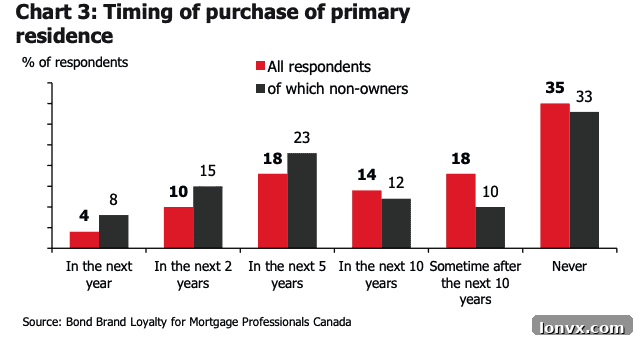
A striking 33 percent of non-homeowners now believe they will never achieve their dream of affording a family home. This represents a substantial 8-point increase in just six months and a staggering 15-point jump year-over-year, underscoring a rapid deterioration in public confidence regarding housing accessibility. Consequently, the proportion of non-homeowners planning to purchase a home within the next five years has dwindled to a mere 18 percent, marking a 6-percentage-point decrease from the previous year. These figures highlight a profound shift in market perception, driven by a challenging confluence of high home prices and escalating interest rates, which have collectively eroded affordability and amplified financial anxieties across Canadian households.
Despite these palpable concerns, the underlying desire for homeownership in Canada remains robust. Close to 80 percent of respondents continue to view real estate as a sound long-term investment, suggesting a deeply ingrained belief in the enduring value of property. This dichotomy—between a strong investment conviction and mounting affordability fears—defines the current intricate state of the Canadian housing market.
Canadian Mortgage and Housing Market Outlook: Resilience Amidst Pressure
The Canadian mortgage market demonstrated remarkable resilience throughout 2022, a period characterized by both falling home prices and rising interest rates, according to data compiled by Oxford Economics. Looking ahead, the broader housing market is projected to endure intense downward pressure, a trend expected to persist until mid-2024. This forecast, however, is tempered by an anticipated, enduring housing shortage, primarily fueled by Canada’s robust population growth.
Optimism for a market turnaround hinges on the peaking of mortgage rates later this year. As rates stabilize and potentially begin to ease, combined with a continued adjustment in house prices and a gradual recovery in income growth, affordability is expected to improve. These factors are anticipated to provide crucial support for sustained mortgage market growth in the medium to long term, signaling a potential return to more balanced conditions for Canadian real estate.
Shifting Homebuyer Trends and Sentiments in Canada
The sentiment among Canadian homebuyers has undergone a noticeable transformation. While 26 percent of survey respondents currently believe it is a good time to purchase a home in their community, this figure is on a steady decline. It represents a 3-point drop compared to the end of 2021 and is 1 point lower relative to mid-2022, indicating a cooling in buyer enthusiasm.
Declining Optimism for Homeownership
The erosion of affordability is starkly evident in the increasing number of respondents who feel they will never be able to acquire a primary residence. This disheartening share has climbed to 35 percent, up from 30 percent just six months prior, and 27 percent at the close of 2021. This trend underscores a deepening crisis of confidence, largely attributed to the compounding pressures of escalating mortgage costs and persistent inflationary forces, which collectively diminish Canadians’ belief in their ability to invest in real estate.
Furthermore, the proportion of non-owners who have ceased considering homeownership altogether is remarkably high, standing at 33 percent. This figure is only marginally below the corresponding share of existing homeowners (36 percent) who are also not currently considering a move, highlighting a broad-based stagnation in market mobility for a significant segment of the population.
Evolving Motivations for Home Purchases and Relocations
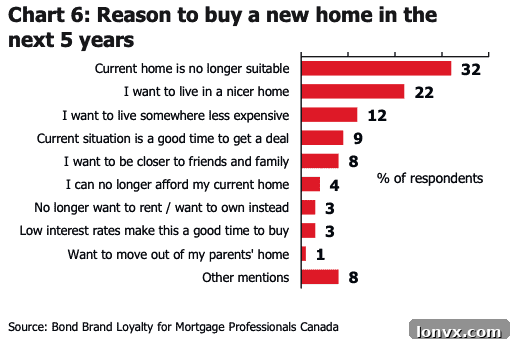
Canadians’ preferences and motivations for buying new homes or relocating are continually evolving, reflecting both economic realities and changing lifestyle needs. Approximately 32 percent of those planning to buy within the next five years indicate that their current home no longer meets their needs in terms of size or location. This figure has increased significantly compared to mid-2022 and late 2021, suggesting a persistent desire among Canadians for larger homes, even as the post-pandemic era reshapes work and living arrangements.
A notable 22 percent of respondents are actively looking to upgrade to a nicer home, driven by aspirations for improved living standards. Concurrently, the share of individuals considering a move to a more affordable home has risen, albeit remaining below four percent, which points to a segment of the population actively seeking cost-effective housing solutions.
Lifestyle vs. Investment: A Changing Perspective
With many workers transitioning back to traditional office settings, the motivation to relocate to reduce commute times is gaining traction, increasing by two points to 12 percent. Conversely, 15 percent of respondents express a desire to downsize their homes, a decrease of three points from a year ago, possibly indicating a slight shift away from pandemic-driven space needs. When asked about their perception of homeownership, respondents, on average, rated their home as 80 percent a place to live versus 20 percent an investment. This highlights that for most Canadians, a home primarily serves as a sanctuary and living space, with its investment potential being a secondary, though significant, consideration.
The Realities of Mortgage Affordability: A Growing Struggle in Canada
The current economic climate, particularly the surge in interest rates, has cast a long shadow over mortgage affordability for many Canadians. A significant 62 percent of respondents report needing external financial assistance, often from family members, to cover a down payment. They explicitly state that without such help, homeownership would have been unattainable. This figure has risen by five points from mid-2022 and six points year-over-year, underscoring a growing reliance on intergenerational wealth transfers to enter the housing market.
Vulnerability to Interest Rate Hikes
Beyond the initial hurdle of a down payment, rising interest rates have compelled a substantial number of respondents to reassess their capacity to manage potential future increases in mortgage payments. The data reveals a concerning level of financial vulnerability: close to six percent of respondents are already struggling to meet their current mortgage obligations. Furthermore, an additional 20 percent would face significant difficulties if their payments were to rise by just 10 percent or less. This precarious situation extends to 37 percent of respondents who would find it hard to cope with a 20 percent increase in their mortgage payments, illustrating a broad-based sensitivity to interest rate fluctuations.
First-time recent homebuyers are particularly susceptible to these financial strains. Over 14 percent of this demographic are currently experiencing payment difficulties, a rate 11 points higher than that of non-first-time recent buyers. This highlights the elevated risks faced by new entrants to the market, who often possess smaller equity buffers and less financial flexibility to absorb unexpected cost increases.
Interest Rate Stability: A Glimmer of Hope for Canadian Housing
In a move offering a potential reprieve for the Canadian housing market, the Bank of Canada has paused further interest rate hikes. Oxford Economics anticipates that the overnight rate will be maintained at 4.5 percent throughout 2023, with a gradual easing expected to commence in early 2024. This projected stability in interest rates could have profound positive implications for the housing sector.
Stable mortgage rates are crucial for supporting mortgage demand, as they provide a clearer financial outlook for prospective buyers and help manage expectations for existing homeowners. Such stability is also expected to contribute to an improvement in housing affordability across Canada, creating a more predictable environment for financial planning and investment in real estate.
Awaiting the Broad Housing Affordability Correction in Canada
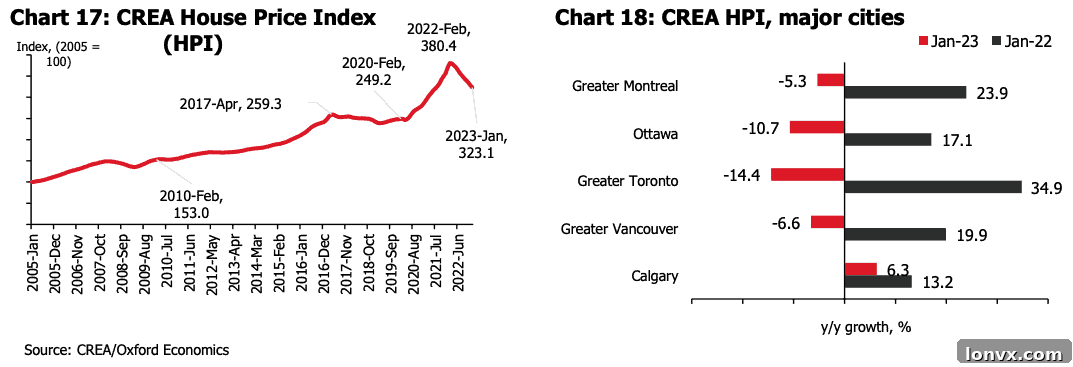
The ongoing housing correction in Canada is anticipated to extend well into 2023, with Oxford Economics forecasting a significant 30 percent peak-to-trough drop in house prices by the end of the year. This adjustment period is crucial for restoring some semblance of affordability to a market that has seen unprecedented price escalations.
Price Adjustments and Policy Measures
This expected decline in housing prices will be supported by new national policies aimed specifically at improving affordability. A key measure includes the prohibition of foreigners from purchasing Canadian real estate, designed to reduce speculative demand and ensure that housing supply primarily serves Canadian residents.
The Role of Housing Supply
Over the medium term, a more robust growth in housing supply is indispensable for fundamentally addressing the affordability crisis. Increased supply will help balance demand, exerting downward pressure on prices and ultimately supporting healthier mortgage market growth as more accessible housing options become available. This supply-side intervention is critical for creating a sustainable and equitable housing market in the long run.
Regional Disparities in Canadian Housing Affordability
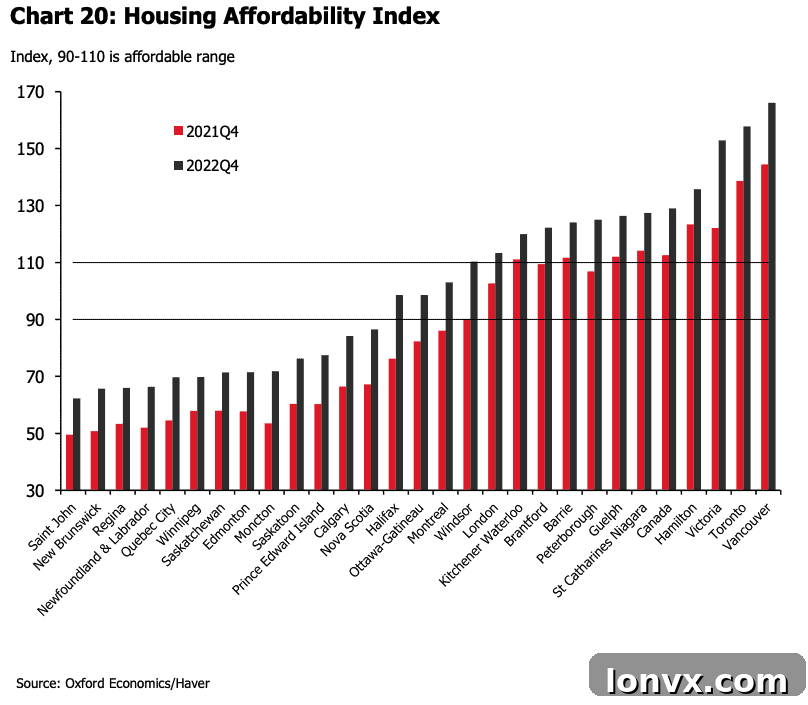
Despite recent declines in home prices, the overall increase in mortgage costs has led to a widespread deterioration of affordability across Canada’s diverse regions. The problem is particularly acute in the urban centers of Ontario and British Columbia, where average house prices soar to approximately 23 times the average disposable income. This stark ratio highlights the extreme challenges faced by residents in these high-demand areas.
Unpacking Provincial Differences
In contrast, Quebec presents a much more favorable affordability landscape, with average house prices standing at 13.3 times the average disposable income. The Atlantic provinces continue to offer relatively more affordable housing markets: New Brunswick (8.0 times), Nova Scotia (11.6 times), Prince Edward Island (10.4 times), and Newfoundland and Labrador (7.5 times). Similarly, the Prairie provinces, including Alberta (10.5 times), Saskatchewan (8.5 times), and Manitoba (10.4 times), fare considerably better in terms of housing accessibility.
Looking forward, affordability is expected to gradually improve by the end of 2023, primarily as mortgage rates begin to ease from their peaks and the ongoing house price correction continues to unfold across these regions. However, the deep-seated structural issues contributing to regional disparities will likely require sustained attention and policy adjustments.
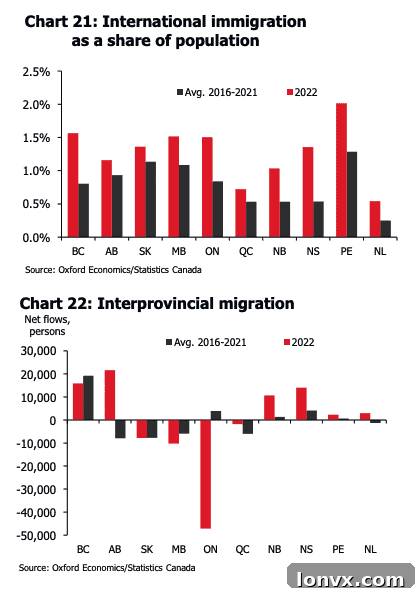
Immigration: A Key Driver of Canada’s Housing Demand
One of the most significant and consistent drivers of mortgage growth across Canada is migration, encompassing both interprovincial movements and substantial inflows from abroad. Strong immigration patterns are vital for sustaining positive population growth, which in turn fuels increased housing demand throughout the country.
Sustained Growth and Regional Flows
Based on the federal government’s ambitious immigration plan and the persistent global demand for migration to Canada, robust immigration trends are projected to continue in the near to medium term. Over the past six years, Ontario, British Columbia, and the Prairie provinces have experienced the most substantial international immigration flows relative to their existing populations, significantly impacting their respective housing markets.
Interprovincial Migration Dynamics
While Ontario historically served as a major destination for both international and interprovincial migrants between 2010 and 2019, it has recorded net negative interprovincial migration in both 2021 and 2022. However, these outflows are expected to moderate as housing affordability conditions gradually improve within the province. Quebec, conversely, is anticipated to receive relatively fewer immigrants over the coming years due to its unique independent immigration legislation. The province is also contending with negative net interprovincial migration, a trend that is likely to significantly temper housing demand within its borders in the years ahead. These complex migratory patterns play a crucial role in shaping regional housing market dynamics and underscore the need for tailored housing strategies across different provinces.
For a deeper dive into these trends and comprehensive data, the full report from Mortgage Professionals Canada and Oxford Economics is available
here.