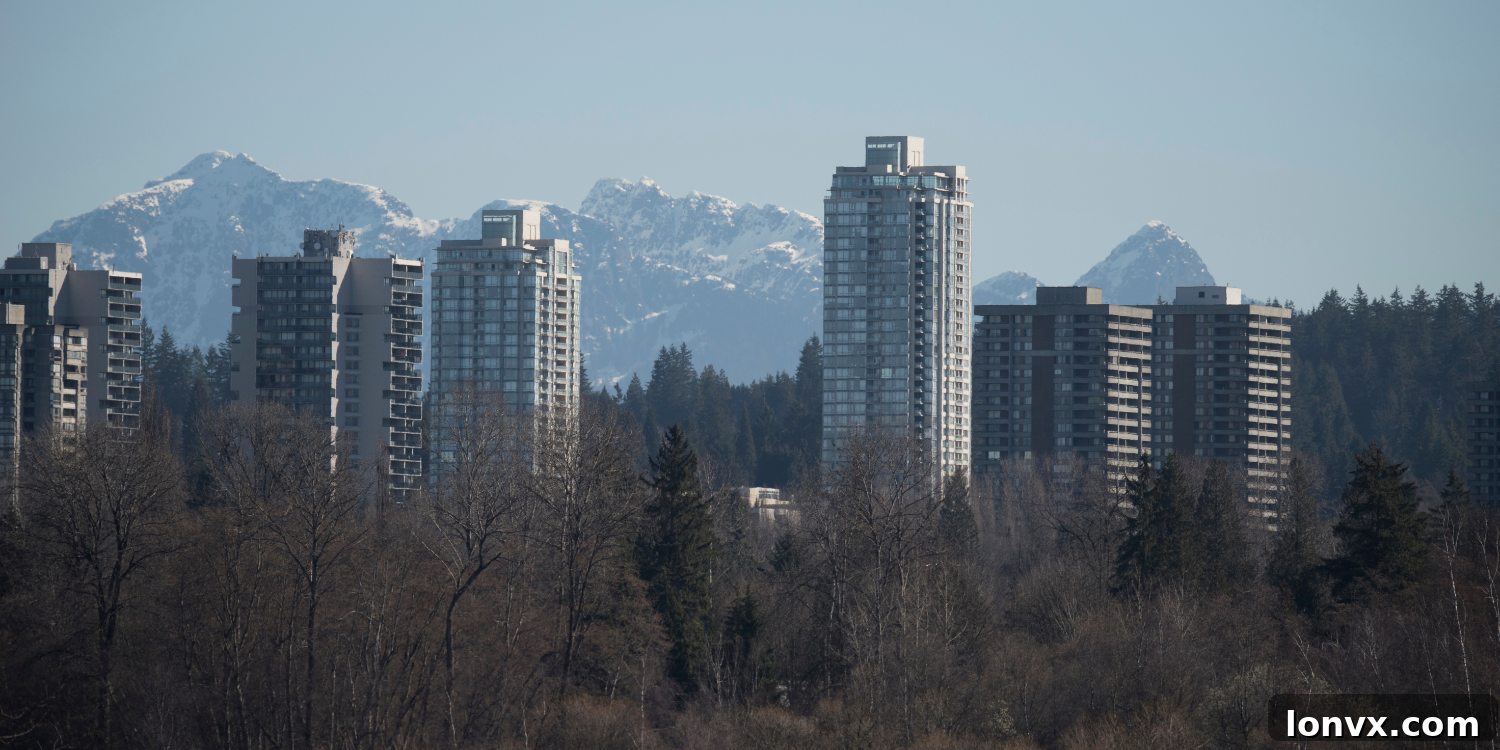
Metro Vancouver Housing Market in 2023: Resilience Amidst High Borrowing Costs and Shifting Dynamics
The Metro Vancouver housing market navigated a complex landscape throughout 2023, demonstrating remarkable resilience even as it grappled with the highest borrowing costs seen in over a decade. While year-end totals might suggest a subdued performance, a closer examination reveals a market that adapted and found its balance despite significant headwinds, primarily driven by fluctuating interest rates and persistent inventory challenges.
According to Andrew Lis, Director of Economics and Data Analytics at the Real Estate Board of Greater Vancouver (REBGV), “You could miss it by just looking at the year-end totals, but 2023 was a strong year for the Metro Vancouver housing market considering that mortgage rates were the highest they’ve been in over a decade.” This sentiment underscores the underlying strength and desirability of the region’s real estate, even when faced with economic pressures that typically dampen market activity.
The defining narrative of 2023, as articulated by Lis, was a fundamental imbalance: “Ultimately, the story of 2023 is one of too few homes available relative to the pool of willing and qualified buyers.” This supply-demand dynamic created a unique environment. Early in the year, sellers exhibited a reluctance to list their properties, leading to a noticeable dip in new listings. This hesitation, coupled with sustained buyer interest, resulted in near record-low inventory levels during the spring, subsequently exerting upward pressure on prices as prospective homeowners competed fiercely for the limited properties on the market.
Understanding the Market’s Resilience: The Impact of High Mortgage Rates
The shadow of decade-high mortgage rates loomed large over the Metro Vancouver housing market throughout 2023. These elevated borrowing costs significantly influenced both buyer affordability and seller sentiment. For many potential buyers, higher rates translated into increased monthly mortgage payments, reducing their purchasing power and forcing some to recalibrate their expectations or postpone their homeownership dreams. This financial tightening contributed to a more cautious buying environment, leading to fewer overall transactions compared to the boom years.
Conversely, high rates also impacted sellers. Homeowners with existing, lower fixed-rate mortgages were often hesitant to list their properties, fearing that selling would necessitate taking on a new mortgage at a much higher rate for their next purchase. This “lock-in” effect contributed directly to the scarcity of inventory, preventing a substantial influx of new listings even as demand remained robust. The market’s ability to maintain equilibrium and even see price appreciation despite these deterrents is a testament to Metro Vancouver’s enduring appeal, strong underlying demand, and limited developable land.
2023 Annual Sales Performance: A Closer Look
The Real Estate Board of Greater Vancouver (REBGV) reported a total of 26,249 residential sales across the region in 2023. While this figure indicates a resilient market given the economic climate, it represents a notable decline compared to previous years. Specifically, 2023 sales were:
- 10.3 per cent less than the 29,261 sales recorded in 2022.
- 41.5 per cent less than the exceptionally active 44,884 sales witnessed in 2021.
- 23.4 per cent below the 10-year annual sales average of 34,272.
These statistics highlight a shift from the fervent market activity of the pandemic years, moving towards a more normalized, albeit still competitive, sales environment. The decline in sales volume can be attributed to a combination of factors, including higher interest rates dampening buyer enthusiasm, the aforementioned scarcity of available listings limiting transactional opportunities, and a general recalibration of market expectations. Despite the decreases, the sheer volume of transactions underscores the continuous flow of individuals and families seeking to establish roots in one of Canada’s most vibrant metropolitan areas.
2023 Annual Listings Trends: The Persistent Supply Challenge
The issue of limited inventory remained a critical factor shaping the Metro Vancouver market in 2023. Total MLS listings for the year reached 50,893 properties. This figure further illustrates the supply crunch, reflecting:
- 7.5 per cent less than the 55,047 properties listed in 2022.
- 20.2 per cent below the 63,761 listed properties in 2021.
- 10.5 per cent under the region’s 10-year total annual average of 56,868.
The consistent decline in new listings year-over-year, and its position below the long-term average, signals a persistent challenge for the Metro Vancouver market. A healthy real estate market typically requires a balanced supply of homes to meet buyer demand without triggering excessive price inflation. The sustained low inventory levels, particularly against a backdrop of steady population growth and high demand, directly contributed to the competitive bidding scenarios and upward price pressures observed throughout the year. This dynamic creates a challenging environment for first-time buyers and those looking to upgrade, reinforcing the notion that supply-side solutions are crucial for long-term market stability.
December 2023 Market Snapshot: A Year-End Pulse Check
As 2023 drew to a close, the December market provided a snapshot of the prevailing trends and hinted at potential shifts for the new year. Residential sales in Metro Vancouver totaled 1,345 in December, marking a modest 3.2 per cent increase over the 1,303 sales recorded in December 2022. This slight uptick suggests a glimmer of renewed activity, perhaps driven by buyers anticipating future rate cuts or seeking to finalize purchases before year-end. However, it’s important to contextualize this figure against historical performance: December 2023 sales were still a significant 36.4 per cent below the 10-year seasonal average of 2,114 transactions. This indicates that while the market showed some signs of life, it was far from the bustling activity typically seen in a strong pre-holiday period.
Benchmark Price Evolution: Stability Amidst Fluctuation
The composite benchmark price for all residential properties in Metro Vancouver stood at $1,168,700 at the end of December 2023. This figure represents a robust 5 per cent increase compared to December 2022, underscoring the market’s underlying strength and the continued appreciation of real estate assets in the region. Despite the challenges of high interest rates and subdued sales volumes, property values not only held firm but also experienced healthy growth over the year. However, a month-over-month comparison reveals a slight dip, with the December benchmark price being 1.4 per cent less than that of November 2023. This marginal decrease could signal a seasonal slowdown, a temporary cooling in buyer intensity, or a modest adjustment in response to fluctuating economic indicators. Such minor month-to-month adjustments are common and do not necessarily indicate a significant market shift, especially within the broader context of strong annual growth.
December Listings: A Glimmer of Increased Choice
Total active listings for sale on the Metro Vancouver MLS system in December amounted to 8,802 properties. This represented a 13 per cent increase from December 2022’s 7,791 listings and was also marginally higher, by 0.3 per cent, than the 10-year seasonal average of 8,772. The increase in active listings offered a bit more choice for buyers at year-end, which could be attributed to various factors, including sellers timing their listings for the new year or responding to perceived market stability. However, when looking at *new* listings, the picture was slightly different: 1,327 detached, attached, and apartment properties were newly listed in December. This was a 9.9 per cent increase over the 1,208 properties listed in December 2022 but remained 22.7 per cent below the 10-year seasonal average of 1,716. This suggests that while overall active inventory improved slightly, the pace of *new* properties entering the market was still lagging historical norms, perpetuating the fundamental supply constraint.
Sales-to-Active Listings Ratio: Gauging Market Balance
The sales-to-active listings ratio is a crucial indicator of market balance, with figures typically interpreted as follows: below 12% generally indicates a buyer’s market, while above 20% suggests a seller’s market. A range between 12% and 20% often signifies a balanced market. For December 2023, the overall sales-to-active listings ratio across all property types in Metro Vancouver stood at 16 per cent. This situates the market firmly in a balanced territory, implying that neither buyers nor sellers held a dominant advantage overall. However, a deeper dive into property types reveals nuances:
- Detached homes: 11.1 per cent, leaning slightly towards a buyer’s market for this segment.
- Attached homes: 18.7 per cent, indicating a relatively balanced but firm market.
- Apartments: 19.6 per cent, approaching seller’s market conditions, signifying stronger competition for condominiums.
These variations highlight the diverse dynamics within the Metro Vancouver housing market, where specific property types can experience different levels of demand and supply pressures. The overall balanced ratio at year-end suggests a level of stability that, while not as hot as previous years, was far from a downturn, especially considering the elevated interest rates.
Looking Ahead to 2024: Anticipation of Lower Borrowing Costs
As the market closed out 2023, the prevailing sentiment among experts was one of cautious optimism for the year ahead, largely hinged on the expectation of lower borrowing costs. Andrew Lis encapsulated this forward-looking perspective, noting, “Looking back on the year, it’s hard not to wonder how we’d be closing out 2023 if mortgage rates had been a few per cent lower than they were. And it looks like we might get some insight into that question in 2024, as bond markets and professional forecasters are projecting lower borrowing costs are likely to come, with modest rate cuts expected in the first half of the new year.”
The prospect of interest rate reductions is a significant catalyst for the Metro Vancouver housing market. Lower rates would immediately improve affordability for buyers, potentially unlocking pent-up demand and increasing transactional activity. It could also encourage more sellers to enter the market, alleviating some of the persistent inventory pressures. A more stable and predictable interest rate environment would foster greater confidence among both consumers and investors, supporting continued market health and growth.
However, the extent and timing of these rate cuts will be crucial. Even modest reductions could have a noticeable impact, but the market will also need to contend with ongoing factors such as strong population growth, economic performance, and the availability of new housing supply. As Metro Vancouver moves into 2024, stakeholders will be keenly watching central bank decisions and their ripple effects on mortgage rates, hoping for a return to a more accessible and vibrant real estate landscape.
For more detailed statistics and comprehensive analysis, you can access the REBGV’s full report here.
Enjoying this article?
Get the latest insights and articles on the Canadian real estate industry delivered directly to your inbox!
(Note: Button color is placeholder, please set to your desired value)