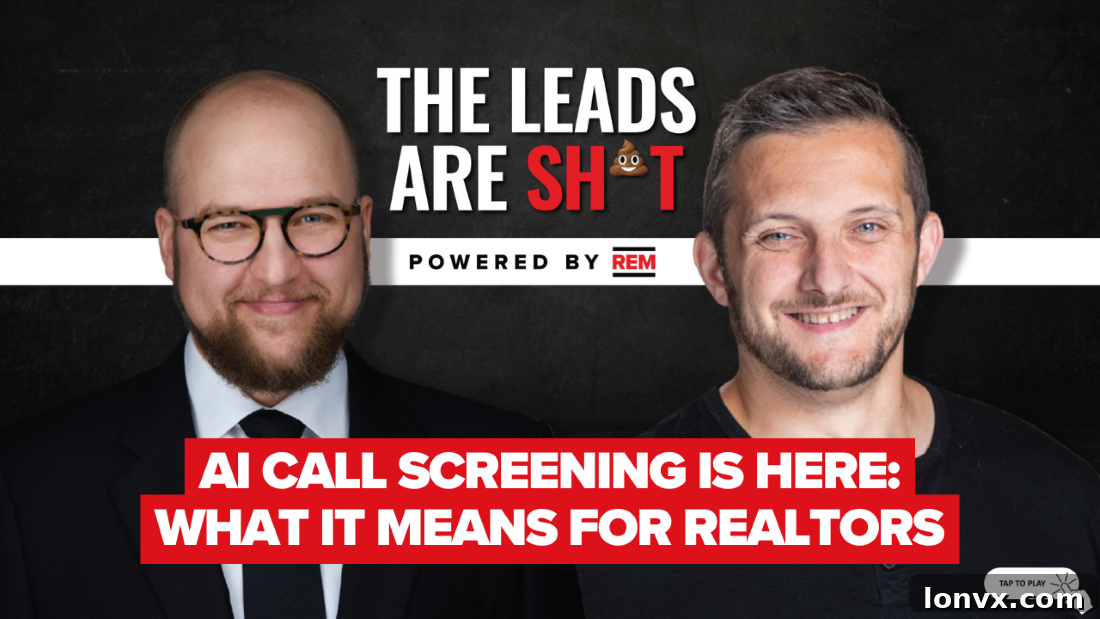
Apple’s AI Call Screening: The Definitive Guide for Real Estate Agents to Master Prospecting and Boost Pick-Up Rates
The landscape of real estate prospecting is constantly evolving, and with the introduction of Apple’s new AI Call Screening feature, agents face a fresh challenge and a unique opportunity. This innovative technology has fundamentally altered how potential clients interact with incoming calls, demanding a new approach from real estate professionals aiming to connect and convert. Recognizing this seismic shift, industry veterans Taylor Hack and Andrew Fogliato recently conducted a live, in-depth test of Apple’s AI call screening. Their findings provide invaluable insights, equipping real estate agents with the precise strategies needed to adapt, thrive, and ultimately boost their pick-up rates in this new era.
This comprehensive guide dives deep into their expert analysis, offering actionable advice on navigating the complexities of AI-assisted gatekeeping. We’ll explore the intricate behaviors of this technology, reveal a highly effective 3-line screen script designed to cut through the digital noise, and provide clear guidance on when to strategically enable or disable screening for optimal results. Furthermore, we’ll dissect the power of permission-based outreach across various channels—text, call, and email—and clarify AI’s true role in your business: that of a powerful editor and enhancer, not a replacement for authentic human connection.
Understanding Apple’s AI Call Screening: How It Works and Its Impact
Apple’s latest innovation, part of iOS 17’s Live Voicemail, allows iPhone users to see a real-time transcript of an incoming caller’s message as they’re leaving it. Before the call even connects, an AI voice asks the caller to state their name and the purpose of their call. This means potential clients can screen calls without ever answering, deciding whether to pick up based solely on the transcribed message. For real estate agents, this isn’t just a minor update; it’s a significant hurdle that demands a refined communication strategy.
The immediate impact is clear: the traditional cold call, where an agent might rely on charm and quick wit to get past the initial “hello,” is now met with an AI gatekeeper. The recipient has full control, able to assess the legitimacy and urgency of the call before committing. This can lead to a decrease in pick-up rates for agents who don’t adjust their approach. However, it also presents an opportunity for those who master the art of delivering a concise, compelling, and value-driven message right from the start. It forces agents to be more prepared, more persuasive, and more respectful of the prospect’s time, transforming a potential weakness into a strategic advantage.
The Power of Precision: Crafting the Perfect 3-Line Screen Script
In the age of AI call screening, brevity and impact are paramount. Taylor Hack and Andrew Fogliato’s research highlights that a concise, compelling 3-line script is the most effective way to navigate this new gatekeeper. The goal isn’t just to leave a message, but to craft a message so intriguing and relevant that the prospect feels compelled to pick up immediately. Forget long-winded introductions or generic sales pitches; this is about delivering value and piquing curiosity within seconds.
Here’s the breakdown of what makes a winning script and a potential template:
- Line 1: Identify Yourself & Establish Context Briefly. State your name and company clearly, then immediately connect it to the recipient in a relevant way. Avoid ambiguity.
- Example: “Hi [Prospect’s Name], this is [Your Name] from [Your Company]. I’m calling about the property at [Address/Area of Interest].”
- Line 2: State Your Core Value Proposition or Urgent Reason for Calling. This is where you grab their attention. What specific benefit are you offering, or what urgent information do you possess? Make it benefit-oriented, not self-serving.
- Example: “I have an urgent update regarding its market value / I found a new listing that perfectly matches your criteria.”
- Line 3: Create a Call-to-Action with a Hint of Urgency/Exclusivity. Encourage them to pick up now, implying that the information is time-sensitive or best discussed live.
- Example: “This is time-sensitive, so I wanted to share it with you directly. Let me know if you’re free for a quick chat now.”
The key to this script’s success lies in its ability to immediately inform the prospect, demonstrate relevance, and create a mild sense of urgency, all while respecting their time by being concise. It transforms a cold outreach into a warm invitation, increasing the likelihood that they’ll bypass the AI and engage directly.
Strategic Screening: When to Enable and When to Disable Call Screening
While mastering the script is vital, understanding the strategic nuances of call screening—when to embrace it and when to bypass it—is equally important for real estate agents. There are distinct scenarios where the AI gatekeeper can be an ally, and others where it might hinder genuine connection.
When AI Call Screening Helps (Enable Strategically):
- Initial Cold Outreach: For brand-new prospects or leads from an unknown source, using the 3-line script through the screening process can be highly effective. It allows you to deliver a professional, value-driven message that helps qualify the lead without demanding an immediate connection. If they pick up, you know there’s genuine interest.
- Vetting High-Volume Leads: When dealing with a large influx of inquiries, using a carefully crafted message via screening can help filter out less serious prospects, allowing you to prioritize those who respond positively.
- Building a Professional Image: A clear, confident message delivered via AI screening demonstrates preparation and respect for the prospect’s time, establishing a professional tone from the outset.
When to Consider Disabling/Bypassing Screening (Or Adapt Your Approach):
- Warm Leads & Follow-Ups: For prospects you’ve already had contact with, particularly those who have expressed direct interest or are expecting your call, bypassing the screening might be more appropriate. A simple “Hi [Prospect’s Name], it’s [Your Name], following up on our conversation about [Topic]” is often enough.
- Existing Clients & Referrals: For current clients or those referred by trusted sources, a direct call is almost always preferred. They already have a relationship with you, and the AI screening could create an unnecessary barrier. Ensure your contact information is saved in their phone to minimize screening.
- Urgent Communications: If the matter is genuinely urgent and requires immediate attention (e.g., offer deadlines, critical property information), a direct call, possibly followed by a text message to alert them, might be more effective.
Ultimately, the decision to engage with or bypass the AI screening mechanism depends on the context of the call, the nature of your relationship with the prospect, and the urgency of your message. A flexible, adaptive strategy is key to maximizing your pick-up rates.
Permission-Based Outreach: Calls, Texts, and Emails in Harmony
In the evolving digital landscape, successful real estate agents understand that a multi-channel approach, centered around permission-based outreach, is paramount. AI call screening further emphasizes the need to diversify and strategically utilize calls, texts, and emails to connect with prospects and clients effectively. This isn’t about bombarding them; it’s about respectful, targeted engagement.
The Evolving Role of Calls:
Despite AI screening, calls remain crucial for building rapport and closing deals. The goal is no longer just to get someone to pick up any call, but to inspire them to pick up *your* call. This means:
- Prioritizing Quality Over Quantity: Make fewer, more impactful calls.
- Pre-Call Warm-up: Send a quick text or email beforehand, referencing your upcoming call, to increase pick-up rates. “Hi [Name], I’ll be calling you in a few minutes to discuss [topic].”
- Mastering the Screen Script: As discussed, a compelling 3-line message is your gateway.
The Power of Text Messaging:
Text messages have become an indispensable tool for real estate agents, especially in a world with call screening. They are immediate, less intrusive, and highly effective for certain types of communication.
- Initial Contact (Permission First): If you have permission (e.g., from a web form or referral), a text can be a soft initial touch. “Hi [Name], this is [Your Name] from [Your Company]. I received your inquiry about [Property/Service]. Would you be open to a quick call or prefer to chat via text?”
- Quick Updates & Reminders: Property viewing confirmations, document reminders, or quick answers to questions are perfectly suited for text.
- Call Follow-Ups: If a call goes to voicemail or screening, a follow-up text summarizing your message and offering an alternative contact method can be highly effective.
Leveraging Email for Deeper Engagement:
Email remains the go-to for detailed information, formal communications, and nurturing leads over time. It allows for rich content, attachments, and a less immediate response expectation.
- Value-Added Content: Send market reports, property portfolios, neighborhood guides, or articles that provide genuine value.
- Lead Nurturing Campaigns: Automate personalized email sequences to stay top-of-mind with prospects who aren’t ready to buy or sell immediately.
- Formal Communications: Offers, counter-offers, legal documents, and detailed explanations are best handled via email, often followed by a confirmation call or text.
The synergy between these channels is where true success lies. A text to warm up a call, an email to follow up with detailed information, and a call to seal the deal – all governed by the principle of permission and respect for the prospect’s preferred communication method. This holistic approach ensures you connect effectively, regardless of how they choose to screen their calls.
AI as Your Editor, Not Your Operator: Shipping Faster, Better
One of the most crucial insights from experts like Taylor Hack and Andrew Fogliato is the distinction between using AI as a powerful assistant (an “editor”) versus an autonomous replacement for human interaction (an “operator”). In real estate, where trust, empathy, and genuine connection are paramount, AI’s role should always be to augment and enhance, never to substitute the human element.
AI as Your Editor: Enhancing Efficiency and Quality
Think of AI as your smartest intern, capable of sifting through vast amounts of information, drafting content, and streamlining processes, allowing you to focus on the high-value tasks only humans can do. Here’s how AI can act as your editor:
- Drafting Communication: AI can rapidly generate initial drafts for emails, text messages, social media posts, or even parts of your call scripts. It can help you find the right tone, grammar, and structure, which you then refine with your unique voice and market knowledge.
- Content Creation: Need a blog post about current market trends, a property description, or a neighborhood guide? AI can provide a strong foundation, saving hours of research and writing.
- Data Analysis and Insights: AI tools can analyze market data, predict trends, identify ideal client profiles, or even suggest optimal pricing strategies. This frees up your time from manual data crunching to focus on strategic decision-making.
- Personalization at Scale: AI can help tailor marketing messages for different segments of your audience, ensuring relevance without the manual effort of crafting each message from scratch.
- Scheduling and Administrative Tasks: From managing your calendar to automating follow-up reminders, AI can take on many repetitive administrative burdens.
Why AI Should NOT Be Your Operator: The Indispensable Human Touch
While AI excels at processing information, it fundamentally lacks the emotional intelligence, intuition, and nuanced understanding required for complex human interactions—qualities that are the bedrock of success in real estate.
- Building Trust and Rapport: Real estate is a relationship business. Clients need to trust their agent, feel understood, and believe their interests are genuinely represented. AI cannot replicate the empathy, active listening, or spontaneous problem-solving that builds this trust.
- Negotiation and Persuasion: The art of negotiation involves reading body language (even over a call), understanding unspoken concerns, and adapting strategies in real-time—skills far beyond current AI capabilities.
- Handling Sensitive Situations: Buying or selling a home is often one of the most significant life events for individuals. AI cannot offer the compassion, reassurance, or personal guidance needed during these emotional transactions.
- Ethical Decision-Making: Real estate often involves complex ethical dilemmas and subjective judgments. AI operates on algorithms; it cannot weigh moral considerations or human values.
By embracing AI as an invaluable editor, real estate agents can significantly enhance their efficiency, improve the quality of their outreach, and free up more time to focus on the irreplaceable human connections that drive their business forward. The future of real estate is a symbiotic relationship between cutting-edge technology and unparalleled human expertise.
Expert Insights: Royal LePage, Buffini vs. Ferry, and the Future of Agent Communication
The ongoing discussions among industry leaders, from major brands like Royal LePage to thought-provoking debates between coaches like Buffini and Ferry, consistently highlight the evolving nature of real estate communication. The consensus is clear: agents must remain agile, continuously adapting their strategies to technological advancements and shifting consumer preferences. Events and conferences frequently underscore the importance of blending traditional, relationship-based selling with modern, tech-enabled outreach. The core message remains that while tools and platforms change, the human desire for authentic connection and expert guidance does not. AI, like call screening, simply refines the pathways to initiating and sustaining those valuable connections, emphasizing the need for agents to be more strategic, more personalized, and more transparent in every interaction.
Missed Our Live Session? Watch the Replay Now!
Dive into the full, unedited discussion where Taylor Hack and Andrew Fogliato reveal their live test results and provide practical, implementable advice for real estate agents navigating Apple’s new AI call screening.
Don’t just read about it—see the live demo and hear the expert strategies directly from the source!
Don’t Miss the Next Episode of The Leads are Sh*t!
Are you tired of hearing that the leads are the problem? We believe the strategy is. “The Leads Are Sh*t” is your essential weekly deep dive into smarter real estate marketing. We cut through the noise to bring you actionable insights, innovative techniques, and proven strategies designed to help you attract, convert, and close more deals with confidence.
Join Taylor Hack and Andrew Fogliato as they tackle the real challenges agents face, offering practical solutions and candid advice that will transform your approach to lead generation and client conversion. Stop wasting time on ineffective tactics and start building a robust, sustainable real estate business.
📅 Live every Thursday at 2:00 PM EST. Each episode is packed with invaluable content you won’t want to miss. Secure your spot now and gain a competitive edge in today’s market!
🎥 Click here to register and secure your spot for the next game-changing episode.
Register for The Leads are Sh*t Webinar
Related Posts
The Ultimate Guide to Real Estate CRM Selection
Choosing the right CRM can revolutionize your business. Learn what to look for and how to implement it effectively.
Read More
Leveraging Social Media for Real Estate Lead Generation
Discover advanced strategies to turn your social media presence into a powerful lead-generating machine.
Read More
Email Marketing Secrets for Real Estate Success
Unlock the potential of your email list with proven tactics for engagement and conversion.
Read More