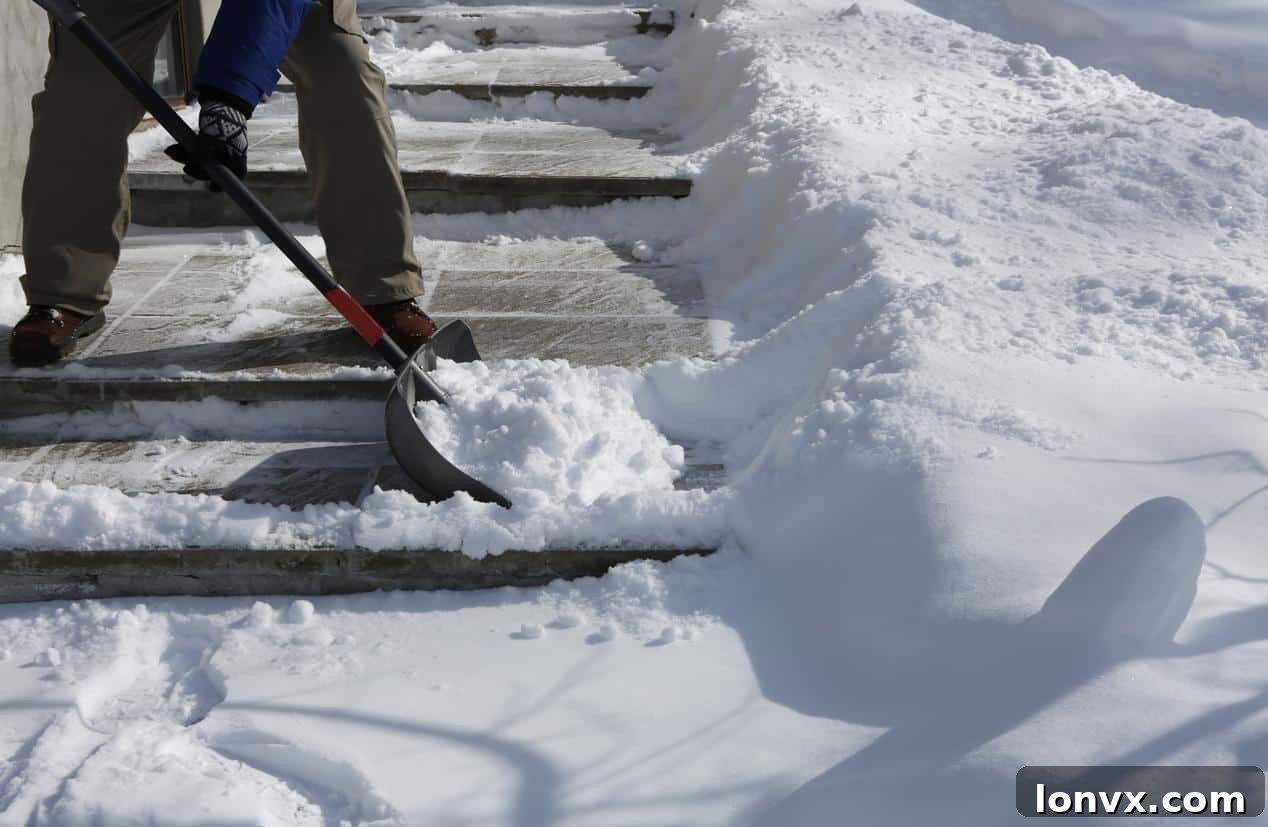
The recent unprecedented snowfall in Southern Ontario, which buried cities under up to two feet of heavy snow within a mere five hours – quickly transforming into treacherous ice – brought with it more than just winter wonderland aesthetics. For many property owners, particularly landlords, it brought immediate concern, followed swiftly by the unwelcome sight of bylaw officers reportedly patrolling residential rental properties. Their mission? To photograph uncleared sidewalks, setting the stage for potential fines and legal disputes. This swift municipal response has ignited a crucial discussion about who truly bears the responsibility for snow and ice removal on public sidewalks and the often-complex legal landscape surrounding it.
The Post-Blizzard Bylaw Blitz: A Costly Wake-Up Call for Landlords
In the aftermath of such severe weather events, the race against the clock to clear snow and ice becomes a monumental task. For landlords managing multiple properties or those who may have been physically unable to clear snow within stringent municipal deadlines, the sight of bylaw officers is particularly unsettling. Many municipalities are perceived to be perpetually seeking new avenues to bolster their coffers, and a significant snowfall, combined with what are often described as draconian and one-sided bylaws, can indeed present a seemingly “golden opportunity” to generate revenue through fines. Landlords, caught between unpredictable weather and unyielding regulations, frequently find themselves in a precarious position, facing penalties even when proactive efforts might have been thwarted by the sheer volume of snow or logistical challenges.
The immediate aftermath of a major snowfall typically sees a surge in bylaw enforcement, focusing on properties where sidewalks remain uncleared. The penalties associated with these infractions can be substantial, adding significant financial burden to property owners already grappling with winter maintenance costs. This aggressive enforcement strategy raises important questions about fairness, especially when landlords are doing their best under extreme circumstances, and whether the true intent is public safety or revenue generation. It also highlights the growing pressure on property owners to comply with often-challenging regulations or face potentially steep consequences.
Untangling Ontario’s Complex Snow Removal Laws: A Multi-Layered Challenge
While bylaw departments often assert that the law regarding snow and ice removal responsibility on city sidewalks is unequivocally clear, this perception is far from the truth. The reality is that laws governing snow and ice liability in Ontario are surprisingly intricate, involving a delicate interplay of provincial acts and municipal bylaws. Understanding these nuances is paramount for landlords and homeowners alike to navigate potential disputes and liabilities. The responsibility isn’t a single, straightforward declaration but rather a mosaic of duties spread across different legal frameworks.
The Residential Tenancies Act (RTA): Landlord Responsibilities on Private Property
In Ontario, the Residential Tenancies Act, 2006 (RTA) primarily governs the relationship between residential landlords and tenants. Under the RTA, landlords are generally responsible for maintaining their rental properties, including common areas, in a good state of repair and fit for habitation. This responsibility typically extends to the clearing of snow and ice from private pathways, driveways, and parking areas directly associated with the rental unit or property’s common elements. While specific clauses in lease agreements may attempt to shift some of these responsibilities to tenants for certain areas, the ultimate accountability for the safety and maintenance of the property, especially common access points, often remains with the landlord.
It’s crucial for landlords to clearly define snow removal duties within their lease agreements. However, even with such clauses, landlords should ensure that the division of labor is reasonable and that tenants are adequately equipped or compensated if they are expected to perform significant snow removal tasks. Neglecting snow and ice removal on private property can lead to tenant complaints, orders from the Landlord and Tenant Board, and potential liability under the Occupiers’ Liability Act if an injury occurs. Proactive communication and clear expectations are key to avoiding disputes and ensuring a safe environment for tenants.
The Occupiers’ Liability Act (OLA): Assigning Financial Responsibility for Injuries
Beyond the RTA, the Occupiers’ Liability Act (OLA) is another pivotal piece of legislation in Ontario. This act outlines the duty of care owed by an “occupier” of premises to persons entering those premises. An occupier can be the owner, a tenant, or anyone with possession or control over the land or premises. The OLA holds the property owner and potentially other “occupiers” financially responsible for accidents and injuries caused by hazardous conditions, including snow and ice, on their property. This applies to private property, where the occupier must take reasonable steps to ensure the safety of visitors.
The OLA mandates that occupiers must take “such care as in all the circumstances of the case is reasonable to see that persons entering on the premises are reasonably safe while on the premises.” This duty extends to protecting visitors from foreseeable harm, which explicitly includes hazards posed by snow and ice. Failure to uphold this duty can result in significant financial liability if a person slips and falls, sustaining injuries. This is why meticulous snow and ice management on one’s private property is not merely a courtesy but a legal imperative. The standard is “reasonable care,” meaning occupiers are not expected to guarantee safety, but to take all precautions a reasonable person would under the circumstances.
Municipal Bylaws: The City’s Attempt to Delegate
Municipalities across Ontario commonly enact bylaws that attempt to transfer the responsibility of clearing snow and ice from public sidewalks adjacent to private properties onto the adjacent property owners. These bylaws often stipulate specific timelines for clearing snow after a snowfall and impose fines for non-compliance. From the city’s perspective, these bylaws are a practical measure to ensure public safety and manage the vast network of sidewalks without deploying extensive municipal resources to every residential street. However, the legality and enforceability of these bylaws, particularly concerning liability for injuries on public sidewalks, have been consistently challenged in courts, leading to important clarifications about municipal duties.
The Landmark Precedent: Bongiardina v. Vaughan (City) 2000
The question of who ultimately owns the responsibility for maintaining public sidewalks, despite municipal bylaws, was definitively addressed by the Ontario Court of Appeal in the pivotal case of Bongiardina v Vaughan (City), 2000 CanLII 5408. This case established a crucial precedent that continues to impact snow removal liability in Ontario, setting a clear boundary for municipal powers.
The case involved Ms. Bongiardina, who suffered injuries after falling on a snow-covered sidewalk within the City of Vaughan. She subsequently sued the City. Vaughan, in its defense, attempted to shift the blame and liability onto the adjacent homeowner, citing its municipal bylaw which stipulated that homeowners were responsible for clearing snow from sidewalks bordering their property. Consequently, the City sued the homeowner, arguing they were liable for Ms. Bongiardina’s injuries due to their failure to clear the sidewalk as per the bylaw.
However, the homeowners robustly argued that they should not be held liable for the City’s failure to maintain its own property. The judge at the initial hearing agreed with the homeowners, ruling that the City could not unilaterally transfer its primary responsibility for public property maintenance to private citizens merely by passing a bylaw. The City of Vaughan’s subsequent appeal of this decision was also unsuccessful, solidifying the initial ruling. This outcome was a significant victory for property owners and a clear delineation of municipal obligations.
The Bongiardina v. Vaughan decision unequivocally affirmed that municipalities have inherent obligations to maintain their property, including public sidewalks, just as private property owners do. A municipal bylaw attempting to delegate this responsibility does not absolve the city of its fundamental duty of care or its potential liability under the Occupiers’ Liability Act for injuries occurring on its own property. This landmark ruling has provided significant legal recourse for homeowners and landlords who find themselves targeted by municipal fines or liability claims stemming from uncleared public sidewalks, fundamentally shifting the power dynamic in such disputes.
Subsequent Legal Challenges and Consistent Upholding of the Precedent
Since the Bongiardina v. Vaughan decision, numerous legal challenges concerning municipal responsibility for sidewalk maintenance have arisen across Ontario. In the vast majority of these subsequent cases, the courts have consistently referred back to and upheld the principles established in the 2000 Court of Appeal ruling. This consistency reinforces the legal position that while municipalities can encourage or even mandate snow clearing by adjacent property owners through bylaws, they cannot fully divest themselves of their primary responsibility and potential liability for the safety of public sidewalks. This means that if an injury occurs on a municipal sidewalk, the city itself is likely to be named as a primary defendant, and attempts to pass that liability solely to a homeowner or landlord through a bylaw are often unsuccessful, highlighting the enduring impact of the Bongiardina case on municipal accountability.
Understanding Your Rights: Protecting Yourself as a Landlord or Homeowner
Given the complexities and the strong legal precedent set by Bongiardina v. Vaughan, it is imperative for landlords and homeowners to understand their rights, especially when confronting an uncompromising bylaw officer or facing a potential lawsuit from the municipality. While it is always advisable to make reasonable efforts to clear snow from adjacent sidewalks to ensure community safety and avoid minor bylaw infractions, remember that your ultimate liability for injuries on municipal property is not as straightforward as cities might suggest. Being aware of your legal standing can empower you to challenge unfair accusations.
If you receive a fine for an uncleared public sidewalk or, more critically, if the municipality attempts to hold you responsible for someone’s injury on their property (a public sidewalk), you may have significant legal recourse. Documenting your efforts to clear snow, noting the timing of snowfall, and even recording the condition of the sidewalk can be beneficial evidence. However, the most crucial step is to seek expert licensed legal opinion. A qualified lawyer specializing in municipal law or personal injury defense can provide tailored advice based on your specific situation and guide you through the process of challenging an unfair fine or defending against a liability claim. Do not assume you are automatically liable just because a bylaw officer or city representative tells you so; your legal rights are robust.
Proactive Strategies for Landlords in Winter
While challenging municipal overreach is an option, proactive measures can significantly mitigate risks for landlords, fostering both safety and compliance:
-
Clear Lease Agreements:
Explicitly outline snow removal responsibilities for private areas (driveways, walkways to entrances, parking spots) within your lease agreements. Be reasonable and ensure tenants have the necessary tools or that services are provided if they are expected to clear significant areas. Clarity here prevents future misunderstandings and disputes.
-
Regular Monitoring:
Implement a system for monitoring weather forecasts and property conditions, especially after heavy snowfalls or freezing rain. Proactive monitoring allows for timely response, crucial for meeting bylaw deadlines and maintaining safety.
-
Professional Services:
Consider hiring a professional snow removal service for all your rental properties, particularly for multi-unit buildings or properties with high foot traffic. This ensures timely and consistent clearing, reducing your liability risk and offering peace of mind.
-
Documentation:
Keep meticulous records of snow removal activities, including dates, times, and methods used. If using a contractor, retain their invoices and service reports. Photographic evidence before and after clearing can also be invaluable in demonstrating due diligence if a dispute arises.
-
Salting and De-icing:
Beyond snow removal, regularly apply salt or de-icing agents to prevent ice formation, especially on high-traffic pathways and areas prone to freezing. Ice is often more dangerous than snow, and proper de-icing is a critical component of winter maintenance.
The Broader Implications: Municipal Accountability and Public Safety
The ongoing tension between municipal bylaws and established legal precedents regarding snow removal highlights a broader issue: municipal accountability. While city councils have a legitimate interest in promoting public safety and cleanliness, attempting to delegate core responsibilities to individual citizens, especially when it comes to publicly owned infrastructure, raises questions about fairness and effective governance. The Bongiardina decision serves as a powerful reminder that municipalities cannot simply legislate away their fundamental duties. Ultimately, a balanced approach is needed, one that recognizes the shared responsibility of maintaining safe communities while upholding the legal principles that protect property owners from undue burden and liability for areas beyond their direct control.
Public safety is paramount, and ensuring clear, safe sidewalks benefits everyone. However, the means by which this safety is achieved must be legally sound and equitable. Relying solely on the threat of fines against private citizens for public property maintenance can strain community relations and, as court cases have shown, often proves legally unsustainable. A collaborative approach where municipalities invest in maintaining their own infrastructure while encouraging citizen participation for minor tasks may lead to better outcomes for all.
Important Disclaimer: Seek Professional Legal Advice
It is crucial to reiterate that the information provided in this article is for general informational purposes only and does not constitute legal advice. I am not a lawyer, and the complexities of snow and ice liability require professional legal expertise. If you find yourself facing fines, legal action, or disputes with bylaw officers or municipalities regarding snow removal, you must seek expert licensed legal opinion from a qualified lawyer in Ontario. Only a legal professional can provide advice tailored to your specific circumstances and guide you on the best course of action to protect your interests and rights.
Understanding the intricacies of Ontario’s snow removal laws is not just about avoiding fines; it’s about asserting your rights as a property owner and ensuring that the burden of public infrastructure maintenance is fairly distributed and legally sound. Stay informed, stay proactive, and when in doubt, consult a legal expert to navigate these challenging winter responsibilities effectively.