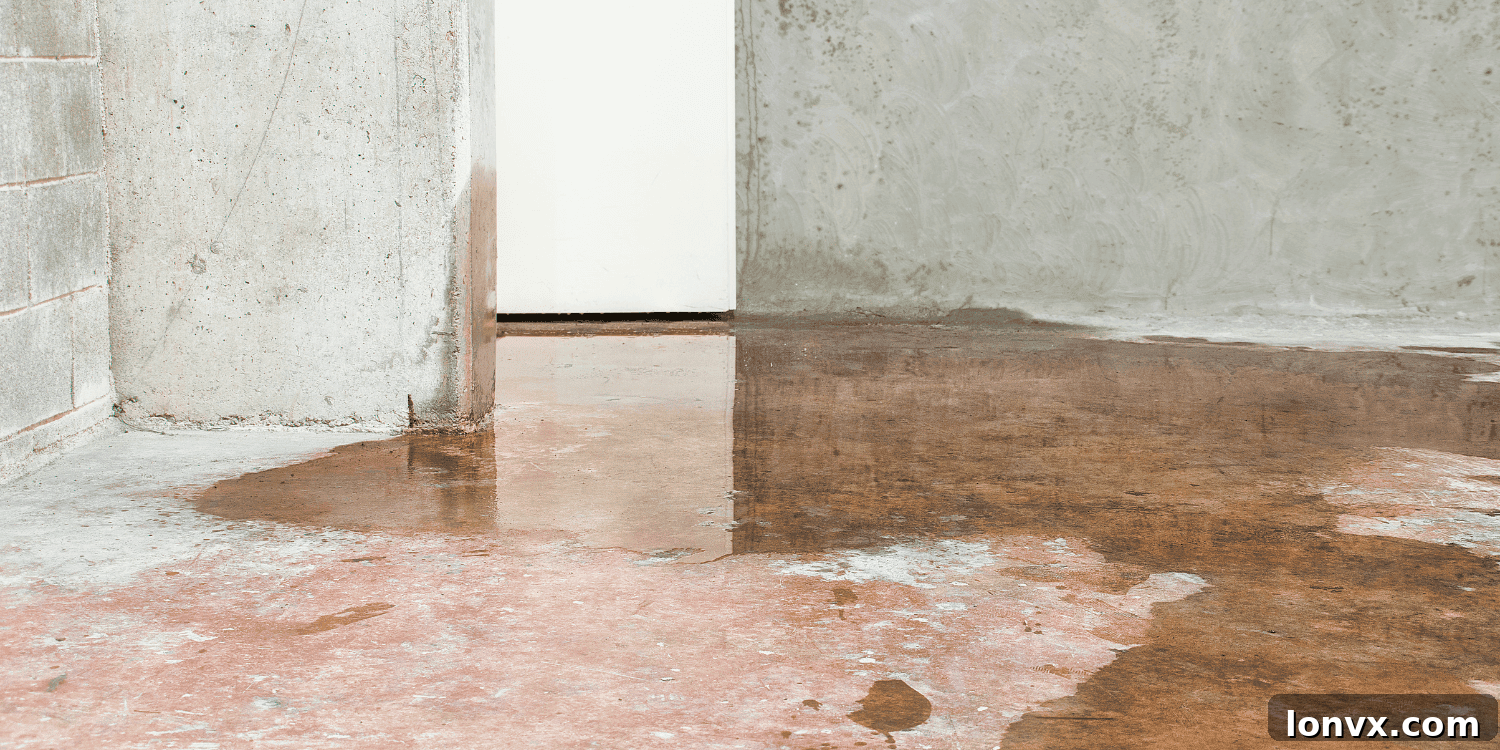
A damp or wet basement is far more than just a minor inconvenience; it’s a pervasive issue that can silently erode the value, safety, and structural integrity of your home. While it often throws a significant wrench into real estate transactions, scaring off potential buyers, the good news is that water intrusion doesn’t necessarily have to be a deal-breaker. With the right knowledge and proactive measures, most basement moisture problems can be effectively addressed, transforming a potential liability into a manageable concern. Understanding the causes, recognizing the early signs, and implementing proven solutions are key steps toward maintaining a dry, healthy, and valuable home.
Why Do Basements Get Wet? Understanding the Root Causes of Water Intrusion
Water is undeniably one of the most destructive forces a home can face. While common culprits like a leaking roof or a plumbing mishap can lead to interior water damage, the vast majority of basement water intrusion stems from issues related to the foundation. Unlike a sudden burst pipe, foundation leaks are often insidious, intermittent, and directly linked to external weather conditions. They frequently manifest only after heavy rainfall or snowmelt, often remaining concealed behind finished walls, making early detection a significant challenge.
Over 95% of basements are estimated to experience some form of water intrusion during their lifespan. Fortunately, water penetration through foundation walls rarely causes immediate catastrophic structural failure. The primary damage typically impacts interior finishes, insulation, flooring, personal belongings, and stored items. In a finished basement, these repairs can quickly become a substantial financial burden.
Many homeowners operate under a crucial misconception: that a house, much like a boat, should be entirely impervious to water when surrounded by it. This isn’t the case. Building codes typically require “damp-proofing” for foundations, not full “waterproofing.” Damp-proofing is designed to resist soil moisture, not sustained hydrostatic pressure or flowing water. Furthermore, the effectiveness of original damp-proofing materials diminishes over time due to natural degradation, ground movement, and environmental factors, making older homes particularly susceptible to leaks and moisture problems.
Basement water intrusion generally falls into a few key categories, each requiring a specific understanding for effective remediation:
- Surface Water Intrusion: This is the most prevalent cause of wet basements. It occurs when rainwater or snowmelt is not properly diverted away from the foundation. Issues such as clogged or missing gutters, improperly directed or short downspouts, and poor ground grading around the home’s perimeter directly contribute to water pooling against the foundation walls. This accumulated water then saturates the soil, seeking any available path into the basement.
- Subsurface Water & Hydrostatic Pressure: A rising water table or prolonged soil saturation can lead to subsurface water issues. When the soil around your foundation becomes excessively saturated, it creates immense hydrostatic pressure. This pressure acts like a giant squeeze, pushing water through microscopic pores in concrete, hairline cracks in foundation walls, and even through mortar joints and floor slab connections. This is particularly common in homes built on clay soils, which retain water, or in areas with naturally high water tables.
- Foundation Cracks: While some hairline cracks in concrete are considered normal due to concrete shrinkage, larger or actively leaking cracks are direct conduits for water. These cracks can develop from various factors, including soil settlement, freeze-thaw cycles that expand and contract the soil, or structural stresses on the foundation. They can appear in walls or in the basement floor, serving as easy entry points for water.
- Internal Plumbing Leaks: Although less common as a source of chronic, widespread basement wetness, internal plumbing issues can certainly contribute to moisture problems. Leaking pipes, faulty water heaters, overflowing sinks, or even issues with laundry hookups can introduce water directly into the basement space. These are usually more localized and present as immediate, rather than intermittent, water sources.
Unmasking the Problem: What Are the Signs of Basement Moisture?
Detecting basement moisture isn’t always as straightforward as spotting a puddle on the floor. Often, the signs are subtle and can easily be overlooked by an untrained eye. Being vigilant about these indicators can save you significant time, money, and stress in the long run. The signs can be categorized into visual cues, olfactory signals, and even operational observations of your home’s systems.
Visual Indicators of Basement Water Intrusion:
- Discoloration, Rot, or Rusted Nail Heads: Pay close attention to baseboards, paneling, and the lower sections of walls. Water causes wood to discolor (darkening or staining), swell, and eventually rot. Rusted nail heads or screws in trim are a tell-tale sign of prolonged exposure to moisture, as the metal oxidizes in a damp environment.
- Water-Stained or Deteriorating Drywall: Brownish, yellowish, or sometimes even dark gray stains near the floor on drywall are clear indicators of water wicking up into the material. Over time, drywall exposed to moisture will soften, crumble, bubble, and visibly deteriorate, losing its structural integrity.
- Damaged Cardboard Boxes or Raised Storage: Cardboard readily absorbs moisture from the air and direct contact, becoming soft, stained, distorted, and eventually collapsing. If you find yourself consistently raising stored items off the floor using pallets or shelving to protect them, it’s a strong implicit admission of an existing moisture problem.
- Efflorescence (White Salt Crystals): This is one of the most definitive signs of active or past water intrusion through concrete or block foundations and columns. Efflorescence is a powdery, white, crystalline deposit formed when water passes through masonry, dissolving mineral salts within the material. As the water evaporates on the surface, it leaves these salt deposits behind. While not directly damaging to the foundation itself, it unequivocally indicates that water is entering and moving through your foundation walls or floor.
- Rust at the Base of Steel Columns and Other Metals: Any metal components, such as support columns, appliance legs, water heater bases, or shelving units, near floor level that exhibit rust are reacting to high humidity or direct water contact. This corrosion weakens metal and indicates a consistently damp environment.
- Peeling Paint or Lifting Floor Tiles: Moisture seeping through basement walls can cause paint to bubble, blister, and peel as it loses adhesion to the damp surface. Similarly, adhesive-backed floor tiles, vinyl flooring, or even carpet can lift, warp, or detach from the subfloor due to persistent dampness and compromised adhesives.
Olfactory and Other Critical Indicators:
- Mold and Musty Odors: These are critical indicators that should never be ignored. Mold thrives in damp, dark, and poorly ventilated environments. Even if visible mold isn’t present, a persistent earthy, stale, damp, or musty smell is a strong sign of hidden mold growth behind walls, under flooring, or within insulation. Mold poses significant health risks, especially for individuals with allergies, asthma, or other respiratory issues, and often requires professional remediation to ensure complete removal and prevent recurrence.
- Excessive Use of a Dehumidifier or Constantly Running Sump Pump: While dehumidifiers are useful for managing ambient humidity, if yours is running non-stop and filling rapidly, it suggests an underlying and significant moisture source that the dehumidifier is merely mitigating, not solving. Similarly, a sump pump that runs frequently, even outside of heavy rain, indicates a high water table or consistent water accumulation around the foundation that needs constant expulsion.
Signs of Past or Current Repairs:
Sometimes, the signs point to previous attempts at remediation, which while indicating proactivity, also confirm a history of issues. Look for patches on concrete walls, evidence of epoxy or polyurethane injections at cracks in foundation walls (these fillers are designed to seal leaks), or the visible top edge of drainage membranes or parging applied against the foundation at grade level outside. While these indicate previous efforts to address the issue, they also confirm a history of water problems and warrant further investigation into the effectiveness and longevity of the repair.
This extensive list of symptoms can indeed be daunting for prospective homebuyers or current owners. However, it’s crucial to remember that in many cases, these issues are treatable and often less severe than they initially appear. A word of caution, though: finished basements are adept at concealing problems. Interior wall coverings, dropped ceilings, and various flooring types can hide significant moisture damage, mold growth, or structural concerns for extended periods. This is why professional home inspectors often utilize specialized tools like moisture meters, which can detect elevated moisture levels within building materials without invasive procedures, and offer advanced thermal imaging inspections. These infrared cameras can identify temperature differentials that often indicate hidden moisture pockets, revealing issues that would otherwise go unnoticed until major damage has occurred.
The Ultimate Solution: Keeping Water Away from Your Foundation
At its core, the most effective strategy for preventing basement wetness is surprisingly simple: keep water away from your home’s foundation. While this sounds straightforward, it involves a multi-faceted approach, starting with the most common and often easiest-to-implement solutions. Addressing surface water management is typically the first and most impactful step in any basement waterproofing effort, and it’s a critical component of maintaining a dry and healthy basement environment.
1. Optimizing Eavestroughs (Gutters) and Downspouts: Your First Line of Defense
Eavestroughs (or gutters) and their corresponding downspouts play a vital, often underestimated, role in a home’s defense against water intrusion. Their primary function is to collect the substantial volume of water that lands on your roof during rain or snowmelt and efficiently channel it well away from the foundation. When these systems are compromised—whether missing entirely, clogged with debris like leaves and twigs, damaged, or improperly installed—they become a significant source of water accumulation around your foundation. As we’ve discussed, a house is not a boat, and if surrounded by water, it will find its way in.
- Regular Maintenance is Key: Cleaning your gutters at least twice a year—ideally in late spring after tree blossoms and seeds fall, and again in late fall after leaves have dropped—is a non-negotiable part of proactive home maintenance. Clogged gutters overflow, creating waterfalls that dump concentrated amounts of water directly down foundation walls, saturating the soil immediately adjacent to the basement.
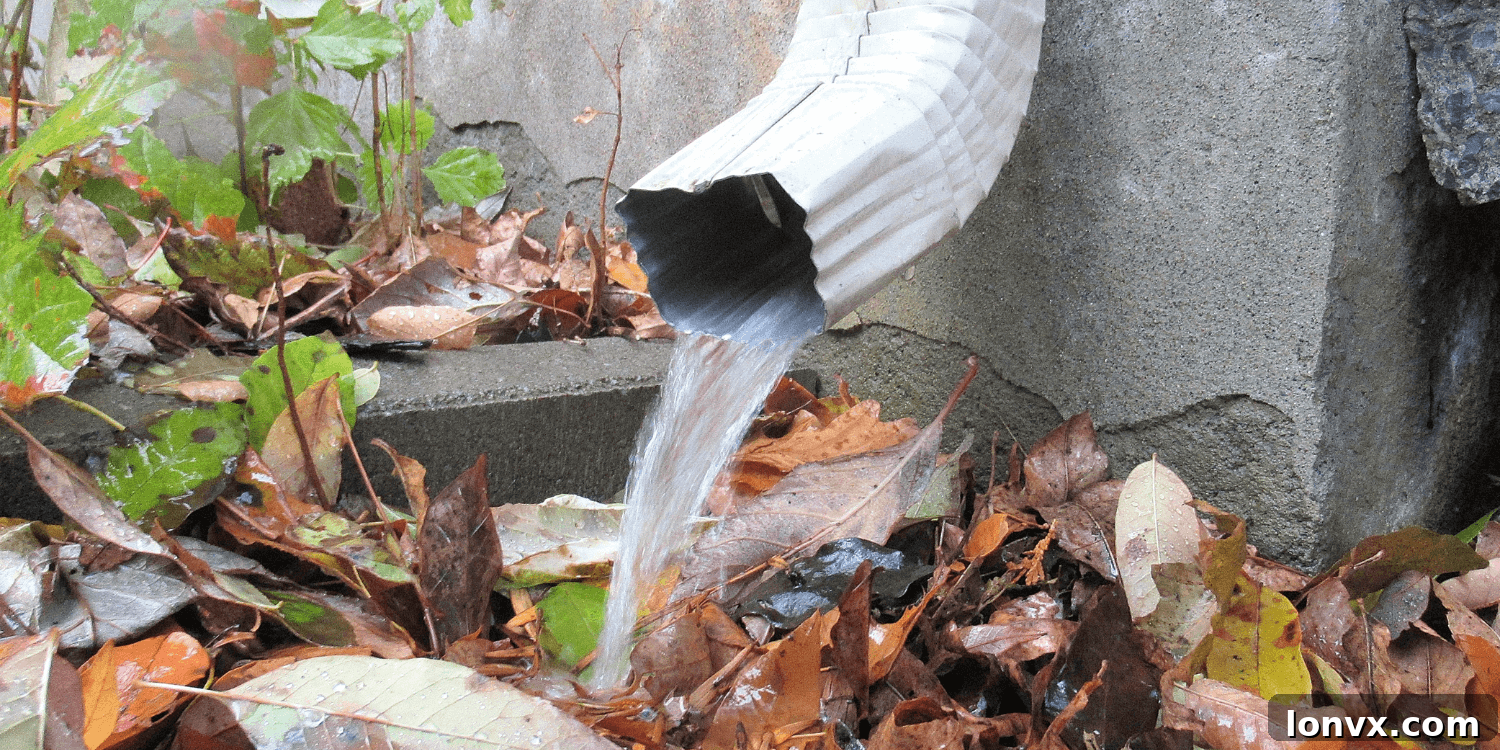
- Downspout Effectiveness and Extension: Downspouts are even more critical as they concentrate the collected roof water into a single stream. The single most prevalent issue leading to wet basements is downspouts that discharge water too close to the foundation. This creates a concentrated saturation zone right where you don’t want it, often leading to hydrostatic pressure buildup. The goal is to extend downspouts so that water is released at least six feet (approximately two meters) away from the home’s perimeter. This allows the water to disperse over a wider area, preventing localized soil saturation.
The photo below perfectly illustrates the common problem of a downspout discharging water directly next to the foundation, leading to localized saturation and likely basement leaks over time.
Correcting this issue can be incredibly simple and cost-effective, often requiring nothing more than a basic downspout extension.
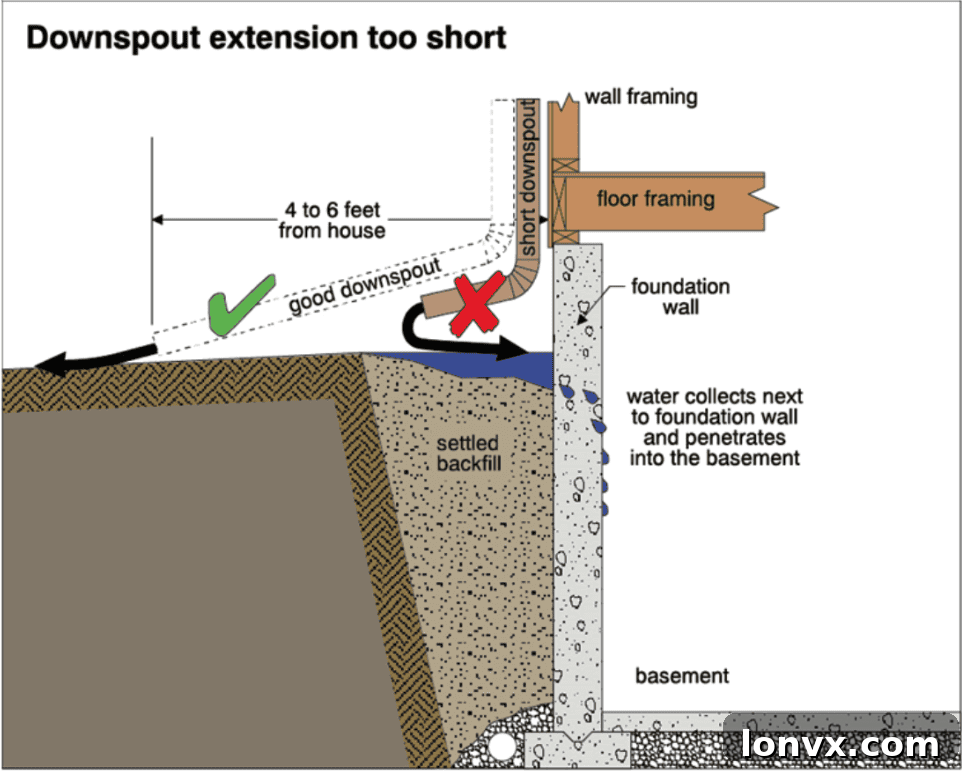
Source: Alan Carson, Carson Dunlop Home Inspections
The “ten-dollar solution,” as it’s often dubbed, involves installing a simple downspout extension. These extensions come in various forms, from flexible corrugated pipes that can be rolled out during rain and retracted, to more rigid plastic or metal extensions that offer a permanent solution. Some advanced options even include buried lines that direct water even further away, discharging it into a suitable area or a French drain system. The fundamental principle remains the same: ensure water is channeled a safe distance away from your foundation.
It might sound deceptively simple, but after decades of experience in the home inspection industry, I can confirm that this singular fix resolves a significant percentage of basement water issues. To reiterate, properly functioning eavestroughs and extended downspouts are paramount for collecting roof water and diverting it at least six feet (two meters) away from your home’s foundation to maintain a consistently dry basement.
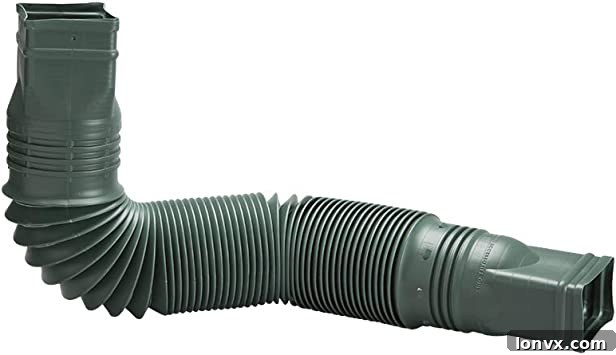
Source: Amazon.ca
2. Proper Ground Grading: Directing Surface Water Away from the Foundation
Beyond roof drainage, the second most common cause of wet basements is equally simple in concept but often requires a bit more effort to rectify: improper ground grading. The soil and landscaping immediately surrounding your home should consistently slope gently downwards and away from the foundation, not towards it. If the ground slopes inward, is flat, or has depressions, rainwater and snowmelt will pool against the foundation walls, allowing it to percolate into the soil and exert hydrostatic pressure, ultimately finding its way into your basement through cracks or porous concrete.
- Achieving the Right Slope: A generally recommended slope is a minimum drop of six inches (approximately 15 cm) over the first ten feet (three meters) extending away from the foundation. This creates enough gradient for water to naturally flow away from the critical foundation zone. Consistent evaluation of your property’s grade, especially after significant landscaping changes or construction, is vital.
- Driveways and Patios: Even paved surfaces like driveways, walkways, and concrete patios must have a slight pitch away from the house. While they are impervious to water absorption, if they slope towards the foundation, they will funnel water directly to it. As long as water visibly runs off and away from the structure, the grading is effective.
- DIY Potential and Professional Solutions: Correcting minor grading issues doesn’t necessarily demand expensive landscaping contractors. Often, a shovel, some quality compacted topsoil, and a bit of physical effort can significantly improve the slope. For larger areas or persistent problems where simple grading isn’t enough, consider incorporating swales (shallow depressions that direct water naturally) or even French drains (a trench filled with gravel and a perforated pipe designed to collect and divert subsurface water) to manage heavy surface runoff and subsurface saturation effectively.
- Landscaping Considerations: Be mindful of your landscaping choices. Avoid planting dense shrubs, trees, or creating garden beds that hold excessive moisture right next to the foundation. Ensure garden beds are also consistently graded away from the house to prevent water retention.
3. Addressing Foundation Cracks and Implementing Interior Drainage Systems
While external fixes (gutters and grading) are often sufficient, some homes require more robust solutions, especially when dealing with existing foundation cracks, persistent subsurface water pressure, or severe water table issues. These solutions generally involve direct intervention with the foundation itself or specialized internal drainage systems.
- Foundation Crack Repair: For non-structural cracks in concrete foundation walls that are actively leaking, injections of epoxy or polyurethane can be highly effective. Epoxy provides a strong structural bond and seals the crack rigidly, suitable for stable cracks. Polyurethane offers flexibility, expanding to fill the crack and accommodating slight future movement, ideal for cracks that might still be active. However, if cracks are wide (exceeding ¼ inch), show signs of significant displacement, or indicate structural issues (like bowing walls), a professional structural engineer and a specialized foundation repair contractor should be consulted immediately.
- Interior Perimeter Drainage (French Drains) & Sump Pumps: When hydrostatic pressure is a persistent problem, and water is seeping through the walls or up from under the floor, an interior drainage system might be necessary. This involves installing a trench along the interior perimeter of the basement, filling it with gravel and a perforated pipe, which collects any water seeping through the foundation walls or up from under the floor slab. This collected water is then channeled to a sump pit, where a sump pump automatically activates to pump the water out and away from the house, typically to the exterior yard. Battery backup sump pumps are highly recommended to ensure protection during power outages, preventing flooding when the primary power fails.
- Exterior Waterproofing Membranes: For severe cases, or during new construction, an exterior waterproofing membrane offers the most comprehensive protection against water intrusion. This extensive process involves excavating the soil around the entire foundation down to the footings, cleaning the exterior walls thoroughly, repairing any existing cracks, applying a continuous rubberized or polymer-based waterproof coating (membrane), installing a dimple board (a protective layer that also allows water to drain freely behind it), and then installing a new drainage tile system at the footing level before carefully backfilling the excavation. This is a significant undertaking in terms of cost and effort but provides the maximum defense against water intrusion by stopping it before it even reaches the foundation wall.
Conclusion: Proactive Steps for a Dry and Healthy Home
While there are always unique circumstances and exceptions to every rule, the knowledge shared here provides a robust framework for understanding and resolving the vast majority of wet basement issues. The journey to a dry basement often begins with simple, cost-effective external fixes like proper gutter maintenance and effective downspout extensions, followed by ensuring correct ground grading around the home. These foundational steps address the most common pathways for surface water intrusion and often yield immediate, significant improvements.
For more persistent problems, or when dealing with higher water tables and foundation cracks, understanding the role of interior drainage systems, sump pumps, and professional foundation repair methods becomes crucial. Recognizing the signs of moisture early—from musty odors to efflorescence, and from stained drywall to a constantly running sump pump—empowers homeowners to take timely action before minor issues escalate into costly structural repairs or pose significant health risks from mold and mildew.
For real estate professionals and homeowners alike, mastering these principles is an invaluable tool. It allows you to provide immense value to clients, maintain proper perspective on potential home issues, and avoid unnecessarily derailing real estate transactions. A dry basement isn’t just about protecting your investment; it’s about ensuring a healthier, more comfortable living environment, expanding usable living space, and preserving the long-term value of your most significant asset. Don’t let a wet basement dampen your spirits or your home’s potential – empower yourself with knowledge and proactive solutions to create a truly resilient and dry home.