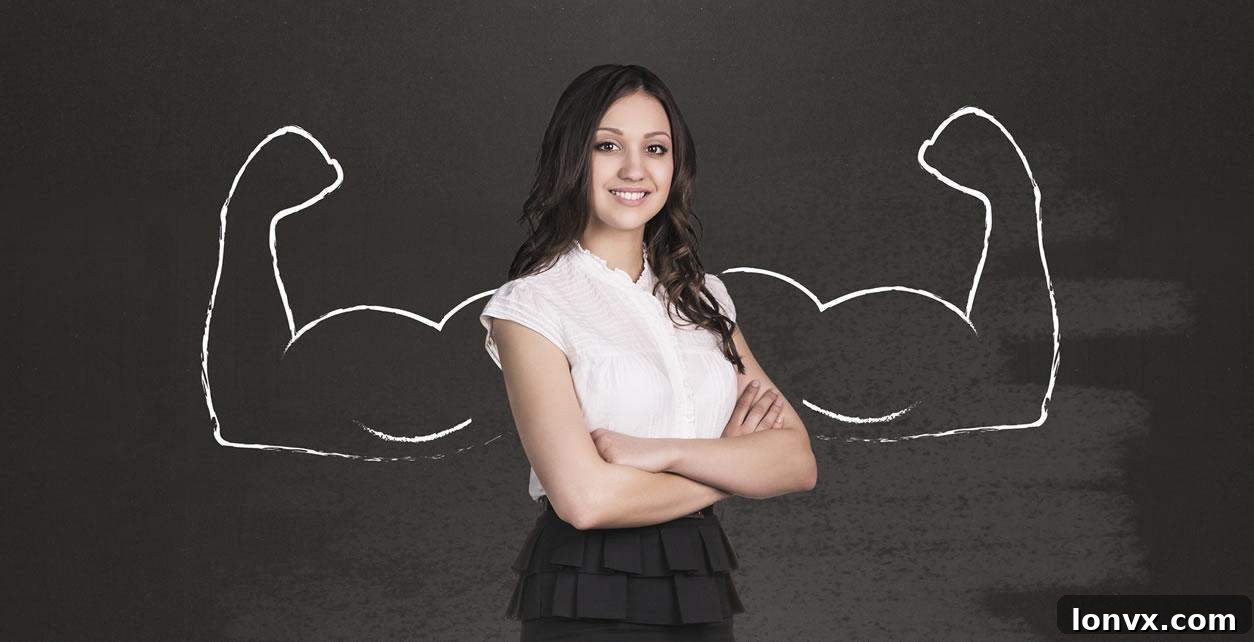
Unlock Your Inner Confidence: The Transformative Power of Posing for Success
In the realm of personal development and motivational speaking, the adage “Fake it till you make it” has long resonated with those seeking to navigate challenging situations. While often perceived as a superficial strategy, this popular saying holds a profound truth, especially when applied to high-stress environments where first impressions are paramount. The underlying wisdom suggests an imperative to project an image of self-assurance and capability, even when internal doubts or overwhelming emotions threaten to undermine one’s resolve.
Our daily interactions are complex dances of communication, a blend of spoken words and unspoken signals. It is a well-established fact that human communication is dual-faceted, encompassing both verbal and non-verbal cues. More critically, individuals are assessed and often judged within mere seconds of an initial encounter. This rapid evaluation process is particularly influential in first meetings, where our body language and non-verbal communication often dictate how others perceive us, and subsequently, how receptive they become to our verbal messages. Groundbreaking research, particularly from institutions like Harvard University, has now provided compelling scientific evidence that this age-old wisdom — “Fake it till you make it” — is not just motivational rhetoric, but a verifiable strategy rooted in human physiology and psychology.
The Profound Connection Between Mind and Body: A Two-Way Street
The intricate relationship between our minds and bodies is a dynamic, bidirectional feedback loop. Our thoughts, emotions, and psychological states profoundly influence our physical responses. For instance, anxiety can trigger a racing heart, shallow breathing, and muscular tension. Conversely, our physical positions, movements, and even internal bodily chemistry can directly impact our emotional landscape and cognitive processes. The body is not merely a vessel for the mind; it actively participates in shaping our internal experiences. It generates various chemicals and hormones in response to physical postures and movements, while simultaneously reacting to the continuous stream of cues originating from our thought patterns and emotional states.
This powerful mind-body interaction is largely mediated by a delicate balance of hormones, two of which play pivotal roles in modulating our sense of confidence and our experience of stress: testosterone and cortisol. When testosterone is released into the bloodstream, it acts as a powerful catalyst, instilling feelings of confidence, assertiveness, and a readiness to engage. It encourages risk-taking and competitive drive. In stark contrast, cortisol, often dubbed the “stress hormone,” primes the body for a “fight or flight” response, but can also trigger withdrawal, self-preservation behaviors, and a sense of vulnerability when its levels surge. Crucially, these potent hormones are highly responsive to our body language, and in turn, their fluctuating levels profoundly influence our thinking, our emotional reactions, and our overall psychological state.
Power Posing: Harnessing Hormones for Instant Confidence
The concept of “power posing” has revolutionized our understanding of self-confidence and its physiological underpinnings. Harvard researcher Dr. Amy Cuddy, whose work has gained global recognition, identifies “power poses” as expansive, open stances that convey dominance, confidence, and strength. Think of an Olympic athlete standing on the podium with arms raised in triumph, or a successful leader commanding a boardroom with an open, assertive posture. These are not merely external displays; they are internal catalysts. Dr. Cuddy’s compelling research demonstrates that intentionally adopting one of these power poses for as little as two minutes is sufficient to trigger a measurable physiological shift: an increase in testosterone production within the body. This surge in testosterone, a naturally occurring steroid hormone, directly translates into a palpable sense of naturally induced confidence and assertiveness.
The scientific validation for this phenomenon is robust. Through a series of carefully designed experiments, participants’ saliva samples were collected and analyzed both before and after engaging in “power poses.” The results consistently showed significant increases in testosterone levels among those who held expansive postures. This biochemical change underscores the direct link between our physical expression and our internal chemistry, offering a powerful, accessible tool for influencing our own psychological state before crucial moments.
The Dual Impact of Testosterone: From Competitiveness to Well-being
Testosterone plays a far more expansive role than simply boosting confidence. It is intrinsically linked to a range of behaviors and psychological states that are essential for personal and professional success. Elevated testosterone levels are associated with increased competitiveness, a stronger drive to achieve goals, and a significant boost in self-esteem. Individuals with healthy testosterone levels often exhibit greater resilience, a higher tolerance for risk, and an enhanced capacity for assertive communication. Even participating in competitive activities can cause these levels to fluctuate, indicating a dynamic interplay between our environment and our internal biology.
Conversely, low testosterone levels can have detrimental effects on an individual’s psychological well-being and cognitive function. These effects can manifest as a marked loss of confidence, a debilitating lack of motivation, and a diminished ability to concentrate on tasks. Furthermore, individuals experiencing low testosterone may report feelings of sadness, persistent fatigue, sleep disturbances, and a general lack of energy and vitality. Understanding testosterone’s multifaceted role highlights why its intentional manipulation through methods like power posing can have such a profound and widespread positive impact on one’s life.
Decoding the Body’s Hormonal Command Center
The human body possesses an intricate and sophisticated system for regulating hormone levels, including testosterone. This delicate balance is maintained through a complex cascade of signals transmitted via hormones and chemical messengers released into the bloodstream. At the helm of this system is the hypothalamus, a vital region in the brain, which acts as the body’s command center. The hypothalamus communicates with the pituitary gland, instructing it on the precise amount of testosterone required. In turn, the pituitary gland relays this crucial information to the appropriate glands in the body, initiating or curbing testosterone production. However, fascinatingly, this finely tuned hypothalamic-pituitary axis can be influenced, or “fooled,” by intentional physical motion and posture. This neurological loophole is precisely why the deliberate assumption of a “power pose” can effectively elevate hormone levels, thereby bypassing the traditional thought-to-emotion pathway and directly influencing our internal state.
It is important to contextualize, however, that while testosterone is a powerful determinant, it is but one of many factors that collectively influence an individual’s personality responses, emotional regulation, and behavioral patterns. The interplay of genetics, environment, social conditioning, and other neurochemicals all contribute to the rich tapestry of human experience.
The Shadow Side of Body Language: Understanding Submissive Poses
Just as open and expansive postures can elevate confidence-boosting hormones, adopting closed, constricted, or “submissive poses” can have the opposite effect. When we withdraw into a hunched posture, cross our arms tightly, or make ourselves appear smaller, we are not only signaling submission and surrender to those around us in a non-verbal manner, but we are also triggering a significant internal shift. In these closed physical stances, the hormone cortisol tends to dominate. While cortisol’s primary functions are metabolic – regulating metabolism, modulating blood sugar, and reducing inflammation – it also plays a critical role in ion transport, the immune response, and even memory formation. More relevant to our discussion, cortisol is a key component of our body’s stress response system, activating the primal “fight or flight” mechanism. Elevated cortisol levels, while adaptive in acute danger, can create feelings of anxiety, diminish risk-taking, impair cognitive function, and foster a desire to retreat, thus reinforcing feelings of vulnerability and stress.
Practical Application: Integrating Power Posing into Your Routine
The implications of this research are profoundly practical. Before you step into a high-stakes meeting, a crucial job interview, a public speaking engagement, a significant social gathering, or even a casual encounter where you wish to project an air of confidence, remember the power you hold within your own body. Take a mere couple of minutes in a private space – perhaps a restroom stall, an empty office, or even your car – to intentionally assume a “power pose.” Stand tall, shoulders back, hands on your hips like a superhero, or stretch your arms wide. This simple, brief physical act is enough to stimulate the production of testosterone, actively recalibrating your non-verbal signals and aligning your internal thoughts with peak performance. Whatever fears, anxieties, or self-doubts may be swirling in your mind can be effectively mitigated by “fooling” your brain into a confident, assertive frame of mind through the direct action of your body.
This deliberate act allows you to enter any situation not just mentally prepared, but also physiologically optimized for success. It transforms pre-performance jitters into focused energy and replaces apprehension with a grounded sense of self-assurance. Consistent practice of power posing can also lead to more enduring changes, gradually embedding a stronger sense of confidence into your baseline personality.
From “Faking” to “Creating”: The Evolution of Self-Belief
The scientific insights gleaned from extensive research into non-verbal communication suggest a powerful rephrasing of the old adage. Instead of merely “Fake it till you make it,” the more accurate and empowering mantra should be: “Fake it till you create it.” This subtle yet significant shift in terminology encapsulates the true mechanism at play. It’s not about sustained pretense; it’s about initiating a cascade of internal physiological changes that genuinely cultivate and solidify a state of confidence. You are not just acting confident; you are actively engaging in a biological process that generates authentic self-assurance from within. The most impactful leaders, successful professionals, and charismatic individuals don’t merely think a certain way; they carry themselves in a certain way. Their posture, their gestures, their very presence radiates authority and self-belief. The remarkable truth is that this powerful ability is not reserved for an elite few. Through the intentional application of power posing, anyone can learn to harness their body’s inherent capacity to create confidence, transforming perceived weaknesses into genuine strengths and unlocking their full potential. You possess the innate ability to sculpt your internal state through your external form, fundamentally changing how you feel, how you act, and ultimately, how others perceive you.