
The Canadian housing landscape is undergoing a significant transformation, with a new report from RBC revealing that the number of Canadians choosing to rent their homes has reached an unprecedented peak. This comprehensive analysis, drawing insights from the 2021 Census data by economists Robert Hogue and Rachel Battaglia, underscores a pivotal shift in the nation’s residential patterns. In 2021, a staggering five million households were living in rented accommodations, marking a substantial increase from just over four million a decade prior. This surge in renter households reflects more than just a growing population; it points to deeper economic and social currents reshaping the very definition of homeownership in Canada.
While homeowners still represent the majority, outnumbering renters by a ratio of two-to-one, the growth dynamics tell a compelling story. Over the past decade, renters have been the primary drivers of growth in the housing sector. The number of renter households expanded by an impressive 876,000 homes, a robust 22 percent increase. In stark contrast, owner households saw a more modest rise of 770,000, or eight percent, during the same period. This disparity highlights a crucial trend: renting is not merely a temporary phase for a select few but an increasingly prevalent and enduring reality for a growing segment of the Canadian population, reflecting evolving financial realities and lifestyle choices.
Millennials Are Navigating a Challenging Path to Homeownership
One of the most striking findings of the RBC report pertains to the experiences of younger generations, particularly millennials, who are facing distinct challenges in their journey towards homeownership compared to their predecessors. Economists note a wealth of evidence indicating that millennials are not ascending the housing ladder with the same ease or at the same pace as their parents’ generation. The report explicitly states, “Data suggests millennials’ ownership rates are lagging those of previous generations at the same age.” This delay is significant, with millennials “lingering in rentership three to five years longer than their baby boomer counterparts” were at the same life stage. This generational gap underscores a fundamental shift in the accessibility of homeownership.
For many millennials, this prolonged period of renting is far from a conscious choice. The primary impediment, as identified by economists, is the increasingly challenging affordability conditions prevalent across Canada. Despite a multitude of government programs and initiatives designed to support first-time homebuyers, the dream of owning a home remains elusive for a substantial portion of this demographic. The national home ownership rate, which stood at 66 percent in 2021, is now on a downward trajectory, steadily approaching the OECD average of 64 percent. This convergence with international norms suggests that the unique Canadian aspiration for widespread homeownership is being tested by severe market pressures. Factors such as stagnant wage growth relative to soaring housing prices, mounting student debt, and stricter mortgage qualification rules collectively contribute to an environment where accumulating a down payment and servicing a mortgage have become formidable hurdles for many young Canadians, forcing them to remain in the rental market for extended periods.
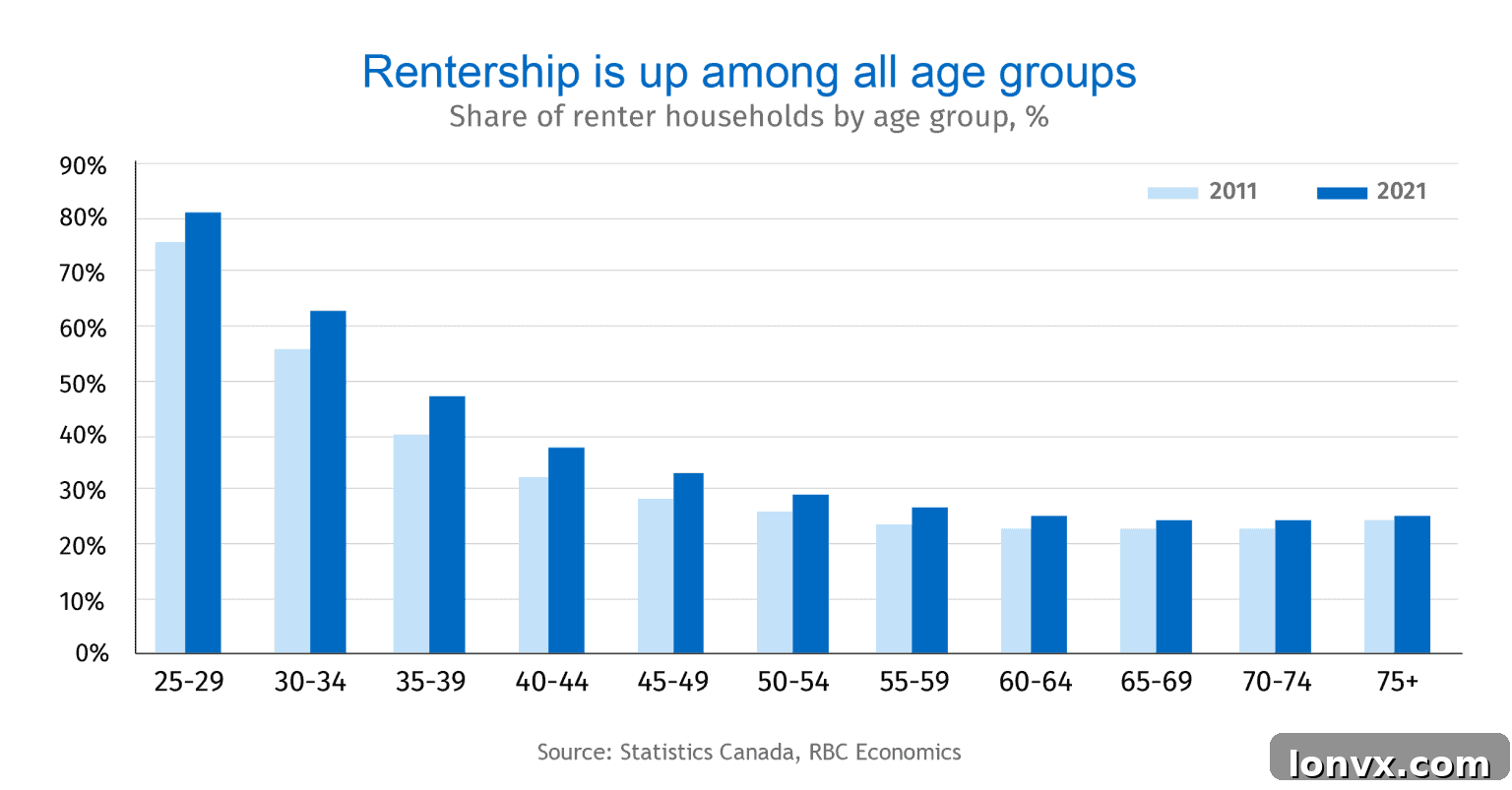
The Rental Boom: A Broader Demographic Trend Beyond Youth
While the struggles of millennials often dominate discussions about the Canadian rental market, the RBC report reveals that the surge in renting is not exclusively a phenomenon limited to younger generations residing in urban centers. Recent census data points to a far broader and more pervasive shift that has taken hold over the last decade, indicating a fundamental re-evaluation of housing preferences and necessities across all age groups. Between 2011 and 2021, an unexpected demographic emerged as a leading force in the rental market: Baby Boomers. This cohort, Canada’s largest generation, actually surpassed millennials as the fastest-growing group of renters. This surprising trend challenges conventional wisdom, suggesting that older Canadians are increasingly opting for, or being driven into, rental accommodations.
The report further illustrates the widespread nature of this shift by noting that the share of renter households has expanded across municipalities of all sizes, from bustling metropolises to smaller, more suburban and rural communities. Over the past ten years, renter growth was notably strong across the board, with growth rates in smaller cities mirroring those observed in larger urban centers. This widespread pattern suggests that while housing affordability issues in major urban areas undoubtedly play a significant role, they are not the sole driving force behind Canada’s evolving rental landscape. Other factors, such as changing lifestyle preferences, the desire for greater flexibility, the rising costs of property maintenance, and even a strategic financial decision to free up capital, are increasingly influencing housing choices for diverse demographics, including those well into their retirement years. This broader demographic participation in the rental market signifies a fundamental recalibration of housing norms, moving beyond the traditional linear path of homeownership for all.
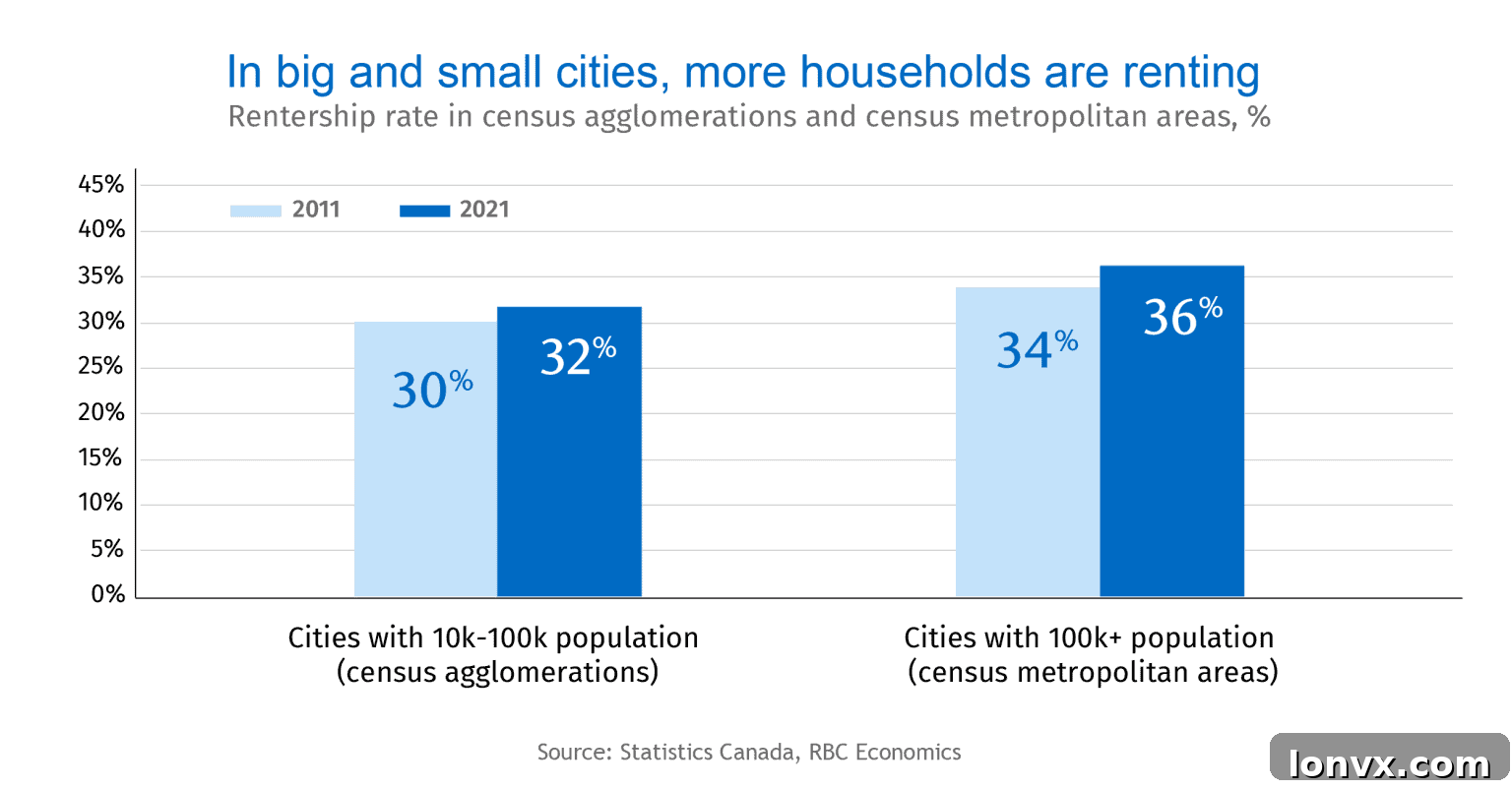
Diverse Demographics Fueling Unprecedented Rental Demand
Beyond generational shifts and affordability concerns, several key demographic trends are acting as powerful catalysts, significantly boosting the demand for rental housing across Canada. According to economists Hogue and Battaglia, two primary drivers are Canada’s robust immigration targets and its steadily aging population. Canada’s proactive immigration policies, aimed at fostering economic growth and addressing labor shortages, have led to a substantial influx of newcomers. These new Canadians, upon arrival, overwhelmingly turn to the rental market as their initial housing solution. The report highlights that of the one million recent immigrants living in private dwellings in 2018, a striking 56 percent (equivalent to 640,700 individuals) resided in rented accommodations. This figure is nearly double the national average, underscoring that immigrants represent a disproportionately high share of rental households in Canada. Their immediate housing needs place considerable pressure on the existing rental stock, particularly in major gateway cities.
Concurrently, Canada’s aging population is also significantly bolstering rental demand. The RBC analysis indicates a notable increase in seniors choosing or needing to rent. In 2021, nearly a quarter (22 percent) of the five million tenant-occupied dwellings were inhabited by seniors aged 65 and up. This represents a three-percentage-point increase from the 19 percent share reported in 2011. This trend is driven by various factors, including the desire for maintenance-free living, proximity to healthcare services and amenities, the flexibility to downsize without the complexities of selling a home, or simply the financial prudence of leveraging housing equity in retirement. The combined effect of immigration and an aging populace creates a dynamic and increasing demand for rental units suited to diverse needs and life stages.
Another crucial demographic shift influencing rental demand is the growing number of Canadians opting to live alone. Modern societal trends point towards smaller household sizes, with more individuals choosing independent living arrangements. Since covering the high costs of homeownership often necessitates a dual income or significant personal savings, many single individuals find renting to be the most viable and financially manageable option. The report reveals a significant milestone: as of 2016, persons living alone had surpassed married couples as the most prominent household type, representing nearly 30 percent of all households last year. This trend of single-person households, coupled with the escalating costs of ownership, further accentuates the reliance on the rental market. These interconnected demographic and behavioral trends are not fleeting; the report projects that they “expect these demographic and behavioural trends to continue fueling demand for rental housing in the years ahead,” signaling a sustained and intensifying need for rental solutions across the country.
Urgent Call for Diverse and Adequate Rental Options
The confluence of surging demand from various demographic groups, coupled with historical underinvestment in rental housing, is placing an unprecedented and continuous strain on Canada’s rental stock. The RBC economists emphatically state that the current inventory is “already stretched and inadequate in many parts of the country,” a situation that poses significant challenges for individuals and communities alike. To mitigate this escalating crisis and ensure a healthy, balanced housing market, there is an urgent and clear call for “a lot more” of the right kind of rental units, units that are specifically designed to meet both the diverse demand and varied income levels of Canadians. This crucial need extends beyond simply building more apartments; it encompasses creating “rental options suitable for families,” which includes larger units in “neighbourhoods close to schools and other amenities.” The lack of family-friendly rental housing contributes to urban sprawl and limits choices for those who prefer or need to rent.
The report further elaborates on the evolving preferences within the rental market, noting the sharp rise in renter households occupying single and semi-detached homes, an increase of 33 percent over the last decade. This specific trend underscores a burgeoning need for rental housing in lower-density areas, challenging the traditional perception that rental units are solely confined to high-rise urban complexes. It highlights a desire among renters for more space, private outdoor areas, and quieter environments, often found in suburban or exurban settings. Addressing this demand requires a shift in urban planning and development strategies to encourage more diverse housing types beyond single-family detached homes or towering condominiums.
A critical component of broadening rental options, particularly in the country’s largest cities, involves tackling the “missing middle.” This term refers to housing types that bridge the gap between detached single-family homes and high-rise apartment buildings, such as duplexes, townhouses, row houses, and low-rise multi-unit developments. These housing forms offer greater density than detached homes while providing more space and a sense of community than high-rises, often at a more accessible price point. Implementing policies that encourage the construction of missing middle housing can significantly enhance the variety and affordability of rental options available to a wider spectrum of the population.
Fortunately, there is a golden opportunity to address these systemic housing challenges. With the federal government, alongside several provincial governments (such as Ontario), setting ambitious targets to double housing construction over the next decade, a concerted effort can be made to rectify the current imbalances. The report concludes that this ambitious goal can be achieved “through the right mix of policies, regulatory changes and incentives.” This includes streamlining zoning bylaws, providing financial incentives for developers to build purpose-built rental housing, investing in infrastructure to support new developments, and fostering partnerships between public and private sectors. By strategically leveraging this period of intensified construction, Canada has the potential to transform its housing landscape, ensuring that all Canadians, regardless of their income or life stage, have access to adequate, affordable, and suitable rental accommodations. The time for decisive action to support the nation’s growing renter population and strengthen the overall housing ecosystem is now.
For a complete and in-depth understanding of these trends and their broader implications, readers are encouraged to consult the full report from RBC here.