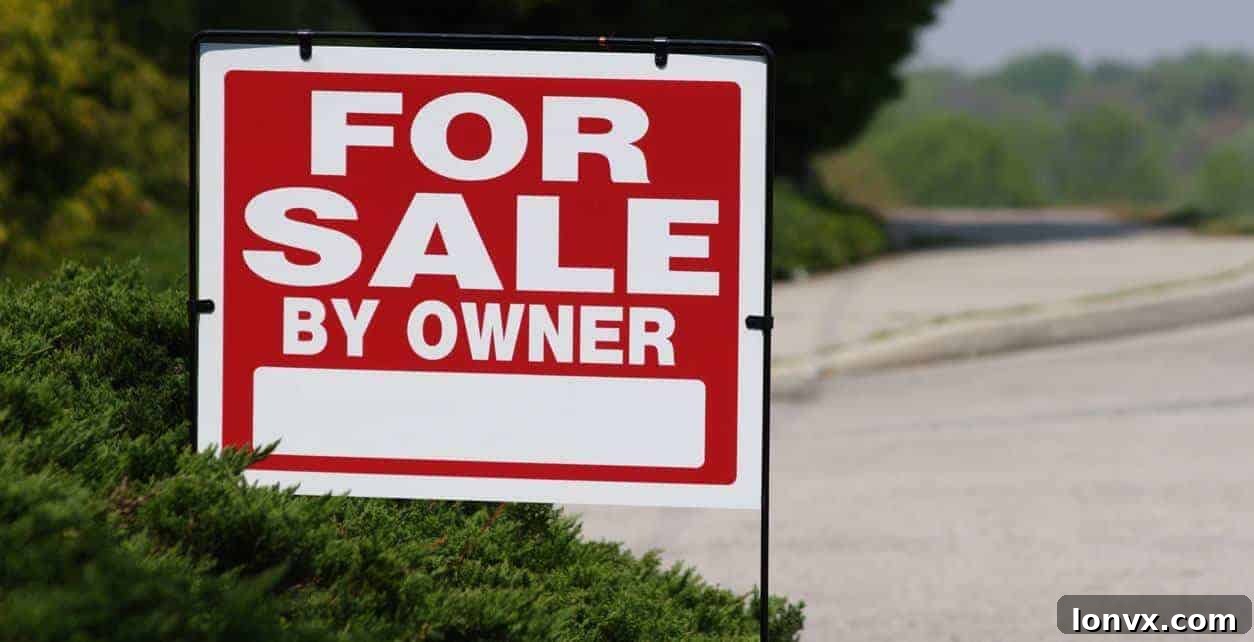
The Hidden Dangers of Selling Your Home For Sale By Owner (FSBO)
The allure of selling your home yourself, bypassing traditional real estate agents, is undeniably strong. Driven by countless online stories and print articles, the “For Sale By Owner” (FSBO) path promises significant savings by eliminating commission fees. Do-it-yourself property sale platforms frequently highlight the thousands of dollars you could theoretically keep in your pocket, making the prospect seem like a financially savvy choice for any homeowner.
However, what many aspiring FSBO sellers don’t realize—and what these DIY companies often gloss over or entirely omit—is the vast landscape of legal complexities, financial pitfalls, and unforeseen challenges that lie beneath the surface of a seemingly simple transaction. Ignorance in this arena can quickly transform potential savings into substantial litigation and devastating financial loss. While the initial appeal of saving commission might be compelling, a deeper dive reveals a world where professional guidance isn’t just a convenience, but a crucial safeguard.
The Illusion of Commission Savings: A Closer Look at the Numbers
One of the primary selling points for the FSBO model is the direct transfer of commission savings into the seller’s bank account. Consider a home valued at $388,000. A typical 4.5% real estate commission could amount to over $17,000. At first glance, this figure appears to be a substantial sum that you could retain by handling the sale yourself. This simple calculation forms the cornerstone of the DIY property sales pitch, encouraging homeowners to visualize those “zeros” accumulating in their personal accounts.
Yet, this perspective often overlooks a critical market dynamic: buyer behavior. What sellers often fail to understand is that prospective buyers are acutely aware when a property is listed as FSBO and no agent commission is being paid. Consequently, buyers naturally expect to pay less for the property. They factor the absence of commission into their offer, knowing that the seller isn’t incurring that cost. Buyers are rarely willing to pay an inflated price just so the seller can enjoy the entirety of the commission savings. Instead, they anticipate a discount, effectively nullifying the perceived financial advantage for the seller.
Understanding Buyer Psychology in FSBO Transactions
In a competitive market, buyers are always looking for value. When they see an FSBO listing, it signals an opportunity to negotiate a lower price. They rationalize that if the seller is saving $17,000 on commission, a portion of that saving should be passed on to them. This isn’t just speculation; it’s a common negotiation tactic. So, while you might save a flat fee of around $900 with a DIY company compared to a $17,000 commission, the final selling price could very well be $10,000 to $15,000 lower than what a professionally represented home might fetch, eroding any actual savings.
The DIY companies effectively market the idea that real estate transactions are primarily about “salesmanship.” They suggest that anyone can facilitate a transaction if they find a buyer. This perspective, however, dangerously oversimplifies a process that is far more complex than a simple exchange of goods for money. The true value of a real estate professional extends far beyond merely “finding a buyer.”
Beyond the Sale: The Intricate Legal Landscape of Real Estate
What most home sellers don’t grasp is that a significant portion of any real estate transaction is inherently legal. It’s a realm governed by intricate laws, contracts, disclosure requirements, and state-specific regulations. In this complex legal environment, what you don’t know isn’t just a minor inconvenience; it can expose you to a world of financial pain, legal battles, and unforeseen liabilities. The legal implications are vast and constantly evolving, making professional guidance indispensable.
Critical Legal Documents and Disclosure Requirements
Every home sale involves a multitude of legally binding documents, each with specific requirements and implications. These include, but are not limited to, the purchase agreement, counter-offers, various addendums, property condition disclosures, lead-based paint disclosures, natural hazard disclosures, and local municipal disclosures. Each document must be meticulously completed, understood, and executed in compliance with state and federal laws. A single missed disclosure or an improperly worded clause can lead to significant legal challenges down the line, potentially forcing a seller to remediate issues, pay substantial damages, or even reverse a sale.
A real estate agent, backed by their brokerage’s legal team and extensive training, acts as a crucial guide through this labyrinth of paperwork. They ensure that all necessary disclosures are made, all contracts are properly drawn, and all legal obligations are met, thereby safeguarding the seller from future legal entanglements.
The Dangers of Unsupervised Transactions: A Cautionary Tale
The importance of legal oversight in real estate is starkly illustrated by real-world examples. Laura Riddle, in her book Sell Your Home Now, recounts a chilling story of a private seller who learned this lesson the hard way. This seller, confident in their ability to handle the transaction, encountered a charismatic and seemingly helpful buyer. The buyer, appearing knowledgeable and trustworthy, offered assistance with the paperwork, stating, “I know what I’m doing; let me help you with the paperwork.”
Trusting this individual, the seller signed what they believed to be routine documentation. Unbeknownst to them, they had signed a notarized quitclaim deed – a legal document that irrevocably transfers property ownership. Typically, such critical documents are held in escrow or by an attorney until all conditions of the sale are met and funds are officially transferred. In this tragic instance, the unscrupulous buyer immediately filed the quitclaim deed, effectively taking ownership of the house for a mere $10 filing fee. The case escalated to court, highlighting the immense vulnerability of unrepresented sellers. As Riddle wisely advises, “Be on your guard; getting a buyer is just one-tenth of the process.” If finding a buyer is only one-tenth, the remaining nine-tenths are dominated by legal, financial, and logistical complexities that DIY companies conveniently omit from their narrative.
Navigating Financial Minefields: Beyond the Initial Offer
The risks for FSBO sellers don’t conclude once an offer is accepted and papers are signed. Hidden dangers can emerge even after the possession date, jeopardizing the entire transaction. Jeff Stern of Re/Max Performance Realty in Winnipeg, in his article The Shocking Hidden Costs of DIY Home Selling, sheds light on a particularly insidious issue: post-possession financing collapses.
The Unseen Threat: Post-Possession Financing Collapse
Stern explains a scenario that can have catastrophic consequences for sellers: “Once possession date arrives … just before the bank releases funds, there is another inquiry into the buyer’s credit to confirm there have not been any negative changes.” This crucial re-verification, which can occur anywhere from seven to 30 days after the buyer has taken possession of the property, is often unknown to unrepresented sellers.
The critical detail here is that if any negative changes have occurred in the buyer’s credit profile during this post-possession period, the bank is not obligated to fund the sale. This means that even after the buyer has moved in and started living in the home, the purchase can still fall through. While rare, it does happen. In such instances, a real estate agent and the buyer typically scramble to secure approval from an alternative lender, working tirelessly to salvage the deal. For an FSBO seller, however, this scenario can swiftly devolve into protracted litigation, significant financial loss (including legal fees, potential damage to the property, and lost market time), and an immense amount of stress and emotional pain.
The bottom line is that DIY sellers proceed unprotected through most critical aspects of the transaction. From the initial negotiation to the final closing and even post-possession, they lack the professional buffer, expert advice, and established networks that an experienced agent provides.
The Agent’s Unsung Role: Protection, Negotiation, and Peace of Mind
While the focus often remains on commission, a real estate agent’s value proposition extends far beyond mere transaction facilitation. They serve as a multi-faceted protector, negotiator, and strategist for their clients, offering invaluable peace of mind throughout what is often the largest financial transaction of a person’s life.
Shielding Sellers from Intimidation and Pressure
Let’s be frank: the real estate world is populated by a diverse array of professionals. Some agents are exemplary, while others might employ aggressive tactics. Homeowners, especially those new to selling, can be susceptible to high-pressure sales tactics. An agent might knock on a homeowner’s door, promising a quick sale or a specific buyer, contingent on signing an exclusive listing agreement. They can be incredibly convincing, employing charm, guilt, or even subtle intimidation to secure a client. A seller’s own agent, however, is well-versed in these tactics and can skillfully fend off such pressures, ensuring their client makes decisions free from coercion.
Furthermore, agents protect sellers from the buyers themselves. Direct interaction with buyers can be emotionally taxing. Buyers, often unsentimental, might offer blunt criticism of a home’s features or condition, which can be unsettling for a seller who has invested their heart and soul into their property. Buyers may also be relentlessly demanding about discounts or specific concessions. Moreover, some “buyers” are merely “looky-loos,” touring homes on a Sunday afternoon with no genuine intention to purchase. An agent provides a crucial third-party barrier, effectively filtering out time-consuming annoyances and maintaining an objective, professional distance during negotiations.
The Art of Negotiation and Objective Representation
Negotiation is an art form, and in real estate, it requires skill, experience, and emotional detachment. An agent acts as a dispassionate advocate, negotiating on the seller’s behalf without being swayed by personal attachments or emotional responses to offers or criticisms. They understand market values, current trends, and effective negotiation strategies, ensuring the seller secures the best possible terms and price. This includes handling counter-offers, navigating contingencies, and expertly resolving unforeseen issues that arise during the inspection or appraisal process. Their expertise can often result in a higher net sale price, even after accounting for their commission.
Marketing Expertise and Maximizing Exposure
Successfully selling a home in today’s market demands more than just a “For Sale” sign. Agents bring a powerful arsenal of marketing tools and expertise to the table. This includes professional photography, virtual tours, strategic staging advice, compelling property descriptions, and widespread listing on the Multiple Listing Service (MLS) – the most comprehensive database used by agents to find homes for their clients. Beyond the MLS, agents leverage their extensive professional networks, social media presence, and brokerage websites to maximize a property’s exposure to a broad and qualified pool of potential buyers. This comprehensive marketing strategy is crucial for attracting the right buyers and generating competitive offers, something a typical FSBO seller would struggle to replicate effectively.
The True Cost of DIY: Time, Stress, and Missed Opportunities
The “savings” touted by FSBO companies often fail to account for the invaluable commodities of time and peace of mind. As David Hodges noted in a 2012 article for MoneySense, “Many people who choose the FSBO route find it a stressful, time-consuming grind.” This sentiment is echoed by countless homeowners who have attempted to sell their property independently.
The Demands of Time and Effort
Selling a home is a full-time job. It involves responding to countless inquiries at all hours, scheduling and conducting showings, filtering out unqualified buyers, negotiating offers, understanding and managing complex paperwork, coordinating inspections and appraisals, and overseeing the closing process. For individuals already juggling work, family, and other commitments, these responsibilities can quickly become overwhelming, leading to exhaustion and frustration.
Consider the experience of Tawnia Vihos, who tried selling her Ottawa home via an FSBO service. She ultimately gave up, concluding, “It totally pays to have a real estate agent. More exposure and fewer headaches.” Her experience underscores a common realization: the perceived savings are often dwarfed by the immense investment of personal time and emotional energy required to navigate the complexities of a home sale without professional assistance.
The Value of Professional Guidance
The decision to sell a home DIY-style is akin to choosing to represent oneself in court. While it might save on legal fees, it’s an incredibly risky endeavor. Most individuals wouldn’t dare represent themselves in a complex legal battle because they recognize they would be up against skilled professionals in a highly specialized arena, risking significant harm. Somehow, this common sense often fails to translate to the realm of real estate, even though the legal and financial stakes are equally, if not more, substantial. A real estate agent, much like an attorney, acts as a skilled professional, navigating complicated terrain on your behalf, safeguarding your interests, and ultimately providing a smoother, more secure transaction.
Conclusion: Making an Informed Decision for Your Most Valuable Asset
In real estate, as in law, what you don’t know can do more than just hurt you—it can land you in major litigation and significant financial loss. The appealing promise of saving on commission often masks the profound complexities and inherent risks of selling a home without professional representation. While DIY property sales companies emphasize the immediate financial savings, they often fail to adequately prepare sellers for the intricate legal demands, the nuances of buyer psychology, the potential for post-possession financial complications, and the sheer time and emotional drain involved.
Entrusting your home sale to a qualified real estate agent is not merely an expense; it’s an investment in expertise, protection, and peace of mind. An agent brings market knowledge, negotiation skills, legal awareness, and a robust marketing strategy to ensure your most valuable asset is sold efficiently, securely, and for the best possible price, ultimately saving you from potential headaches, legal battles, and financial setbacks that often accompany the DIY path.