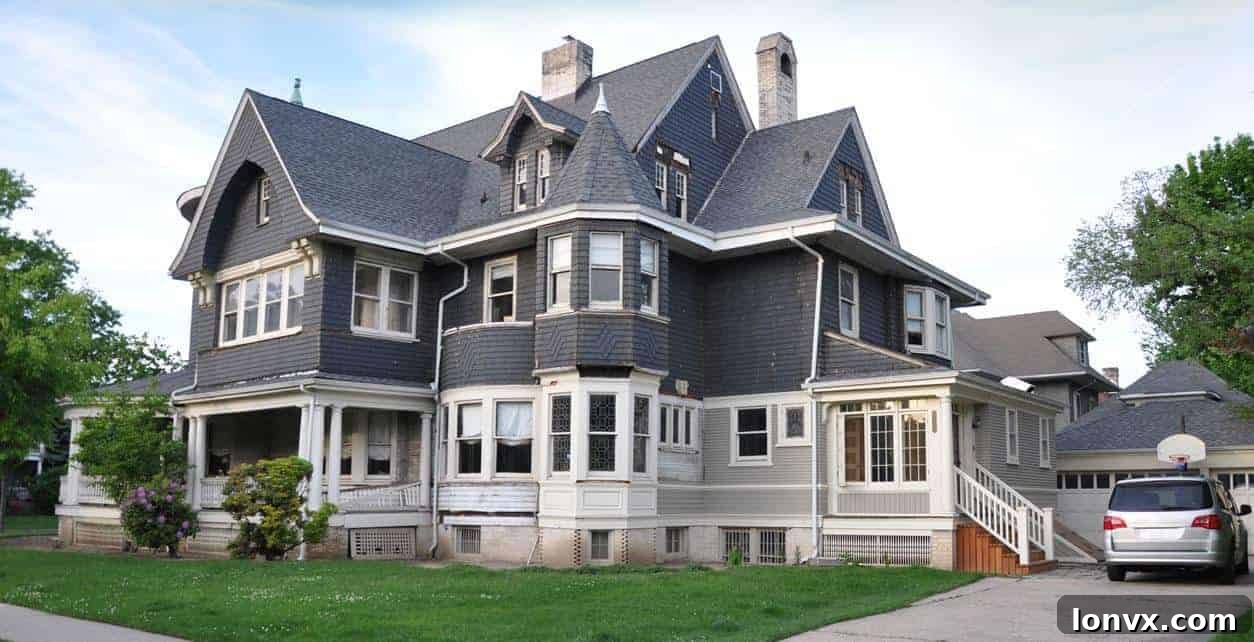
The Enduring Allure and Gritty Realities of Victorian Home Life
There is an undeniable charm to Victorian-style homes that has captivated imaginations for generations. Of all architectural forms, these grand and intricate structures hold a special place in my heart. Their distinctive features—from the inviting, often ornate porches that beckon visitors to the charming complexity of gabled rooftops—speak volumes about an era defined by craftsmanship and elaborate aesthetics. Many of these historical residences still proudly feature a carriage house, a tangible echo of a time when horses were not merely transport but an integral part of family life and a symbol of status.
Beyond their captivating facades, the interiors of Victorian homes were meticulously designed with a profound emphasis on functionality. In a period devoid of the widespread luxury and technological conveniences we enjoy today, every room, every hallway, and every structural element was built for a specific purpose. There was no scope for designing a space merely to accommodate a large dining table or a flat-screen television; practicality dictated the layout, ensuring that the home served its inhabitants efficiently and effectively, a true testament to the necessities of 19th-century living.
The Functional Blueprint: Understanding Victorian Home Layouts
The interior architecture of Victorian homes was a direct reflection of the prevailing social customs and technological limitations of the era. Efficiency in heating, for instance, was a paramount concern. The strategic placement of the kitchen stove and principal fireplaces was often calculated to leverage the natural principle of heat rising, thereby effectively warming the rooms above and conserving precious fuel. This intelligent design minimized waste and maximized comfort in a time when warmth was a valuable, hard-won commodity.
The kitchen, contrary to its modern role, often functioned as the true heart of the Victorian household—the equivalent of today’s family room. It was the central, warmest gathering place where the family congregated for meals, engaged in spirited games, and shared daily conversations. This room fostered a sense of togetherness and provided a much-needed respite from the often-chilly conditions found elsewhere in the house.
Separate from the main kitchen, typically located at the back of the house to contain noise and odors, was the scullery. This dedicated utility room was the nexus of strenuous culinary tasks. It was here that most of the cooking, dishwashing, and meal preparation took place, often equipped with a large sink, a work counter, and various cooking implements. The scullery ensured that the more formal kitchen area remained presentable for family use while the less glamorous, more arduous tasks were confined to a practical, utilitarian space.
In stark contrast, the parlour was a formal reception room situated at the front of the house, reserved almost exclusively for special occasions and entertaining esteemed company. Its decor was often more elaborate, signaling its status as a showcase for the family’s social standing and taste. However, heating this room required significant additional effort and cost, making it a space to be used sparingly, primarily for formal hospitality rather than everyday relaxation. This selective use highlighted the Victorian emphasis on social hierarchy and careful resource management.
A Day in the Life: Navigating Victorian Challenges
Life within a Victorian home was characterized by constant physical exertion and an ingenious reliance on manual labor, a stark departure from our modern, automated existence. Understanding the daily routines of this era provides invaluable insight into the sheer effort required to maintain a household.
Heating the Home: A Daily Battle Against the Cold
Keeping a Victorian home comfortably warm, particularly during the harsh winter months, was an ongoing, labor-intensive commitment. Coal served as the primary fuel source, delivered and stored in a designated “coal space” or cellar, usually located directly beneath the home for convenient access. It is fascinating to consider that this “coal space,” designed for storing the fuel that kept homes warm, may have linguistically evolved into the modern term “crawl space,” still used for similar subterranean areas today, albeit for different purposes.
The daily ritual involved stoking fires in multiple fireplaces and stoves, meticulously cleaning out ash, and managing the continuous supply of coal. This process was inherently messy, generating smoke and soot that permeated the house, adding to the constant demand for cleaning. Furthermore, the heat generated was often localized, leaving many areas of the house, especially bedrooms on upper floors, perpetually cool.
Sanitation and Hygiene: Rudimentary Solutions
The widespread adoption of indoor plumbing and flushing toilets was still decades away for most Victorian households. Consequently, residents relied on outdoor facilities, commonly referred to as a “biffy” or privy. This necessitated venturing outside, regardless of weather conditions, for basic needs—a significant inconvenience and a stark reminder of the era’s rudimentary public health infrastructure. For nighttime emergencies, the ubiquitous chamber pot was a necessity, discreetly kept under the bed and requiring daily emptying and thorough cleaning each morning, a far less glamorous start to the day than our modern conveniences afford.
Access to hot water for personal hygiene and household chores was another monumental undertaking, a stark contrast to the effortless flow from modern taps. Obtaining hot water involved heating large kettles or pots over a fire or stove, a time-consuming and laborious process. This made hot water a precious commodity, carefully conserved and strategically used. As a result, activities requiring substantial amounts of hot water, such as bathing and laundry, became significant household events, typically scheduled for specific days of the week.
Bath times, for instance, were often a communal and infrequent affair, generally occurring only once a week. Enough water had to be heated to allow every family member to take their turn, ensuring the removal of the week’s accumulated grime and dirt. This shared ritual underscored the value of hot water and the collective effort involved in maintaining personal cleanliness, highlighting the profound difference in hygiene standards compared to today.
Laundry Day: A Test of Endurance
Laundry in a Victorian home was perhaps one of the most physically demanding chores imaginable, a world away from the automated efficiency of modern washing machines. The process was exhaustive and required immense manual labor. It began with soaking garments, followed by vigorous scrubbing, often against a washboard, using harsh soaps. The wet clothing was then agitated, sometimes with a wooden “dolly”—a stick with a cross-shaped foot—in a large tub of water, a process designed to loosen dirt and stains.
After the initial wash, the arduous task of extracting water commenced. Clothes were either wrung out by hand or, more efficiently, squeezed through the heavy rollers of a “masher” or wringer. This hand-cranked device pressed out as much water as possible before the items were hung to dry. Rinsing involved repeating the entire process with fresh water, followed by another pass through the masher. This drawn-out affair often consumed an entire day, solidifying the term “laundry day” in the lexicon. The physical toll of lifting, scrubbing, wringing, and hanging heavy, wet garments was immense, demanding both strength and endurance.
Food Preservation Without Refrigeration
Sustenance in the Victorian era relied heavily on local resources and rigorous preservation techniques, as the luxury of an internal refrigerator was nonexistent. Gardens were indispensable, providing fresh vegetables and herbs, while the preservation of meat, milk, butter, and other perishables presented a formidable challenge. These items were typically stored in cool lockers, larders, or cellars, areas designed to naturally maintain lower temperatures. Wealthier households might have had access to ice houses, but for most, clever natural cooling methods were the only recourse.
The constant threat of food spoilage meant that vigilance was key. Milk and meat, in particular, often began to spoil before they could be fully consumed. To mitigate this, various ingenious methods were employed. Milk on the verge of turning sour was often “scalded”—heated to a high temperature just below boiling—a technique that temporarily extended its freshness. Meat, to deter spoilage and perhaps mask incipient odors, was frequently rubbed with vinegar prior to cooking, a practice believed to inhibit bacterial growth and enhance palatability.
Other vital preservation techniques included salting, pickling, smoking, and drying. These time-honored methods were crucial for ensuring a year-round food supply, particularly during the lean winter months. The daily management of food, from procurement to preparation and preservation, was a continuous and vital component of Victorian household routines, demanding constant attention and considerable physical effort.
The Myth vs. Reality: Romanticism of the Victorian Era
It is all too easy to view the Victorian era through the lens of romanticized literature, lavish period dramas, and nostalgic art, envisioning a world of elegant soirées, grand architecture, and refined social graces. Indeed, countless stories and artistic depictions have contributed to this alluring, yet often incomplete, perception. However, the stark reality of daily life for the vast majority of people living in Victorian homes was anything but idyllic. It was an exceptionally physical and demanding existence, characterized by a relentless cycle of chores that were both time-consuming and often incredibly difficult. The phrase “working for a living” held a profoundly literal and often harsh meaning for those who toiled tirelessly within their homes and communities.
The contrast between this arduous past and our present-day lives, separated by just over a century, could not be more pronounced. We are the fortunate beneficiaries of an unparalleled age of convenience and technological advancement that has fundamentally reshaped the domestic sphere. The daily struggles faced by our Victorian ancestors highlight the extraordinary progress humanity has made in elevating basic living conditions and significantly reducing the sheer physical burden of household management.
A Transformed World: Appreciating Modern Conveniences
Consider, for a moment, the myriad comforts we now effortlessly enjoy. We have indoor, flushing toilets that offer privacy, hygiene, and convenience unimaginable to most Victorians. Hot water flows instantaneously from our taps, eliminating hours of manual heating and cautious conservation. Electricity bathes our homes in light at the flick of a switch, banishing the gloom and fire hazards of candles and oil lamps, and powers a vast array of appliances that have revolutionized domestic labor.
Washing machines and clothes dryers have transformed the once full-day ordeal of “laundry day” into a manageable chore completed in a matter of hours. High-tech ovens and dishwashers simplify meal preparation and cleanup dramatically. Our homes are maintained at a precise, comfortable temperature with the mere touch of a thermostat, a stark departure from the constant stoking of coal fires. And perhaps most revolutionary of all, food is readily available at grocery stores, offering an incredible variety that we can effortlessly bring home and preserve in our refrigerators, preventing spoilage and ensuring fresh ingredients year-round.
Beyond these foundational conveniences, the relentless evolution of electronics and technology continues at an astounding pace, introducing innovations that cater to every imaginable need. From sophisticated smart home systems that automate our living spaces to seemingly trivial apps that offer personalized feedback on everything from our sleep patterns to, humorously, whether we are brushing our teeth too hard, these advancements represent a level of comfort and automation that would have been pure science fiction to someone in the 1800s.
Reflecting on the formidable challenges faced within a Victorian home allows us to cultivate a profound and genuine appreciation for the often-overlooked amenities that define our modern existence. The next time we reach for that cold, fresh glass of milk from the refrigerator, or effortlessly turn on a hot shower, let it serve as a powerful reminder of how far we have truly come. It reminds us of the silent, daily battles our ancestors fought simply to live comfortably. The romanticized image of the Victorian era, while captivating, ultimately fades against the backdrop of its arduous practical realities, making our present-day comforts all the more precious and remarkable.