In the vibrant, sought-after Leslieville neighbourhood of Toronto, the dream of homeownership often feels like a distant fantasy for many. For Andy Stark, a 53-year-old instructor at George Brown College, this sentiment was particularly acute. A self-described serial renter for years, he harboured a growing desire to finally put down roots for his family of four. Yet, despite accumulating a substantial $190,000 down payment, the stark reality of Toronto’s hyper-competitive real estate market loomed large. His capital, impressive as it might seem, was simply insufficient to secure the family home he envisioned in his preferred part of the city. Stark’s predicament mirrors that of countless individuals and families across metropolitan areas, grappling with the escalating costs of housing and the elusive nature of traditional homeownership.
This challenging landscape, however, is precisely where visionary real estate professionals are stepping in to redefine possibilities. Enter Lesli Gaynor, a dynamic Toronto sales representative with Royal LePage Burloak Real Estate. Gaynor is not just another agent; she’s rapidly becoming recognized as a pioneering matchmaker, connecting aspiring homeowners who lack the individual capital to purchase property independently. With a diverse background as a former social worker and restaurateur, Gaynor brings a unique blend of empathy, community-building instincts, and business acumen to the traditionally rigid world of real estate. She is actively working to revolutionize outdated homeownership models by aligning like-minded individuals, proving that a collaborative approach can unlock the door to property ownership for many.
Gaynor’s innovative approach materializes through curated events designed to foster connections among potential co-owners. These gatherings, often described as akin to speed dating, provide a relaxed yet structured environment for interested parties to meet, share their aspirations, and explore potential partnerships. “The fun part is it gets us thinking differently about property ownership,” Gaynor, also 53, explains with infectious enthusiasm. She emphasizes that the modern definition of ‘family’ and ‘household’ is evolving. “People are living differently, and they don’t have to love each other to live together.” The benefits, she argues, extend far beyond just shared financial burdens. “There are practical advantages: you walk my dog and I walk yours, and you save 50 bucks a month. No one’s expecting dinner to be served or your laundry to be done, but there are also significant social benefits that enrich daily life.”
Andy Stark’s journey with Gaynor exemplifies the potential and the nuances of this model. Lesli successfully connected Stark and his family with a woman in her 70s who was also keen on a co-operative living arrangement. This potential partnership highlighted the rich tapestry of mutual benefits that can arise from such an alliance. For the elder woman, the arrangement promised reliable assistance with yard work and general home maintenance, offering peace of mind. For Stark, the hope was that she might become a grandmotherly figure for his young sons, adding a valuable intergenerational dynamic to their household. While this particular match ultimately did not materialize, with the woman later deciding to back off, Stark remains undeterred and optimistic. He recognizes the global context: “Lesli brought the idea to the table that we can co-own and we were copacetic with someone who would be a good fit. In other parts of the world, people are doing all kinds of creative things to own a home.” This international perspective underscores the burgeoning acceptance of alternative housing solutions.
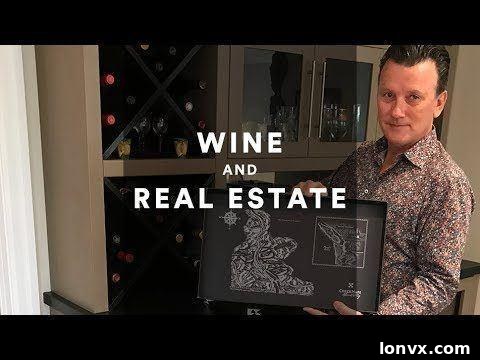
Lesli Gaynor at a real estate meet and greet event that’s like speed dating, fostering connections for co-ownership opportunities.
The concept of co-ownership among non-intimate partners forms the very foundation of GoCo Solutions, Gaynor’s visionary startup. Through her website, www.gocosolutions.com, she provides comprehensive guidance on every aspect of the co-ownership journey. This includes crucial advice on how to initiate the process, effective strategies for finding compatible partners, and practical steps for securing the necessary financing. GoCo Solutions aims to demystify co-ownership, making it an accessible and viable path for those traditionally locked out of the housing market.
Gaynor’s deep understanding and fervent belief in co-operative homeownership are rooted in her own pioneering experience. Twenty-six years ago, long before it became a burgeoning trend, she co-purchased a home in Toronto’s vibrant Parkdale neighbourhood with a close girlfriend. As a single mother at the time, Gaynor resided on the downstairs level with her baby, while her friend occupied the upstairs. This arrangement thrived for seven years, offering both individuals immense benefits. For Gaynor, having an on-the-spot babysitter was an invaluable convenience, providing both flexibility and peace of mind. Moreover, the shared financial burden significantly reduced the scary and often costly prospect of tackling homeownership alone, highlighting the substantial practical advantages of communal living.
“I’ve always believed in this communal approach,” she affirms, reflecting on her past. “Living that way made our lives better for that period of time.” While acknowledging that no arrangement is without its challenges, Gaynor emphasizes the importance of clear communication and defined expectations. “We had our moments and probably needed clarity around big financial issues like when the roof leaked, but all in all it was amicable and it was fine. We’re still close friends.” Her personal narrative serves as a powerful testament to the long-term viability and positive impact of well-managed co-ownership, demonstrating that even shared properties can foster enduring relationships.
Since embracing her role as a real estate matchmaker, Gaynor has been instrumental in facilitating several successful home-buying partnerships. Despite being a licensed salesperson for only two years, her specialized expertise is generating significant demand. She now receives approximately three referrals per week, rapidly establishing herself as the Greater Toronto Area’s (GTA) go-to expert for co-operative living solutions. This increasing interest underscores a growing recognition among the public that traditional homeownership models are becoming unsustainable for many, and that innovative alternatives are not only desired but essential.
“People are calling me up and saying I would like to talk to you about co-operative purchasing,” Gaynor notes. “And while people are kind of desperate for real estate and improving their net worth and all that jazz, this is bigger than just wanting to own real estate. It’s about connection and people doing things outside of traditional boundaries.” This profound insight reveals that the movement towards co-ownership is driven by more than just financial necessity; it reflects a deeper human need for connection, community, and a re-evaluation of societal norms regarding property and independence. It’s a holistic solution addressing both economic pressures and social isolation.
The concept of communal or co-operative living arrangements is, in fact, far from new. These alternative housing models have existed in various forms for centuries, adapting to different cultural and economic contexts. In contemporary society, they are gaining renewed traction, particularly among specific demographic groups. Many single, divorced, or widowed baby boomers, for instance, are actively seeking such arrangements as they age, rejecting the conventional, often isolating, notion of large institutional retirement and nursing homes. They desire vibrant, supportive communities that offer independence alongside companionship, a stark contrast to the often sterile environment of traditional care facilities.
This demographic trend is also inspiring others to create similar services. Dorothy Mazeau, a 69-year-old salesperson from Caledon, Ontario, is in the process of launching a service designed to match like-minded individuals seeking shared housing. Her vision evokes the popular sitcom The Golden Girls, albeit without the sunny Miami backdrop, focusing instead on fostering supportive, companion-driven households. Mazeau’s personal history is a testament to the benefits of this lifestyle; in the 35 years since her divorce, she has lived in five different shared situations, comfortably residing with both female and male friends, and even couples. Her experiences highlight the adaptability and personal enrichment that shared living can offer.
Mazeau candidly explains her primary motivation: “My motivation to live this way was not primarily financial. It was companionship. Even when I was in university, I shared accommodations with three other women. I think people depend too much on their spouse for everything. But community is so important also.” Her perspective adds a crucial dimension to the co-ownership discussion, underscoring that while financial savings are a significant draw, the invaluable aspects of social connection, mutual support, and a broader sense of community are equally, if not more, compelling for many individuals. It champions a diversified support network beyond the nuclear family.
Gaynor firmly believes that buying property with likeminded strangers is not only feasible but increasingly necessary, given the prohibitive costs of housing in today’s real estate market and our innate human need for interdependence. She argues passionately that this model needs to be normalized, moving from a niche concept to a widely accepted housing solution. Encouragingly, the financial and legal industries are beginning to respond to this evolving demand, recognizing the potential and validity of co-ownership. Meridian Credit Union, for example, has proactively launched its “friends and family mortgage,” which innovatively allows up to four individuals to be placed on title without incurring additional costs. Similarly, Duca Financial Services Credit Union introduced its “More Together mortgage” in May, expanding the possibility for up to six individuals to share a property title. These specialized mortgage products are critical enablers, dismantling traditional barriers and legitimizing co-ownership as a mainstream option.
For Andy Stark, the idea of abandoning his urban life and moving out of the city is simply not a preferred plan for him or his wife. Leslieville offers him the convenience of cycling to work, a significant factor in his daily routine. More importantly, his Ecuadorian wife relies on proximity to her city-based Latin American community, a vital source of cultural connection and social support. Their commitment to their preferred lifestyle and community underscores the compromises people are willing to make, and the innovative solutions they are willing to explore, to maintain their desired way of life. “We want a place to call home and we’re willing to make concessions to make that dream come true,” Stark articulates, encapsulating the resolve of many. “This feels like a place to lay our roots,” he concludes, expressing a profound desire for stability and belonging that co-ownership can uniquely provide.
The burgeoning trend of co-ownership and shared living arrangements represents a powerful shift in how individuals approach homeownership and community. It’s a testament to human adaptability, innovation, and the enduring quest for belonging and security in an increasingly complex world. As housing markets continue to challenge traditional aspirations, these collaborative models offer not just an economic lifeline, but a richer, more connected way of living. Lesli Gaynor, Andy Stark, and Dorothy Mazeau are not just pioneers; they are catalysts for a future where homeownership is defined not by solitary struggle, but by shared dreams and collective effort.