The Evolving Landscape of Parking in Toronto: Costs, Policies, and Urban Future
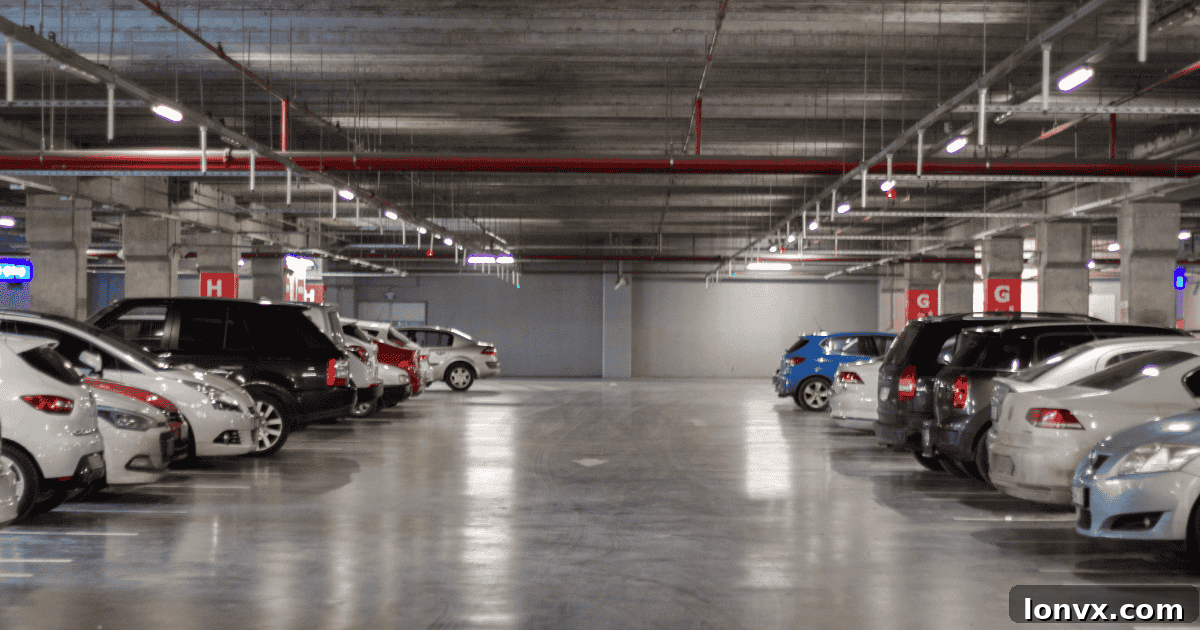
Toronto’s urban fabric is undergoing a significant transformation, particularly in how its new buildings integrate parking. A discernible trend points towards the inclusion of fewer and fewer parking spaces in residential developments, with some cutting them entirely – a trajectory experts widely anticipate will continue its course. This shift is not merely an architectural preference but a complex interplay of escalating construction costs, evolving urban planning philosophies, and the city’s ambitious vision for a more sustainable, transit-oriented future.
Richard Lyall, president of the Residential Construction Council of Ontario (RESCON), shed light on the economic realities driving this trend. He informed Real Estate Magazine that the expense for developers to construct a single underground parking space can soar up to an astounding $120,000. This substantial cost is almost inevitably transferred to the end consumer, directly impacting housing affordability in an already competitive market. This direct link between parking provision and housing prices underscores a critical challenge for urban planners and policymakers aiming to make Toronto more accessible.
Lyall firmly advocates for a market-driven approach to parking provision, suggesting that the quantity of parking included in new developments should be dictated by demand rather than enforced by restrictive city bylaws. Toronto took a monumental step in this direction in 2022 by removing zoning rules that mandated minimum parking requirements for new constructions. The city is now actively deliberating whether to extend this deregulation to visitor parking, signaling a deeper commitment to its evolving urban strategy. Lyall posits that developers who misjudge market demand by omitting parking in areas where it’s truly needed will ultimately bear the financial consequences, struggling to sell units in such circumstances. This perspective highlights a belief in the market’s efficiency to balance supply and demand more effectively than prescriptive regulations.
Allowing the Market to Dictate Parking Needs
Lyall’s argument is rooted in the practical assessment of urban infrastructure and resident needs. He contends that parking becomes significantly less essential in areas well-served by public transit, where residents have viable alternatives to car ownership. For neighborhoods where personal vehicles remain a necessity, Lyall suggests that above-ground parking offers a more cost-effective and adaptable solution compared to its subterranean counterpart. The reduced construction cost of above-ground structures makes them an attractive option for developers. Furthermore, this approach preserves the flexibility for these parking areas to be converted to alternative uses in the future, such as vibrant retail spaces, much-needed residential units, or even community amenities, as urban needs evolve. This foresight allows for a more dynamic and responsive urban planning model.
“If someone wants parking, they can find a building that offers it and potentially pay more for their unit,” Lyall emphasized, articulating the principle of consumer choice within a market-oriented framework. This highlights that parking, like other amenities, can become a premium feature. Data from the real estate platform Wahi, released in May, reinforced this point, indicating that a single parking space can augment the price of a one-bedroom condo by up to $200,000 in the Greater Toronto Area. This substantial valuation underscores the financial implications of parking for both developers and homebuyers.
“These parking spots are really expensive, and you don’t need them all,” Lyall reiterated. “Leave it to the market.” His stance is clear: by allowing developers to respond directly to purchaser demand, the city can foster more efficient land use, mitigate construction costs, and ultimately contribute to more affordable housing options, particularly for those who do not require or desire personal vehicle ownership. This perspective aligns with a broader vision of creating more walkable, transit-friendly communities where car dependency is reduced.
Rising Costs and the Challenge of Below-Grade Construction
The escalating cost of underground parking in Toronto is not solely due to general construction inflation; it’s also heavily influenced by specific regulatory changes. Jennifer Keesmaat, president and CEO of development company Collecdev Markee, explained to REM that a significant portion of this increase stems from a new city policy introduced in 2022. This policy mandates that new developments are prohibited from discharging foundation drainage and groundwater into the city’s already strained sewer system. The primary goal of this regulation is to prevent the municipal sewer infrastructure from being overwhelmed, particularly during periods of heavy rainfall, and to protect the city’s water quality.
To comply with this stringent policy, developers often have no choice but to implement a complex and costly construction method known as “bathtubbing” for below-grade parking levels. This process involves meticulously sealing the lower levels of a structure to prevent any water ingress, effectively creating a watertight “bathtub” underground. This isn’t a simple sealing job; it requires extensive waterproofing membranes, specialized concrete applications, and sophisticated engineering to ensure long-term structural integrity against hydrostatic pressure.
Keesmaat described this policy as “aggressive,” noting its profound impact on construction costs. The necessity to over-engineer foundations and incorporate advanced waterproofing techniques, even on sites that may naturally be “bone-dry,” leads to considerable additional expenses. “It overbuilds infrastructure because if you don’t need it — if it’s a bone-dry site — you don’t need to be pouring that much concrete,” she elaborated. “It adds enormous costs.” These costs are not marginal; they can significantly inflate the overall budget of a project, pushing developers to re-evaluate the feasibility and pricing of units, especially those accompanied by underground parking. The policy, while well-intentioned for urban infrastructure, inadvertently adds another layer of financial burden to an already expensive construction environment.
Achieving Density Without Exacerbating Car Dependency
Toronto, as a rapidly growing metropolis, has reached a critical juncture where the existing infrastructure and urban space have very little capacity for accommodating additional cars. Jennifer Keesmaat highlighted this reality, noting that while the city may not explicitly discourage parking, projects that propose fewer parking spaces often find a smoother path to approval. This implicit preference by the city signals a strategic shift towards fostering density that prioritizes people and sustainable transit over private vehicle use. The removal of parking minimums has effectively decentralized this decision, allowing the market to respond to urban realities. Consequently, many developers are choosing to incorporate less parking, driven both by the prohibitive costs and the city’s evolving planning objectives.
Keesmaat’s own development company, Collecdev Markee, exemplifies this nuanced approach, undertaking projects that include both buildings with and without parking. She acknowledges the pragmatic limits of completely excluding parking, particularly in areas not adequately served by public transit, such as certain parts of North York. In such car-dependent locales, as she vividly put it, “There, a developer would be committing suicide. The units just wouldn’t sell.” This illustrates the delicate balance developers must strike between reducing costs, adhering to city planning visions, and meeting the practical needs of prospective buyers in diverse urban and suburban contexts.
The impact of high parking costs extends beyond unit pricing; it can also lead to project delays or even cancellations when the financial burden becomes insurmountable. Keesmaat also pointed out a crucial social benefit of reduced parking: buildings with fewer parking spaces often render higher-density developments more palatable to existing residents. The primary objection from many residents against increased density isn’t necessarily more people, but rather the fear of increased traffic congestion and competition for street parking. “Most people who oppose density, they actually don’t want more cars in their neighbourhood,” she explained. “It’s not that they don’t want more people.” By reducing the parking footprint, developers can alleviate these common concerns, fostering greater community acceptance for much-needed housing density and supporting the vision of more livable, walkable neighborhoods.
The Growing Concerns About Visitor Parking Accessibility
As the City of Toronto continues its review of whether to eliminate visitor parking minimums, a prominent voice of concern has emerged from Toronto Councillor Lily Cheng, who is actively speaking out against the accelerating trend toward fewer parking spaces, especially for visitors. Councillor Cheng’s apprehension centers on the observation that many new buildings now incorporate an insufficient number of visitor parking spaces. This deficit, she notes, is often an overlooked detail by prospective buyers during the purchasing process, only to become a significant issue once they move in.
Cheng underscores the potential for this lack of visitor parking to have negative mental health effects on residents. The inability to easily host family and friends can lead to feelings of isolation, stress, and diminished quality of life. Imagine the stress of an elderly parent trying to visit their children, only to face a complex journey on public transit or the difficulty of finding street parking in an unfamiliar, often congested area. These everyday scenarios highlight the practical and emotional toll that inadequate visitor parking can exact.
A significant number of development proposals currently in the pipeline still feature minimal or no visitor parking, Cheng reveals. Given that these projects are yet to be constructed, the long-term societal and urban impacts of this policy direction remain largely unknown and are a cause for considerable concern. The ripple effects could include increased demand for on-street parking in surrounding neighborhoods, creating tension between new residents and long-standing communities, or even deterring essential service providers and delivery vehicles.
Councillor Cheng had plans to launch a comprehensive survey to gather more empirical data on this critical issue, aiming to provide a clearer picture of residents’ needs and experiences. However, the provincial government’s designation of Major Transit Station Areas (MTSAs) within Toronto has complicated matters. These MTSAs are specific zones identified for intensified housing development near major transit hubs, and provincial policy limits the city’s ability to impose certain parking minimums within these areas, including for visitor parking. Consequently, the city’s review of its visitor parking bylaw has been temporarily placed on hold until the following year, awaiting further clarity and strategic alignment with provincial directives.
Cheng articulated the core of her concern with a poignant distinction: “You can choose as a resident whether you’re going to drive or not, but you might not be able to choose whether your mom can take transit to visit you.” This statement encapsulates the dilemma faced by many urban dwellers who embrace a car-lite lifestyle but still rely on visitors who may not have the same transportation options or physical capabilities. “If there’s no visitor parking, it will present a significant challenge for people,” she concluded, advocating for a balanced approach that supports sustainable urban growth without compromising social connectivity and the practical needs of Toronto’s diverse population. The visitor parking debate underscores a broader challenge for modern urban planning: how to build for density and sustainability while preserving the essential human elements of community and accessibility for all.
In conclusion, Toronto’s journey towards a more transit-oriented, less car-dependent future is complex, marked by a delicate balance between economic realities, environmental goals, and the social fabric of its communities. The ongoing discussions around parking costs, market influence, regulatory challenges, and visitor accessibility reflect a city grappling with rapid growth and evolving urban ideals. As the city continues to lead in innovative urban planning, the outcomes of these parking policy shifts will undoubtedly shape its future livability, affordability, and overall quality of life for residents and visitors alike.