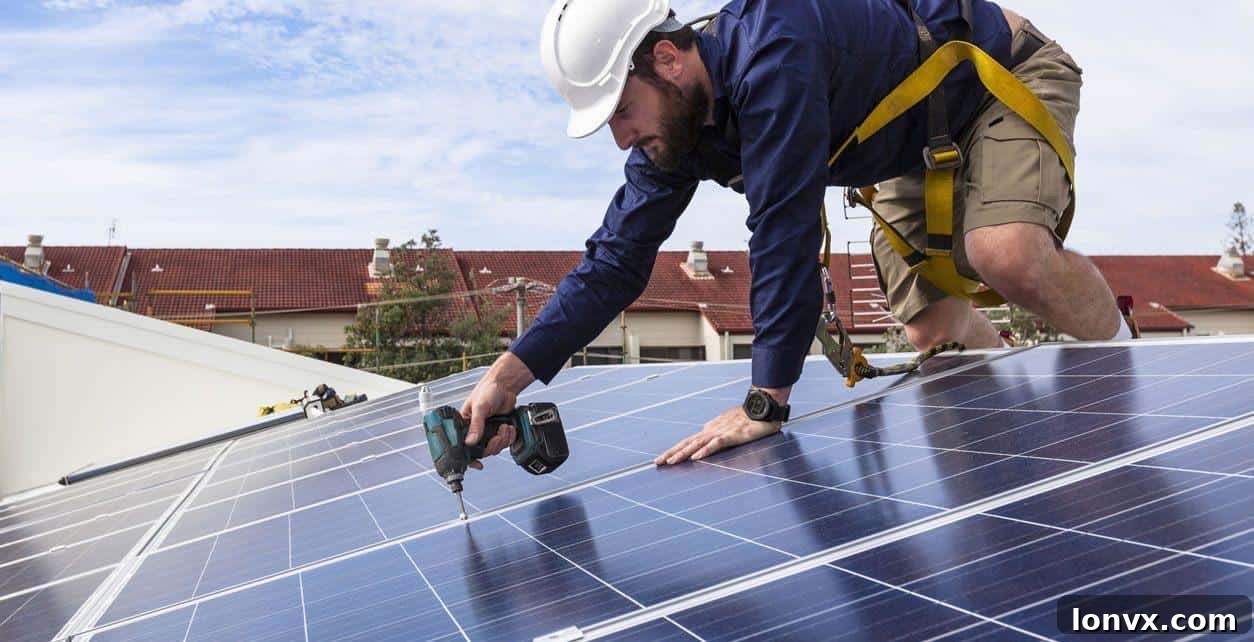
Transform Your Existing Home into a Net-Zero Energy Sanctuary
Imagine living in a home that generates as much energy as it consumes – a true net-zero home. For many, this sounds like a distant, aspirational goal, often associated with cutting-edge new constructions. However, the exciting reality is that this sustainable dream is far more accessible than you might think, even for existing properties. In fact, the very house you currently inhabit could be your future net-zero oasis, waiting for a smart, strategic transformation.
Leading the charge in this innovative field is Peter Darlington, the founder of Solar Homes Inc., a Calgary-based company specializing in the art and science of renovating existing homes to achieve net-zero energy status. Darlington’s work demystifies the concept of net-zero, proving it’s not an exclusive club but an attainable goal for virtually any homeowner committed to efficiency and sustainability. His personal journey began with his own 1980s-era home, which he meticulously upgraded, turning it into a living testament to the practicality and profound benefits of net-zero renovation.
The Compelling Advantages of a Net-Zero Home Renovation
Peter Darlington frequently emphasizes the straightforward nature of net-zero upgrades, asserting that “It’s really quite simple to do.” The process involves a series of strategic improvements that collectively eliminate reliance on fossil fuels, significantly enhance living comfort, drastically reduce operating costs, and deliver an impressive return on investment. The benefits extend far beyond your utility bill:
- Unparalleled Comfort and Indoor Air Quality: Say goodbye to drafts, cold spots, and inconsistent temperatures. Net-zero renovations prioritize superior insulation and meticulous air sealing, resulting in a home with stable, comfortable temperatures year-round. This enhanced airtightness also allows for controlled ventilation systems, leading to significantly improved indoor air quality.
- Substantial and Lasting Cost Savings: By generating your own electricity and drastically reducing overall energy consumption, you’ll experience remarkable monthly savings. Darlington’s personal experience showcases this vividly: he eliminated his natural gas bill entirely, saving approximately $600-$700 annually just on distribution and connection charges. Furthermore, he saved an additional $4,500 over two years simply by producing his own energy and living in a more efficient home. These accumulated savings represent a perpetual return on your initial investment.
- Exceptional Return on Investment (ROI) and Increased Home Value: Unlike many conventional renovations that primarily offer aesthetic improvements, net-zero upgrades are a smart financial investment. The dramatic reduction in operating costs, coupled with the enhanced energy efficiency, significantly boosts your home’s market value and appeal. This makes a net-zero renovation a prudent long-term investment that continually pays dividends.
- Profound Environmental Impact and Reduced Carbon Footprint: Beyond the personal gains, a net-zero home plays a vital role in combating climate change. By eliminating fossil fuel consumption and harnessing clean, renewable energy sources, you drastically reduce your household’s carbon footprint, contributing directly to a healthier planet for current and future generations.
- Enhanced Energy Independence and Security: Achieving net-zero means gaining a high degree of energy autonomy. With your own solar photovoltaic system providing the majority or all of your electricity needs, you become less susceptible to fluctuating energy prices and potential grid disruptions, securing your home’s energy future.
Darlington’s personal commitment to this work is deeply rooted in a powerful sense of responsibility. He states, “I believe that climate change will be the greatest risk or challenge that my children will face in their lifetime. And, I don’t want to look back and have my children ask me, why didn’t you do anything about it when you knew how to?” This compelling motivation resonates with many homeowners seeking to make a tangible difference through their living choices.
The Four Foundational Steps to Net-Zero Home Transformation
Embarking on a net-zero renovation doesn’t necessitate a massive upfront capital expenditure. Peter Darlington advocates for a strategic, phased approach, allowing homeowners to manage costs and integrate upgrades over time as budgets and opportunities arise. Here are the four critical steps:
1. Conduct a Comprehensive Home Energy Model
This initial step is the cornerstone of any successful net-zero project, serving as your strategic roadmap. An energy model is a detailed, data-driven analysis of your home’s current energy performance. It meticulously identifies areas of heat loss and gain, assesses the efficiency of existing heating, cooling, and ventilation systems, and simulates the anticipated impact of various proposed upgrades. This invaluable diagnostic tool is crucial because it:
- Optimizes Investment: Pinpoints precisely where your investment will yield the greatest energy savings and comfort improvements, ensuring every dollar spent is maximally effective.
- Quantifies Insulation Needs: Determines the optimal type, R-value, and placement of insulation required for walls, attics, foundations, and floors.
- Evaluates Window Performance: Highlights the specific energy-saving potential of high-performance windows, such as triple-pane units with low-e coatings.
- Sizes Mechanical Systems Accurately: Provides the precise load calculations for your new heating and cooling systems, preventing inefficient oversizing or inadequate undersizing.
- Calculates Solar System Requirements: Forms the essential basis for accurately sizing your solar photovoltaic (PV) array, ensuring it can effectively offset your home’s projected annual energy demand.
By providing a clear, evidence-based plan, the energy model ensures that every subsequent renovation step is both informed and highly effective in achieving your net-zero objective.
2. Optimize the Building Envelope: Advanced Insulation, Air Sealing, and High-Efficiency Windows
The building envelope—the exterior shell of your home—is your primary defense against energy loss and gain. This phase typically involves a comprehensive exterior renovation designed to dramatically improve your home’s thermal performance and airtightness, which are critical for net-zero living. Key components include:
- Advanced Insulation Systems: Substantially increasing the insulation levels in walls, attics, and foundations creates a robust thermal barrier. This often involves techniques like adding exterior rigid insulation, cavity insulation (such as spray foam or dense-packed cellulose), and insulating basements or crawl spaces to minimize heat transfer.
- Superior Air Sealing: This meticulous process involves identifying and sealing all cracks, gaps, and penetrations in your home’s structure – from attic hatches to electrical outlets. Air leakage is a major culprit for energy waste and discomfort. By dramatically improving overall airtightness, you prevent conditioned air from escaping and unconditioned air from infiltrating, which is paramount for both comfort and efficiency.
- High-Performance Siding: Often installed in conjunction with exterior insulation, new siding not only enhances your home’s curb appeal but also contributes to the integrity and effectiveness of the overall thermal envelope.
- Energy-Efficient Windows and Doors: Replacing older, leaky windows with modern, high-performance units is a game-changer. Triple-paned windows featuring low-emissivity (low-e) coatings and inert gas fills (like argon or krypton) drastically reduce heat loss during winter and unwanted heat gain in summer. Similarly, upgrading to insulated, air-sealed exterior doors eliminates drafts and improves security.
Peter Darlington expertly transformed his 1980s home by strategically adding insulation, installing advanced windows, integrating electric heating and hot water systems, and deploying a comprehensive solar system. Photo Credit: David Dodge, GreenEnergyFutures.ca
While the investment for this crucial phase can be substantial, estimated at approximately $30,000 for insulation, air tightness improvements, and siding, and an additional $15,000 to $20,000 for high-performance windows, these upgrades form the fundamental basis for achieving net-zero by drastically minimizing your home’s energy demand.
3. Upgrade to High-Efficiency Mechanical Systems
Once your home boasts superior insulation and airtightness, its heating and cooling requirements will be dramatically reduced. This creates the ideal scenario for upgrading your mechanical systems to highly efficient, all-electric alternatives, completely transitioning away from fossil fuels.
- Electric Heat Pumps for Heating and Cooling: As your older furnace and water heater reach the end of their operational life, replace them with modern electric heat pump systems. Air-source heat pumps are incredibly efficient, providing both heating and cooling by transferring heat (either from outdoor air to indoor or vice versa) rather than generating it. This makes them significantly more efficient than traditional furnaces and air conditioners. Similarly, heat pump water heaters offer highly efficient hot water production.
- Heat Recovery Ventilator (HRV) or Energy Recovery Ventilator (ERV): In a tightly sealed net-zero home, controlled mechanical ventilation is essential for maintaining optimal indoor air quality. HRVs and ERVs continuously bring in fresh outdoor air while exhausting stale indoor air. Critically, they recover a significant percentage of the heat (or coolness) from the outgoing air and transfer it to the incoming fresh air. This ensures a constant supply of fresh air without compromising the home’s hard-won energy efficiency.
These crucial mechanical upgrades, typically costing around $15,000, are vital for creating a comfortable, healthy, and fossil-fuel-free indoor environment, leveraging the efficiency gains from your enhanced building envelope.
4. Install an Appropriately Sized Solar Photovoltaic System
With your home’s energy demand meticulously reduced through envelope improvements and highly efficient mechanical systems, the final and most visible step is to generate your own clean electricity. A solar photovoltaic (PV) system is installed, specifically sized to meet all your remaining annual electricity needs, including those for your new heat pumps and hot water systems.
- Custom System Sizing: Based on the precise calculations from your energy model and the documented success of your prior efficiency upgrades, the solar array is custom-sized. The goal is to offset 100% of your home’s annual electricity consumption, ensuring that over a year, you produce as much energy as you consume.
- Grid-Tied Functionality: Most residential net-zero solar systems are “grid-tied.” This means they are connected to your local utility grid. When your solar panels produce more electricity than your home is currently using, the surplus energy is fed back into the grid, often earning you credits through a process called net metering. Conversely, when your panels produce less (e.g., at night, on heavily overcast days, or during peak demand), you seamlessly draw electricity from the grid. This effectively uses the existing grid as a large, convenient energy storage system.
Darlington’s nearly net-zero home efficiently operates on a robust 10-kilowatt solar system, showcasing the power of renewable energy in residential settings. Photo Credit: David Dodge, GreenEnergyFutures.ca
For a typical home requiring a larger system, such as a 10-kilowatt array, the approximate cost would be $30,000. Peter Darlington highlights the flexibility of this phased approach: “All these things can be done individually, so that you don’t have to bite off this massive capital cost right up front. We put 10-kilowatt solar on the garage and that generates about 90 percent of our annual requirements.” This modularity makes net-zero a more attainable and manageable goal for a wide range of homeowners and budgets.
Financial Incentives, Long-Term Value, and Enhanced Living
The current landscape presents an opportune moment for considering a net-zero renovation. Governments and utility providers increasingly recognize the immense value of sustainable housing and have introduced a variety of financial incentives to encourage homeowners to undertake these crucial upgrades. As Darlington notes, “In Alberta there’s a bunch of incentives available from the province towards insulation, windows and solar panels and there’s almost 15 grand available to a home that’s looking to renovate to net zero.” Current examples include significant rebates for insulation and windows, and dedicated programs for solar installations. It is highly advisable for homeowners to diligently research similar grants, rebates, and tax credits available in their specific province, state, or municipality, as these can substantially reduce the overall capital investment.
Many homeowners allocate significant funds to purely cosmetic home upgrades. Darlington challenges this perspective: “There are lots of people in Alberta spending $50,000 or more on cosmetic upgrades to their buildings. Why not spend a little bit more?” The fundamental difference lies in the nature of the investment. Unlike a conventional renovation that might primarily offer aesthetic value or even depreciate, a net-zero upgrade is a strategic investment that actively saves you money every single year for the entire lifespan of your home. It’s a powerful financial decision that generates tangible returns through drastically reduced operating costs and a measurable increase in property value.
Beyond the undeniable financial returns, the enhanced comfort of a net-zero home often emerges as a surprising and highly cherished benefit. Darlington shares, “One of the surprising aspects was just how comfortable the house became after you sealed all those cold spots and all those drops. It’s a much more comfortable home to live in.” This superior living experience, combined with the substantial savings (Darlington saved nearly $4,500 in two years), makes the investment profoundly rewarding. Crucially, these transformative results were achieved “without any significant changes to lifestyle or other features in the home,” effectively dispelling the common misconception that sustainable living necessitates major compromises.
Maximizing Efficiency: Beyond the Core Four Steps
While the four core steps establish the foundation for a net-zero renovation, homeowners can further amplify their energy savings and potentially reduce the required solar system size through a range of complementary smart strategies:
- LED Lighting Conversion: Systematically replacing incandescent or fluorescent bulbs with energy-efficient Light Emitting Diodes (LEDs) dramatically cuts down on lighting electricity consumption, offering instant savings.
- Smart Thermostat Installation: Upgrading to programmable or smart thermostats allows for optimized heating and cooling schedules. These intelligent devices learn your preferences, adjust automatically to maximize efficiency, and can often be controlled remotely, offering both convenience and savings.
- Energy-Efficient Appliances: When the time comes to replace major appliances like refrigerators, washers, dryers, or dishwashers, prioritize models that carry the Energy Star rating. These appliances are engineered to consume significantly less electricity and water, contributing to overall household efficiency.
- Eliminating “Phantom Power” or “Vampire Draw”: Many electronic devices continue to draw a small amount of power even when turned off or in standby mode (e.g., old beer fridges, phone chargers, entertainment systems). Unplugging these “vampire” devices or utilizing smart power strips can cumulatively eliminate this wasteful consumption.
By consciously implementing these additional measures, homeowners can often reduce their overall electricity demand by an extra 20 to 50 percent. This direct reduction in demand translates into needing a smaller, less expensive solar photovoltaic system, further enhancing overall savings and accelerating the return on your initial investment.
Considering all these integrated factors and potential incentives, Peter Darlington estimates that bringing a typical existing home close to net-zero involves an overall investment of approximately $95,000. However, with current rebates and financial incentives in regions like Alberta, this figure could be substantially reduced by $10,000 to $15,000, making the project even more financially appealing and accessible to a broader range of homeowners.
The Broader Vision: Existing Homes as the Cornerstone of a Sustainable Future
“Aside from the obvious return on investment, there’s not a lot of chances in life to invest money and things that not only make your home more comfortable and bring down your operating costs, but are also morally correct,” reflects Darlington. This insightful perspective elevates net-zero renovations beyond mere home improvement projects to a powerful statement of values, a commitment to future generations, and a tangible contribution to a sustainable future.
While new net-zero constructions, such as those pioneering efforts by Landmark Homes in Edmonton (offering new net-zero homes for less than $400,000, including a garage, solar system, and GST), are an essential part of the solution, the true, expansive potential for dramatically reducing global greenhouse gas emissions resides in transforming the vast existing housing stock. Millions of energy-inefficient homes and buildings will still be standing for decades to come, making their upgrade a critical and urgent priority for achieving widespread environmental impact and decarbonizing our built environment.
The global significance and scalability of this endeavor are powerfully underscored by ambitious international initiatives like the Netherlands’ EnergieSprong project. This groundbreaking program aims to renovate every single building in the entire country to net-zero standards by 2050, offering a robust and inspiring model for systemic, nationwide decarbonization that other nations can emulate.
Ultimately, the journey of transforming your home into a net-zero sanctuary is one of empowerment and profound long-term benefits. It’s about taking decisive control of your energy future, dramatically cutting your emissions to near zero, enjoying substantial and lasting financial savings, and experiencing the deep satisfaction of producing all your own clean electricity for the entire lifespan of your home. It represents a tangible commitment to innovation, personal responsibility, and the undeniable advantages of truly sustainable living.