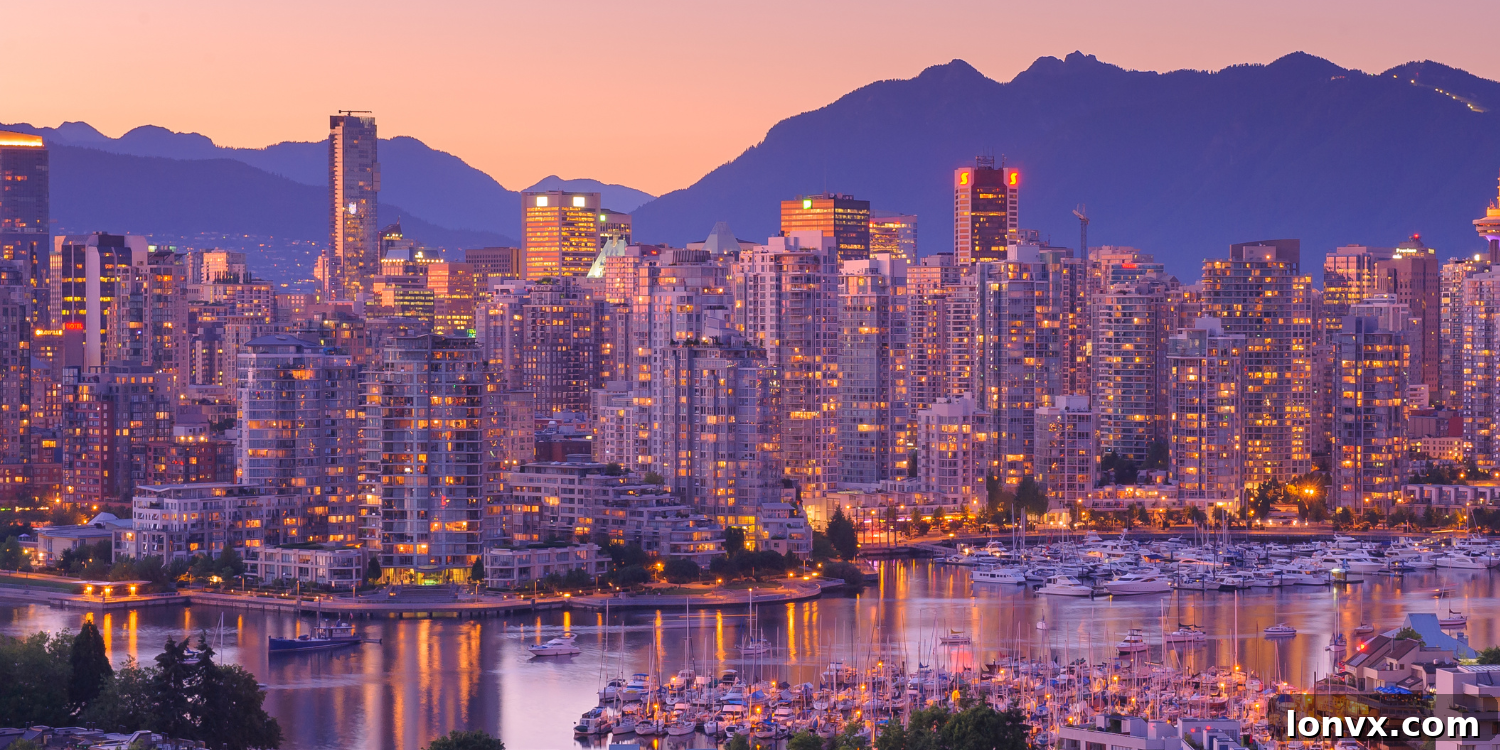
The Unfolding Evolution of Vancouver: From Village Charm to Global Metropolis
In 1979, during the intense North American Soccer League (NASL) finals pitting the Vancouver Whitecaps against the mighty New York Cosmos, legendary sportscaster Jim McKay made an offhand remark, casually referring to Vancouver as a “village.” Given the colossal scale, bustling energy, and sheer population density of New York City at the time, his observation, though perhaps a slight jab, wasn’t entirely inaccurate. Vancouver then was a city poised on the cusp of something far greater, a burgeoning urban center with a distinct, rugged charm that hinted at its Pacific Northwest identity.
This early perception of Vancouver as a quaint, peripheral settlement would soon undergo a dramatic metamorphosis. The city, and indeed the entire province of British Columbia, was destined for a series of pivotal moments that would not only propel it onto the world stage but also irrevocably reshape its economic landscape, social fabric, and the very expectations of its residents. What began as a modest port town would, through ambition and strategic global engagement, transform into a coveted international destination, celebrated for its stunning natural beauty, vibrant culture, and robust economy.
Expo 86: A Catalyst for Global Recognition and Urban Renewal
Fast forward to 1986, a monumental year that significantly elevated the global profile of both Vancouver and the province of British Columbia. The launch of Expo 86, officially known as the 1986 World Exposition on Transportation and Communication, was met with considerable global fanfare and marked a profound turning point in Vancouver’s narrative. Unlike its predecessor, Montreal’s Expo 67, this event was meticulously themed around “World in Motion — World in Touch,” a declaration that resonated deeply with the regional desire for increased visibility, accelerated growth, and enhanced international connectivity. It was a bold statement from a city eager to shed its “village” moniker and embrace a future of global significance.
Mid-eighties Vancouver was a far smaller, grittier port city nestled on the geographical edge of a much younger Canada. Its economy was largely defined by blue-collar industries, particularly forestry, fishing, and mining. The city possessed a raw, untamed quality, a charm rooted in its working-class heritage and proximity to vast wilderness. Expo 86 acted as a powerful catalyst for urban renewal and infrastructural development. It brought new transit lines, significant architectural projects, and a surge of international visitors, fundamentally altering the city’s physical appearance and its self-perception. The event showcased Vancouver’s potential, demonstrating its capacity to host large-scale international events and fostering a sense of civic pride and ambition that had been latent. It set the stage for future growth, planting the seeds for the diverse, dynamic metropolis it would become.
The 2010 Winter Olympics: Securing Vancouver’s A-List Status
The next major event to significantly boost Vancouver’s standing on a global level was the 2010 Winter Olympics and Paralympic Games. These games were not merely a sporting spectacle; they represented a strategic governmental initiative aimed at cementing Vancouver’s status as an A-list global city. The opening ceremonies famously featured a governmental statement by then-Premier Gordon Campbell, who proudly declared, “Hosting these Games is an achievement on the world stage that all British Columbians and all Canadians can be proud of. Together, we have welcomed the world with open arms to see and experience our nation, our province and our communities.”
For any British Columbian of a certain age, the intensive media dialogue in the lead-up to the Games made it clear: the primary justification for the substantial public expenditure was to transform Vancouver into a magnet for international investment and a premier tourism destination. The ambition was to put Vancouver squarely on the international map, making it synonymous with excellence, innovation, and unparalleled natural beauty. In retrospect, the Vancouver Olympic Games largely achieved these lofty goals. The infrastructural upgrades, including the Canada Line rapid transit system and improvements to the Sea-to-Sky Highway, provided lasting benefits. The exposure garnered during the Games attracted sustained global attention, drawing in new residents, businesses, and tourists, thereby setting a path of ongoing development and investment. However, this ascent to A-list status, while successful, also brought with it significant social and economic consequences, many of which continue to shape the city today.
Vancouver’s Profound Social and Economic Transition
Today, Vancouver consistently ranks among the world’s most desirable cities, repeatedly earning accolades as one of the most liveable cities globally by prestigious publications like The Economist magazine. This transformation has been so rapid and intense that many long-time residents scarcely recognize the city compared to just a decade or two prior. The rugged, blue-collar town of the past has evolved into a sophisticated urban center, a magnet for the affluent, the famous, devout winter sports enthusiasts, and dedicated outdoor adventurers seeking its unparalleled natural playground.
The city has also blossomed into a vibrant mosaic of cultures, a diversity evident in every facet of urban life, from its world-class culinary scene offering a myriad of international flavors to its diverse entertainment options, festivals, and linguistic tapestry. Beyond its traditional resource-based economy, Vancouver has cultivated a thriving tech sector, attracting a wide landscape of innovative mid-sized businesses and becoming a significant hub for international corporations. Tech giants like Amazon and Microsoft have established major presences, alongside homegrown success stories such as Lululemon, further diversifying its economic base and creating a dynamic job market. This economic diversification, coupled with its magnetic lifestyle appeal, has undeniably propelled Vancouver to its current global standing, yet it has also introduced complex challenges.
The Paradox of Prosperity: Why Many Vancouverites Lament the Past
In conjunction with these indicators of big-city success and global prominence, an unfortunate and widely felt byproduct has been the dramatic escalation in the cost of living. The housing market, in particular, has seen an unprecedented surge: home prices have more than quadrupled since the year 2000, and Vancouver rents have skyrocketed, leaving vacancy rates at critically low levels. This affordability crisis creates a striking paradox: while the city has dramatically transformed and gained international acclaim, a significant portion of its long-term residents feel increasingly displaced and disconnected from its new identity.
Far from celebrating this remarkable transition, the average Vancouverite often spends considerably more energy bemoaning a bygone era. There is a deep-seated nostalgia for a time when the city felt more accessible, less crowded, and more rooted in its community-oriented past. Yet, the reality is that Vancouver has not merely evolved; it has fundamentally reinvented itself, largely through its own ambition and efforts. The speed of this change, coupled with the rapid erosion of affordability, has left many grasping for a version of the city that simply no longer exists and, realistically, will never return. Complaints like, “Why can’t I buy a house for $200,000 as my parents did back in ’83?” are common. The answer is stark: it’s no longer 1983, and today’s Vancouver bears little resemblance to its early ’80s incarnation. The city’s transformation, while bringing global recognition, has also fostered a profound sense of loss and frustration among those who once called it an affordable home.
Homeownership Expectations in Global Cities: A Sobering Perspective
Accepting the “new Vancouver” by contemporary global city standards necessitates a significant recalibration of expectations, particularly concerning homeownership. When we compare Vancouver to other established global metropolises like New York, Tokyo, London, or Paris, a different perspective emerges. Do residents in these cities express consistent outrage at the inflated cost of regional housing? Arguably, yes, to some extent, but the expectation of single-family homeownership, especially within the urban core, is decidedly more tempered. In many of these cities, apartment living is the norm, multi-generational housing is common, and longer commutes from more affordable suburbs are a widely accepted reality. The dream of a detached house with a yard within city limits is often seen as an extreme luxury, not a fundamental right or an achievable goal for the average resident.
Vancouver residents, however, have largely struggled to adapt to this shift in expectation. This resistance is compounded by the approaches taken by federal and provincial governments. In reaction to public affordability concerns, governments often focus on piecemeal legislative measures – often dubbed “band-aid solutions” – designed to contain prices or, at worst, pursue the patently impossible goal of “restoring affordability” to a previous era. These measures, such as foreign buyer taxes, empty homes taxes, or even various forms of rent control, while well-intentioned, often fail to address the fundamental, systemic influences that have driven prices up in the first place. These influences include persistent supply-demand imbalances, Vancouver’s status as a global safe haven for capital, low interest rates over an extended period, and the city’s inherent attractiveness as a place to live.
Moreover, these reactive policy responses frequently divert valuable governmental focus and resources from where they could be far more effectively deployed: fostering robust local economic development. The overall Canadian economy, and by extension, British Columbia’s, is not universally prospering across all sectors. A greater emphasis on strengthening our export markets, investing in diverse industries beyond real estate and resources, and focusing on overall Canadian business efficiency would yield more sustainable benefits than attempting to artificially manipulate a market driven by global forces and inherent desirability.
The Missing Piece: Cultivating a Robust Regional Economy for Sustainable Growth
For most Vancouverites, the true missing piece in the A-list city reality isn’t solely the escalating cost of housing, rent, or daily living expenses. While these are pressing concerns, a more sustainable and practical path forward lies in addressing a deeper issue: the need to build out an increasingly robust and diversified regional economy. Living under the false dichotomy that housing prices will magically decline despite record demand, prolonged supply drought, and global capital flows is unrealistic and unsustainable. The long-term well-being of the city and its residents depends on creating an economic foundation that can support the demands of a global metropolis.
Unfortunately, the prosperity of British Columbia’s businesses often appears to be an afterthought in provincial governmental priorities, frequently overshadowed by social issues or reactive housing policies. For Vancouver and BC to truly thrive as a global player, there must be a significant and sustained focus on enhancing regional and global business competitiveness. This involves strategic investments in innovation, fostering emerging industries like clean energy, biotech, and creative technologies, supporting small and medium-sized enterprises, streamlining regulatory environments, and attracting talent beyond the real estate sector.
There is little sustainability in a city that draws immense global attention for its beauty and lifestyle but simultaneously struggles with an economy that, in certain respects, still operates with a “village status” mentality. A strong, dynamic, and diversified economy is not just about wealth creation; it’s about generating high-paying jobs, creating opportunities for residents, increasing tax revenues for public services, and ultimately contributing to a more balanced and affordable living environment. By prioritizing economic strength and global competitiveness, Vancouver can ensure its A-list status is supported by a foundation that benefits all its citizens, offering them not just a beautiful place to live, but also a prosperous future within their world-class city.