Canada’s Housing Market: A Comprehensive Look at Pandemic-Era Investments and Current Values
The Canadian housing market has undergone a dramatic transformation, shifting from the red-hot conditions of the pandemic era to a more measured and complex landscape today. During the unprecedented times of 2020 and early 2021, a unique confluence of factors fueled an extraordinary surge in real estate activity. Ultra-low interest rates, driven by global efforts to stimulate economies amidst the COVID-19 crisis, made borrowing incredibly cheap. This, combined with a tight inventory of available homes and a robust demand spurred by changing lifestyle preferences and increased household savings, created a seller’s market unlike any seen before. Home prices soared, leading to substantial gains for sellers and healthy commissions for real estate professionals across the country. Buyers, eager to capitalize on low mortgage costs and secure their ideal living spaces, often found themselves in intense bidding wars, pushing valuations to historic highs.
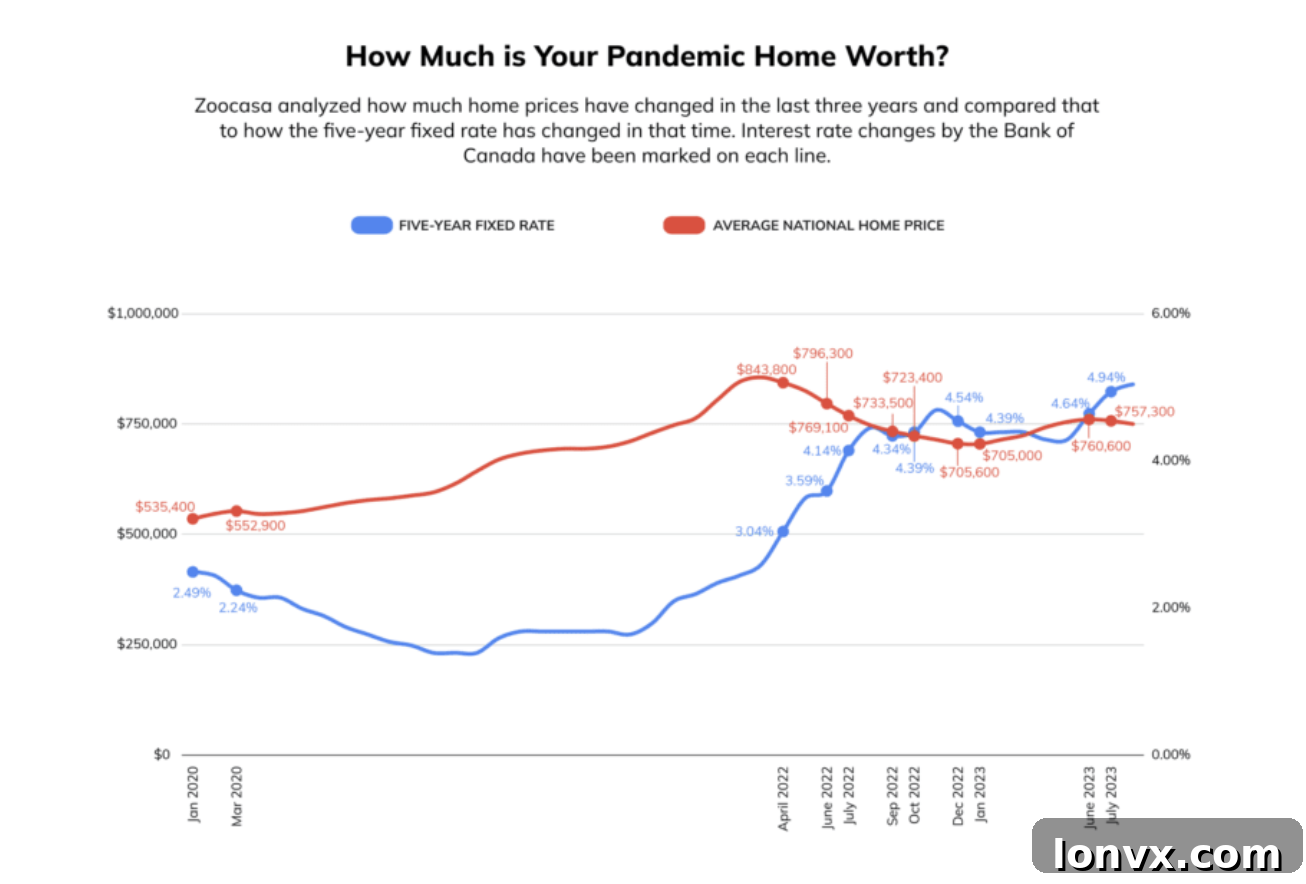
However, the economic narrative has drastically changed. Since March 2022, the Bank of Canada, in its persistent effort to combat soaring inflation, has embarked on an aggressive campaign of interest rate hikes. These rates have climbed to ten times their pandemic-era lows, fundamentally altering the affordability landscape for prospective homebuyers. While home prices have experienced some adjustments and shifts, they haven’t always mirrored the dramatic increase in borrowing costs, leaving many to wonder about the true value of homes purchased during the peak of the pandemic boom. This disparity between rapidly rising interest rates and more moderate price movements creates a critical juncture for both recent buyers and long-term homeowners.
Understanding this evolving market dynamic is crucial for anyone involved in Canadian real estate. To shed light on this pressing question, Zoocasa conducted a comprehensive analysis, meticulously comparing home prices from August 2020, 2021, and 2022 against the national and major city prices recorded in 2023. This insightful study also factored in the significant fluctuations in interest rates across these periods, providing a holistic view of how property values have truly fared in the face of unprecedented economic shifts. The findings offer invaluable insights into the performance of various markets and the enduring impact of macroeconomic policies on individual property investments.
Source: Zoocasa
National Housing Trends: A Three-Year Perspective
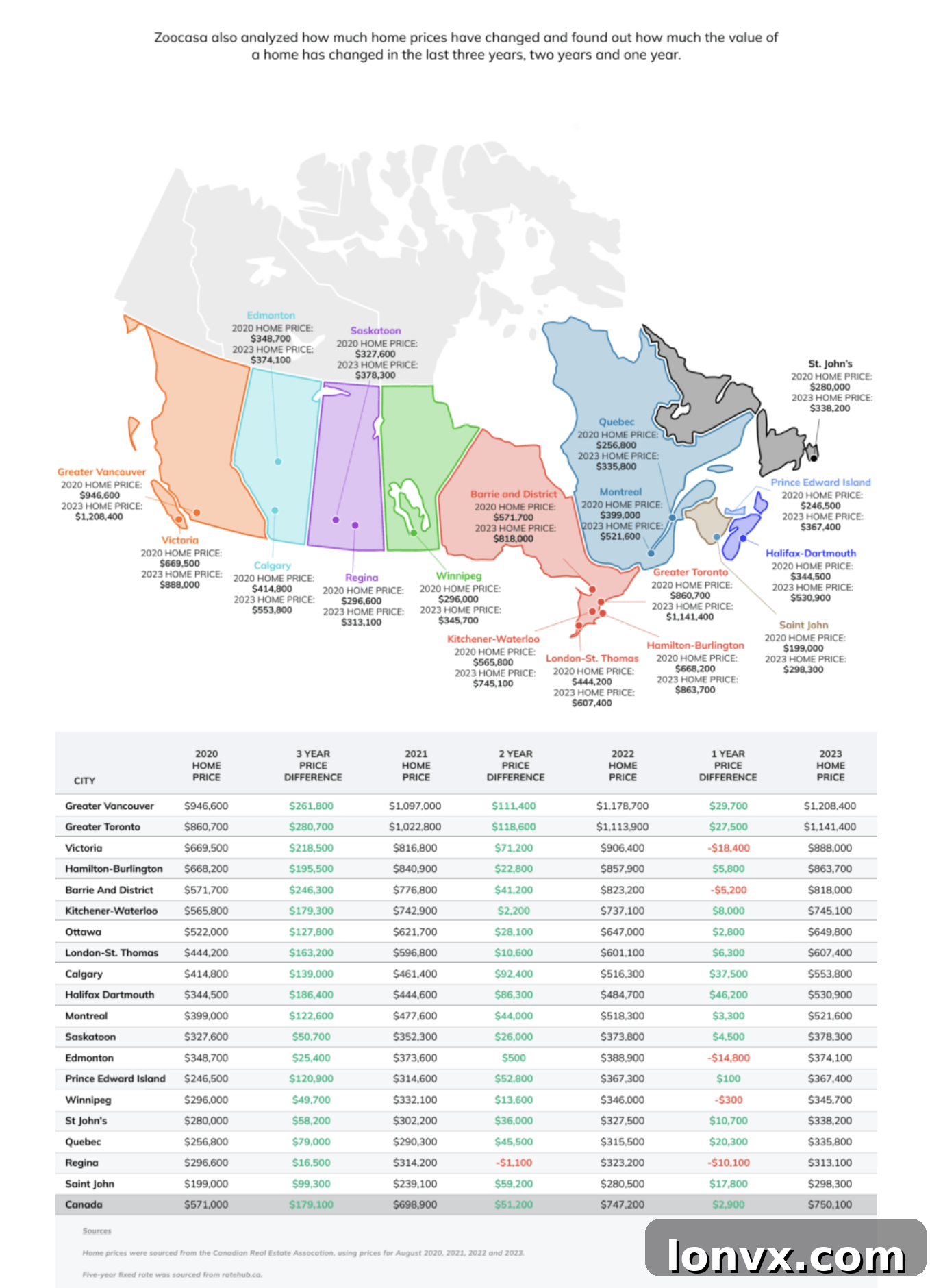
The national benchmark for home prices in Canada paints a vivid picture of the market’s trajectory over the past three years. According to CREA (Canadian Real Estate Association) data analyzed by Zoocasa, the average home across Canada saw an impressive increase of just over $179,000 during the entire three-year assessment period (August 2020 to August 2023). This figure underscores the substantial growth experienced during the pandemic and its immediate aftermath, driven by intense demand and limited supply. However, a closer examination reveals a significant deceleration in this appreciation.
A substantial portion of this overall growth occurred in the earlier years. Since August 2021, the national average home price has risen by approximately $51,200, indicating a continued, albeit slower, upward trend. The most telling statistic, however, emerges when looking at the most recent year. From August 2022 to August 2023, the national average increase plummeted to less than $3,000. This near stagnation in annual growth highlights the profound impact of rising interest rates, which have rapidly cooled demand and constrained buyers’ purchasing power. Essentially, the market saw its largest appreciation spurt in 2020, riding on the wave of historically low borrowing costs.
Today, CREA reports the national average home price stands at $750,100. While this figure still represents a substantial increase compared to pre-pandemic levels, the dramatically reduced year-over-year growth suggests a market grappling with new realities. For homeowners who purchased in 2020, their equity gains remain substantial, often providing a comfortable buffer. However, those who entered the market more recently, particularly in late 2021 or 2022, might find their equity growth has slowed considerably, or even seen minor adjustments downwards in some regions. This national overview sets the stage for a more detailed exploration of how specific urban centers have navigated these fluctuating economic conditions, revealing a nuanced and highly localized market performance.
Regional Deep Dive: Toronto and Vancouver Lead the Charge
When examining individual markets, Toronto stands out as a prime example of exceptional appreciation during the pandemic surge. Homebuyers who invested in Toronto property during the initial phase of 2020 reaped the most significant rewards in terms of value appreciation over the three-year period. On average, properties in the Greater Toronto Area saw an astounding increase of $280,700. This remarkable growth transformed Toronto’s real estate landscape, solidifying its status as one of Canada’s most expensive and competitive markets.
The pace of this ascent was swift and relentless. By mid-2021, the average home price in Toronto had crossed the formidable $1 million threshold, a psychological and financial milestone that underscored the market’s overheated conditions. Since then, prices have continued to climb, albeit at varying rates, demonstrating the underlying strength of demand in this major economic hub. For those who purchased homes in Toronto during 2021, they would have witnessed an average bump in value of over $118,000 in the subsequent two years. This figure represents the largest two-year increase among all the cities analyzed by Zoocasa, highlighting Toronto’s continued robust performance even as interest rates began their ascent.
Close behind Toronto in terms of impressive growth was the Vancouver market. Known for its picturesque setting and high cost of living, Vancouver’s real estate sector also experienced significant upward momentum. Over the three-year period, properties in Vancouver saw price increases exceeding $261,000. Looking at the two-year span, Vancouver recorded a substantial rise of over $111,000. Both Toronto and Vancouver, as Canada’s two largest and most sought-after metropolitan areas, consistently demonstrate resilience and strong appreciation potential. Factors such as high immigration rates, limited land supply, strong local economies, and ongoing demand from both domestic and international buyers contribute to their sustained, though recently moderating, price growth. These markets continue to be critical indicators of the broader health and direction of Canada’s top-tier real estate segment, where significant capital investment continues to flow despite higher borrowing costs.
Source: Zoocasa
Halifax-Dartmouth: An Unexpected Market Leader in Recent Growth
While the focus often remains on Canada’s largest urban centers, the Zoocasa analysis reveals an intriguing development in the Halifax-Dartmouth area. Over the past year (August 2022 to August 2023), homeowners who purchased in this vibrant Atlantic Canadian region experienced a larger value boost than anywhere else in the country. This makes Halifax-Dartmouth a standout performer in a period where many markets saw stabilization or even slight declines.
The city’s average home price now hovers around $531,000, which represents an impressive increase of nearly 10 percent, or over $46,000, within just one year. This remarkable one-year appreciation outpaced even the traditionally high-growth markets of Vancouver and Toronto, marking Halifax-Dartmouth as an unexpected leader in recent property value gains. This surge can be attributed to several factors. During the pandemic, the Maritimes, including Nova Scotia, saw a significant influx of inter-provincial migration. Many Canadians from more expensive provinces sought greater affordability, a slower pace of life, and the charm of coastal living, making Halifax-Dartmouth a prime destination. This heightened demand, coupled with relatively lower prices compared to major Western and Central Canadian cities, created fertile ground for rapid price escalation.
The continued momentum in Halifax-Dartmouth suggests that the city’s appeal remains strong, even as interest rates climb. Its growing economy, expanding tech sector, and reputation as a desirable place to live and work continue to attract new residents and investment. For those who bought into the market in 2022, their decision has been validated by substantial equity growth. This trend underscores the evolving dynamics of Canada’s housing market, where regional economic shifts and lifestyle preferences can drive significant localized booms, offering promising returns even in a generally slowing national environment.
Markets Facing Price Adjustments: Victoria and Beyond
While many Canadian markets enjoyed substantial appreciation, some areas have begun to experience a cooling trend, or even slight price adjustments downwards, particularly over the past year. Victoria, British Columbia, serves as a notable example of this shift. Despite experiencing a significant home price jump of more than $218,000 since 2020, reflecting strong growth during the pandemic boom, the market has seen a recent deceleration.
Over the last year, Victoria’s average home price fell by about 2 percent, translating to an approximate decrease of $18,400. This brought the average price from over $906,000 down to $888,000. For those who bought at the peak, this recent dip might be concerning, but the long-term perspective remains positive. Given the substantial appreciation since 2020, homeowners can generally still look forward to solid long-term equity gains. The primary reason for this recent adjustment is the impact of higher interest rates, which inevitably shrink the pool of eligible buyers and reduce overall purchasing power, leading to a more balanced or even buyer-favored market.
Victoria was not alone in experiencing price declines in 2022. Several other Canadian markets also saw their average home values fall. These included Edmonton, Winnipeg, and Barrie and District. These markets, often characterized by relatively more affordable prices compared to Toronto or Vancouver, felt the pinch of rising interest rates more acutely, as they relied heavily on local demand sensitive to borrowing costs. For these regions, the post-pandemic slowdown has been more pronounced, challenging the rapid growth seen in the preceding years.
Perhaps the most complex case is Regina, Saskatchewan, which stands out as the only market to have experienced decreased values over the past two years. The average price in Regina went down by approximately $1,100 in 2021 and a more significant $10,000 last year. This consistent, albeit moderate, decline indicates a sustained period of market adjustment. However, there’s a silver lining for certain buyers: those who purchased in 2021 and subsequently sold a year later could have still seen some recovery, as the city’s average home price went up by $9,000 in the intervening period. This highlights the localized and often volatile nature of real estate in some regions, where short-term fluctuations can mask underlying resilience or specific market dynamics. These declining or stagnant markets underscore the importance of local market analysis, as national trends do not always reflect regional realities.
The Broader Impact of Interest Rates on Canadian Real Estate
The overarching theme weaving through these varied market performances is the profound influence of interest rates. The Bank of Canada’s aggressive monetary policy, aimed at taming persistent inflation, has fundamentally recalibrated the affordability equation for potential homebuyers across the nation. With borrowing costs now significantly higher than just two years ago, the monthly mortgage payments for an average Canadian home have increased dramatically, even if the absolute price of the home has only seen slight adjustments or even decreases in some areas.
This surge in interest rates has had several cascading effects on the Canadian housing market. Firstly, it has substantially reduced the buyer pool. Many individuals and families who qualified for mortgages at lower rates are now priced out of the market or compelled to significantly reduce their budget. This diminished demand naturally puts downward pressure on prices, or at least curbs rapid appreciation. Secondly, it impacts seller expectations. The days of multiple offers and homes selling well over asking price, common during the pandemic, are largely over. Sellers are now facing a market where homes stay longer, and price negotiations are more common. Thirdly, existing homeowners, particularly those with variable-rate mortgages or those nearing mortgage renewal, are experiencing significantly higher carrying costs, which can strain household budgets and, in some cases, force difficult decisions.
Looking ahead, the trajectory of interest rates will continue to be the primary determinant of market activity and home values. Should inflation subside, and the Bank of Canada signal a pause or even a reversal in its rate hike cycle, we might see some renewed buyer confidence. However, any significant drop in rates is unlikely in the short term, suggesting a prolonged period of more modest growth, if any, for many markets. The market is increasingly segmented: premium markets like Toronto and Vancouver, underpinned by strong fundamentals, show resilience with moderate growth, while more affordable markets might see greater volatility or slower recovery. For potential buyers, patience and careful financial planning are paramount. For sellers, realistic pricing strategies aligned with current market conditions are essential. The dynamic interaction between economic policy, housing supply, and demographic trends ensures that the Canadian real estate landscape will remain a subject of keen observation and adaptation for years to come.
Conclusion: Navigating Canada’s Dynamic Real Estate Landscape
The Zoocasa analysis vividly illustrates the dramatic pivot in Canada’s housing market from the frenzy of the pandemic to the more complex reality shaped by aggressive interest rate hikes. What began as a period of unprecedented gains, especially for early 2020 buyers in hot markets like Toronto and Vancouver, has evolved into a more nuanced landscape. While some major cities continue to demonstrate robust, albeit moderated, long-term appreciation, others, particularly over the last year, have experienced stagnation or even minor price corrections. The unexpected rise of markets like Halifax-Dartmouth highlights the shifting demographics and search for affordability that continue to influence regional dynamics.
Ultimately, the Canadian real estate market is no longer a monolith. Its performance is highly segmented, driven by localized economic conditions, migration patterns, and the ever-present shadow of interest rates. For homeowners, especially those who bought at the peak, understanding their specific market’s trajectory is crucial. For prospective buyers, the current environment demands careful consideration, detailed research, and a clear understanding of long-term financial commitments. The insights from this study emphasize that while national averages provide a general overview, true understanding comes from delving into the unique story unfolding in each Canadian city and region. As the market continues to adapt to ongoing economic pressures, staying informed and agile will be key for all participants.