Unlocking the Canadian Dream: How Advanced Transit Solves Housing and Traffic Crises
The pursuit of homeownership remains a cornerstone of the Canadian dream, yet for many, it feels increasingly out of reach. Simultaneously, our major urban centers grapple with paralyzing traffic congestion that erodes productivity, inflicts stress, and degrades our quality of life. While these challenges often appear complex, their fundamental solution, surprisingly, lies in a remarkably straightforward concept: sophisticated, high-quality public transit. This isn’t theoretical rocket science; it’s a practical, mathematical equation for urban revitalization and national prosperity.
The Gridlock Epidemic: A National Challenge
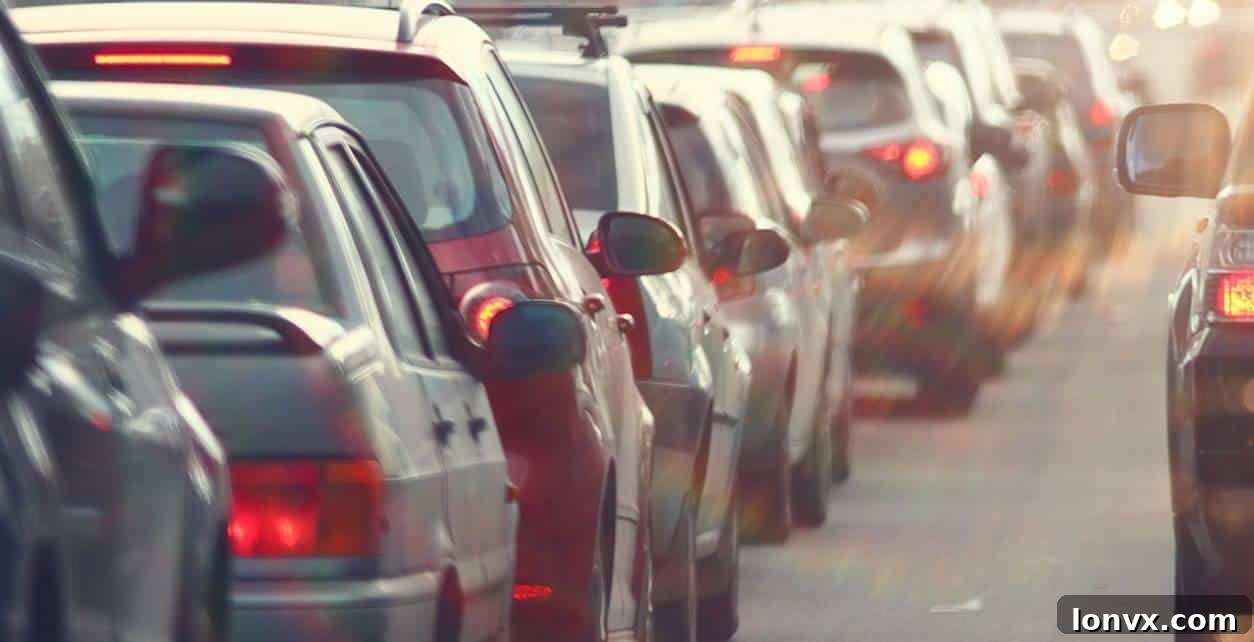
Across every major city in Canada, from the Pacific coast to the Atlantic, the daily commute has evolved into a frustrating ordeal. Our roads are perpetually overcrowded, and the existing alternatives are often so unappealing that millions default to the confines of their private vehicles. Consider the infamous Highway 417 in Ottawa; if you’ve ever navigated its arteries during peak hours, you’ve likely experienced the soul-crushing crawl of bumper-to-bumper traffic. Imagine enduring that daily, a testament to the immense pressure on our transportation infrastructure.
The situation is no different for our friends in Vancouver. Many have firsthand experience with the notorious “parking lot” that Hastings Street transforms into, or the agonizing queues on Highway 1 leading up to the Ironworkers Memorial Bridge. These aren’t isolated incidents; they are symptoms of a systemic failure to provide efficient, appealing alternatives to single-occupancy vehicle travel. The economic toll of this congestion is staggering, accounting for billions in lost productivity, wasted fuel, and increased environmental pollution annually. But beyond the financial implications, there’s a profound human cost.
The psychological impact of chronic traffic is undeniable. Nerves fray, tempers shorten, and otherwise patient individuals can find themselves overwhelmed by stress, leading to instances of road rage and heightened tension. It’s a breeding ground for frustration, where minor delays can trigger significant emotional responses. This isn’t just about getting from point A to point B; it’s about preserving our collective sanity and fostering a more harmonious society. The current state of our roadways demands an urgent and transformative intervention.
Beyond Inconvenience: The Shortcomings of Current Public Transit
While most Canadian cities do offer some form of public transportation, these systems frequently fall short of providing a genuinely attractive alternative to driving. The problem isn’t the existence of transit; it’s its quality, frequency, comfort, and reliability. Too often, commuters are faced with a litany of inconveniences that actively discourage ridership, pushing them back into their cars despite the gridlock.
- Infrequent Service: Waiting for a bus or train often means enduring long intervals, exposed to the elements – rain, snow, or sweltering heat. This unpredictability makes it challenging to plan a schedule, particularly for those with time-sensitive commitments.
- Lack of Comfort and Cleanliness: Many transit stops and vehicles are poorly maintained. Imagine waiting at a bus stop where the single bench is grimy, perhaps stained with spilled coffee or soda, a testament to years of neglect. Once the vehicle arrives, it’s often overcrowded, forcing passengers to stand in uncomfortable proximity. For many, safety concerns can also arise in such cramped and unhygienic conditions.
- Limited Accessibility: While accessibility has improved in some areas, many parts of our transit networks still pose significant challenges for individuals with disabilities or those pushing strollers, further limiting their utility for a broad spectrum of the population.
- Inefficiency and Reliability Issues: Existing systems often suffer from delays due to road congestion (when not on dedicated lines), operational inefficiencies, or aging infrastructure. This unreliability undermines public trust and makes transit an unviable option for those who cannot afford to be late.
These compounded issues mean that despite the overwhelming traffic, many Canadians find themselves trapped in a cycle where driving remains the “least bad” option. To truly shift behavior and alleviate congestion, public transit must evolve from a last resort into a preferred, first-class mode of transport.
The Vision: Frequent, Comfortable, Restorative Transit
Imagine a transit system that is not merely functional, but genuinely enjoyable. A system where “frequent” means never waiting more than a few minutes for your next connection, regardless of the time of day. Where “comfortable” implies a guaranteed seat, ample space, climate control, and a clean, safe environment. And “restorative” suggests a journey that allows you to relax, read, work, or simply decompress, rather than endure the stress of driving. This is the promise of truly transformative public transit.
Such a system would be a meticulously planned network featuring dedicated rapid transit lines, potentially light rail, subways, or express bus services, that bypass road congestion entirely. Vehicles would be modern, well-maintained, and designed for passenger comfort, offering amenities like Wi-Fi and charging ports. Stations would be clean, well-lit, secure, and integrated seamlessly with local feeder systems – buses, bike-sharing, and pedestrian pathways – ensuring smooth, door-to-door connectivity. This level of service would make transit not just a convenience, but a lifestyle choice, encouraging millions to leave their cars at home.
Naturally, building such an extensive and advanced infrastructure would require a substantial investment. The costs would be significant, measured in billions. However, this investment should not be viewed as an expense, but as a critical long-term asset, a national infrastructure project with an unparalleled return on investment. The economic, environmental, and social benefits would far outweigh the initial capital outlay, creating a more prosperous and sustainable future for all Canadians.
Unlocking Housing Potential: The Transit-Oriented Development Revolution
One of the most profound impacts of a superior rapid transit network would be its ability to revolutionize housing affordability and availability. For too long, the narrative, particularly in cities like Vancouver, has been that geographical constraints – mountains and oceans – limit growth. This perspective, while partially true for immediate urban cores, ignores the vast potential of regions just outside existing city limits.
A well-designed rapid transit system could easily transform a 100-kilometer commute into a comfortable, productive one-hour journey or less. This dramatically expands the habitable and developable land base around our major cities. Think of the thousands of square kilometers of accessible land currently considered too remote for daily commuting. With high-speed, reliable transit, these areas become prime locations for new, master-planned communities.
This isn’t about sprawling suburbs; it’s about transit-oriented development (TOD). New communities could be designed around transit hubs, minimizing the need for cars within these areas and fostering walkable, vibrant neighborhoods. By making distant locations genuinely accessible, we could significantly increase the supply of housing, thereby easing the upward pressure on property prices within existing urban cores. This creates a multi-tiered housing market, offering more affordable options further afield while maintaining the vibrancy of downtown areas.
The Economic Engine: Housing and Transit as Stimuli
Ask any seasoned real estate professional about the most potent driver of economic growth in a country, and an overwhelming majority will point to housing. The housing sector is not merely about buying and selling homes; it’s a colossal economic ecosystem that stimulates countless ancillary industries. From the moment a home is conceived to its ongoing maintenance, it generates an endless chain of economic activity.
- Construction Boom: Building new homes requires architects, engineers, construction workers, material suppliers, and manufacturers. This creates hundreds of thousands of direct and indirect jobs.
- Infrastructure Development: New communities necessitate new roads, utilities, schools, hospitals, and community centers, further fueling job creation and local economies.
- Retail and Services: Home purchases drive demand for furniture, appliances, landscaping services, renovations, and a myriad of retail goods, boosting local businesses and creating entrepreneurial opportunities, even for teenagers cutting lawns.
- Government Revenue: Increased property values and transactions generate higher tax revenues, which can then be reinvested into public services, further enhancing quality of life.
Now, imagine a scenario where thousands upon thousands of new homes could be bought and sold across every major Canadian city, all within a comfortable one-hour transit commute to downtown job centers. This is precisely what a robust transit system facilitates. It creates a vast, untapped market for housing development and, in doing so, unleashes an unprecedented wave of economic stimulus that reverberates through every segment of our economy. It’s an economic catalyst of immense proportion.
Overcoming Obstacles: A Call for Visionary Leadership
The path to achieving this transit-led transformation will not be without its challenges. There will undoubtedly be skepticism, opposition from vested interests, and the usual chorus of those who declare, “It can’t be done.” This kind of narrow-minded thinking, unfortunately, often stifles progress. The word “no” itself is often devoid of substance, a short, sharp sound that too easily closes the door on innovation and possibility.
Building a truly modern, integrated transit system demands not just financial commitment, but also political courage, long-term vision, and cross-jurisdictional cooperation. It requires planners and smart thinkers to collaborate, to learn from global best practices, and to envision a future beyond immediate political cycles. Most importantly, it requires the active engagement of voters.
We, as citizens, have the power to demand better. It’s time to elect leaders – politicians, government officials, and urban planners – who are willing to make “real transit” a top priority. Leaders who understand that investing in infrastructure isn’t just about moving people; it’s about building a better country. It’s about reducing stress, improving health outcomes, fostering economic resilience, and creating vibrant, sustainable communities for generations to come.
The math is clear, the need is urgent, and the benefits are profound. Let us reject the notion that complex problems require equally complex, unattainable solutions. Sometimes, the most powerful answer lies in a fundamental shift in our approach to connectivity. It’s transit, for crying out loud. It’s the key to unlocking Canada’s full potential.