Unlock Consistent Real Estate Success: Master Your Sphere of Influence and Sales Strategy
Imagine a real estate career where your phone consistently rings with potential clients, where you never have to scramble for new leads, and where the people who know and trust you become your most reliable source of steady business. This isn’t a pipe dream; it’s a tangible reality for a select few. While many real estate agents acknowledge this ideal exists, very few manage to achieve it. The journey from aspiring to thriving often hinges on understanding and overcoming fundamental challenges in client engagement and sales proficiency. Achieving this level of consistent, referral-driven business transforms the daily grind into a fulfilling and highly profitable venture.
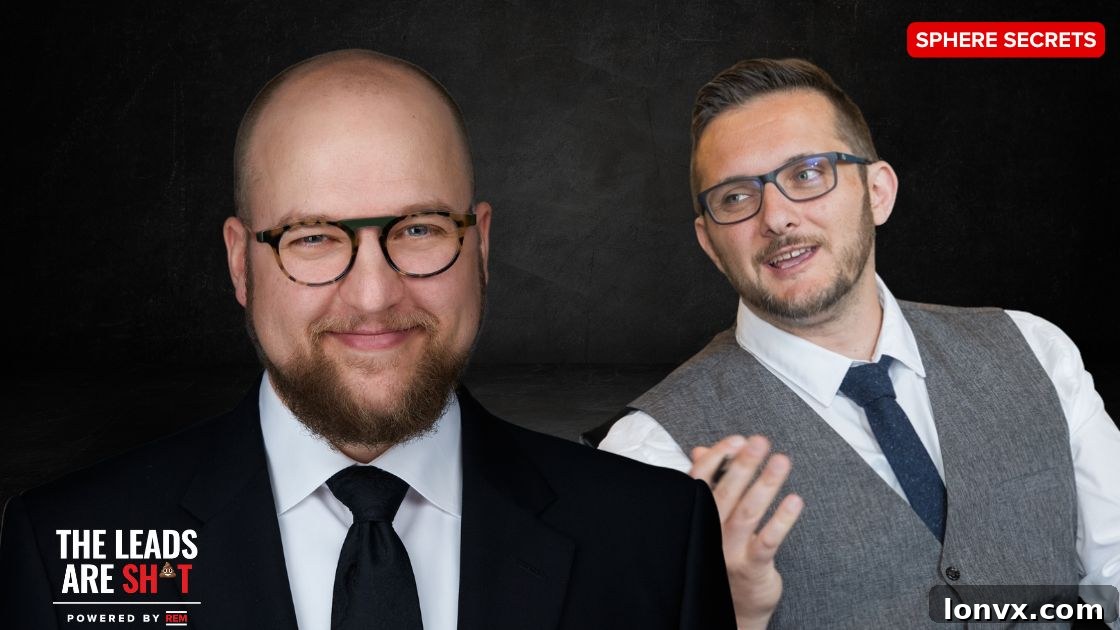
In a recent insightful discussion, real estate sales and marketing experts Taylor Hack and Andrew Fogliato delved into the core reasons why agents often shy away from discussing real estate with their closest connections. They uncovered what this underlying fear truly signals and, crucially, provided a roadmap for cultivating a robust “home team” that consistently generates referrals without ever feeling intrusive or pushy. Their strategies offer a refreshing perspective on building a sustainable real estate business rooted in genuine relationships and refined skills, paving the way for unparalleled real estate success.
Overcoming the “Salesy” Stigma: It’s a Skill Gap, Not a Personality Flaw
One of the most prevalent barriers preventing real estate agents from engaging their personal networks is the pervasive fear of appearing “salesy” or overly pushy. This apprehension can lead to self-silencing, causing agents to miss out on valuable opportunities within their sphere of influence. However, Taylor Hack offers a transformative perspective: this fear isn’t a defect in your character; it’s a vital signal pointing to a gap in your skillset.
“If you’re afraid of being salesy, it’s likely that you’re untrained,” Hack asserts. He emphasizes that caution is indeed warranted, and a strategic approach is essential. Without proper strategy and training, an agent will come across as salesy—not because it’s their personality, but because they haven’t yet mastered the nuanced art of consultative sales. The natural instinct to avoid being perceived negatively is valid; however, the correct response isn’t to remain silent but to cultivate the necessary skills for effective real estate conversations.
Instead of avoiding real estate conversations entirely, agents who struggle with these interactions should commit to learning how to have more effective, value-driven discussions. This involves understanding client needs, offering genuine insights, and positioning oneself as a trusted advisor rather than a transaction-focused salesperson. Andrew Fogliato highlights a similar dichotomy in public perception: while people online might critique “bad agents,” they invariably describe their own agent in glowing terms—as consultative, supportive, and always having their best interests at heart. “Those other agents we talk about online, those are the other ones,” Fogliato notes, underscoring that clients value a different kind of interaction from *their* agent. This distinction is crucial for building a strong real estate career based on reputation and trust.
Mastering consultative selling involves developing active listening skills, asking insightful questions that uncover unspoken needs, and providing solutions that genuinely benefit the client. It’s about building rapport and trust, demonstrating empathy, and ensuring that when a real estate need arises, you are the obvious first choice. This skill-based approach transforms the fear of being “salesy” into an opportunity for professional growth, allowing real estate agents to confidently engage their network and unlock a steady stream of referral business.
Cultivating Your “Home Team”: 300 People Who Won’t Walk Past You
At the heart of Taylor Hack’s successful business model lies the concept of the “home team.” This isn’t just a generic contact list; it’s a specifically defined group of individuals who not only recognize you but would also explicitly mention your name when asked for a real estate referral. More importantly, these are people with whom you are consistently having regular, low-pressure real estate conversations. These relationships form the bedrock of a robust and sustainable real estate career, providing a consistent source of quality leads.
The target number for this elite group is strategically derived from the work of anthropologist Robin Dunbar. His research on social group sizes suggests that most individuals can comfortably maintain about 150 meaningful relationships. However, dedicated practitioners, those committed to nurturing their network, can effectively manage around 300 strong connections. A home team of 300 individuals who acknowledge both a personal and professional relationship with you is projected to generate a minimum of 30 transactions annually from that group alone. This robust pipeline underscores the immense power of a well-cultivated sphere of influence and is a cornerstone for consistent real estate success.
Hack describes the process of engaging this team as effortless once the initial barrier of discomfort is overcome. “If you open that door to have 100 real estate interactions with zero pressure, they just fly in,” he explains. The critical failure point for many real estate agents is skipping this crucial step entirely. Agents who neglect consistent real estate conversations with their acquaintances risk losing potential clients, not to a competitor’s aggressive pitch, but simply to a lack of visibility and availability. If a friend needs an agent and you aren’t the immediate, obvious first call, another agent has likely already secured that position.
Building your home team requires intentional, consistent effort. It means staying top-of-mind not through relentless self-promotion, but through genuine engagement, providing value, and subtly integrating real estate into your conversations when appropriate. Regularly checking in, sharing relevant market insights, and being a resource even when there’s no immediate transaction demonstrates your expertise and commitment, solidifying your position as their go-to real estate professional and ensuring a steady flow of referral business.
Navigating Client Phases: Research vs. Action
A pivotal concept within Hack’s framework is recognizing the distinct difference between contacts who are merely in a “research phase” and those who are genuinely “action-ready.” Treating every prospect with the same level of urgency or type of communication is a common pitfall that can damage nascent relationships with the former group while simultaneously causing you to miss critical opportunities with the latter. Understanding these phases is crucial for effective real estate lead generation and client management.
Being “action-ready” carries a precise definition: if you could present an ideal home at a great price today, could this client confidently submit an offer with standard conditions within approximately ten days? If the answer involves prerequisite steps such as selling an existing property, securing financing approvals, or waiting for specific external circumstances to align, then that individual is not yet in the action phase. They are researchers, and your approach to them should reflect this, offering educational content and patient guidance rather than pushing for a sale.
“Two years means not now. That’s the only thing they can tell me,” Hack states. His direct approach highlights the importance of understanding current readiness. However, even contacts with longer timelines require consistent nurturing. “If I’m not talking to them every 90 days, somebody else is,” he warns, emphasizing the competitive nature of the real estate market and the need to stay present in a client’s mind, even when their timeline is extended.
Andrew Fogliato reinforces this, noting that client timelines are fluid and can shift unexpectedly. Someone who declared a two-year plan last week might call you next week because a family member just bought a home, a job opportunity arose, or a significant life event altered their immediate plans. “They weren’t lying. They meant two years a week ago,” Fogliato clarifies, highlighting that circumstances, not deception, are often behind these shifts. Therefore, a consistent, value-driven follow-up strategy is paramount for both research-phase and action-ready clients, albeit with tailored content and frequency, ensuring you remain their trusted real estate advisor.
The Flashlight Trick and Beyond: Demonstrating Expertise Through Problem Solving
One of Taylor Hack’s most innovative and effective techniques at open houses has nothing to do with overtly asking for business. When a prospective buyer pauses at a window, Hack subtly pulls out his phone, activates its flashlight, and shines it onto the glass, demonstrating how to count the panes. This simple, unexpected action creates an immediate connection and demonstrates value, showcasing genuine real estate expertise.
“It’s not the flashlight that gets them,” Hack reveals. “It’s the understanding of the problem that the flashlight solves – that they didn’t even know they had. They were looking at kitchens.” The buyer, initially focused on aesthetics, suddenly gains a practical insight into window quality or energy efficiency, a problem they weren’t consciously considering. This subtle act elevates Hack from a mere agent to an expert guide, building trust and authority effortlessly.
Fogliato recounts a similar experience with an agent early in his career who would casually check the edge of a window frame to read its manufacturing date, then quickly calculate its remaining useful life. Again, this wasn’t about pushing a sale; it was about providing an unprompted, valuable piece of information that demonstrated deep real estate knowledge and a commitment to client education.
The underlying principle of both these examples is profound: the most potent way to demonstrate expertise is not by proclaiming it, but by tangibly solving a problem the prospect didn’t even realize they had. Fogliato identifies this as creating “aha moments” and answering questions people haven’t yet thought to ask – the two highest-performing content types in any format. “You’re auditioning for a guide,” Hack concludes. “I know how to help in places you don’t even know exist yet.” By proactively offering insights and knowledge that empower buyers and sellers, real estate agents establish themselves as invaluable resources, building trust and authority organically, which is vital for a thriving real estate career.
Mastering the Open House: A Stepping Stone, Not a Final Transaction
Taylor Hack is unequivocally clear about the true purpose of open houses: they are rarely about selling that specific property on the spot. Statistically, less than one percent of open house attendees end up purchasing the featured home. The genuine value of an open house lies in its potential for database entries, lead generation, and setting up crucial next steps, rather than securing immediate conversions. This shift in mindset is fundamental for effective real estate marketing and client acquisition.
His strategic opening question at every open house is designed to efficiently segment visitors: “Did you have to come from far to be here today?” The response instantly reveals whether the individual likely resides within the immediate neighborhood or is an external buyer, fundamentally altering the subsequent conversation. For local residents, the discussion might pivot to market trends, neighborhood value, or future selling plans. For those who traveled, the focus shifts to their specific buying criteria, timeline, and financing needs, allowing for a more tailored approach to lead nurturing.
From this initial engagement, the overarching goal is to gather vital context: the visitor’s timeline for buying or selling, their family situation, underlying motivations, and any other pertinent details that provide a legitimate reason for a follow-up. Crucially, this conversation should feel organic and natural, akin to two individuals discussing property interests, rather than a high-pressure qualification interview. This consultative approach fosters a positive experience and builds rapport for future client relationships.
“You’re not showing up with engagement rings,” Hack cleverly analogizes. “Talking to people about buying things and writing offers is how you scare the hell out of all of them. You’re at the nightclub. You’re not at the first date yet.” This perspective highlights the need for a relaxed, conversational approach that builds rapport and gathers information without overwhelming or alienating potential clients. The open house is an initial touchpoint, a gentle introduction to your expertise and a chance to begin a relationship that could blossom into future real estate business.
Crafting Business Cards: One Contact Side, One Compelling Call to Action
In the digital age, the humble business card might seem archaic, yet Fogliato and Hack contend that most real estate agents squander its potential, particularly the valuable space on the back. Their philosophy is straightforward: the front of the card should fulfill traditional expectations—your name, contact information, and brokerage details. However, the reverse side should feature exactly one, highly compelling call to action (CTA), turning a simple card into a powerful real estate marketing tool.
The effectiveness of this CTA hinges on its relevance to the audience receiving it. A card distributed to prospective buyers at an open house should offer something directly appealing to buyers, perhaps a link to exclusive listings or a guide to first-time home buying. Conversely, a card exchanged at a real estate conference with fellow agents should clearly communicate a referral opportunity or a partnership benefit. A card used in a listing-focused neighborhood campaign should resonate with potential sellers, perhaps offering a complimentary home valuation or a local market report tailored to their needs.
“Sign up for my newsletter is not a call to action,” Fogliato emphatically states. “You need an actual reason. No one enters their email just because it says sign up for my newsletter.” A powerful CTA provides a clear, tangible benefit and a low barrier to entry, enticing the recipient to take the next step in engaging with you and your real estate services.
Fogliato shares a CTA that has consistently delivered results in his own marketing campaigns: “Become the smartest person in your neighborhood about real estate in three minutes a week.” This statement is potent because it promises a specific, desirable outcome (becoming “smart”), quantifies the minimal time commitment, and immediately conveys the value proposition to the reader. Hack’s version for an exclusive insider list utilizes a QR code paired with a tantalizing phrase like “learn what’s coming before it gets to Realtor.ca.” In both instances, the business card is designed to perform one critical job: to create an irresistible reason for someone to take the crucial next step in engaging with the agent, driving real estate lead generation and client relationships.
These strategies collectively form a powerful framework for real estate professionals looking to build a sustainable, referral-driven business. By refining their sales approach, nurturing their network, understanding client readiness, demonstrating expertise subtly, and optimizing every touchpoint like the open house or business card, agents can move beyond transactional interactions to foster lasting client relationships and achieve consistent real estate success.
Join the Conversation and Elevate Your Real Estate Game
For those eager to dive deeper into these strategies and more, the insights shared by Taylor Hack and Andrew Fogliato are just a glimpse into the wealth of knowledge available. Their weekly sales and marketing show, “The Leads Are Sh*t,” brings together working agents to dissect what’s genuinely effective in the dynamic world of real estate today.
Don’t miss the opportunity to be part of the live recording sessions, get your pressing questions answered directly by the experts, and engage in a vibrant after-show conversation with peers. This is your chance to gain actionable strategies and connect with a community dedicated to real estate excellence.
👉 Register for the next live session and transform your real estate business today.
Learn more from Taylor Hack and Andrew Fogliato:
Discover More: Related Insights and Resources
Related Posts
Building Client Trust: The Foundation of Long-Term Real Estate Success
Explore strategies for fostering genuine trust and loyalty with your clients, ensuring repeat business and consistent referrals in your real estate career.
Read More
Effective Lead Nurturing: Turning Prospects into Valued Clients
Learn how to engage and convert real estate leads at every stage of their buying or selling journey, from initial interest to closing the deal.
Read More
The Art of Negotiation: Essential Skills for Real Estate Agents
Master the techniques that will empower you to secure the best outcomes for your clients in every real estate transaction, boosting your professional reputation.
Read More