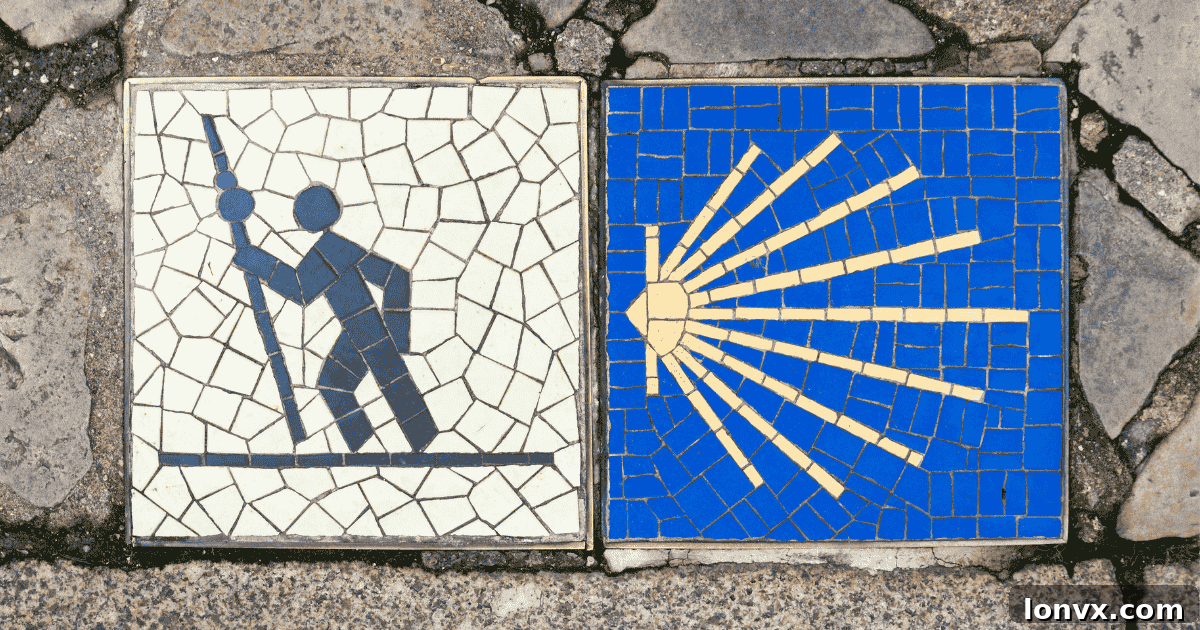
Camino De Santiago sign (Canva)
Like countless others, my inspiration to walk the legendary Camino de Santiago last fall stemmed from watching the poignant film The Way, starring Martin Sheen. This ancient route, often referred to simply as the Way of St. James, or “the Way,” captivated my imagination, much as it has for thousands worldwide. I couldn’t help but notice the profound coincidence that “the Way” is also a central concept in the ancient Chinese text, the Tao Te Ching, representing a philosophical path to life. Initially, my motivations, much like those portrayed in the movie, were rather superficial: it simply looked like a fun adventure, a grand escapade across Spain.
In The Way, the characters embark on the pilgrimage, each driven by deeply personal reasons, and in their pursuit, they find not only what they desired but, more importantly, what they truly needed in a profoundly transformative manner. While such neat resolutions are a hallmark of Hollywood narratives, I was initially skeptical that a simple walk in the real world could yield such life-altering epiphanies. I anticipated excitement and enjoyment, certainly, but any profound personal revelation seemed, at the time, highly improbable.
More Than Just a Fun Adventure: The Camino’s Deeper Call
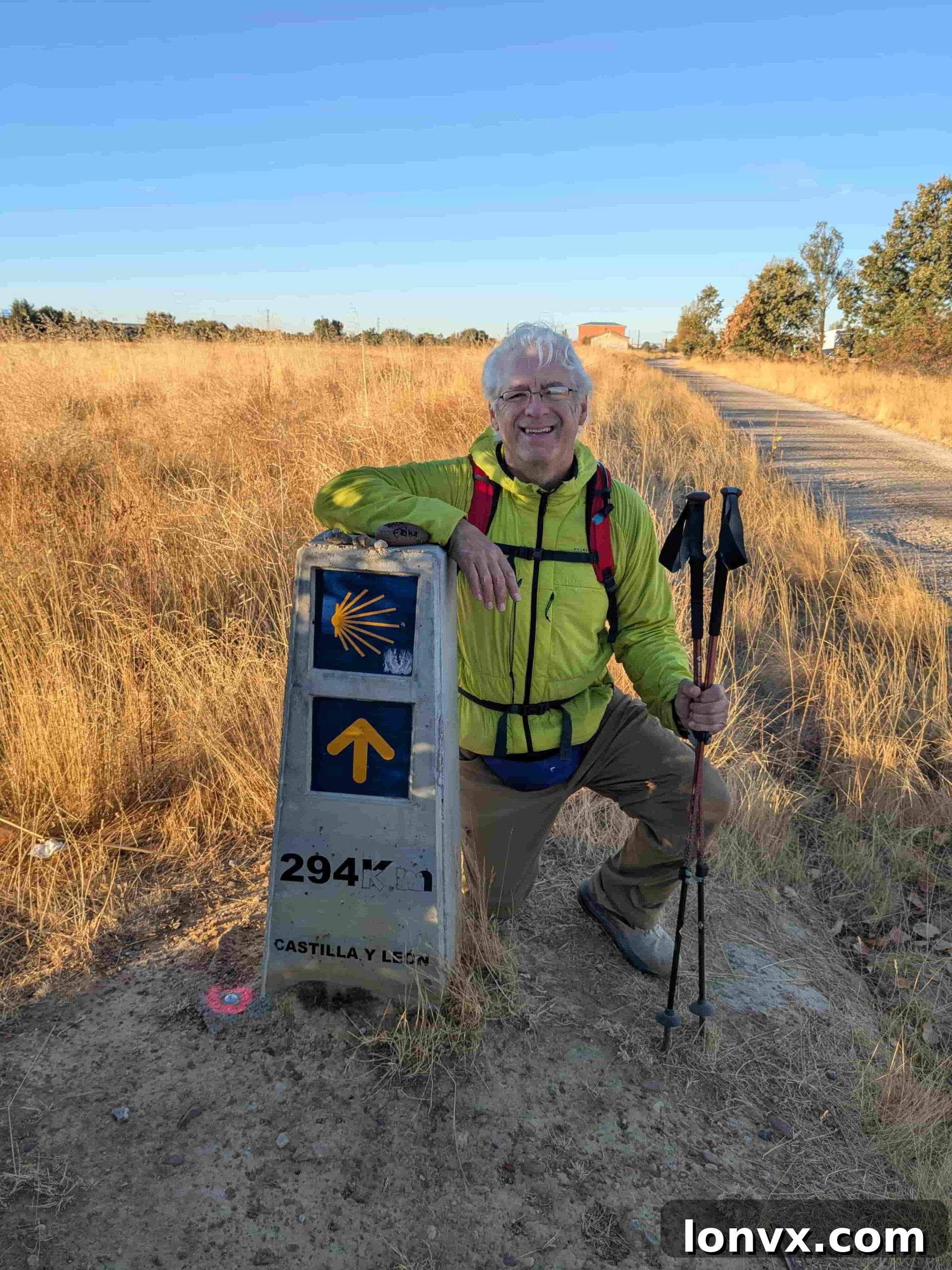
Source: Gerald Tostowaryk
My preliminary research into the Camino de Santiago quickly revealed its true nature: a thousand-year-old Catholic pilgrimage route, steeped in history and spiritual significance. A recurring theme in countless articles emphasized the critical importance of understanding *why* one chooses to walk the Camino. Many stressed that the journey’s true value lies in this intrinsic motivation, often hinting at a spiritual quest rather than mere tourism.
As a seasoned professional with three decades in the demanding world of real estate, I considered myself a well-adjusted individual leading a good life. I dismissed the “why” as overly spiritual introspection, focusing instead on the tangible, physical challenges. My preparation was rigorous: I began hiking three to five kilometers three times a week with an eight-pound pack, steadily increasing both distance and weight. By the time my departure date arrived, I was confidently covering 12 to 14 kilometers two to three times a week with a 15-pound pack. I felt unequivocally ready for my “fun adventure,” convinced that nothing could possibly go wrong. Little did I know, the Camino had entirely different plans for me.
In hindsight, it seems almost everything could and did go “wrong” in the most unexpected ways. The movie certainly never depicted the incessant pain of sore feet, the throbbing ache of shin splints, or the uncomfortable swelling of ankles. Yet, by the second week, I, along with thousands of my newfound “closest friends,” found ourselves limping, our limbs adorned with compression socks, sleeves, and an assortment of bandages. Thankfully, after a millennium of pilgrims traversing these paths, the local farmacias (pharmacies) along the route have become veritable experts in foot ailments. Their knowledgeable staff, often offering advice with a sympathetic smile, expertly patched us up. Despite my left foot protesting almost every single day, the determination to press forward never wavered, and I persevered.
The Universal Question: ‘Why Are You Walking the Camino?’
Beyond the immediate relief offered by the farmacias, the spirit of camaraderie among pilgrims was truly remarkable. Fellow travelers were always eager to share their extensive foot-care knowledge, along with any spare bandages or blister remedies they possessed. Coming from 30 years in real estate, an industry where every interaction often involves negotiation and a subtle struggle for advantage, I was initially struck by this genuine willingness to offer “something for nothing.” My ingrained street-smart skepticism, honed over decades, told me there was no such thing. I remained cautiously guarded, not a cynic, I thought, but merely practical.
A question frequently posed by fellow pilgrims was, “Why are you walking the Camino?” Clearly, I wasn’t the only one influenced by the movie or those introspective articles. On my very first morning, I walked several kilometers with a young man whose partner had tragically taken his own life just months prior. The partner’s mother had moved in and claimed the body, leaving this young man with no tangible memories. His story was incredibly sad, and it touched me deeply, despite my initial assertion that I was “no cynic.” Yet, a part of me, still clinging to my practical worldview, thought, “If you have issues in your life, going for a walk is no way to solve them. It’s just a fun adventure, nothing more.”
And indeed, it was a truly fun adventure. The 780-kilometer route meanders westward through the breathtaking landscapes of northern Spain. The rolling hills, verdant valleys, and dramatic coastlines offered a constantly changing panorama of natural beauty. Spain, remarkably spared the widespread bombing of the Second World War, presents a living museum of history. Every town along the Camino is a parade of stunning, ancient structures that have stood for hundreds, some even a thousand years or more. These silent witnesses have watched countless kings, wars, and pilgrims come and go, their weathered stones holding the echoes of generations. The larger cities boast particularly amazing architecture; I especially fell in love with the grandeur of Leon and the spiritual majesty of Santiago de Compostela, the ultimate destination of the pilgrimage.
A Thousand Years of Pilgrims: Echoes of Faith and Humanity
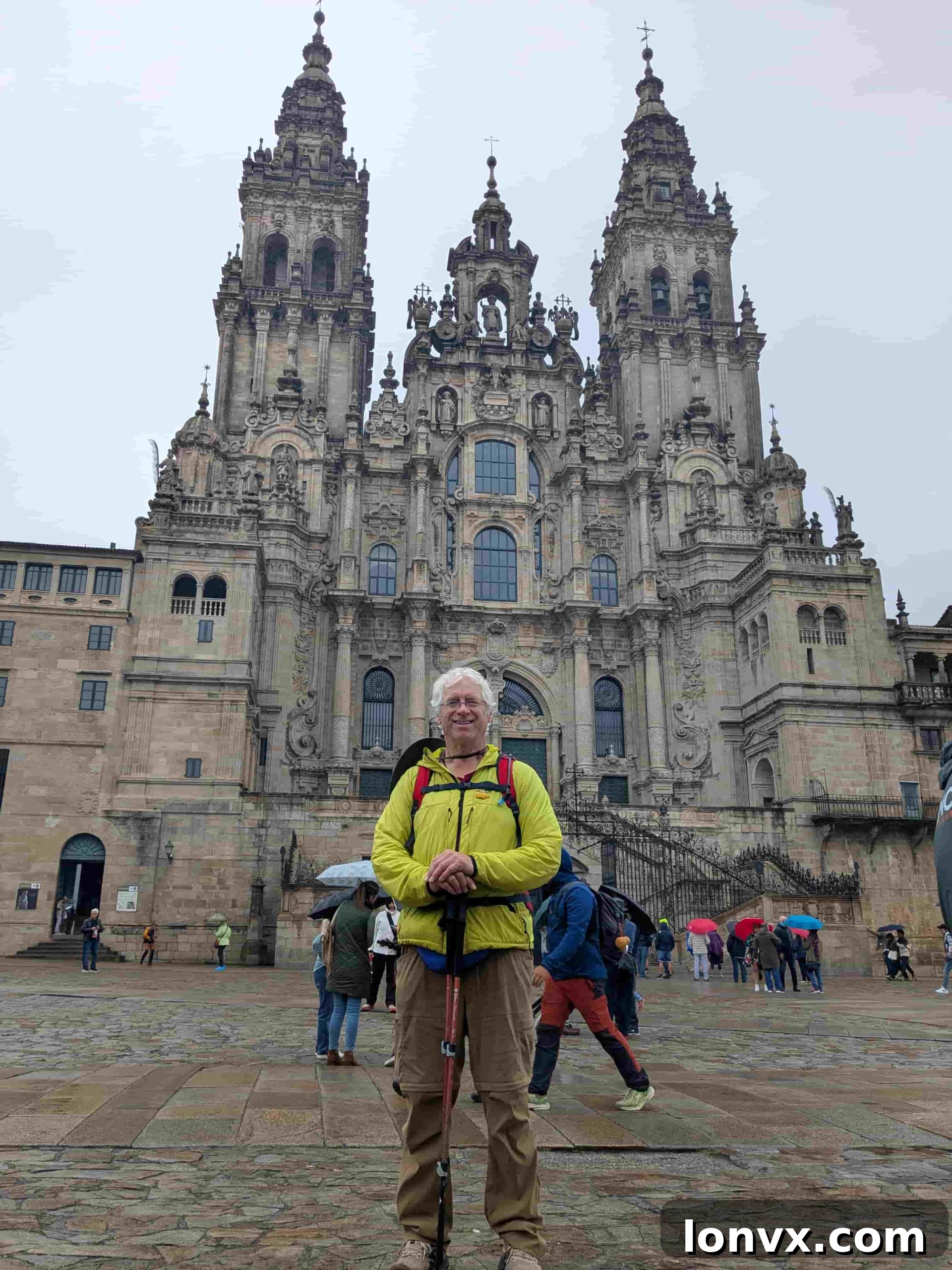
Source: Gerald Tostowaryk
Every town, no matter how small, seemed to possess a magnificent, ancient church. I found myself attending Mass many times along the route, a surprising development for someone who hadn’t anticipated such a deep dive into the spiritual aspect. Though I didn’t understand Spanish, the ritual and atmosphere of the Mass took on a new, profound meaning. My mind, unburdened by linguistic comprehension, noticed details and felt emotions I had never experienced before. The priests and nuns frequently blessed the pilgrims, often taking care to bless each individual, a deeply moving gesture. Many non-Catholics were present at most Masses, a testament to the Camino’s universal appeal. For those not of the Catholic faith, it’s customary to approach during communion by crossing your hands across your chest, signaling to the priest that you wish to receive a blessing rather than the Eucharist.
As a lover of food, trying Spanish cuisine was an undeniable joy, though the demanding schedule of the Camino meant we had little time for elaborate, exotic meals. Each day followed a predictable, yet fulfilling, rhythm: rise early, walk, enjoy breakfast, walk again, eat lunch, continue walking, check into your albergue (a pilgrim hostel), shower, perhaps a brief snooze, do laundry, book the next albergue, savor supper, and finally, bed. Time was always tight. Breakfast was typically a Spanish tortilla – a hearty potato-and-egg dish – and lunch often a simple yet delicious bocadillo, or sandwich. But supper, oh, supper was the highlight, an affair to be savored and remembered.
Most albergue owners home-cooked the evening meal, transforming it into a beautiful, timeless tradition. We pilgrims would break bread together around communal tables, sharing stories of the road, our triumphs, and our struggles. These communal suppers fostered an incredible sense of belonging and kinship. I also had many unforgettable conversations with albergue owners, individuals who open their homes not merely for a living but out of a profound sense of care and dedication to humanity. The Camino is a melting pot of cultures and backgrounds; you meet countless people, share innumerable stories, and often encounter the same faces multiple times, forging lifelong bonds with a select few along the way. These connections, born on the dusty paths of Spain, are a testament to the Camino’s power to unite.
‘Buen Camino’: A Greeting, A Blessing, A Shared Journey
Beyond fellow pilgrims, you also have countless opportunities to engage with Spanish locals, simply sharing a conversation, a smile, or a moment of connection. I found the people of Spain to be incredibly warm and welcoming. I recall chatting with an old man and his dog at a rest stop, his eyes full of wisdom. Another vivid memory is of a farmer at the roadside, generously handing out extra bunches of grapes to passing pilgrims for free, his kindness a simple, heartwarming gesture. Many locals would greet us with a cheerful “Buen Camino!” – a phrase that transcends a mere “good journey” to become a blessing, an acknowledgment of shared humanity on the path.
One of the most impactful encounters was with an older Spanish pilgrim named Javier. He was 81 years old and on his 12th Camino, a testament to his enduring spirit and the allure of the Way. We spent three unforgettable days together, forming a truly special bond. One evening, at a church-run albergue, we participated in a session where pilgrims shared their reasons for walking the Camino. Once again, heart-wrenching stories unfolded. A young Chinese man, whom I had earlier judged on the trail as rather aloof, perhaps even thinking himself superior, shared his deeply personal tale. His father had asked him to return to China, but the young man, eager to live his own life, had refused. Shortly after, his father passed away. He was walking the Camino, consumed by guilt, hoping his father would be happy in heaven, knowing his son was sorry. My initial judgment of him crumbled. Was I, after all, a cynic? I tried to shake off the unsettling thought.
Then, Javier, with tears in his eyes, began to share something about his beloved wife in broken English. His words faltered, and he broke down, weeping openly. In that raw, honest moment, we cried together. Later that evening, during Mass, the emotions resurfaced, and we found ourselves crying together once more, two men from vastly different backgrounds, united by shared grief and unexpected intimacy.
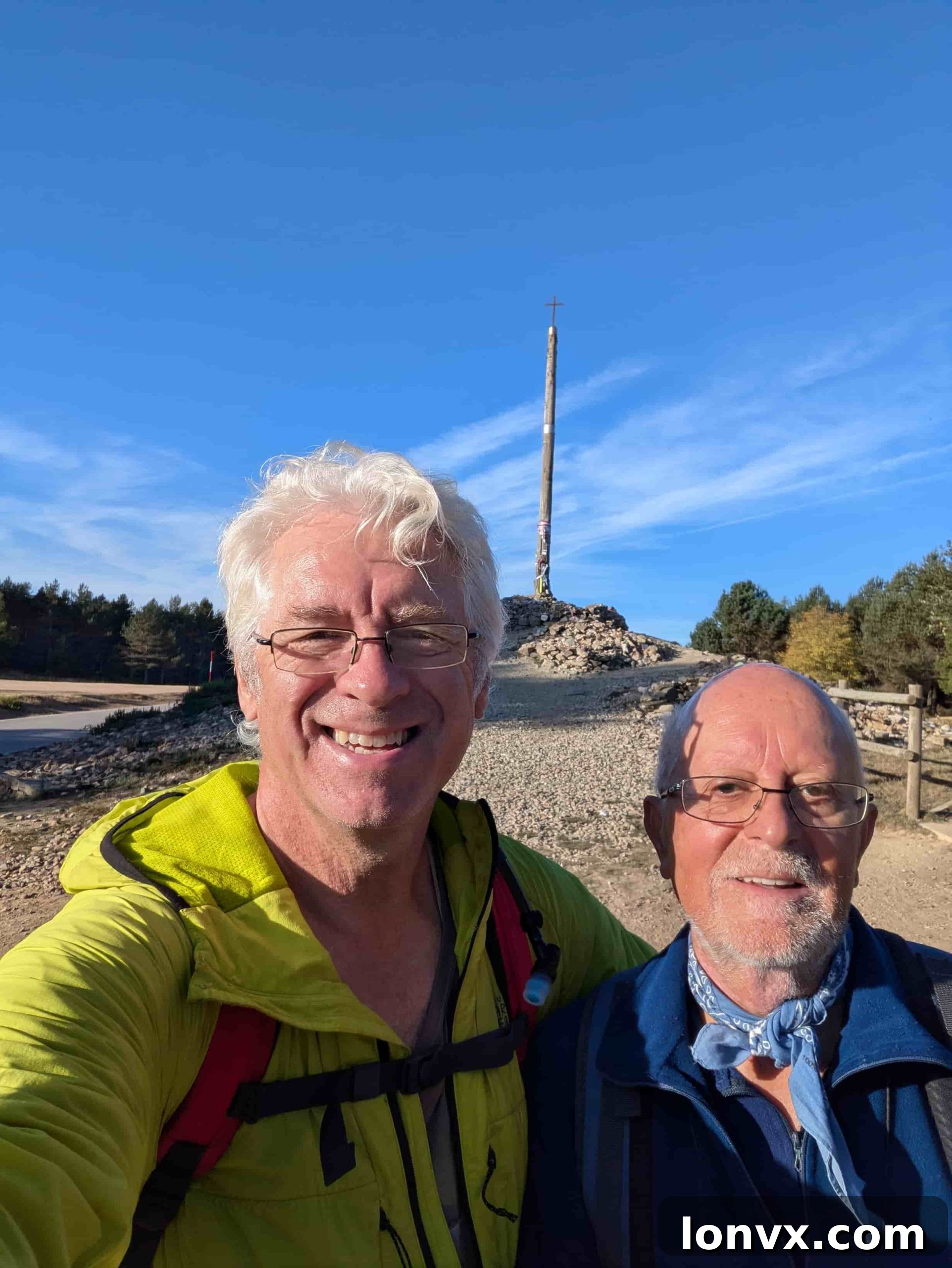
L to R: Gerald and walking companion, Javier (Source: Gerald Tostowaryk)
On our third and final morning together, Javier looked at me with unwavering resolve and declared, “We walk together the whole day.” Coming from a world where everyone always wants something from you, Javier’s simple desire for true friendship was profoundly surprising. I was, by now, seriously questioning whether my self-perception as merely “street-smart” was, in fact, a deeply ingrained cynicism.
That day proved to be one of the most powerful and transformative of my entire journey on the Way. We passed the iconic Cruz de Ferro, or Cross of Iron, a profoundly symbolic site where pilgrims traditionally leave a stone, representing a burden or care, at the foot of the cross, entrusting it to God. It’s a moment of release and spiritual significance. Javier, demonstrating his deep local knowledge and his boundless generosity, showed me a secret alternate path, generally known only to locals, which bypassed one of the steepest and most hazardous parts of the route. My foot was bothering me significantly, and I knew I was slowing him down. The hot Spanish sun beat down mercilessly, and he, at 81, had four more kilometers to walk that day than I did. Concerned for his well-being, I suggested he go on ahead. He stopped, looked deep into my soul with an intensity I’d never encountered, and repeated those six words, imbued with an almost sacred weight: “We walk together the whole day.”
That moment, a simple declaration of companionship and solidarity, touched me more deeply than words can convey. It was a revelation of unconditional human connection, a stark contrast to the transactional world I knew. Later that day, as we eventually parted ways – perhaps never to see each other again – we embraced, and I fought back a flood of tears. I had truly never met a man quite like Javier, whose spirit and kindness shone so brightly.
The Way You Can Talk About Is Not the Way: An Unspeakable Truth
Another young woman I met and ran into a couple of times along the route shared her reason for walking the Camino during an evening supper. She simply said, with a quiet intensity that belied her young age, “I have to believe there’s still hope.” I have no idea what profound sorrow or hardship had led her to feel this way, but once again, I fought back tears, feeling the raw vulnerability of her statement. These encounters chipped away at my guarded exterior, revealing the shared human experience beneath the surface.
There were so many others: the young man from Toronto whom I initially prejudged based on his appearance, only to discover I was completely wrong about him. Through these numerous interactions, I finally began to realize that after 30 years in real estate, constantly negotiating and evaluating everyone, I had indeed become cynical, prone to prejudging others. This powerful realization hit me with the force of a revelation. I resolved to change, to shed this ingrained skepticism. In that moment of profound self-awareness, I understood: I had indeed gotten what I wanted – a grand adventure. But, far more importantly, I had gotten exactly what I *needed*. Hey, wait a minute – just like the movie.
I wish I could articulate every single experience and every deep conversation shared with my fellow pilgrims, but even if I possessed the perfect words, they could never adequately express the sheer range of emotions that cascade over you during a grand adventure like the Camino. At the beginning of this story, I mentioned the fascinating parallel between the Camino and the concept of “the Way” as outlined in the Tao Te Ching. The very first line of this ancient book wisely states: “The way you can talk about is not the Way.” How profoundly true that statement became for me.
Words are simply inadequate to describe the depth and breadth of the experience I had on the Way. I now understand, with every fiber of my being, why people walk the Way of St. James. It’s not just a walk; it’s a journey of the soul, a crucible of self-discovery, and a profound immersion in human connection. I will undoubtedly be returning to the Camino. And I wholeheartedly urge you to go as well; I promise you, you will get what you need, perhaps in ways you never even imagined.
Buen Camino.