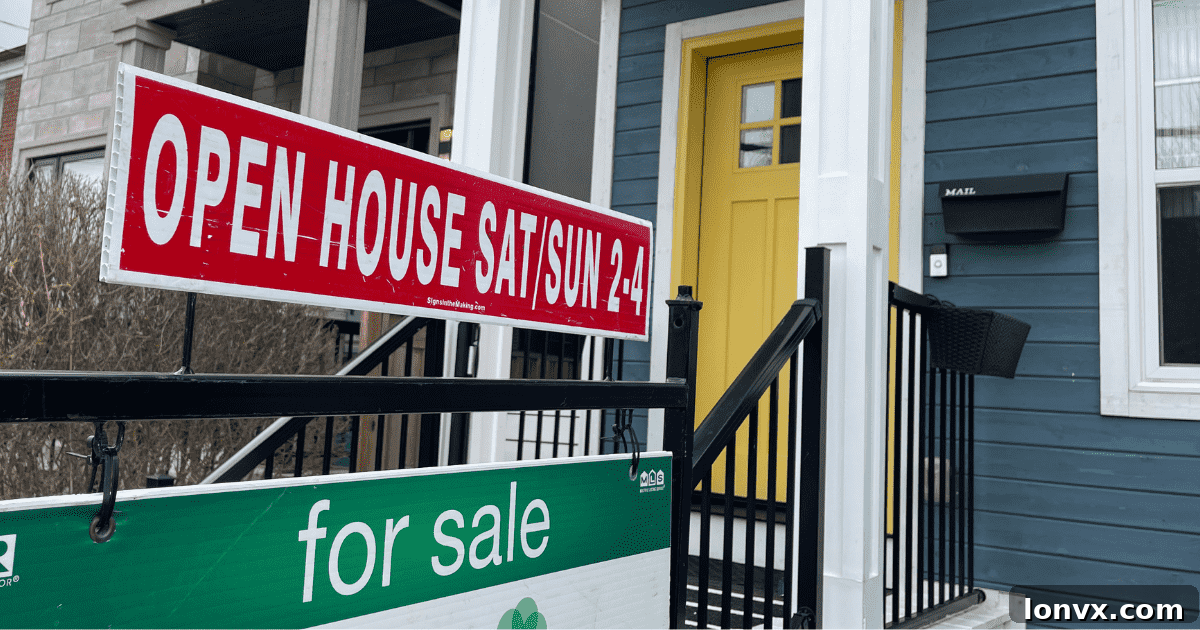
The Canadian real estate landscape is undergoing a significant transformation, marked by an increasingly stark divergence between its most coveted and more accessible metropolitan areas. As we navigate 2025, real estate professionals across the nation are observing two distinctly different market narratives unfold, shaping buyer and seller behaviors in profound ways.
In prominent and historically expensive regions like the Greater Toronto Area (GTA) and Metro Vancouver, the market is characterized by subdued demand and observable year-over-year price declines. This cautious environment reflects a confluence of factors influencing buyer sentiment. Conversely, provinces such as Quebec, the resource-rich Prairies, and the burgeoning Atlantic Canada are experiencing a robust upturn, with home prices appreciating steadily and a notably energetic start to their respective spring markets. This regional dichotomy highlights the complex interplay of local economies, demographics, and broader national and international influences impacting Canada’s diverse housing sector.
Toronto and Vancouver: A Cautious Start to the Spring Housing Market
According to the insightful Q1 2025 House Price Survey and Market Forecast from Royal LePage, Canada’s two most historically valuable real estate markets—Toronto and Vancouver—recorded year-over-year aggregate price declines in the first quarter of the year. Toronto saw a 2.7 percent dip, while Vancouver experienced a more modest 0.7 percent decrease. This trend is symptomatic of a broader buyer hesitation pervading Ontario and British Columbia, provinces grappling with external pressures. Global geopolitical tensions, the anticipation of a federal election, and widespread consumer caution have collectively contributed to a slower pace of activity in these critical urban centers.
“The traditional spring market, typically a period of heightened activity, has yet to fully blossom in Toronto,” noted Shawn Zigelstein, a seasoned broker at Royal LePage Your Community Realty. “There’s a palpable sense of reduced consumer confidence, which is undeniably a major driving force behind the current slowdown witnessed across the GTA housing market.” This sentiment underscores a wait-and-see approach adopted by many potential purchasers, who are carefully weighing their options amidst economic uncertainties.
During the first quarter, Toronto’s aggregate home price settled at an average of $1,146,100, while Vancouver’s stood at $1,230,100. Specific segments of the market, particularly condominiums, continue to face considerable pressure in both cities. Toronto condos registered a significant 4.0 percent drop, and Vancouver condos slipped by 1.7 percent compared to price levels observed in 2024. These declines highlight the sensitivity of the condo market to shifts in demand and affordability, particularly for first-time buyers and investors.
Despite this notable pause in transaction volume and the slight price adjustments, neither city is currently experiencing a dramatic collapse in property values. Instead, a more nuanced dynamic is at play. Sellers are demonstrating remarkable patience, opting to hold onto their assets rather than engage in distressed sales. Concurrently, buyers who are actively participating in the market are doing so with increased strategic acumen. They are often in a stronger negotiating position, capitalizing on a more balanced market environment where they have greater leverage and choice. This strategic approach by both parties suggests a market adjusting to new realities rather than a full-scale retreat.
Quebec and Regional Markets: Surprising Resilience and Strong Growth
While Canada’s two largest metropolitan areas, Toronto and Vancouver, navigate a period of constrained activity, the real estate market in Quebec continues its impressive momentum. Quebec City, in particular, has emerged as a national leader, posting an astonishing 17 percent year-over-year increase in home prices. This remarkable growth marks its fourth consecutive quarter leading the nation, showcasing sustained demand and market strength. The Greater Montreal Area has also contributed significantly to the province’s positive trend, recording a robust 7.9 percent increase over the same period, indicating broad-based regional vitality.
“Markets spanning Quebec, the Canadian Prairies, and Atlantic Canada are collectively demonstrating a surprising and enduring resilience in the face of broader economic currents,” stated Phil Soper, President and CEO of Royal LePage. He further elaborated, “This uneven performance across Canada’s regions is increasingly becoming a defining hallmark of a national market currently undergoing a significant transition phase.” This observation underscores the importance of a localized perspective when analyzing Canada’s diverse housing conditions.
In Quebec City, a unique combination of factors has fostered a vibrant and stable real estate environment. The strong presence of the public sector provides substantial employment stability, buffering the local economy from the fluctuations that might impact other regions. Furthermore, Quebec City’s relatively low exposure to volatile industrial trade risks has played a crucial role in maintaining high consumer confidence. As Michele Fournier of Royal LePage Inter-Quebec insightfully noted, “As long as there are no concrete job losses or widespread economic distress, there is no collective stress among consumers that would typically slow down significant purchasing decisions like buying a home.” This consistent confidence fuels sustained demand.
Similar dynamics are evident in other regional markets across Canada, including cities like Winnipeg, Edmonton, and Regina. These urban centers benefit from comparatively more affordable home prices, a critical factor drawing both local and inter-provincial buyers. Coupled with generally low inventory levels, this affordability creates a competitive market environment, driving up prices even amidst overarching national economic uncertainties. The appeal of better value for money, combined with steady local economies and demographic growth, positions these regions as attractive alternatives to the more saturated and expensive major hubs. This ongoing competition, fueled by constrained supply and robust demand, continues to propel these markets forward.
Consumer Confidence: A Landscape Divided Along Regional Lines
The national mood surrounding Canada’s economic outlook remains predictably uncertain, reflecting the disparate experiences across the country. A recent survey indicates that 49 percent of Canadians express confidence in the economy, while a nearly equal 43 percent hold reservations. This confidence, however, varies dramatically when examined at the provincial level. A notable 65 percent of Quebecers report feeling optimistic about the economy, a stark contrast to Manitoba and Saskatchewan, where only 34 percent share similar sentiments. This regional divide in economic outlook significantly influences local real estate market dynamics and consumer spending habits.
Among prospective homebuyers, the prevailing political and economic anxieties are having a tangible and measurable impact on purchasing decisions. Approximately half of all Canadians who had initially planned to purchase a home in 2025 have reportedly postponed their plans. A significant factor contributing to this hesitation is the lingering uncertainty surrounding trade relations, particularly the ongoing dispute with the United States. Beyond trade, pervasive concerns over the escalating cost of living and the inherent volatility of the housing market are central to this widespread buyer caution. Many consumers are choosing to wait on the sidelines, hoping for greater stability or more favorable market conditions to emerge.
“The typical energy associated with the spring market did not materialize as robustly as anticipated, and it’s clear that geopolitical uncertainty is playing a major, overarching role,” elaborated Phil Soper. He emphasized the profound impact of external pressures, stating, “The new administration in Washington has undeniably rattled Canadian public sentiment with its aggressive rhetoric and the implementation of punitive trade policies. While Canada was ultimately spared from the blanket 10 percent tariff imposed on most other countries globally, the targeted steel and aluminum duties, combined with unsettling comments that provocatively called Canada’s sovereignty into question, have been sufficient to significantly shake public confidence and sentiment. Even if these specific trade measures do not directly impact the housing market on a transactional level, they contribute substantially to a broader climate of caution. This heightened sense of uncertainty weighs heavily on all significant consumer decisions, both domestically and across global markets, influencing everything from investment choices to major purchases like real estate.”
Policy and Political Pressure: Housing at the Forefront in an Election Year
The impending federal election has introduced yet another layer of unpredictability into Canada’s complex real estate equation. With housing affordability consistently ranking as a paramount concern for Canadians, all major political parties have made it a central tenet of their platforms. They have rolled out a diverse array of proposals specifically designed to address critical issues such as housing supply shortages and to enhance accessibility for first-time homebuyers. These initiatives range from tax incentives and grants to potential changes in zoning regulations and increased investment in affordable housing projects.
However, Phil Soper cautions against overly simplistic solutions, emphasizing the critical need for a long-term, strategic vision. “Any initiatives that genuinely aim to make housing more accessible for young families and first-time buyers are, without question, welcome and necessary,” he affirmed. Yet, he underscored the gravity of the challenge, stating, “But the decades-long shortfall of housing inventory that our nation currently faces will not, and cannot, be resolved overnight through piecemeal solutions. It demands serious, sustained, and comprehensive long-term commitments from all levels of government and industry stakeholders. This includes everything from land development and infrastructure investment to addressing labor shortages in construction and streamlining regulatory processes.”
Market Forecasts and Forward Momentum: A Path to Recovery
Despite a slower-than-anticipated commencement to 2025, Royal LePage remains cautiously optimistic, forecasting a respectable 5 percent increase in the national aggregate home price by the fourth quarter of 2025. This projection represents a slight downward revision from earlier forecasts, primarily attributed to the more muted real estate activity observed in the significant markets of Ontario and British Columbia. The revised outlook reflects a recalibration based on the current market realities and the ongoing influence of external factors.
Encouragingly, Soper highlights that Canada’s fundamental economic indicators largely remain robust and supportive of the housing market’s long-term health. Notably, Canada boasts some of the lowest mortgage default rates globally, a testament to the stability of its financial system and responsible lending practices. Furthermore, the anticipation of continued declines in interest rates is expected to inject renewed confidence and affordability into the market, stimulating demand. While the introduction of new housing inventory remains a gradual process, it is steadily coming online, which will eventually help alleviate some of the supply pressures in key regions.
“The Canadian housing market has historically demonstrated a remarkable ability to provide individuals and families with a reliable and foundational asset, even during periods of broader uncertainty,” says Soper. He concludes with an optimistic outlook: “Real estate activity inherently tends to rebound with considerable speed and vigor once overarching economic and geopolitical uncertainties begin to dissipate. As these clouds clear, we anticipate a renewed surge in market confidence and transaction volumes, underscoring the enduring appeal and stability of Canadian real estate.”