
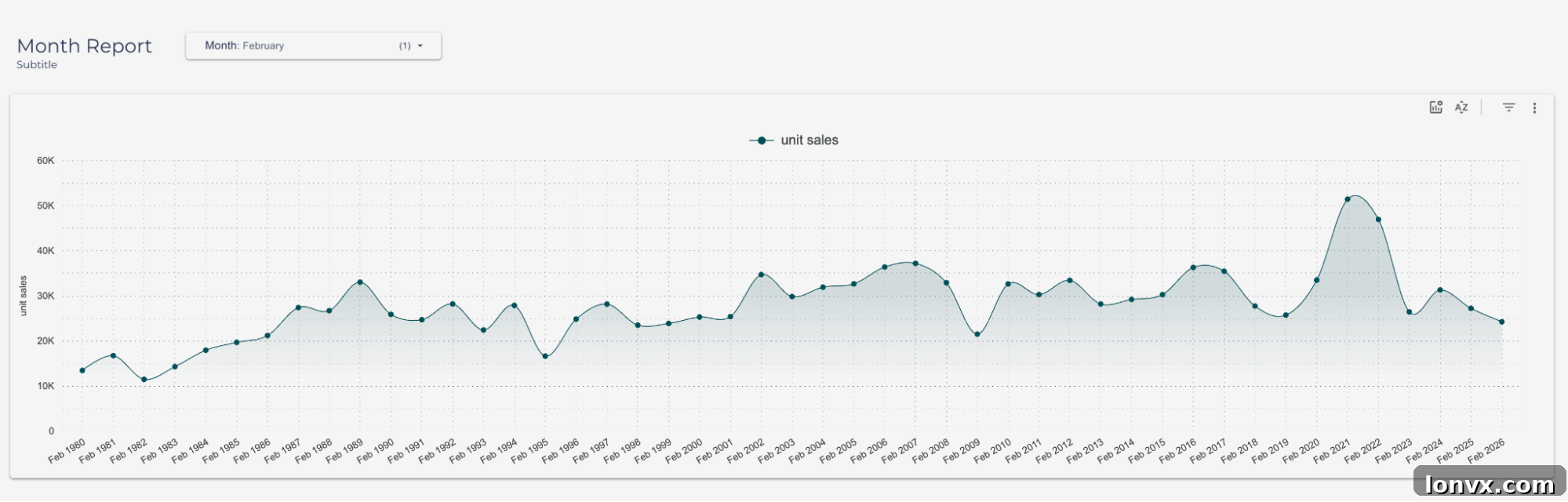
The Canadian real estate landscape has been navigating a turbulent period, with the past year marking one of its weakest performances in recent memory. National home sales for 2025 totalled 470,314 units, reflecting a 1.9 percent decline from 2024. The Canadian Real Estate Association (CREA) highlighted that 2026 would unfortunately extend this trend, marking the fourth consecutive year where sales figures have failed to surpass the half-million mark. Far from witnessing a robust recovery, the new year has commenced with an even colder market sentiment. January’s activity plunged 16.2 percent below year-ago levels, and February sales across Canada saw a further reduction of 8.1 percent compared to February 2025. This persistent deceleration suggests that 2026 is shaping up to be a challenging year for the housing sector.
To find comparably slow February data in the Canadian housing market, one would have to rewind to significant historical downturns, such as the Global Financial Crisis of 2009 or even the recession of the 1990s. This historical context underscores the severity of the current market conditions and prompts a deeper examination of the factors at play. Despite some glimmers of improving affordability, a confluence of economic uncertainties and waning consumer confidence continues to suppress buyer activity across the nation. Understanding this complex interplay is crucial for homeowners, prospective buyers, and investors alike as they navigate the evolving real estate climate.
What makes February’s housing data particularly striking is the apparent paradox it presents. On the surface, indicators suggest that affordability might be seeing a slight improvement. National Bank’s insightful housing research noted a decline in January prices, alongside more favorable fixed and variable mortgage rates. This, combined with resilient household incomes, offered support to specific regional markets. Furthermore, Statistics Canada reported a healthy 3.3 percent year-over-year increase in average hourly wages for January. In essence, the fundamental economics of homeownership, the “pure math” of buying, has indeed become somewhat more amenable for certain segments of the population. However, this mathematical improvement has yet to translate into a corresponding surge in market activity, pointing to deeper, non-numerical influences at work.
Affordability vs. Confidence: The Core Market Driver
The intricate dynamics of housing markets are rarely driven by affordability metrics alone. At their very core, these markets operate on the bedrock of consumer confidence. Currently, this essential ingredient is being eroded from multiple directions, creating a climate of pervasive uncertainty. Lingering fears of trade wars have already cast a pall over sentiment in Canada’s housing sector. RBC, a prominent financial institution, has argued that tariff anxiety has compelled many potential buyers into a cautious “wait-and-see” approach, effectively derailing what had initially appeared to be a budding market recovery. Adding to this geopolitical tension, the emergence of an actual conflict in the Middle East has, according to Reuters, pushed oil prices and bond yields higher once more. This resurgence in inflation fears comes precisely when buyers were hoping for a period of calm and predictability, further unsettling their purchasing plans and delaying decisions on significant investments like real estate.
Beyond geopolitical tremors, the domestic labour market is another significant contributor to the prevailing lack of confidence. Statistics Canada’s latest release, as reported by Reuters, revealed a concerning downturn: Canada shed 83,900 jobs in February, causing the national unemployment rate to rise to 6.7 percent. This statistic carries profound implications for the housing market. Prospective homeowners typically hesitate to make the largest financial commitment of their lives when confronted with anxieties about potential layoffs, shrinking commissions, reduced bonuses, or the uncertain future of their employment security six months down the line. Such concerns directly impact their perceived financial stability and long-term planning. Compounding this caution, rising mortgage delinquencies further heighten unease. The Canada Mortgage and Housing Corporation (CMHC) has indicated a national increase in mortgage arrears, with major urban centers like Toronto and Vancouver facing the most significant projected rise in delinquency risk. This vulnerability is a direct consequence of higher mortgage payments, softer home prices, decreased resale liquidity, and a weaker labour market all converging to create a challenging environment for existing homeowners and a deterrent for new buyers.
Beyond the Weather: Deeper Market Issues Persist
While one might charitably attribute the early-year slump to external factors, it becomes increasingly difficult to sustain this argument as the months progress. CREA’s January release, for instance, suggested that the initial downturn was “probably more about a historic winter storm than a downshift in demand.” This perspective holds some validity for the very short term. However, by February, pinning the market’s subdued performance solely on adverse weather conditions becomes less convincing. The narrative shifts from an isolated weather event to a more systemic market condition—one that appears to be caught in a delicate balance between a mathematically improving affordability and a dramatically worsening sense of economic and geopolitical uncertainty. This complex interplay of factors is what truly defines the current state of Canadian real estate, suggesting that underlying structural issues are at play rather than merely seasonal or transient disruptions.
Indeed, Canada’s housing market continued its subdued performance throughout February, still actively searching for a definitive catalyst to ignite a broader resurgence. National home sales experienced a marginal dip of 1.3 percent month-over-month, while actual sales figures registered a significant 8.1 percent decline compared to February 2025. New listings also saw a reduction, falling 3.9 percent from January, which left the national sales-to-new listings ratio at 47.6 percent. While this ratio still falls within the broad range CREA considers indicative of a balanced market, it remains notably below the long-term average of 54.8 percent. This suggests that even as fewer homes come onto the market, buyer demand isn’t strong enough to absorb the existing inventory quickly, indicating a lack of urgency among potential purchasers. The overall picture is one of hesitancy, with both buyers and sellers holding back, contributing to the prolonged period of market quietude.
A Balanced Market? Nuance Amidst Fragmentation
The headline figures regarding market balance, while not overtly dramatic, mask a more complex and fragmented reality beneath the surface. While the Canadian market may appear “soft” nationally, the underlying dynamics vary significantly depending on the specific region. At the close of February, Canada recorded 151,850 properties listed for sale, representing a 3.7 percent increase from the previous year. However, this figure still sits 12.3 percent below the long-term average for this particular time of year, indicating that while supply is growing, it hasn’t reached historical norms. The national “months of inventory” — a key metric indicating how long it would take to sell all current listings at the current sales pace — stood at five months, unchanged from January and roughly in line with historical averages. On paper, these statistics suggest a balanced market, where neither buyers nor sellers hold a distinct advantage. Yet, in practice, this national average profoundly misrepresents the highly fragmented nature of the Canadian housing market.
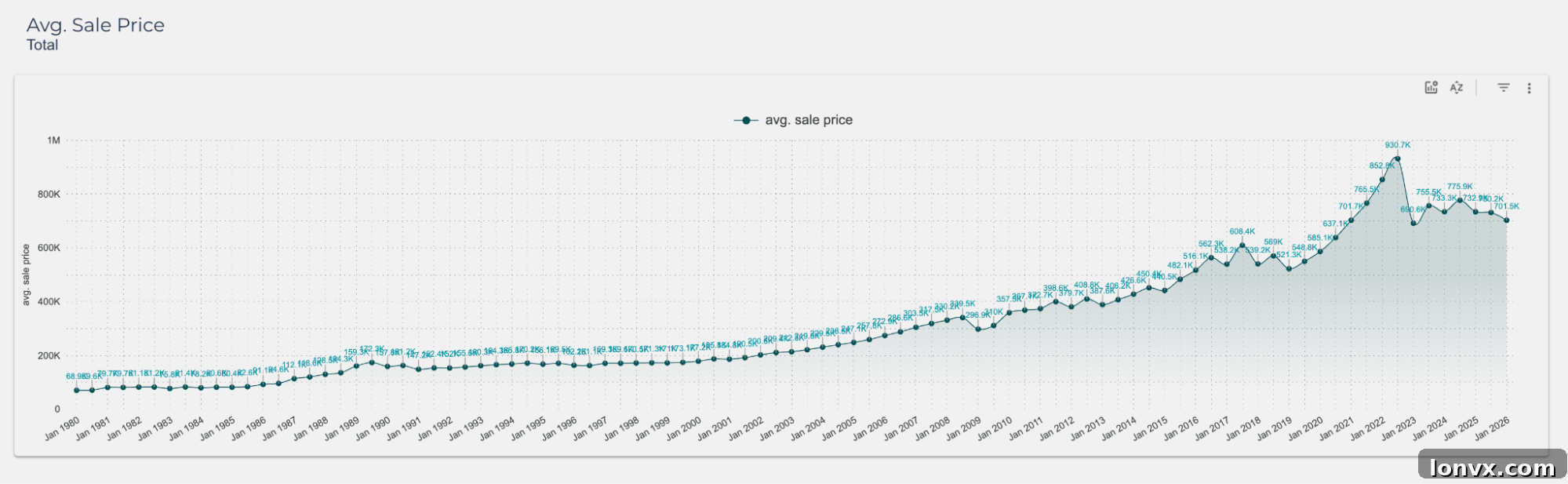
CREA itself acknowledges this disparity, noting that the national average obscures wide regional differences, with no single province precisely matching this benchmark. This fragmentation is crucial for understanding current trends. Prices continue to vividly reflect this unevenness across the country. The national composite MLS Home Price Index (HPI), a more accurate measure of typical home value because it adjusts for changes in property type and size, registered a 0.6 percent decline in February from the preceding month and was down 4.8 percent year-over-year. In stark contrast, the actual national average sale price stood at $663,828, almost unchanged from a year ago, slipping by a mere 0.2 percent. This significant gap between benchmark prices and average prices is highly telling. The HPI, reflecting underlying valuations, indicates that property values are still under considerable pressure, particularly in densely populated and typically expensive regions like parts of Ontario and British Columbia. The seemingly stable national average price, conversely, can be skewed by a shift in sales mix—fewer sales of high-end homes in expensive markets and more activity in relatively affordable regions—creating an illusion of stability that doesn’t reflect the true depreciation in typical home values in specific areas. This divergence highlights the importance of looking beyond national aggregates to understand regional specificities.
Ontario and British Columbia Lead the Slowdown
Ontario remains the most significant drag on the overall national housing picture, profoundly influencing the aggregate Canadian data. Valérie Paquin, Chair of CREA, specifically identified the corridor stretching between Windsor and Toronto as exhibiting particularly sluggish activity, a sentiment strongly supported by the provincial numbers. Residential sales in Ontario declined by 5.8 percent month-over-month and a substantial 8.1 percent year-over-year in February. Concurrently, residential new listings plummeted 8.2 percent from January and a steep 11.6 percent from a year ago, indicating that even fewer properties are being brought to market, yet demand remains insufficient. The average residential price in Ontario settled at $802,601, marking a 5.2 percent annual decrease, while months of inventory rose to 5.3, suggesting a growing supply relative to demand. Within the Greater Toronto Area (GTA), the benchmark price suffered an even sharper decline, falling 7.9 percent year-over-year, with noticeable weakness echoing across many surrounding Ontario markets, underscoring a widespread cooling trend in the province’s real estate.
British Columbia is demonstrating a similar dynamic to Ontario, albeit with slightly different regional textures and market nuances. Province-wide residential prices experienced a 2.9 percent year-over-year decrease, and residential sales fell 9.6 percent compared to February 2025. Specific markets within BC further illustrate this variability: in the Fraser Valley, the average residential price was down 9.2 percent annually, reflecting significant price adjustments, while Greater Vancouver prices, though also down, showed a more moderate decline of 1.5 percent. This indicates that while the entire province is undergoing a correction, the severity can differ. By contrast, Alberta continues to present a comparatively resilient housing market. Residential prices in Alberta climbed 2.4 percent year-over-year, and inventory remained notably tight at 3.4 months, suggesting robust demand relative to available supply. This strength is partly attributed to strong interprovincial migration and a relatively more affordable market. Similarly, Saskatchewan and significant portions of Atlantic Canada continue to post firmer price growth than central Canada, even if sales volumes have softened in certain localities within these regions. These provincial contrasts highlight the deeply regional nature of the Canadian housing market, where economic drivers and affordability levels create divergent outcomes.
Quebec Stands Apart: A Counterweight to Weakness
Amidst the national slowdown, Quebec distinctly emerges as a robust counterweight to the weaknesses observed in Ontario and British Columbia. The province’s housing market has shown remarkable resilience and positive growth metrics. Residential new listings in Quebec saw a healthy increase of 15.0 percent year-over-year in February, signaling an improved supply entering the market. Crucially, this enhanced supply has not translated into price weakness, as residential prices across the province collectively increased by 6.5 percent. Breaking down this growth, Montreal’s residential average sale price rose 5.1 percent from a year earlier, Quebec City experienced an impressive 12.3 percent surge, and Sherbrooke recorded an even more substantial increase of 16.3 percent. While sales volumes might not be booming universally across the province, Quebec remains one of the clearest and most compelling examples of a Canadian market where supply conditions have significantly improved without leading to the kind of price depreciation witnessed in Canada’s historically hottest markets. This unique trajectory for Quebec underscores the profound impact of regional economic factors, relative affordability, and specific demand-supply dynamics in shaping local housing outcomes, making it a pivotal area to watch for different trends than the national average.
The Bottom Line: A Market in Transition
The overarching takeaway from the latest data is clear: the much-anticipated spring housing market has yet to truly commence in earnest across Canada. While CREA’s own commentary suggests some nascent momentum began to build towards the very end of February, and the organization continues to frame 2026 as a year ripe for the re-emergence of pent-up demand from first-time buyers—especially if mortgage rates stabilize—this optimism is encountering a formidable counter-reality. In some of the country’s most expensive and influential markets, a significant portion of potential buyers are not merely waiting for lower interest rates; they are actively holding out for better, more affordable prices. This cautious stance is particularly evident in Ontario and various parts of British Columbia, where benchmark prices continue their downward trajectory, suggesting that even with modest improvements in financing costs, the high entry point remains a significant barrier for many.
For now, February’s data does not paint a picture of a broad-based recovery. Instead, it unmistakably points to a Canadian housing market still deeply entrenched in a period of transition and recalibration. Nationally, activity remains subdued, reflecting a cautious environment where major financial decisions are being deferred. Inventory levels are gradually normalizing, moving away from the extreme lows seen during the pandemic boom, offering buyers more choice but also signaling a less competitive environment. Prices, particularly at the benchmark level, are still undergoing adjustment, seeking a new equilibrium that aligns with current economic realities and buyer capacities. However, to truly grasp the intricacies of the Canadian housing market, it is vital to look beyond the national aggregates. Regionally, the narrative is strikingly different. Ontario and British Columbia continue to grapple with persistent pressure, characterized by cooling prices and subdued sales. Alberta, conversely, demonstrates commendable resilience, driven by a combination of affordability and strong provincial economic factors. Quebec, meanwhile, consistently surprises on the upside, presenting a vibrant market with both increasing supply and strong price growth. If a stronger, more dynamic spring market is indeed on the horizon, its signs are yet to manifest convincingly in the official numbers. February served as another potent reminder that in Canadian housing, there is no single, monolithic market—only a complex tapestry of diverse regional markets, each moving in its own distinct direction, collectively challenging any simple national summary.