The Enduring Allure of Bottle Houses: A Journey into Sustainable Art and Whimsical Architecture
Some homes defy conventional expectations, transcending mere shelter to become works of art, testaments to human ingenuity, and vibrant landmarks. Among the most enchanting are bottle houses, structures meticulously crafted from thousands of discarded glass bottles. These unique buildings, often born from a passion for sustainability and a flair for the whimsical, invite visitors into a world where refuse is transformed into remarkable beauty. Far from being ordinary dwellings, these architectural marvels serve as captivating tourist attractions, preserving a piece of history and inspiring awe in all who behold them.
Prince Edward Island’s Glass Bottle Wonderland: Édouard Arsenault’s Vision
Nestled in the picturesque community of Cap-Egmont, Prince Edward Island, stands a truly extraordinary collection of structures known simply as “The Bottle Houses.” This enchanting site, comprising three distinct buildings, tells a compelling story of creativity, perseverance, and the transformative power of a simple idea. Unlike typical homes, these glass structures lack heat, running water, or conventional facilities, as they were never intended for occupancy. Instead, they stand as monuments to a remarkable vision, drawing curious travelers from across the globe to the scenic southwest part of the province.
The Genesis of a Dream: Édouard Arsenault’s Inspiration
The genesis of Cap-Egmont’s Bottle Houses can be traced back to 1979, when Édouard Arsenault, a local fisherman, former lighthouse keeper, and a veteran of the Second World War, received an inspiring postcard from his daughter. The postcard depicted a magnificent glass castle on Vancouver Island, igniting a spark of imagination within Arsenault. Captivated by the idea of transforming everyday objects into something extraordinary, he embarked on an ambitious project that would ultimately define a significant part of his legacy.
Arsenault’s journey began with the laborious task of collecting bottles. He meticulously gathered thousands of glass containers from friends, relatives, and local businesses, understanding that each bottle was not merely an empty vessel but a potential building block for his dream. The process was painstaking: each bottle had to be thoroughly cleaned and stripped of its labels, a task that demanded countless hours of dedicated effort. This methodical preparation laid the foundation for the unique construction method he would employ, where the bottles themselves would become the primary structural elements.
Crafting the First Glass House: A Testament to Ingenuity
With his immense collection of cleaned bottles ready, Arsenault began construction on the first building, a charming six-gabled house. Measuring 20 feet by 14 feet, this initial structure required an astonishing 12,000 bottles, all meticulously cemented together. The sheer scale of the undertaking, combined with the innovative use of materials, quickly caught the attention of locals. Visitors, enchanted by the whimsical design and the sheer craftsmanship, encouraged Arsenault to open his creation to the public as a tourist attraction. He heeded their advice, officially opening The Bottle Houses in 1981, marking the beginning of its remarkable journey as a beloved island landmark.
Expanding the Vision: The Hexagonal Building and the Tranquil Chapel
Encouraged by the immediate success and popularity of his first bottle house, Arsenault’s creative drive surged. Over the next few years, he expanded his unique architectural complex with two more distinctive structures. The second addition was a striking hexagonal building, originally designed to house souvenirs and a charming array of handicrafts made by his wife, Rosina. This structure, which now serves as a captivating display area for a curated selection of bottles with special features, underwent a significant reconstruction in 1993 after it sustained considerable damage during a particularly severe winter. This rebuilding effort underscored the resilience of the project and the enduring commitment to Arsenault’s vision.
The third and final building completed Arsenault’s extraordinary trilogy: a serene chapel. Constructed with another 10,000 bottles, this sacred space was finished in 1983, just a year before Arsenault’s sudden passing at the age of 70. The chapel is a masterpiece of light and form, complete with intricately crafted pews and an altar, all fashioned from glass bottles. Visitors frequently remark on the profound sense of tranquility and peace that pervades the building, particularly when sunlight streams through the myriad bottles from behind the altar, casting kaleidoscopic patterns of light and color across the interior. It stands as a moving tribute to Arsenault’s artistic spirit and his ability to infuse ordinary objects with extraordinary soul.
A Legacy Preserved: The Bottle Houses Today
Collectively, the three structures at Cap-Egmont were constructed using a grand total of 25,000 bottles of various shapes, sizes, and colors, creating a vibrant mosaic that shimmers under the Prince Edward Island sun. Now in its 35th season, The Bottle Houses attraction remains a beacon of creativity and a testament to one man’s inspiring dream. It is proudly owned and operated by Édouard Arsenault’s two elder daughters, Yvette and Réjeanne, who have faithfully continued their father’s legacy. Their dedication has ensured that The Bottle Houses remains one of Prince Edward Island’s longest-running and most cherished tourism attractions, welcoming visitors from May 15 to October 3 each year, offering a unique glimpse into a world crafted from recycled beauty.
Quebec’s Bottle Castle: A Community’s Green Endeavor
Beyond the shores of Prince Edward Island, the spirit of bottle architecture thrives in other corners of Canada. In Quebec’s scenic Bas-Saint-Laurent region, another captivating dwelling constructed entirely of bottles stands as both a remarkable tourist attraction and a vital community hub. This impressive structure, located in the charming village of Saint-Jean-de-Dieu, serves as a testament to collective effort and environmental consciousness.
Chanel Rousseau’s Vision: Recycling Meets Community Spirit
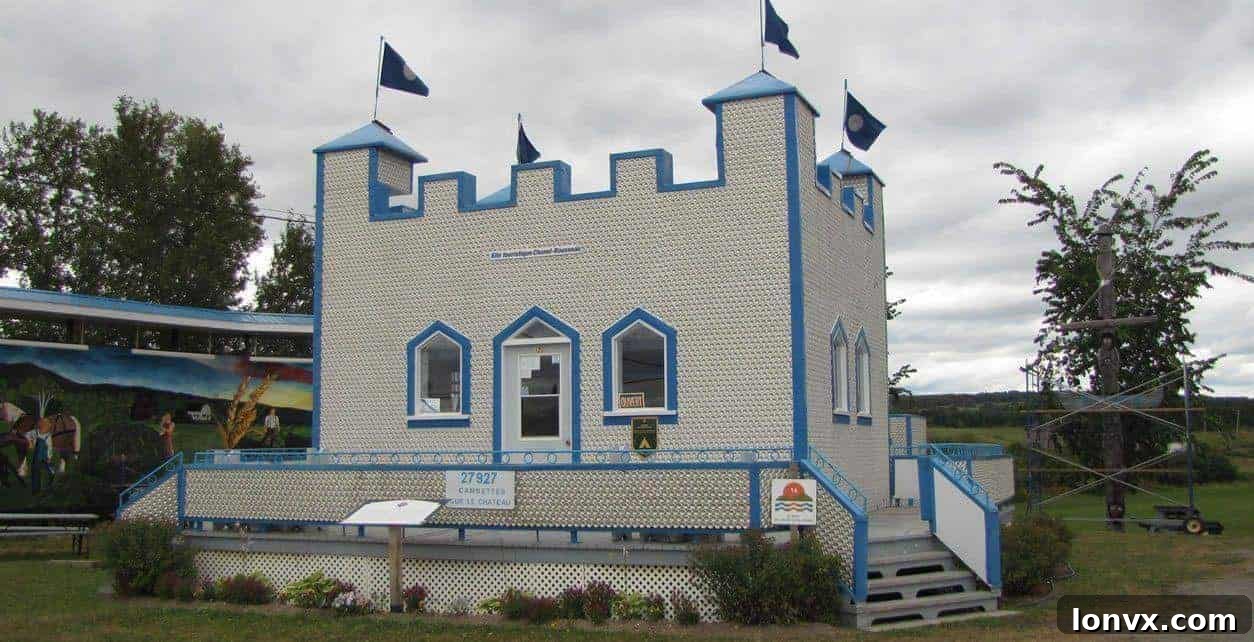
With a population of just 1,663, Saint-Jean-de-Dieu might seem like a quiet, unassuming town, but its innovative bottle house proves that small communities can harbor grand ambitions. The eye-catching structure, which beautifully resembles a majestic castle, was the brainchild of Chanel Rousseau. Her vision was not just about creating an architectural marvel, but also about undertaking a significant recycling project that would unite the community and raise awareness about environmental sustainability. The project was a massive undertaking, requiring an astounding 27,927 bottles to complete its intricate design.
The construction of this impressive bottle castle was a true community endeavor, a testament to the power of volunteerism. Over 4,000 hours of dedicated volunteer work were poured into the project, with residents of Saint-Jean-de-Dieu contributing their time and effort to clean, sort, and assemble the countless bottles. This collaborative spirit not only brought the unique structure to life but also fostered a stronger sense of community pride and shared accomplishment.
A Hub for Visitors and Local Culture
Today, Quebec’s Bottle Castle serves a dual purpose. While its striking appearance makes it an undeniable tourist attraction in its own right, its interior functions as a welcoming visitor center for Saint-Jean-de-Dieu. Inside, guests can discover a wealth of information about the village and the surrounding Basques region, known for its rich history and natural beauty. The center provides insights into local culture, traditions, and the picturesque landscape that characterizes this part of Quebec, nestled on the banks of the tranquil Boisbouscache River.
The village of Saint-Jean-de-Dieu itself offers a range of recreational opportunities for visitors. There’s a well-maintained golf course for enthusiasts and convenient access to the expansive National Hiking Trail, inviting adventurers to explore the region’s stunning natural vistas. The visitor center, with its captivating bottle architecture, is open to the public from 10 am to 6 pm, specifically from June 24th (Saint-Jean Baptiste Day) until Labour Day. Even outside these operating hours, the impressive bottle castle can be admired from the exterior, its sparkling glass walls continuing to captivate passersby throughout the year, standing as a proud symbol of community innovation and sustainable artistry.
The Global Appeal of Sustainable Bottle Architecture
The Bottle Houses of Prince Edward Island and the Bottle Castle of Quebec stand as magnificent examples of a global movement towards innovative and sustainable architecture. These structures are more than just quirky attractions; they embody resourcefulness, artistic expression, and a powerful message about recycling and environmental stewardship. By transforming discarded glass bottles into enduring works of art, builders like Édouard Arsenault and Chanel Rousseau have demonstrated that beauty and functionality can emerge from unexpected places. Their legacies serve as a vibrant reminder that imagination, paired with a commitment to sustainable practices, can create spaces that not only charm and educate but also inspire future generations to think creatively about the resources around them.
Visiting a bottle house is a truly unique experience. It offers a chance to marvel at the intricate craftsmanship, appreciate the play of light through colored glass, and connect with the stories of the individuals and communities who brought these wonders to life. These architectural gems are not merely buildings; they are cultural treasures that celebrate human ingenuity and the enduring beauty of repurposing. They remind us that even the most humble materials can be transformed into something extraordinary, leaving a lasting impression on all who step inside their luminous walls.
Whether you’re exploring the tranquil chapel in Cap-Egmont or discovering the local history within the castle walls of Saint-Jean-de-Dieu, bottle houses offer an unforgettable journey into the heart of sustainable art and whimsical design. They are essential stops for anyone seeking unique attractions, a deeper understanding of eco-friendly building practices, or simply a moment of wonder at the unexpected possibilities of glass.