
In a compelling reflection of contemporary Canadian society, a new national survey by real estate platform Wahi reveals an escalating and profound pressure on younger generations to enter the housing market. This societal expectation is now reportedly on par with traditional life milestones such as marriage and starting a family, underscoring a deep cultural emphasis on property ownership that is particularly pronounced among Millennials and Gen Z.
The Wahi 2025 Homebuying Pressure Point Survey, meticulously conducted among members of the esteemed Angus Reid Forum, brought to light stark generational disparities. A significant 54 percent of Millennials and 41 percent of Gen Z respondents articulated feeling immense pressure to own property. These figures stand in stark contrast to the national average of 34 percent, highlighting the disproportionate burden felt by Canada’s younger cohorts as they navigate an increasingly challenging housing landscape.
Conversely, older generations, who have largely benefited from more accessible housing markets in their formative years, reported considerably less pressure. Only 30 percent of Gen Xers and a mere 13 percent of Baby Boomers—the demographic currently enjoying the highest rates of homeownership in the country—expressed similar feelings. This generational divide paints a clear picture of how economic shifts and evolving market conditions have reshaped aspirations and anxieties across different age groups in Canada.
Benjy Katchen, CEO of Wahi, encapsulates this trend, stating, “As Canadian home values have increased over the decades, so has the pressure to own real estate.” He further adds a crucial caveat: “While long-term price trends suggest homebuying is often a smart decision, it’s important that Canadians do their due diligence before making what will likely be the biggest purchase of their lives.” This statement acknowledges both the perceived benefits of homeownership as an investment and the critical need for caution and informed decision-making in a high-stakes market.
The Generational Divide: Unpacking the Pressure to Own
The pronounced generational difference in homebuying pressure is not merely a statistical anomaly but a reflection of deep-seated economic and social factors. For Baby Boomers, who came of age in an era of more affordable housing, lower interest rates, and robust economic growth, homeownership was often a natural progression. Many were able to purchase homes with less financial strain, leveraging their properties to build substantial equity over decades.
Gen X, while facing slightly more challenging conditions than their predecessors, still largely benefited from an economic environment where housing, though appreciating, was not as astronomically priced relative to incomes as it is today. Their journey to homeownership often involved different hurdles, but perhaps not the pervasive sense of being perpetually priced out that defines the younger generations.
For Millennials and Gen Z, the landscape is dramatically different. These generations entered the workforce grappling with stagnant wage growth, the burden of student loan debt, and an unprecedented surge in housing prices, particularly in major urban centers. The aspirational “Canadian Dream” of homeownership, once seemingly within reach for their parents, now feels like a distant and often unattainable goal. This creates a psychological pressure cooker, fueled by societal expectations, family influence, and an understandable desire for stability and wealth accumulation that property ownership traditionally offers.
The constant bombardment of real estate success stories on social media, coupled with the rising cost of living, only intensifies this feeling. Many young Canadians perceive homeownership not just as a financial investment but as a symbol of personal success and security, leading to feelings of inadequacy or anxiety if they haven’t yet reached this milestone. The Wahi survey’s findings confirm that this isn’t just an individual feeling but a widespread societal phenomenon affecting millions.
Regional Disparities: Where the Pressure Mounts and Recedes
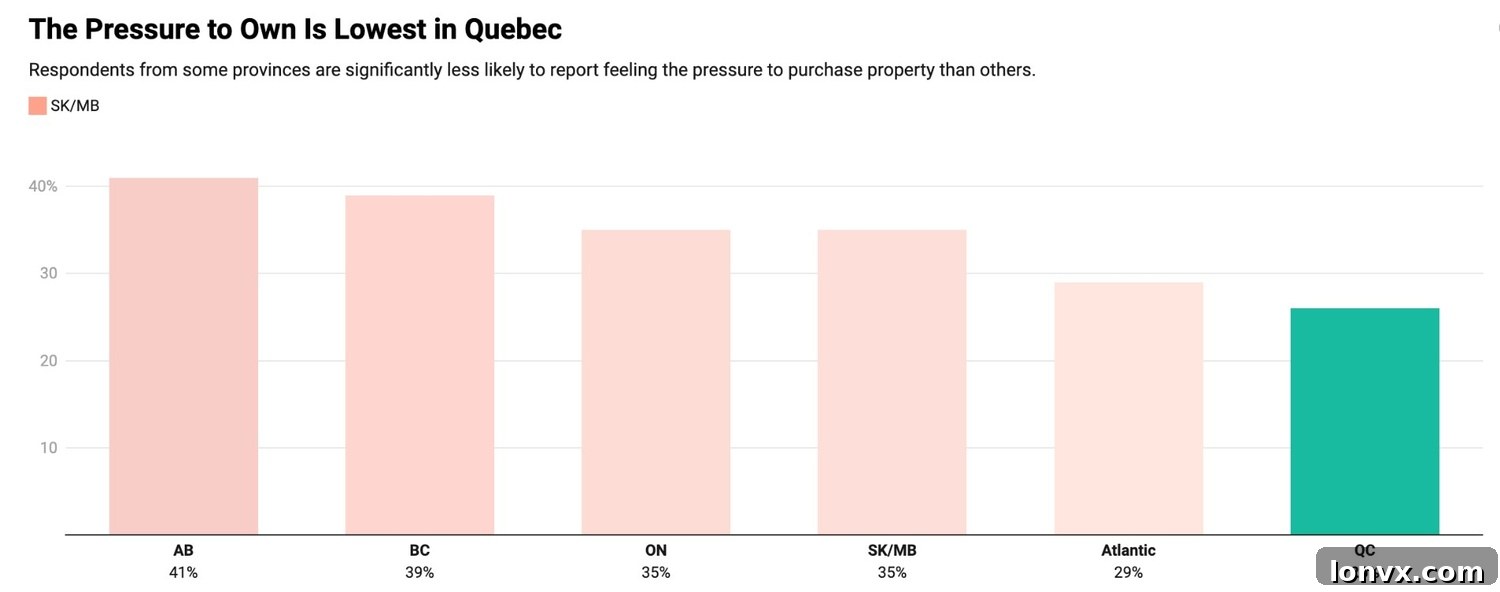
The Wahi survey also highlighted significant geographical variations in the intensity of homebuying pressure across Canada, correlating strongly with local market affordability. Understanding these regional differences provides crucial insights into the diverse housing realities across the country.
The pressure to own property was found to be notably lower in Quebec (26 percent) and Atlantic Canada (29 percent). These regions, characterized by relatively more affordable home prices compared to the national average, offer a glimpse into what a less feverish housing market might feel like. Factors contributing to this affordability include different economic growth patterns, lower population density, and historically less speculative real estate markets. For many, these regions represent a potential refuge from the intense competition and soaring prices seen elsewhere, making the prospect of homeownership less daunting.
Conversely, the pressure reached its peak in Alberta (41 percent) and British Columbia (39 percent). Alberta, currently experiencing an influx of homebuyers from other, more expensive provinces—especially Ontario and B.C.—is seeing its housing market heat up rapidly. While still generally more affordable than some of Canada’s most notorious markets, the rapid appreciation and increasing demand are clearly translating into heightened stress for prospective buyers. The provincial government’s efforts to attract talent and investment are inadvertently contributing to this demand surge.
British Columbia, on the other hand, is home to some of the country’s priciest local housing markets, particularly in the Greater Vancouver Area and Vancouver Island. Decades of sustained price growth, limited land supply, strong international and inter-provincial migration, and robust economic activity have created an exceptionally competitive environment. For residents in B.C., the dream of homeownership often requires extraordinary financial sacrifices or means it remains perpetually out of reach, hence the elevated pressure identified by the survey.
Beyond Ownership: Unpacking Other Key Findings and Their Implications
The Wahi survey delved deeper into Canadian attitudes towards housing, revealing several other critical insights that underscore the complexities of the current real estate landscape. These findings go beyond mere statistics, touching upon psychological impacts, societal perceptions, and widespread misconceptions.
Homeownership Rates Across Generations: A Stark Reality
- A significant 81 percent of Baby Boomers and 74 percent of Gen Xers currently own property in Canada. This reflects historical trends and the relative ease with which these generations could acquire assets.
- In stark contrast, only 61 percent of Millennials and a mere 21 percent of Gen Z currently own homes. This data powerfully illustrates the widening gap in property ownership between older and younger Canadians, highlighting the immense barriers new generations face in entering the market. The figure for Gen Z, in particular, suggests a significant portion of this generation may be entirely priced out of ownership for the foreseeable future.
The Emotional Toll of Non-Ownership
- The survey found that 55 percent of non-owners are unhappy with not owning a home. This statistic underscores the profound emotional and psychological impact of being excluded from property ownership. For many, renting is not a choice but a necessity, often accompanied by feelings of frustration, financial insecurity, and a sense of missing out on a fundamental Canadian life goal. This unhappiness can contribute to broader societal discontent and exacerbate mental health challenges among younger demographics.
The Stigma of Renting: A Cultural Challenge
- A striking 50 percent of Canadians believe that renting is viewed unfavourably. This reveals a pervasive cultural bias against renting, often equating it with financial instability or a lack of success. In a country where homeownership is deeply ingrained as a virtue, renting is frequently perceived as a temporary solution rather than a viable long-term housing strategy. This stigma can make it difficult for individuals and families who choose to rent, regardless of their financial circumstances, to feel fully accepted or secure within society. It also limits policy discussions around strengthening tenant rights and making renting a more attractive and stable option.
Underestimating Canada’s Homeownership Rate: A Collective Misconception
- A surprising 62 percent of respondents underestimate Canada’s actual homeownership rate, believing it to be 50 percent or less. This widespread misconception could be due to several factors: intense media focus on the affordability crisis, the high visibility of rental markets in major urban centers, and perhaps a skewed perception influenced by personal struggles or the experiences of peers. This underestimation suggests a lack of public awareness regarding the true landscape of Canadian housing, potentially influencing policy discussions and individual financial planning. Understanding the actual rate is crucial for informed dialogue about housing policy and for challenging prevailing narratives.
Navigating the Future: Advice and Outlook for Canadian Homebuyers
The Wahi 2025 Homebuying Pressure Point Survey provides a crucial snapshot of the current state of housing aspirations and anxieties in Canada. For young Canadians, the path to homeownership is fraught with unprecedented challenges, yet the societal pressure to achieve it remains intensely strong. Understanding these dynamics is the first step towards making informed decisions and fostering a more equitable housing future.
For those feeling the weight of this pressure, Benjy Katchen’s advice on “due diligence” is more critical than ever. This includes a comprehensive financial assessment, understanding the nuances of different markets, seeking advice from qualified financial advisors and real estate professionals, and exploring all available options, including various financing models and government programs designed to assist first-time homebuyers. It also means questioning whether homeownership is the right decision for every individual’s lifestyle and financial goals, rather than blindly following a societal script.
The regional differences highlighted by the survey suggest that while some markets remain fiercely competitive, others offer more accessible entry points. Prospective buyers might consider broadening their search geographically, if feasible, to regions where affordability is less strained. Furthermore, challenging the cultural stigma around renting is vital. Renting offers flexibility, fewer maintenance responsibilities, and the ability to invest savings in other assets, which can sometimes provide a better financial return than a highly leveraged, expensive property.
As Canada continues to grapple with population growth and housing supply challenges, policy discussions will need to address not only affordability but also the psychological and social implications of current market trends. The survey underscores the need for policies that support diverse housing solutions, strengthen tenant protections, and educate the public about the realities of the housing market, helping to alleviate some of the undue pressure on younger generations.
In conclusion, while the dream of homeownership remains a powerful force in Canadian society, particularly for Millennials and Gen Z, the Wahi survey serves as a vital reminder that this dream is becoming increasingly complex and emotionally charged. By understanding the pressures, regional differences, and generational divides, Canadians can approach their housing decisions with greater clarity and resilience, ensuring that their choices align with their true financial well-being and personal aspirations rather than simply succumbing to societal expectations.
These comprehensive findings are derived from a survey conducted by Wahi from June 17 to June 19, encompassing a representative sample of 1,500 online adult Canadians who are active members of the Angus Reid Forum. The survey was meticulously administered in both English and French to ensure broad representation and accurate data collection across Canada’s linguistic diversity.