
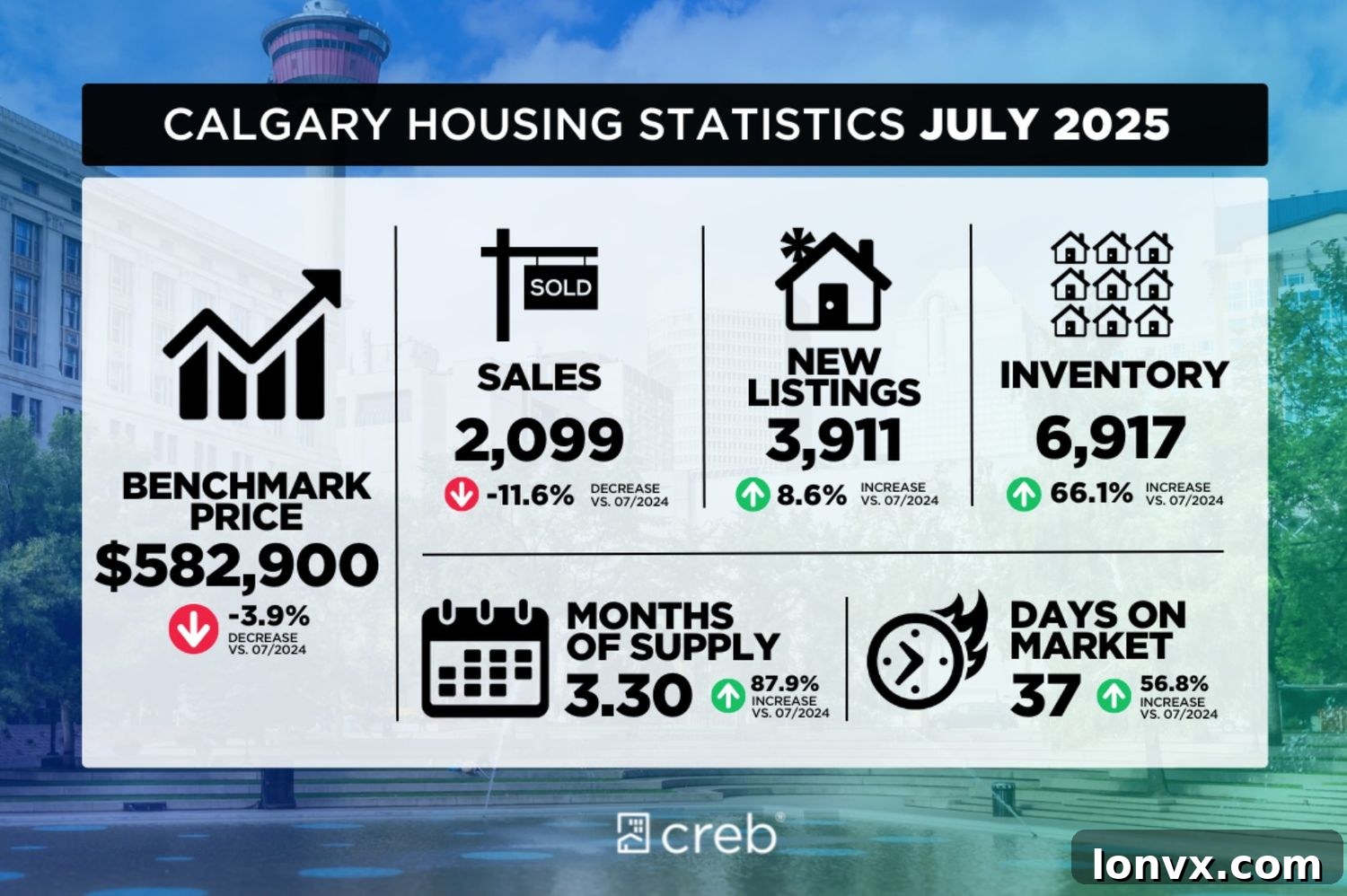
The Calgary real estate market is currently navigating a significant shift, characterized by a notable surge in housing inventory that is reshaping dynamics for both buyers and sellers. In July, Calgary’s housing inventory soared to an impressive 6,917 units, a figure not witnessed since before the onset of the global pandemic. This robust increase signals a substantial revitalization in available properties, largely attributed to the continuous development and unveiling of new communities across the city. This influx of listings marks a pivotal moment for the market, moving it towards a more balanced, and in some segments, a buyer-friendly environment, after a prolonged period of intense competition and limited choices.
The data from the Calgary Real Estate Board (CREB) paints a clear picture of this transformation, indicating a staggering 66 percent increase in inventory levels compared to the same period last year. This rapid accumulation of supply is most pronounced in the burgeoning neighborhoods where new residential projects are reaching completion and entering the market. These newer communities, often designed with modern amenities and diverse housing options, are instrumental in bolstering the overall housing stock, providing prospective homebuyers with an expanded array of choices. This substantial growth in supply is a welcome development for many, offering a much-needed respite from the tightly constrained market conditions that have defined Calgary’s real estate landscape in recent years.
Such a significant influx of listings naturally exerts downward pressure on prices, particularly in specific sectors and geographical pockets of the city. While the market as a whole experienced some moderation, the benchmark price for total residential properties trended lower in July, reaching $582,900. This represented a four-per-cent decline on a year-over-year basis, indicating a measurable shift from the escalating prices seen previously. However, it is crucial to understand that these price adjustments are not uniformly distributed across all property types or locations. The nuances of the Calgary market mean that certain areas and housing styles are reacting differently to the increased supply, creating a complex and diverse landscape for real estate participants.
As observed by Ann-Marie Lurie, chief economist at CREB, it is imperative to contextualize these price movements. “Price declines are not occurring across all property types in all locations of the city, and even where there have been declines, it has not erased all the gains made over the past several years,” Lurie noted. This statement highlights the resilient nature of Calgary’s housing market, where despite recent adjustments, the long-term appreciation enjoyed by homeowners largely remains intact. The steepest price declines have been predominantly observed in the apartment and row-style home segments, particularly within the North East and North districts. This trend directly correlates with the substantial gains in new supply within these specific property types and regions, suggesting that the market is recalibrating where new inventory is most concentrated.
More Listings, Fewer Sales: A Shifting Demand Landscape
The surge in housing supply has coincided with a notable downturn in sales activity. Compared to the same month last year, July witnessed a 12 percent drop in sales, with a total of 2,099 homes sold across the city. Simultaneously, new listings continued their upward trajectory, rising to 3,911 units—an increase of more than eight percent year-over-year. This dual trend of increasing listings and decreasing sales fundamentally alters the supply-demand equilibrium, moving away from the seller-dominated conditions that characterized the market in recent memory. For prospective buyers, this shift translates into more options, less frantic bidding wars, and a greater opportunity to negotiate on price and terms. However, for sellers, it means increased competition and the necessity of strategic pricing to attract offers in a more crowded market.
CREB has identified several contributing factors to these evolving market conditions, including broader economic uncertainties, the impact of prevailing lending rates, and heightened competition stemming from new construction. The global economic landscape, marked by inflationary pressures and geopolitical events, often translates into cautious consumer sentiment, affecting significant investment decisions like home purchases. Moreover, the sustained high lending rates, while not necessarily “stagnant,” have effectively tightened borrowing conditions, increasing the cost of mortgages and thereby impacting affordability for many potential buyers. This financial constraint leads some buyers to postpone their purchasing plans or adjust their budget downwards, further dampening sales velocity.
Adding to this complexity is the growing competition posed by new builds. Developers are consistently bringing new inventory to the market, often featuring modern designs, energy-efficient features, and attractive incentives that can draw buyers away from the resale market. This competition is particularly acute in the segments where new communities are expanding rapidly, as buyers weigh the benefits of a brand-new home against an existing property. This dynamic forces sellers of older homes to reassess their pricing strategies and consider upgrades or other differentiators to remain competitive.
A closer look at the market by property type reveals significant variances in the absorption rate, commonly measured by “months of supply.” Months of supply indicates how long it would take to sell all current listings at the current sales pace. For apartment-style homes, the months of supply has now climbed to over four months. This figure typically suggests a market that is leaning towards buyers, offering them more leverage in negotiations due to the abundance of available units relative to demand. This extended supply period for apartments underscores the segment’s particular sensitivity to increased inventory, especially in areas with concentrated new multi-family developments.
In contrast, detached and semi-detached homes continue to reside in a relatively more balanced territory, with approximately three months of inventory. A market with 4 to 6 months of supply is generally considered balanced, meaning neither buyers nor sellers have a distinct advantage. The 3-month supply for detached and semi-detached homes indicates that while inventory has increased, demand remains comparatively stronger in these segments, or the rate of new supply is not overwhelming existing demand. This distinction highlights the varied performance within Calgary’s housing market, where luxury homes and single-family residences often maintain stronger demand due to their inherent appeal and scarcity compared to the influx of new apartment units.
The implications of these shifts are far-reaching. For first-time homebuyers, especially those eyeing the apartment market, the increased inventory and softening prices present a golden opportunity to enter the market with more choices and potentially better value. Investors, too, might find attractive prospects in segments with higher months of supply, looking for opportunities to acquire properties at competitive prices. For existing homeowners contemplating selling, a nuanced understanding of their specific property type and neighborhood conditions becomes paramount, as the generalized market trends may not fully reflect their localized reality.
Looking ahead, Calgary’s real estate market is poised for continued evolution. While the pace of inventory growth may eventually moderate, the current conditions suggest a sustained period where buyers will have more options and less pressure to make hasty decisions. The city’s ongoing population growth and relative affordability compared to other major Canadian urban centers will likely continue to underpin long-term demand. However, the short-to-medium term will be characterized by a market that is actively adjusting to new levels of supply and the broader economic environment, making informed decision-making more crucial than ever for all participants.
The current landscape emphasizes the importance of consulting with local real estate experts who possess an intimate understanding of specific community dynamics and property market segments. Navigating a market with such significant shifts in inventory and sales requires careful consideration of individual circumstances, financial goals, and the prevailing micro-market conditions that can vary significantly from one neighborhood to another within Calgary. As the market finds its new equilibrium, flexibility and strategic planning will be key to success for buyers, sellers, and investors alike.