
Don’t miss our comprehensive monthly market breakdown! Join REM columnist Daniel Foch online on Oct. 28 at 2 PM ET as he dissects CREA’s latest statistics, explores critical regional variations, and discusses what shifting market sentiment truly means for real estate professionals. Register here to secure your spot and gain invaluable insights.
Navigating Toronto’s Housing Market: A Deep Dive into September’s Trends
The Greater Toronto Area (GTA) housing market presented a complex picture in September, with initial headlines suggesting a path towards recovery. Data released by the Toronto Regional Real Estate Board (TRREB) indicated an uptick in sales, seemingly bolstered by a recent interest rate adjustment from the Bank of Canada. This superficial optimism painted a scenario where increased affordability was drawing more households back into the market, creating an illusion of returning momentum. However, a deeper examination reveals a more nuanced and less reassuring reality. Beneath the surface of increased activity, prices continue their retreat, available listings are steadily accumulating, and the duration required to successfully sell a property has noticeably lengthened. This dynamic has resulted in a market that appears busier but is fundamentally structurally imbalanced, a trend that echoes observations from previous months.
September’s Data: A Closer Look at Sales and Price Dynamics
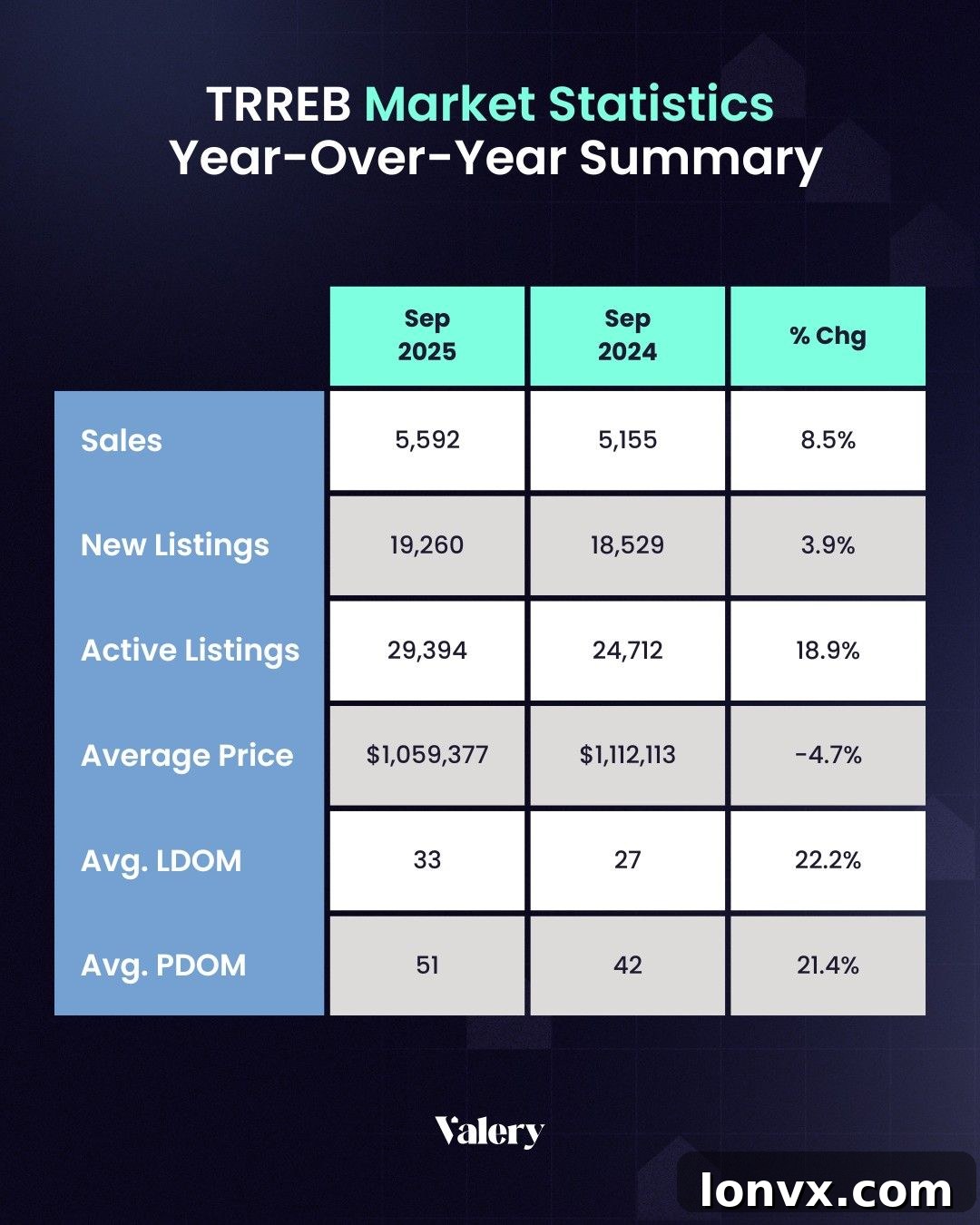
September’s figures highlighted a notable 8.5 percent increase in sales compared to the same period last year. This rise was complemented by the Bank of Canada’s September rate cut, which offered a modest but perceptible uplift to housing affordability. While these factors initially contributed to a renewed sense of confidence among some buyers, leading to increased market participation, the underlying pricing trends tell a different story. TRREB reported an average sale price of $1.06 million for September, representing a 4.7 percent decline year-over-year. The MLS Home Price Index (HPI), a more accurate measure of housing value changes, further confirmed this downward trajectory, falling by 5.5 percent over the same period.
Although month-to-month price movements might appear stable, the broader trend unmistakably points to sustained downward pressure. This consistent erosion of values is primarily driven by a significant imbalance where housing supply is outpacing the market’s ability to absorb it. Despite the increase in transactions, sellers are increasingly finding themselves in a position where they must adjust their expectations, signaling a market still searching for its equilibrium. This struggle between an apparent increase in sales activity and persistent price depreciation underscores the fragility of any perceived market recovery.
The Growing Chasm: Supply Outpacing Demand in the GTA
The year-over-year summary for September starkly illustrates the delicate nature of the GTA housing market’s apparent rebound. Active listings surged by nearly 19 percent compared to the previous year, a substantial increase that dwarfs the pace of sales growth, which stood at less than half that figure. While new listings edged up by a modest 3.9 percent, this subtle rise has significant implications: more homes are lingering on the market for extended periods, contributing to a substantial accumulation of inventory. The total inventory reached 29,394 units, a clear indicator of burgeoning supply.
This surge in available properties underscores a critical issue for sellers. As highlighted by Valery agent Robert Marsiglio in a chart shared on X (formerly Twitter), the most recent September ranked as the second busiest September for new listings across the GTA in the past decade. This influx of homes gives buyers more options and less urgency, empowering them in negotiations. Concurrently, homes are taking significantly longer to sell. The average listing period has stretched from 27 to 33 days, while the property days on market—the total time from listing to sale—increased from 42 to a substantial 51 days. This extended timeline imposes additional costs and uncertainties on sellers, further cementing the notion that the market favors buyers.
As industry experts, including REM columnist Daniel Foch, have consistently articulated, a genuine and sustainable market bottom cannot materialize while supply continues to grow at a faster rate than demand. Until this fundamental imbalance is addressed and corrected, any stabilization in prices is likely to be temporary and without lasting permanence. The current dynamics suggest that the scales remain heavily tilted towards supply, dictating a continued period of adjustment for the GTA housing market.
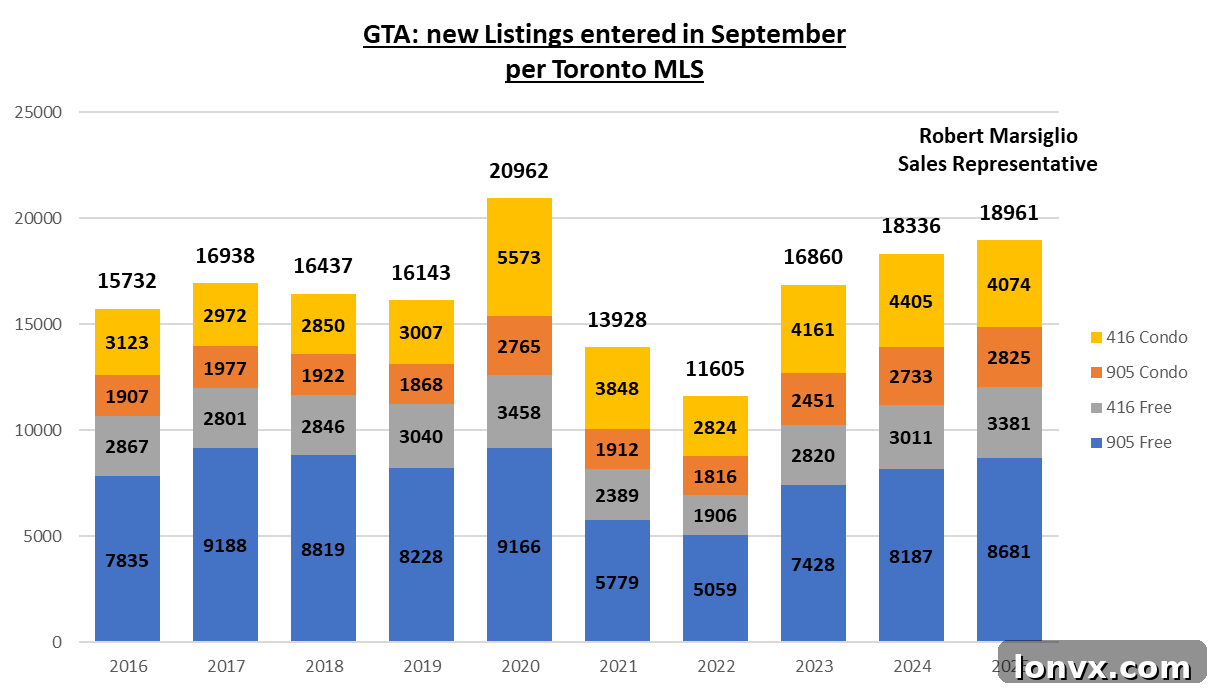
Indeed, a recent tweet from Daniel Foch reiterated this sentiment, stating that “no serious discussion of a bottom can take place while supply continues to rise faster than demand.” This fundamental truth underpins the current market’s challenges. Until the equilibrium between available homes and buyer appetite shifts, the prospect of sustained price stability remains elusive. Sellers are increasingly forced to compete in a crowded market, leading to more concessions and longer selling cycles. This environment fosters a buyer’s market, where patience and negotiation power are key.
Uneven Geographies: Disparities Across Home Types and Regions
A deeper dive into September’s data reveals just how uneven the current market correction has become, with distinct variations across different home types and geographical regions within the GTA. This fragmentation means that not all segments are experiencing the same pressures or opportunities.
Performance by Home Type
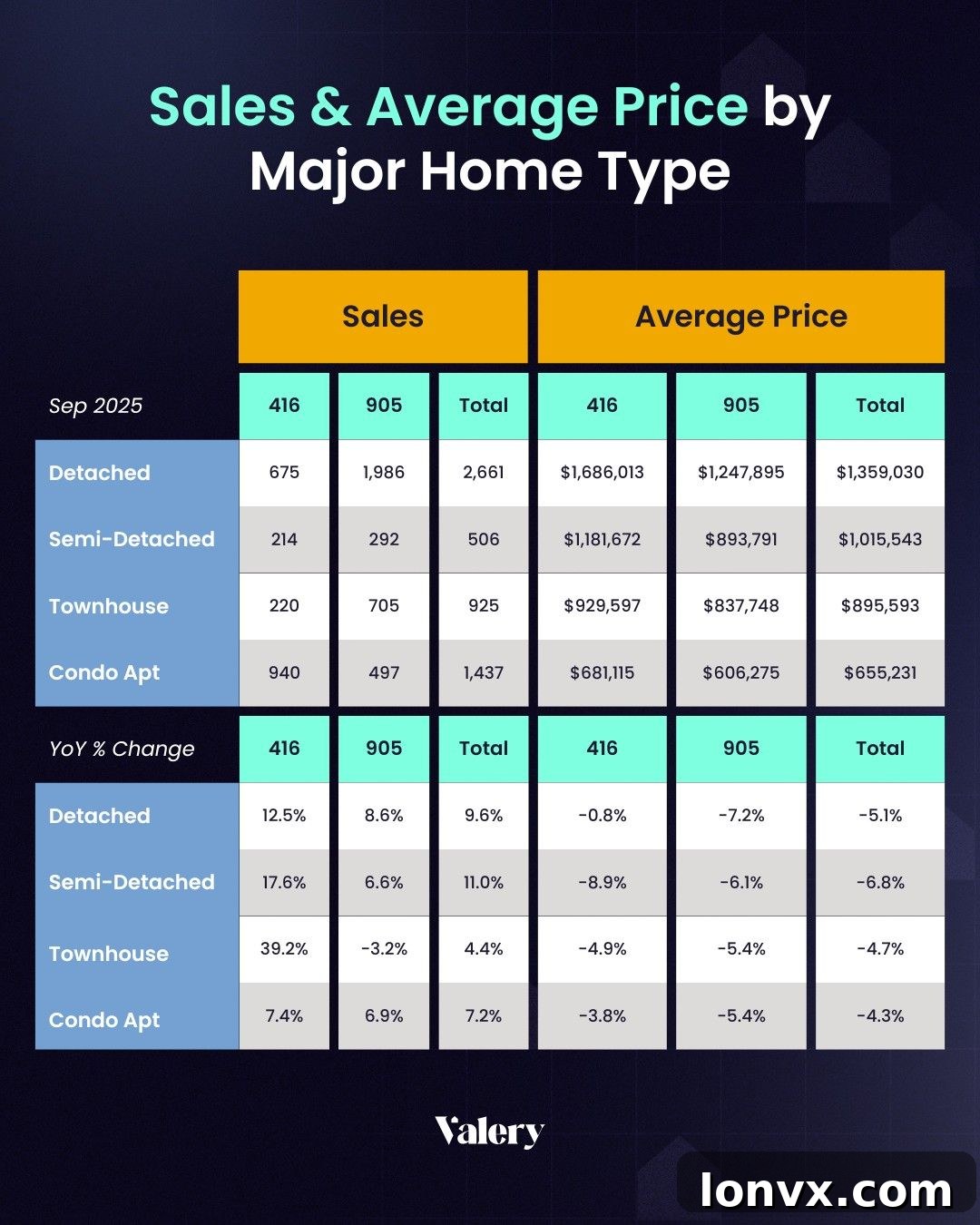
- Detached Homes: Despite a 9.6 percent year-over-year increase in sales, the average prices for detached properties fell by 5.1 percent. This suggests that while buyers are active, they are primarily doing so at lower price points or with greater negotiation power.
- Semi-Detached Homes: This segment saw an even stronger increase in sales, climbing 11 percent. However, prices followed a similar downward trend, decreasing by 6.8 percent, indicating consistent pressure on valuations even with higher transaction volumes.
- Condominiums: The condo market recorded a respectable 7.2 percent gain in sales. Yet, like other property types, prices slipped by 4.3 percent, reflecting the broader market sentiment and the ongoing re-evaluation of urban density living.
The Townhouse Outlier and Regional Divergence
One particular segment stands out amid these declining prices: townhouses within the 416 area (City of Toronto). Sales in this category soared by nearly 40 percent compared to the previous year, marking the strongest growth among all housing types. While prices for townhouses still declined by almost five percent, the sharp increase in transactions signals a clear and growing buyer preference. Townhouses offer a compelling compromise: they are ground-oriented, providing more space and utility than a condominium, while remaining relatively more affordable than detached properties, especially within the city limits. This positions them as a coveted “missing middle” housing option, bridging the gap between high-rise living and single-family homes.
The divergence between the 416 (City of Toronto) and 905 (surrounding suburban regions) further emphasizes the market’s fragmented nature. Detached home prices within the city experienced a relatively modest decline of less than one percent. In stark contrast, suburban detached properties in the 905 saw a more significant drop of 7.2 percent. This indicates that central, urban locations are exhibiting greater resilience, likely due to persistent demand, robust infrastructure, and proximity to employment centers. Suburban markets, on the other hand, are facing a steeper adjustment, perhaps due to factors like increased commute times, higher property taxes, and a greater influx of new listings.
The enduring appetite for “missing middle” housing, particularly townhouses, within Toronto proper points to a resilient demand for certain property types that meet both spatial and affordability needs. Even as other segments of the market grapple with instability and price corrections, strategic buyers are identifying value and opportunity in these specific niches.
Policy, Economics, and the Fragility of Confidence
The complex dynamics observed in the GTA housing market are unfolding against a challenging and uncertain economic backdrop, both nationally and locally. Canada’s GDP contracted by a significant 1.6 percent in the second quarter, signaling broader economic slowdown. In Toronto, the unemployment rate has climbed to nine percent, impacting job security and consumer spending power. While inflation has cooled to 1.7 percent, providing the Bank of Canada with potential leeway for further interest rate adjustments, households remain deeply wary. This caution is palpable in buyer behavior.
Even with marginally lower borrowing costs following the Bank of Canada’s adjustments, prospective buyers are pressing harder in negotiations. They are keenly aware that the elevated inventory levels and extended selling times tilt the leverage firmly in their favor. This newfound buyer confidence is a direct reflection of the market’s current structural imbalance, allowing them to dictate terms more aggressively than in previous boom cycles.
TRREB rightly points out that lower interest rates can stimulate spending and offer some cushioning for the broader economy. However, an over-reliance on monetary easing as the sole mechanism to prop up sales activity is a poor substitute for achieving structural market balance. A housing market that can only function effectively when interest rates are falling reveals deeper, systemic problems related to affordability, stagnant incomes, and an inadequate alignment of housing supply with genuine demand. This dependency on rate cuts merely masks underlying issues, delaying the inevitable and potentially creating artificial market cycles rather than fostering sustainable growth and stability.
What Comes Next: Navigating the Path to a Balanced Market
The trajectory of the Greater Toronto Area housing market in the coming months will largely hinge on whether demand can sustainably absorb the continuous surge of new and active listings. While additional interest rate cuts from the Bank of Canada may provide some renewed momentum and temporary relief, they alone are insufficient to correct the pervasive oversupply or to rebuild long-term seller confidence. The challenges facing the market are multifaceted and require more than just monetary policy adjustments.
For a truly healthy and sustainable housing market, policymakers and builders must confront the critical need for aligning new supply with true affordability, rather than perpetuating cycles of market overhang and retrenchment. This involves innovative approaches to zoning, development, and infrastructure, ensuring that the housing being built genuinely meets the diverse needs and financial capacities of a growing population. Addressing this fundamental disconnect is paramount to fostering long-term stability.
In the interim, for prospective buyers, this period continues to represent a rare window of significant leverage. The market is currently characterized by an abundance of choice, extended timelines for decision-making, and sellers who are increasingly adjusting their price expectations downwards. This environment offers considerable opportunity for those who are well-prepared and patient, allowing them to negotiate favorable terms and potentially secure properties at more realistic valuations. Conversely, sellers need to adopt a strategic and realistic approach, understanding that the market has shifted.
September’s data powerfully reinforces a clear and undeniable point: Toronto’s housing market has not yet found its definitive bottom. Until the fundamental forces of supply and demand converge into a more balanced equilibrium, any semblance of recovery will remain more of an appearance than a tangible reality. Stakeholders across the market spectrum—from individual buyers and sellers to industry professionals and policymakers—must acknowledge these underlying realities to navigate the path forward effectively and build a more resilient housing ecosystem for the GTA.