
The recent interest rate hike announced by the Bank of Canada in June, coupled with the ongoing speculation about another potential increase in July, has sent palpable tremors through the Canadian housing market. Early reports from real estate boards across the country reveal a landscape of mixed reactions, underscoring the complex interplay between monetary policy and local market dynamics.
Leading the analysis, RBC Economists Robert Hogue and Rachel Battaglia meticulously examined Canada’s largest metropolitan areas to gauge the immediate impacts of these policy shifts. Their comprehensive findings highlight a clear divergence in buyer behavior: prospective homeowners have notably retreated in high-stakes markets such as Toronto, Hamilton, Ottawa, and Vancouver. In stark contrast, buyer confidence appears to have remained largely unshaken in the Fraser Valley, Calgary, Edmonton, and Montreal. This intriguing disparity in responses can primarily be attributed to the robust and rapid price gains observed during the spring season, particularly within the highly competitive markets of Toronto, Vancouver, and other areas of Ontario and British Columbia. These swift escalations in property values, intensified by rising borrowing costs, seem to have “spooked” a segment of buyers, prompting a period of hesitation and re-evaluation.
The Bank of Canada’s strategy to cool inflation by increasing interest rates directly influences mortgage rates, thereby impacting the affordability of homes and the overall confidence of buyers. As borrowing costs ascend, the purchasing power of many Canadians diminishes, compelling them to reconsider their housing plans. This acute sensitivity to interest rate fluctuations underscores the delicate equilibrium within the Canadian housing market, where economic indicators can rapidly reshape market sentiment and activity.
An Expanding Supply Across Key Markets Offers a Glimmer of Hope
Amidst the varied reactions to the recent interest rate adjustments, a consistently positive trend has emerged: a sustained increase in the supply of homes available for sale across Canada’s major real estate markets. RBC Economics’ estimations confirm this development, indicating that more properties entered the market last month in virtually every major city, building upon significant increases first observed in May. This upward trajectory in new listings is a welcome relief for a market that has frequently grappled with severe supply shortages, a challenge that has contributed to escalating home prices in recent years.
Despite this encouraging growth in housing supply, the underlying upward pressure on home prices has not yet been substantially eased. While a greater number of homes are now entering the market, demand, in many regions, remains sufficiently robust to absorb this new inventory without triggering a drastic correction in property values. Market experts are meticulously monitoring this evolving scenario, forecasting that if the current pace of supply growth is maintained, it is highly probable to contribute to a deceleration in the rate of property appreciation over the forthcoming months. This anticipated slowdown doesn’t necessarily imply widespread price reductions but rather a shift towards a more gradual and sustainable rate of growth, offering a much-needed cooling effect after periods of rapid escalation.
RBC Economist Robert Hogue offered his perspective on the market’s recent trajectory, noting, “We’ve been surprised by the speed with which some markets (e.g., Toronto and Vancouver) rebounded this spring.” He further elaborated, “Our view had been—and in fact remains—that the initial stage of the recovery would be gradual in the face of massive ongoing affordability challenges. Buyers retreating in key markets in June could be a sign that the future trajectory will be more measured.” Hogue’s commentary highlights the unexpected vigor witnessed earlier in the year and now suggests a potential return to a more cautious, deliberate pace, which aligns with the Bank of Canada’s overarching objective to temper overheated demand and stabilize the real estate sector.
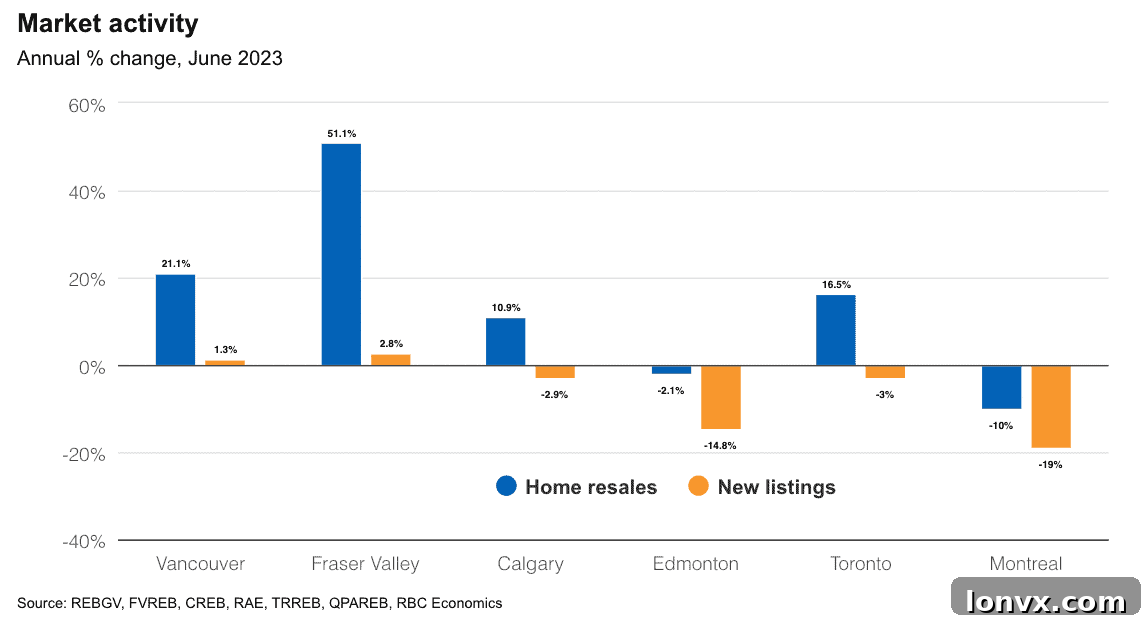
To provide a clearer picture of these dynamics, let’s delve deeper into RBC Economics’ comprehensive analysis of the housing market conditions within Canada’s most influential urban centers:
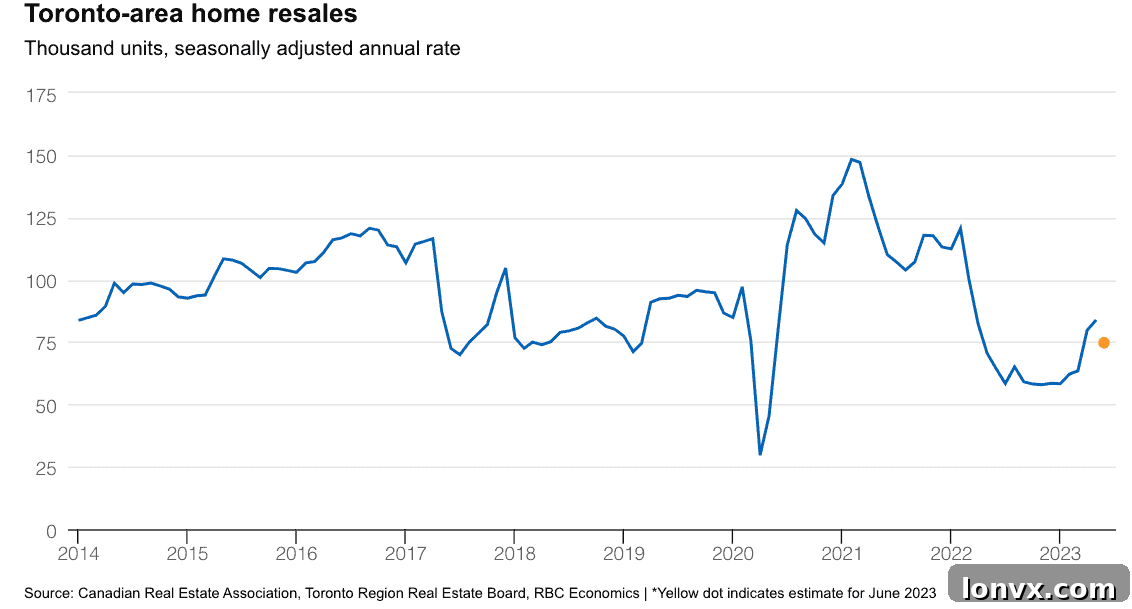
Toronto: Momentum Wanes as Resales Decline in June
The Greater Toronto Area (GTA), often considered a bellwether for the broader Canadian housing market, experienced a noticeable dip in its previously robust momentum last month. Following impressive surges of 32 percent in home resales during both April and May, June witnessed a 6.9 percent month-over-month decrease in transactions. This retreat in buyer activity occurred despite an encouraging increase in the number of properties available for sale, signaling a clear departure from the preceding two months where upticks in new listings had significantly stimulated market engagement. The immediate impact of the latest interest rate hike likely played a substantial role in this cooling effect, as prospective buyers reassessed their financial commitments and overall affordability.
This rebalancing of demand-supply conditions has initiated a slower pace of appreciation, yet home prices in the GTA continue their upward trajectory, albeit at a reduced speed. The MLS Home Price Index (HPI) composite benchmark price notably climbed by 2.5 percent compared to May, reaching $1.16 million in June. As Robert Hogue aptly points out, “Since reaching a cyclical bottom in February, the benchmark price is up an astounding 8.9 percent or nearly $96,000—reversing almost half of the decline in the previous year.” This impressive rebound underscores the persistent underlying demand that continues to characterize the region despite higher borrowing costs. However, Hogue cautions that “more balanced conditions point to a slower pace of appreciation in the months ahead,” suggesting that the era of rapid, double-digit monthly growth may be temporarily behind us, giving way to a more gradual and sustainable real estate environment for the Toronto housing market.
Montreal: Resales Accelerate Amidst Muted Price Pressure
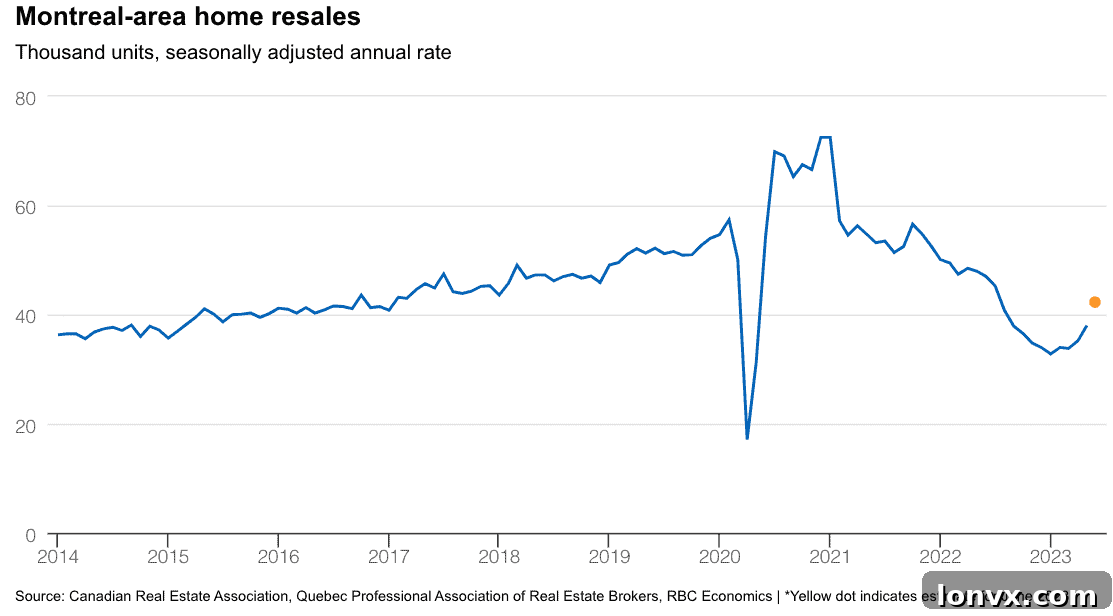
In a noteworthy contrast to the Greater Toronto Area, the Montreal real estate market continues to exhibit strong upward momentum in its housing sector. Home resales are estimated to have climbed by approximately 11 percent month-over-month in June, building on steady increases of 3.9 percent in April and 8.1 percent in May. This sustained growth in demand highlights Montreal’s unique market characteristics, including its relative affordability compared to its Western Canadian counterparts. A significant factor facilitating these advances has been a healthy growth in supply, including a robust 12 percent increase in new listings (seasonally adjusted) last month, which has effectively helped accommodate the heightened buyer interest.
Interestingly, even with both demand and supply on the rise, price pressure in Montreal remains relatively muted. The median value for a single-detached home held steady between May and June, indicating a stable market, while condo apartments observed a slight decrease. This remarkable stability suggests that the increased supply is efficiently meeting demand, thereby preventing the rapid price escalation and intense bidding wars often seen in other hotter markets. RBC economists anticipate a gradual appreciation in the period ahead, noting that while the Montreal market is clearly recovering, it still remains somewhat soft, with resales roughly 15 percent below pre-pandemic levels. This indicates substantial room for continued growth and recovery before reaching peak activity, making it an attractive and more balanced market for those seeking less volatile conditions.
Vancouver: Supply Surges as Buyers Pause
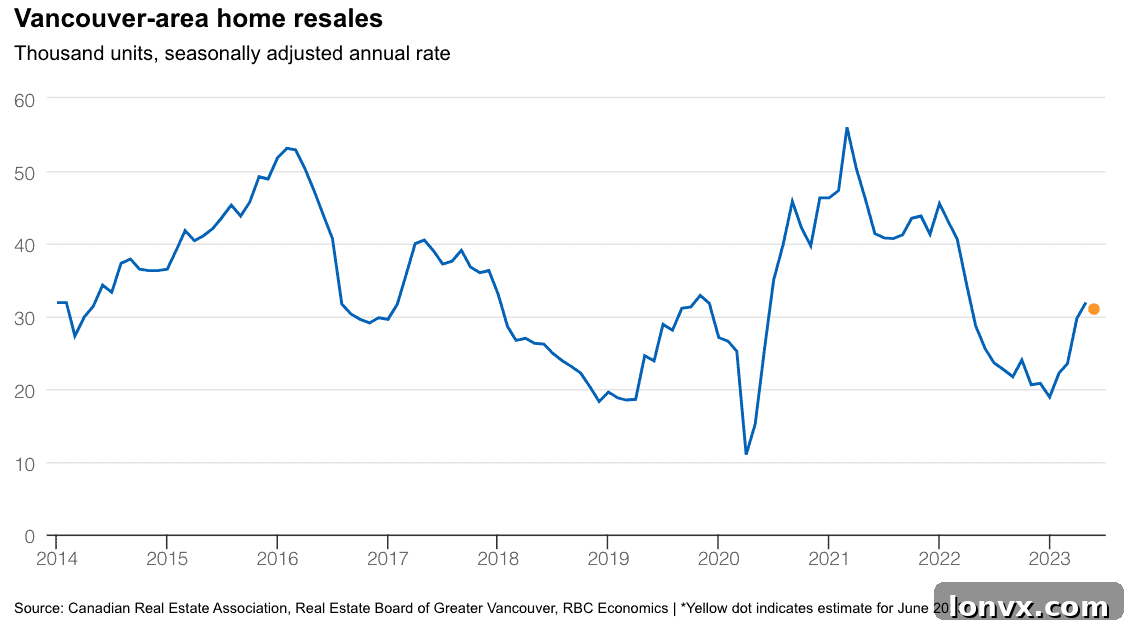
Vancouver, another high-value and highly competitive market in Canada, witnessed a significant influx of sellers in June, leading to a much-needed improvement in the alignment of supply with demand. New listings in the Vancouver area rose for the third consecutive month, increasing by more than 15 percent month-over-month, according to RBC’s meticulous calculations. This substantial surge in inventory offered prospective buyers a wider array of choices and potentially eased some of the intense competition that has historically characterized this market. However, despite this increased selection, purchase transactions remained relatively stable when compared to May, signaling a potential pause in buyer enthusiasm and caution creeping into decision-making.
This stability in sales activity, occurring amidst rising listings, strongly suggests that the cumulative effect of the latest interest rate hike and the sharp price upturn experienced earlier in the spring are beginning to deter buyers. The psychological impact of higher mortgage costs, coupled with already elevated property values, is incrementally pushing more individuals to the sidelines. Nevertheless, property values continued their appreciation, with the MLS HPI for Vancouver rising by 1.3 percent from May, adding to the cumulative 3.1 percent increase observed over the previous two months. This sustained price growth, even as buyer activity steadies, indicates persistent underlying demand and limited immediate downward pressure on prices. Economists are now predicting that buyers will increasingly push back on further price appreciation in the coming months, implying a crucial shift in bargaining power and potentially leading to a more competitive environment for sellers in the Vancouver housing market.
Calgary: Growing Supply Quickly Absorbed by Insatiable Demand
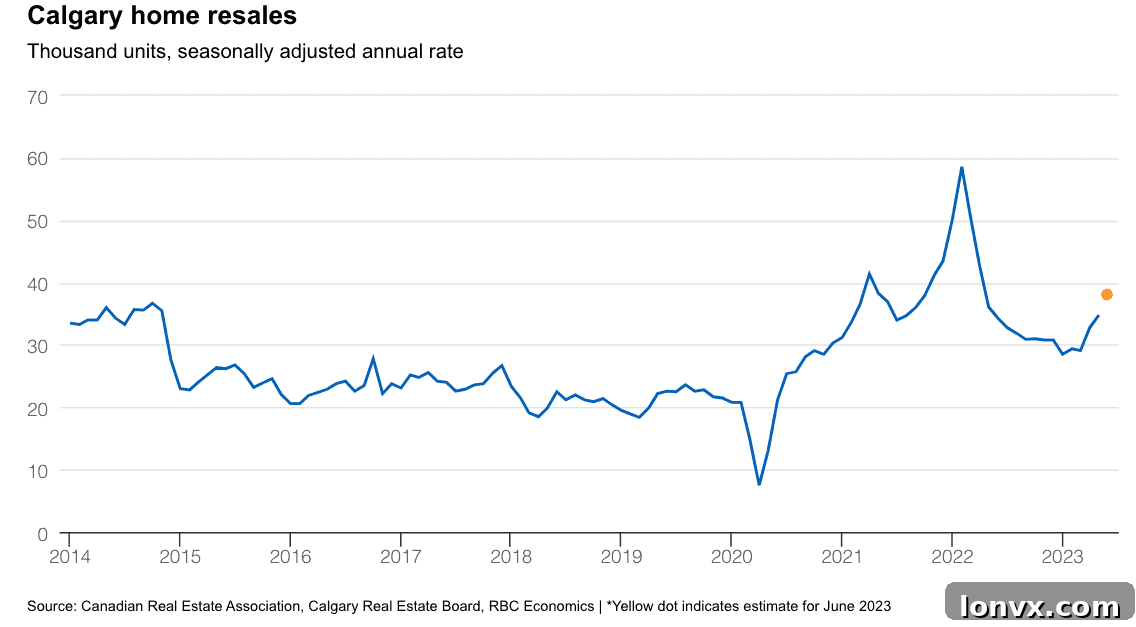
The Calgary area stands out as a unique and exceptionally robust case study within the current Canadian housing landscape, experiencing a sustained period of remarkable growth. Over the past two months, Calgary has witnessed a significant and much-needed increase in the number of homes available for sale. This surge in supply has been instrumental in unlocking some of the pent-up demand that has long characterized the market, subsequently driving up overall market activity to impressive levels. Home resales in June are estimated to have jumped an impressive nine percent month-over-month, building on a solid six percent increase recorded in May. This consistent upward trend vividly highlights the strong confidence and brisk activity within Calgary’s thriving real estate sector.
However, as Robert Hogue astutely observes, “Still, the increase in supply has come well short of demand, leaving the market heavily tilted in favour of sellers.” Despite the healthy and continuous growth in listings, the overwhelming and insatiable buyer demand continues to significantly outpace the available inventory. This persistent imbalance results in intense competition among buyers, frequent multiple-offer scenarios, and ultimately, an accelerating rate of price increases. Calgary has seen a substantial year-over-year price increase of 4.4 percent, a clear testament to its red-hot market conditions and robust economic fundamentals. Several key factors contribute to Calgary’s exceptional performance: its impressive population growth, largely driven by interprovincial migration and a strong job market, coupled with its relatively affordable position compared to other major Canadian cities like Toronto and Vancouver. These fundamental strengths are highly likely to sustain this upward trend throughout the latter half of the year, solidifying Calgary’s position as a vibrant beacon of activity in an otherwise cautious national market.
Navigating the Future: A Measured Trajectory Ahead for Canadian Housing
The latest insights gleaned from Canada’s diverse housing markets paint a vivid picture of divergence and ongoing adjustment. While some prominent regions, particularly Toronto and Vancouver, exhibit clear signs of buyer fatigue and a measured slowdown in activity following significant price gains and successive interest rate hikes, other markets like Calgary and Montreal demonstrate remarkable sustained resilience and robust growth. This varied and nuanced response underscores the critical importance of local economic conditions, unique population dynamics, and the relative affordability of housing in shaping real estate outcomes across the vast Canadian landscape.
The Bank of Canada’s unwavering commitment to managing inflation through its strategic interest rate adjustments will continue to be a primary and influential driver of overall market sentiment. As borrowing costs gradually stabilize, or potentially face further modest increases, the Canadian housing market is widely expected to settle into a more predictable, albeit slower, pace of appreciation. The consistent and encouraging increase in housing supply is a crucial factor that holds the potential to gradually alleviate some of the intense price pressures, thereby fostering healthier, more balanced, and sustainable conditions for both prospective buyers and current sellers alike.
For prospective homeowners and those looking to invest, this period presents a complex and multifaceted environment. While increased inventory might offer a broader selection of properties, higher mortgage rates inevitably reduce overall affordability. Sellers, particularly in markets experiencing a slowdown, may need to recalibrate their expectations regarding rapid appreciation and exceptionally quick sales. Ultimately, the Canadian housing market appears to be transitioning from a period of rapid, often unsustainable growth to a more equilibrium-focused and mature phase. Staying diligently informed about specific local market trends and broader macroeconomic developments will be absolutely essential for making sound, well-informed real estate decisions in the dynamic months to come.
Enjoying this article? Stay Informed on Canadian Real Estate!
Get the latest real estate market insights, expert analyses, and essential articles delivered directly to your inbox three times a week. Don’t miss out on staying up to date on the Canadian real estate industry.