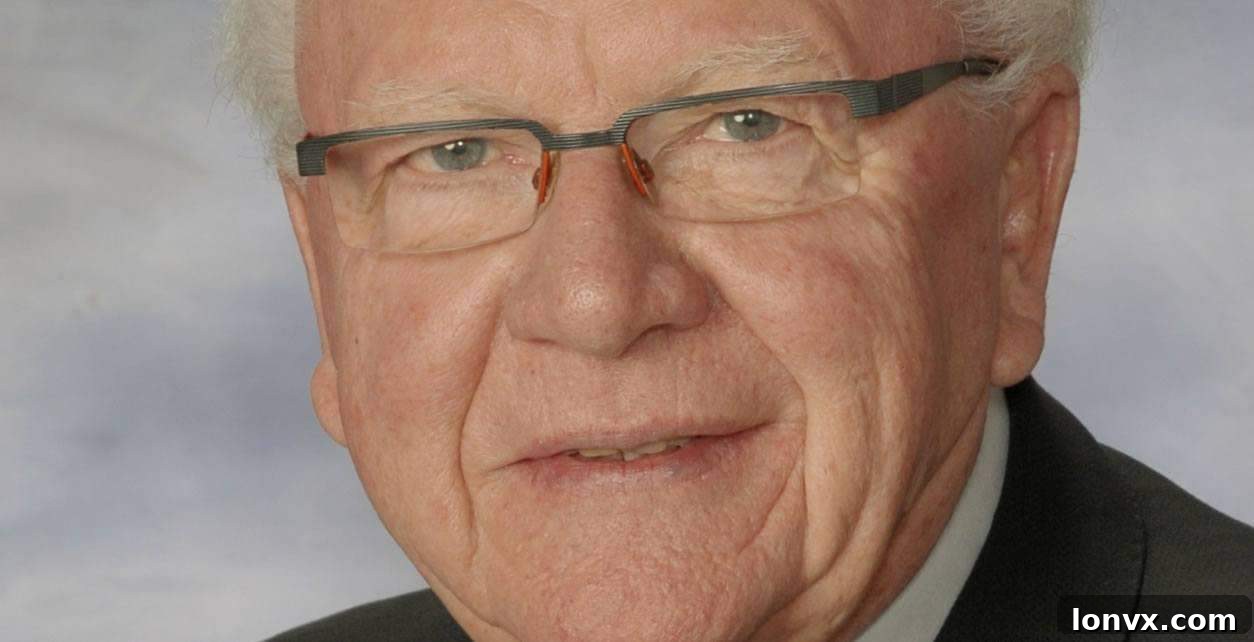
Vern Morton: Celebrating Five Decades of Unwavering Dedication to Durham Region Real Estate
In an industry often characterized by rapid turnover and fleeting trends, Vern Morton stands as a testament to enduring commitment and an unwavering passion for real estate. At the age of 73, after 47 distinguished years as a real estate agent, many would assume retirement was the logical next step. Indeed, Morton found himself confronted with the paperwork to conclude a long and unbroken career, poised to step into a new chapter of life free from the daily demands of showing homes and orchestrating deals. Yet, as his long-time employer prepared to close its doors, a profound realization dawned upon him: he was far from ready to embrace a quiet life of gardening or leisurely euchre games at the clubhouse.
Reflecting on past acquaintances who had opted for early retirement packages from prominent companies like General Motors, Morton observed a recurring pattern of disengagement and, in his own words, a failure to “last very long afterwards.” Without a meaningful purpose or active involvement, life seemed to lose its zest for many. This observation crystallized his own resolve. “I determined really quickly that I wasn’t going to quit,” he firmly states, underlining his intrinsic need for active participation and continuous contribution to a field he deeply loved.
Instead of retreating, Morton embarked on a new quest, approaching a local brokerage with a bold proposition: he sought a job. His proactive spirit and deep well of experience quickly resonated with Rafael Roberto, the forward-thinking head of Coldwell Banker RMR in Durham, Ontario. Roberto, recognizing the immense value of Morton’s seasoned expertise and unwavering work ethic, eagerly welcomed him to the team. This pivotal moment, just four years ago, marked not an ending, but a vibrant new beginning for a career that many might have considered complete.
Today, at 77, Vern Morton is celebrating an extraordinary milestone: his 50-year anniversary as a distinguished member of the Durham Region Association of Realtors. This remarkable achievement was recently honored with a rare and prestigious gold ring, a tangible symbol of his half-century of dedication and unparalleled service to the real estate profession. He wears this ring with profound pride, a constant reminder of his journey and commitment to a business he eloquently describes as “stimulating.” Each transaction, he explains, is as unique and intricate as the individuals seated across the table, demanding fresh insights and tailored approaches, ensuring that no two days are ever truly alike and keeping his passion ignited.
Ralph Roberto, Vern Morton
The Enduring Philosophy: Customers First, Always
The secret to Vern Morton’s extraordinary longevity in real estate isn’t found in complex market strategies or aggressive sales tactics, but rather in a surprisingly simple yet profoundly effective formula: prioritize customers above profit. This principle, deeply ingrained in his character, he attributes to formative lessons learned during his upbringing on a sprawling 200-acre farm in an era devoid of modern conveniences like hydro or running water. Life on the farm instilled a rigorous discipline and a clear understanding of fundamental values that would shape his professional trajectory.
Every morning, until the age of 13, young Vern was responsible for the arduous task of fetching water from a cold spring well. This daily chore, essential for his family’s cleaning and cooking, taught him far more than just perseverance. It was an early masterclass in integrity, demonstrating the direct link between effort, reliability, and the well-being of others. More significantly, it highlighted the primacy of strong relationships and human trust over mere transactional gain. The communal spirit and mutual dependence inherent in farm life cultivated a deep-seated respect for people and a commitment to doing right by them—values that would become the bedrock of his professional ethos in the highly personal world of real estate.
At 17, driven by a desire for new horizons and practical skills, Morton left the farm to pursue studies at a trade school. This educational step led him to a job in Peterborough with Ruddy Electric, a prominent wholesaler of electrical products. He dedicated nine productive years to this company, further honing his work ethic and understanding of the commercial world before destiny gently steered him towards a new, unexpected path.
A Glimpse into the Past: Entering the World of Real Estate
Morton’s journey into real estate began serendipitously when Ruddy Electric transferred him to Oshawa. It was there, in 1964, that he crossed paths with Paul Ristow, an influential figure who owned a burgeoning real estate brokerage. Ristow had just completed the development of Oshawa’s impressive Financial Trade Building, a hub of commerce that exuded an air of prosperity and sophistication. Morton was immediately captivated by the well-heeled location and, notably, by Ristow’s impeccable daily attire – always a suit and tie, a symbol of professionalism and success that deeply resonated with his own values.
“I thought, now this is an interesting way to make a livelihood,” Morton recalls, reflecting on the initial allure of the profession. He observed Ristow’s apparent ease and control over his schedule, noting, “He didn’t have to make a deal every day. He could do one every two weeks. He seemed to be doing quite well. That lured me into the business.” This perception of a career offering both financial reward and a degree of autonomy, coupled with the inherent prestige associated with Ristow’s enterprise, served as the powerful catalyst that drew Morton into the dynamic world of real estate, setting the stage for his remarkable career.
Building Communities: The Legacy of Ristow and Fleming Limited
Soon after Morton’s entry, Paul Ristow partnered with Bud Fleming to establish Ristow and Fleming Limited. While the company maintained a deliberately intimate scale, it quickly earned a reputation for exceptional productivity and an unwavering commitment to quality. Ristow and Fleming became synonymous with developing unique and meticulously constructed commercial and residential properties, leaving an indelible mark on the landscape of Durham Region through their dedication to excellence and thoughtful urban planning.
Morton speaks with particular pride about two deluxe condominiums that remain iconic examples of the firm’s dedication to excellence: Plaza 700 and 900 Wilson Road North. His admiration is clear: “Thirty years later those two buildings are still the best in the area,” he asserts, highlighting their enduring quality and timeless design—a testament to the foresight and craftsmanship embedded in their creation. His 47-year tenure with this single company was not merely a matter of loyalty, but a profound reflection of his deep respect for the integrity of the operation and its deeply ingrained culture of teamwork and shared purpose, which prioritized long-term value over short-term gains.
Beyond the individual projects, Morton takes immense satisfaction in having contributed significantly to the development of stable, thriving communities within his core service areas of Oshawa, Whitby, and Clarington, Ontario. He fondly remembers an era when people purchased homes for the long haul, envisioning them as foundations for family life and lasting roots, rather than viewing them primarily as speculative investments for short-term profit—a stark and often troubling contrast, he observes, to many contemporary motivations for homeownership.
Vern Morton, Jane Hurst
Oshawa’s Evolution and the Changing Face of Real Estate
Over the course of his illustrious half-century career, Vern Morton has been a firsthand witness to the dramatic transformation of Oshawa. Once a self-sufficient, single-industry town, its identity was intrinsically linked to its manufacturing prowess. Today, thanks to significant infrastructure developments like the extension of the GO Train service and Highway 407, Oshawa has evolved into a bustling “commuter haven.” This profound demographic and economic shift, while bringing numerous opportunities, has also introduced a unique set of challenges to the region and its real estate market, demanding adaptability from all stakeholders.
Morton recounts the tangible impacts: increased population density, the proliferation of smaller lot sizes in new developments, and the sometimes-complex process of cultural assimilation as diverse populations choose to call Oshawa home. These changes underscore the dynamic nature of urban development and its ripple effects on community fabric and housing landscapes, requiring real estate agents to navigate an increasingly intricate environment with sensitivity and comprehensive market understanding.
He expresses concern over a prevailing trend he has observed within the real estate industry: an influx of individuals whose primary motivation is personal profit, often accompanied by superficial pretensions such as flashy cars and ostentatious displays designed to attract clients. “A lot of people are attracted to our industry strictly for money,” he laments, “and unfortunately they do not have the legs to stay with it for a long period of time.” This insight highlights his deep-seated belief that true longevity and success in real estate stem from a deeper commitment than mere financial gain—a commitment rooted in genuine service, integrity, and client care that transcends fleeting market fluctuations.
Technology: A Double-Edged Sword in Client Relations
From a client engagement perspective, Vern Morton often waxes nostalgic about the “good old days” when methods like door-knocking and direct phone calls were not only legal but highly effective ways to prospect for new business. He recalls a simpler era when the most “tech-savvy” advertisement was a prominent front lawn sign or a well-placed ad in a local newspaper. These methods, though low-tech, fostered direct human interaction and personal connections, laying the groundwork for trust that often lasted a lifetime.
Morton approaches modern technology with a pragmatic skepticism, refraining from viewing it as a “magic bullet” for the real estate business. In fact, he sometimes believes it can be a hindrance, particularly in its impact on market transparency and pricing. He vividly contrasts the past with the present: “In the early days we would pick up data sheets in person from the real estate board office. That was our inventory. Buyers would depend on the agents for the source of all listings information versus today when everyone has access to the information online.” This democratization of information, while empowering consumers, has an unforeseen consequence in his view: “This serves to drive up the pricing with multiple offers. No one knows what anything is worth in this frothy market,” he observes, pointing to the potential for market volatility and client confusion that can emerge when information is abundant but context is scarce.
However, to sustain a career for 50 years demands more than just sticking to tradition; it requires an inherent ability to adapt. Morton, despite his reservations, has diligently learned to leverage technology to remain competitive and keep pace with the evolving industry. Yet, he maintains a healthy skepticism regarding the sweeping promises of social media as a primary business tool. With a characteristic chuckle, he quips that his version of “Facebook” involves the more direct and personal approach of “walking onto the street and meeting people face to face.” This anecdote perfectly encapsulates his enduring conviction in the power of genuine human connection.
“Really what it comes down to is that the actual sale is a one-to-one person relationship,” he affirms, articulating his core belief. “And that has not changed and that is not going to change.” This fundamental truth, he argues, transcends technological advancements and market shifts, remaining the bedrock of successful real estate practice and the key to building truly loyal clientele.
A Lifetime of Trust: Guiding Clients Home
In his current role, Vern Morton primarily functions as a highly respected sellers’ agent. His clientele largely consists of past clients and long-standing friends, individuals who implicitly trust his judgment and expertise, often seeking his advice on significant life decisions. Many of the homes he now helps to sell are properties he originally facilitated for them years, and sometimes decades, ago. This remarkable cycle of repeat business is the ultimate validation of his customer-first philosophy and the deep, enduring relationships he has cultivated over half a century, demonstrating the power of trust and consistent service.
For aspiring young sales representatives entering the challenging world of real estate, Morton offers invaluable, hard-earned advice: “Be prepared to work hard. It doesn’t come overnight.” He stresses that success is not a swift ascent but the culmination of countless hours dedicated to understanding market nuances, honing negotiation skills, and, most importantly, building rapport and credibility. “There are a lot of hours that go into making a sale,” he explains, detailing the unseen effort behind every successful transaction. He concludes with perhaps his most profound piece of wisdom: “Gaining the confidence of the buyer takes time; it may even take a lifetime.” This emphasizes that true success in real estate is built on an unbreakable foundation of trust, integrity, and patient, persistent effort—qualities that Vern Morton has embodied throughout his extraordinary five-decade journey, cementing his legacy as a true titan of the Durham Region real estate market.