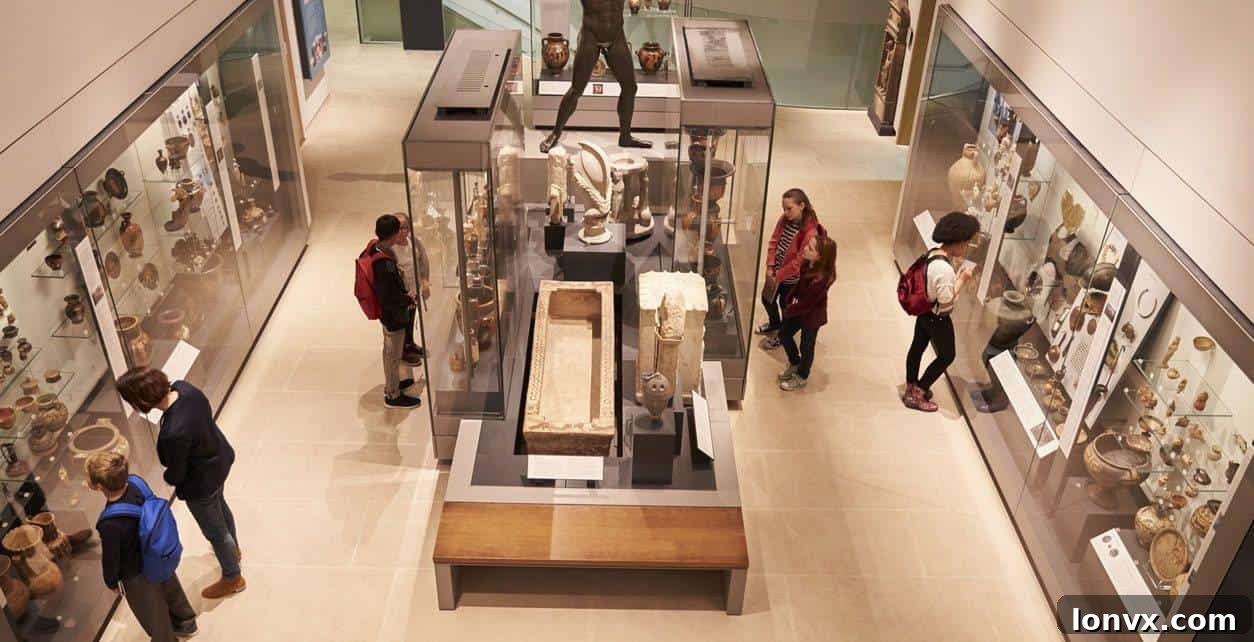
Hello and welcome, esteemed guests, to The Real Estate Museum! My name is Bob, and it’s an absolute pleasure to be your guide today as we embark on a fascinating journey through the annals of real estate history. Prepare to explore the humble beginnings, surprising innovations, and often amusing challenges faced by real estate professionals throughout the ages. Our mission here is to illuminate the incredible evolution of an industry that shapes our lives and communities.
Unlike conventional museums, where priceless artifacts are typically guarded by thick glass, alarms, and watchful eyes, many of our exhibits feature everyday items that have simply been outpaced by progress. We operate on an honor system here. We encourage you to engage with the displays, pick up items, and examine them closely to truly appreciate their historical significance. We only ask that you kindly return them to their original place once you’ve finished your inspection. Now, let’s step back in time and begin our exploration!
The Dawn of Documentation: Early Real Estate Marketing
Our journey commences here, in the Early Real Estate wing, where we delve into the very first methods of property advertisement. You might initially mistake this exquisite, postcard-sized oil painting for a quaint piece of art, and while it certainly is that, it served a far more practical purpose in its time. This, ladies and gentlemen, was an early feature sheet – a crucial marketing tool from an era long before the invention of the camera.
Imagine the challenge: how do you showcase a property to potential buyers without photographic evidence? Real estate companies of the day employed talented artists to meticulously paint detailed renderings of homes. Once the initial painting was complete, other skilled artists would create numerous copies to be distributed to prospective clients. This was a labor-intensive and time-consuming process. In burgeoning towns and cities, where competition was fiercer and demand higher, it wasn’t uncommon for a single property listing to require as many as a dozen such paintings. These hand-rendered images were the only visual representation buyers had, making the artist’s skill in capturing the home’s essence paramount. It was a testament to human ingenuity and artistic talent filling a technological void, highlighting the enduring need to visualize a property before making one of life’s biggest investments.
Connecting Across Distances: The Telegraph Room
Moving along, we enter the Telegraph Room, a fascinating glimpse into a time when instant communication was a futuristic dream. Before the advent of telephones, and certainly long before the conveniences of electronic lockboxes or digital scheduling, this was the central hub for inter-agent communication. Here, realtors would gather to send telegrams – brief, coded messages transmitted over long distances – to their counterparts in other areas.
Consider the scenario: a client expresses interest in a property listed by another agent, perhaps in a different part of town or even a neighboring city. The selling agent would compose a telegram, dispatching it to the listing agent to arrange a showing. The reply, too, would come via telegram, often involving a significant waiting period. This painstaking process required patience, precision, and a robust understanding of telegraphic codes. While it seems incredibly inefficient by today’s standards, the telegraph represented a monumental leap forward in connecting remote parties. It replaced even more rudimentary and often less-than-courteous methods. Indeed, it was a vast improvement on what we affectionately refer to as the “crowbar era,” a time when clients, understandably, began to voice complaints about damaged doors resulting from unauthorized, pre-arranged property viewings. The telegraph, for all its limitations, brought a new level of professionalism and order to the chaotic world of property showings.
The Analogue Age: Real Estate in the 1970s
Our next stop transports us to the vibrant, yet decidedly analogue, world of the 1970s. Here, we’ve meticulously recreated a typical kitchen of the era, complete with a grand, marbled Formica-top table and a set of classic Naugahyde chairs. This humble kitchen often served as the nerve center for a realtor’s operations. In an age devoid of digital databases and online listings, the daily newspaper was the primary conduit for property advertisements.
Realtors would diligently pore over the real estate sections, carefully cutting out ads for homes listed for sale. These snippets of information were then meticulously pasted onto standard recipe cards. These cards, once filled with details, photographs (if available, usually black and white), and the agent’s handwritten notes, formed the backbone of a top-notch filing system. This system allowed agents to track properties, manage client preferences, and essentially run their entire business. Imagine the sheer volume of paper, the endless cutting and pasting, and the constant threat of accidental damage. Many a newspaper, and countless cups of coffee, were sacrificed when inquisitive children, playful cats, or simply clumsy moments led to spills and smudges on these invaluable recipe cards and ads. This era perfectly illustrates the dedication and sheer manual effort required to connect buyers and sellers, long before a computer screen became the window to the housing market.
The Technological Leap: Pagers and Pay Phones
As we press forward, we enter the Technology Department, a testament to the rapid acceleration of communication tools that transformed the real estate profession. Please observe these high-tech pager devices, which, in their prime, represented the pinnacle of mobile communication. Emerging in the 1980s and flourishing in the early 1990s, just on the cusp of the monumental Cellular Phone Revolution, these devices offered real estate agents unprecedented accessibility.
The Pager: A Beacon of Accessibility
Picture an agent out on a showing, running errands, or perhaps catching a much-needed afternoon movie during a quiet period. With a quick page from the office, they could be instantly alerted to a new lead, an urgent message from a client, or a change in a scheduled appointment. Early pagers offered one-way communication, typically displaying a numeric code or a short, several-word message. This was a significant upgrade from being completely unreachable, allowing agents to stay connected to their business even when away from their desk phone. Receptionists of the era often found a humorous challenge in sending pages, trying to guess if an agent was at the cinema, and if their pager was on vibrate or, even better, turned off. The loud, insistent chirping of a pager during a dramatic movie scene was, as you can imagine, not always met with appreciation by fellow moviegoers, though it certainly ensured the agent got the message!
The Pay Phone: A Lifeline for Frugal Agents
Adjacent to our pager display, you’ll notice an artifact that was once ubiquitous across the nation: the pay phone. These public communication hubs were literally dotted everywhere, in almost every nook and cranny of towns and cities, providing a vital link for anyone needing to make a call on the go. While their usage steadily declined with the widespread adoption of personal cell phones, for thrifty realtors in the late 80s and early 90s, pay phones offered a crucial and economical solution.
Early cellular phone plans were notoriously expensive, with costs often soaring to hundreds, if not thousands, of dollars for even relatively short calls. A 10-minute conversation could easily result in a $1,700 bill on some of those inaugural plans. Consequently, many agents strategically used pay phones to return pages. Rather than incurring exorbitant mobile charges, they would find the nearest pay phone, deposit a quarter, and return the call, making the most of this affordable alternative. This demonstrated not only the resourcefulness of real estate professionals but also highlighted the immense cost barrier that initially prevented widespread cell phone adoption. The pay phone, therefore, served as a crucial bridge during the transition from fixed-line to mobile communication, empowering agents to remain responsive without breaking the bank.
Conclusion: A Legacy of Innovation and Dedication
Alas, our fascinating journey through the Real Estate Museum has come to an end. We hope this glimpse into the past has provided you with a deeper appreciation for the ingenuity, resilience, and adaptability of the pioneers in this incredible profession. From hand-painted property listings to the early, clunky forms of mobile communication, the evolution of real estate is a testament to constant innovation driven by the fundamental human need for shelter and community.
Thank you for visiting today, and for taking the time to understand the rich history that underpins today’s sophisticated real estate market. Before you leave, please feel free to browse our gift store, where you’ll find an array of unique mementos from different real estate eras. And don’t forget to fill out a feedback form – it’s your chance to enter a drawing to win a truly retro prize: an authentic, blank sales contract from yesteryear, delivered to you via fax machine, just like the good old days! We hope to see you again soon as the real estate world continues its fascinating journey of transformation.