
Canadian Housing Market Rebounds: A Deep Dive into the Latest Sales Surge and Future Outlook
The Canadian housing market has reached a significant turning point, recording its first quarterly increase in home sales since 2021. According to the Canadian Real Estate Association (CREA)’s June data, transactions in June 2023 soared 4.7 percent above figures from June 2022, marking the most substantial year-over-year jump witnessed in two years. This notable uptick suggests a potential shift in momentum, offering a glimmer of hope for a sector that has navigated considerable headwinds.
This positive development sparks crucial questions about the market’s trajectory. Is this a genuine recovery signaling the end of a challenging period for real estate professionals? Or does it merely represent a temporary reprieve for property owners who continue to grapple with the pressures of elevated interest rates? Understanding the nuances of this resurgence requires a comprehensive look at historical precedents, affordability dynamics, and the underlying forces at play.
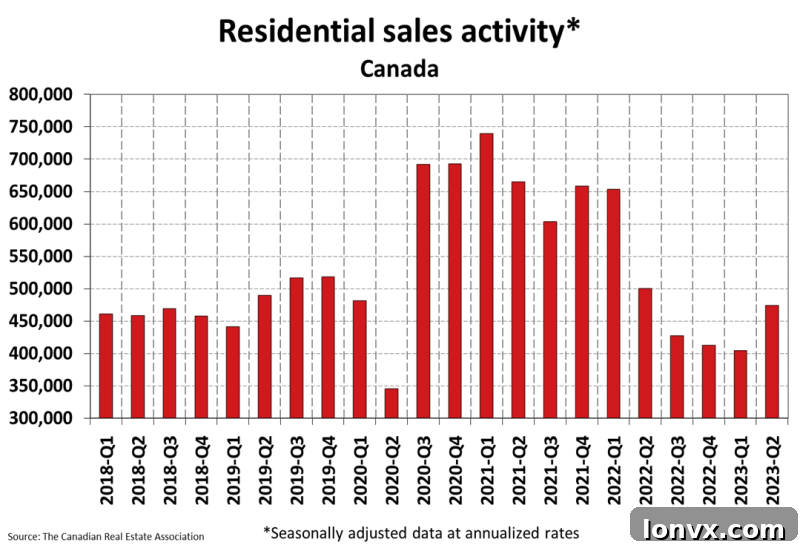
The Resurgence of Sales Volume: A Glimmer of Hope for Realtors, Continued Challenges for Owners
The recent revival in sales volume could indeed be perceived as a positive indicator for real estate agents and brokers across Canada. For these professionals, transaction volume is the lifeblood of their business, directly impacting commission earnings. After a prolonged period of suppressed activity, the June figures suggest a renewed appetite among buyers, translating into more opportunities for realtors to facilitate deals.
However, the picture remains complex, particularly for existing property owners. While increased sales might signal market health, many homeowners are still contending with the repercussions of heightened interest rates. The Bank of Canada’s aggressive rate hike cycle, implemented to curb inflation, has significantly increased mortgage carrying costs for those with variable rate mortgages or those renewing fixed-rate terms. This creates a challenging environment where rising property values might not directly translate into financial relief, instead exacerbating the affordability crisis for potential new buyers and adding pressure on existing homeowners.
The dichotomy between the interests of real estate professionals and property owners highlights the delicate balance within the Canadian housing market. A vibrant market ideally supports both liquidity for sellers and accessible ownership for buyers, alongside sustainable incomes for industry stakeholders. The current scenario suggests that while one segment might be finding its footing, another continues to navigate stormy waters, underscoring the uneven impact of recent economic shifts.
Historical Parallels and the Enduring Role of Affordability
Observing the current market recovery, one cannot help but draw parallels to previous periods of significant downturns. Historically, major drops in Canadian home sales volume, such as those witnessed in 1981, 1989, and 2008, were often followed by periods of recovery. These downturns were typically triggered by a confluence of factors, including economic recessions and sharp increases in interest rates – circumstances strikingly similar to those experienced in the recent past.
In each of these historical instances, a common thread underpinned the eventual rebound: an improvement in housing affordability. As prices softened during periods of reduced demand, housing became more accessible to a broader pool of buyers. This increased affordability served as a catalyst, gradually enticing buyers back into the market and stimulating transaction activity. The current recovery aligns with this historical pattern, suggesting that the recent price adjustments and a temporary plateau in rates may have opened a window for buyers who were previously priced out.
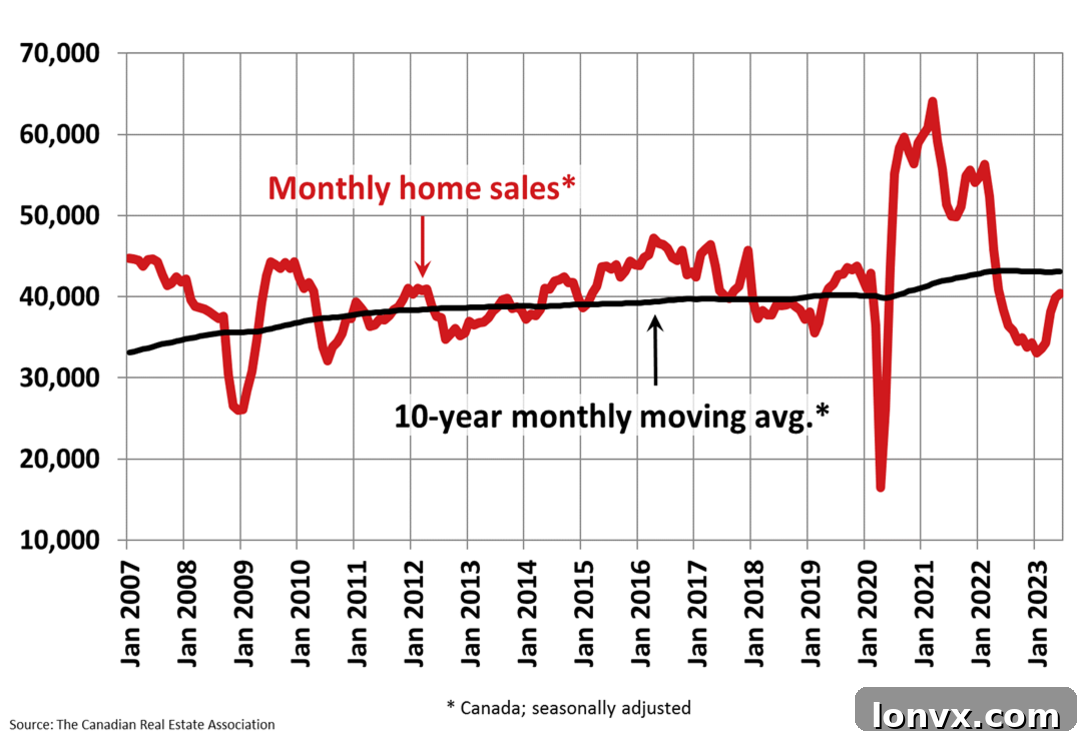
The hypothesis that declining prices restore affordability, thereby bringing buyers back, appears to be playing out once again. This cyclical nature of the market underscores the fundamental importance of affordability as a driving force behind sustainable growth. Without it, market activity can remain suppressed, leading to prolonged stagnation.
The Realtor’s Dilemma: Why Volume Trumps Price for Market Health
It’s a common misconception, even within the industry, that soaring house prices are inherently good for real estate professionals. While higher prices on individual transactions can mean larger commissions, the health and sustainability of the real estate sector fundamentally rely on volume – the number of properties bought and sold. This distinction is crucial: volume dictates the frequency of transactions, which in turn determines the overall flow of business for realtors.
The paradox lies in the relationship between price and affordability. When house prices escalate rapidly and become detached from average incomes, affordability plummets. Unaffordable housing markets inevitably lead to reduced homeownership rates, as a significant portion of the population finds themselves unable to enter the market. A decline in homeownership, over time, translates directly into fewer property transactions. This creates a self-defeating cycle where the pursuit of ever-higher prices ultimately undermines the very foundation of the real estate business by shrinking the pool of active buyers and sellers.
This critical dynamic explains why sales volume was severely suppressed for 12 months prior to the recent uptick. The Canadian housing market reached unprecedented levels of unaffordability, pushing many potential buyers to the sidelines. The current return to more normalized transaction levels indicates that some degree of affordability has been restored, or at least perceived, by a segment of buyers. CREA acknowledges this market-squandering unaffordability in its forecast, projecting a 6.8 percent decline in overall home sales this year compared to last, reflecting the lingering effects of the previous year’s market conditions despite recent improvements.
While a short-term rally in prices might provide a temporary boost to seller confidence, a prolonged period of steep price increases could quickly erode any gains in affordability, potentially leading to another seasonal or secular deceleration in volume. For the long-term health of the Canadian real estate market and the prosperity of its professionals, a stable, accessible, and high-volume environment is far more beneficial than one characterized by volatile, unaffordable price spikes.
Decoding CREA’s Latest Forecasts: Balancing Current Growth with Future Stability
The recent surge in home sales provides a compelling narrative, but it’s essential to contextualize this against broader market predictions. CREA’s quarterly forecast offers a cautious outlook, projecting that the national average home price will likely fall this year before experiencing a modest rise of just 3.0 percent from 2023 to 2024. This projection is particularly intriguing given that national house prices have already grown more than 3.0 percent year-to-date, with June alone witnessing a robust 2.0 percent monthly increase.
To align with CREA’s prediction, house prices would necessitate a period of stabilization, or even a slight correction, in the latter half of the year. CREA itself addresses this potential discrepancy, stating that prices are expected to “stabilize until interest rates start to come down.” This suggests that the current momentum, while strong, may be tempered by the persistent influence of high interest rates on buyer affordability and market sentiment. The expectation is that the market will enter a holding pattern, awaiting a clear signal from the Bank of Canada regarding future rate adjustments.
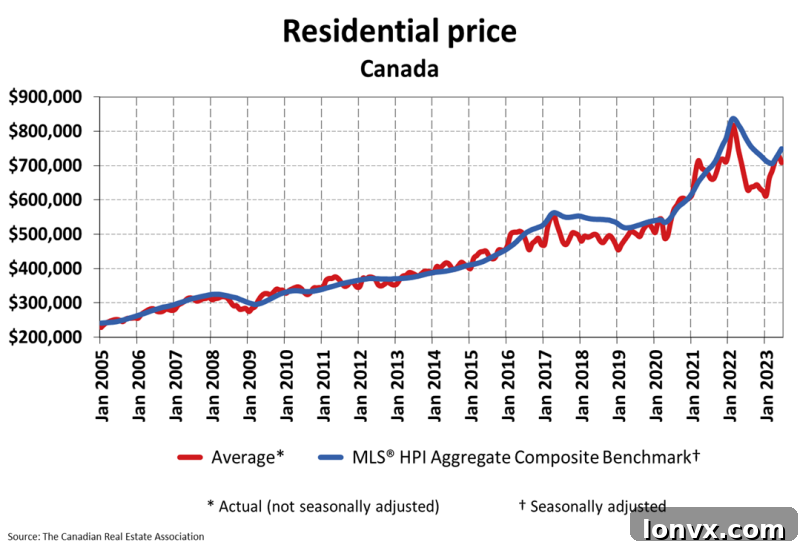
The timing and magnitude of any future interest rate cuts remain speculative, making CREA’s forecast a delicate balancing act between current market enthusiasm and anticipated economic realities. Should interest rates remain elevated for longer than expected, the projected stabilization could easily lean towards a decline, further testing the resilience of the Canadian housing market. Conversely, an earlier-than-anticipated cut could inject renewed vigor, potentially exceeding the 3.0 percent growth forecast for 2024.
A Closer Look at Listings: Unpacking the “Re-listing” Phenomenon
Beyond sales activity, new listings are also showing an upward trend for the first time in over a year. This increase in supply is another critical factor influencing market dynamics, as it provides more options for buyers and can help alleviate some of the competitive pressures seen in previous years.
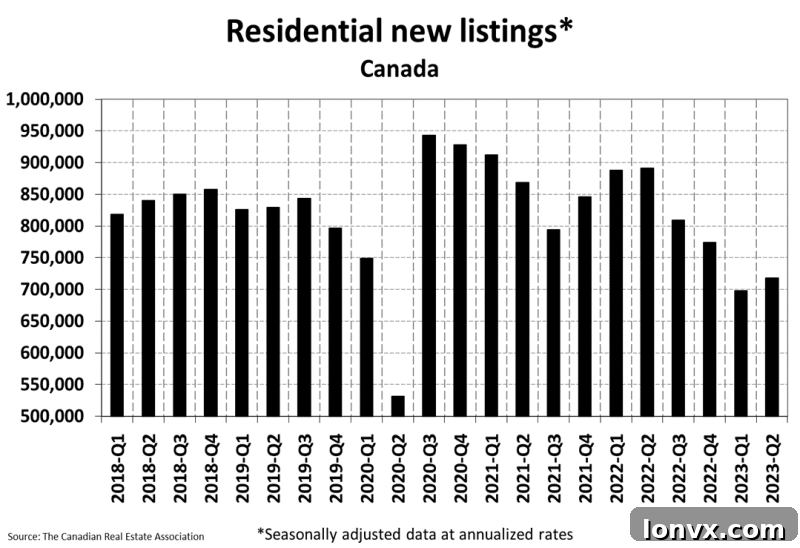
However, a closer examination of CREA’s residential market balance metrics reveals an intriguing, and potentially misleading, evolving trend. Both the sales-to-new-listings ratio and the months of inventory metrics are trending downwards, even as new listings are on the rise. This apparent contradiction suggests that something more complex is happening beneath the surface of the raw data. There’s a reasonable chance that the widespread practice of “re-listing” properties is skewing these key market indicators.
The “re-listing” phenomenon occurs when a property fails to sell within its initial listing period, or at its initial asking price, and is subsequently taken off the market only to be re-listed, often with a revised price or a new strategy. While such properties appear as “new listings” in some datasets, they don’t represent genuinely new supply entering the market. If this practice is prevalent, it can artificially inflate the “new listings” count while simultaneously depressing the sales-to-new-listings ratio (because many “new listings” are not actually selling) and potentially skewing the active inventory metric downwards (if a property is delisted for a short period before being re-listed).
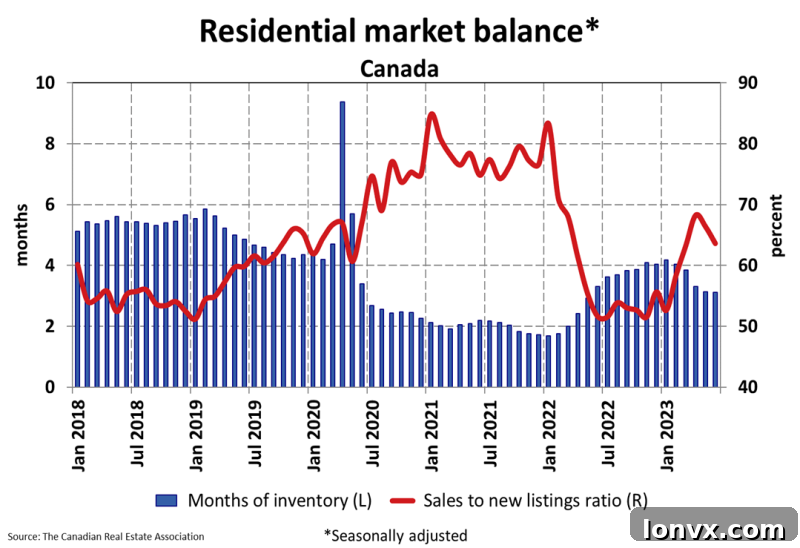
This dynamic could be masking underlying market conditions, making it difficult to ascertain the true balance between supply and demand. A high volume of re-listings might indicate seller frustration, unrealistic pricing expectations, or a slower market where properties take longer to sell. For market participants, understanding this trend is crucial for accurate decision-making, as relying solely on headline figures for new listings or sales-to-new-listings ratios could lead to misinterpretations of market health and liquidity.
Navigating the Nuances of the Canadian Housing Market Ahead
The Canadian housing market is currently navigating a complex period of transition and adjustment. While the recent surge in June 2023 home sales offers a much-needed boost in confidence and transaction volume, it is imperative to look beyond the headline figures. The interplay between persistently high interest rates, evolving affordability dynamics, and intricate listing behaviors creates a multifaceted landscape that requires careful analysis.
The historical context suggests that market recoveries are often predicated on improved affordability, a trend that appears to be partially at play now. However, CREA’s cautious forecast for price stabilization, contingent on future interest rate movements, indicates that the market’s path forward is far from linear. Furthermore, the potential for “re-listing” practices to skew key market metrics underscores the importance of digging deeper into the data to understand the true balance of supply and demand.
For buyers, sellers, and real estate professionals alike, the coming months will be critical in determining whether this recent uptick represents a sustainable recovery or merely a temporary surge within a broader period of market correction. Vigilance regarding interest rate policies, a keen eye on genuine affordability trends, and a nuanced understanding of listing data will be essential for making informed decisions in Canada’s evolving real estate landscape. The market remains resilient but continues to demand adaptability and strategic insight from all its participants.
Enjoying this article?
Get the latest articles in your inbox 3x week so you stay up to date on the latest in the Canadian real estate industry.