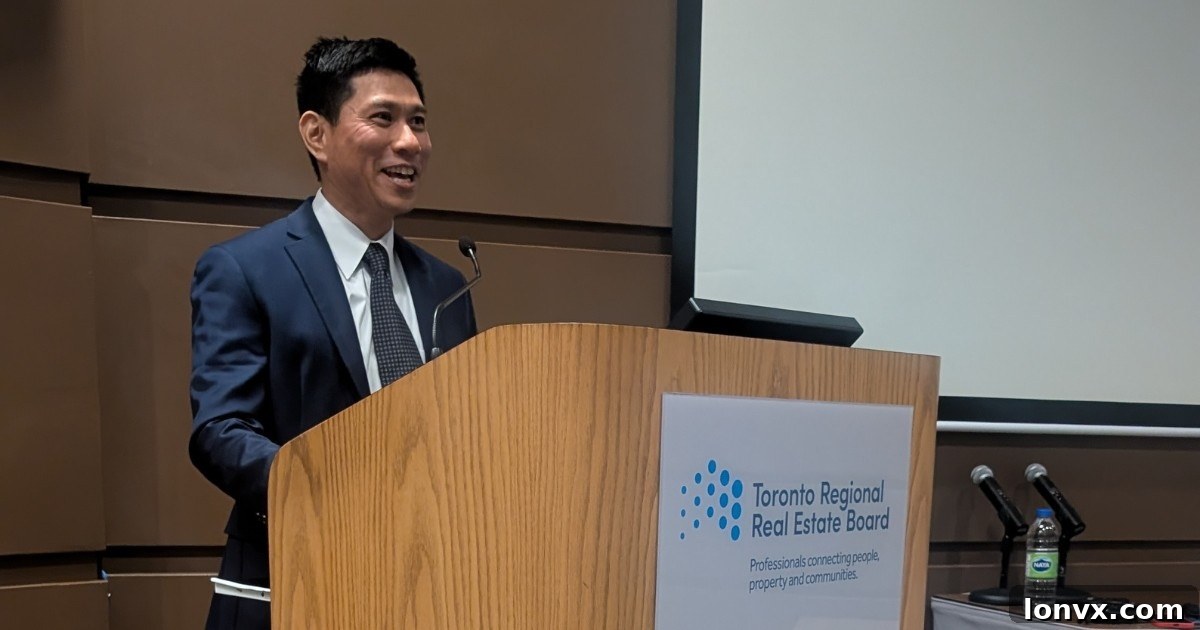
Ever wondered what it truly entails to serve as a director for the largest and most influential real estate board in Canada? The journey to becoming a leader at the Toronto Regional Real Estate Board (TRREB) is far more intricate and surprising than many might anticipate. Whether you aspire to run for a directorship or simply wish to understand the inner workings of this pivotal organization, allow me to share an insider’s perspective, highlighting the unexpected lessons I learned during my inaugural term.
When I first considered entering the election, I held a firm belief that my extensive experience within the real estate sector would be my most significant asset, a clear differentiator. However, the reality of the TRREB director race presented a stark and humbling surprise: much of what I initially thought mattered, didn’t quite play out as expected.
The Electoral Journey: Decoding TRREB Director Elections
The path to a TRREB directorship is unique, diverging significantly from typical corporate or volunteer board elections. My first major revelation was understanding the true mechanics of how directors are elected. You might be thinking, “I’ve only volunteered for a few office social events; how could I possibly possess the credentials to get elected to such a prominent board?” This very question exposes a common misconception. While enthusiasm for contributing is valuable, the election process itself is less about formal credentials and more about an active, engaged electorate.
TRREB is fundamentally a member-led organization. This means that to secure a position as a director, you must garner the highest number of votes from your peers – the tens of thousands of real estate professionals who constitute the board’s membership. My initial foray into the electoral arena was a clear demonstration of this reality: I finished a disappointing seventh out of ten candidates. My second attempt, however, was successful, largely thanks to what I can only describe as a “perfect storm” of industry circumstances aligning with my campaign.
The crucial insight here is that traditional volunteer experiences, while commendable, often have little direct bearing on election outcomes. If you aspire to a directorship, you must be prepared to actively campaign and connect with the membership. With over 70,000 members, voter apathy is a significant factor; historically, only about seven percent of the membership actively participates in the election. This low turnout means that a relatively small number of votes can make all the difference, sometimes as little as 20 votes separating an elected director from a losing candidate.
The campaign trail for a TRREB directorship can be surprisingly intense. I witnessed aspiring directors engaging in extensive outreach: cold-calling agents from lists, actively soliciting votes at open houses, and even launching aggressive direct mail campaigns to their entire databases. Candidly, I did not employ these high-pressure tactics. My victory, as far as I could tell, relied more on genuine connections and, perhaps, a touch of what I playfully refer to as “boyish charm.” However, for most, a more strategic approach is essential.
Based on my experience, I offer two key suggestions for those serious about getting elected:
Run for a Less Popular Committee to Gain Essential Experience
To qualify as a director candidate, you must first accumulate relevant TRREB committee experience. This requirement ensures that aspiring directors understand the board’s operational structure, governance principles, and the issues facing its members. However, many candidates gravitate towards the most visible and seemingly influential committees: Finance, Government Relations, and the Multiple Listing Service (MLS) Committee. These “Big 3” committees are highly competitive, attracting a large pool of talented applicants, which makes securing a spot incredibly challenging.
A more strategic approach is to apply for a less popular committee. While these committees might not generate as much buzz, they offer an excellent opportunity to gain crucial experience, contribute meaningfully, and establish your reputation within the organization. Examples might include professional standards, member engagement, or technology development committees. These committees play vital roles in the board’s overall function and provide equally valuable insights into TRREB’s operations.
During the committee selection process, merit and qualifications truly matter, not just popularity. I’ve been involved in the selection for committees like MLS and technology, observing firsthand the caliber of applicants. Highly impressive candidates vie for these positions, making it imperative to stand out. By choosing a less competitive committee, you significantly increase your chances of being selected, taking that vital first step towards becoming a qualified director candidate. You’ll gain practical experience, demonstrate your commitment, and build a network of influential peers and staff members – all invaluable assets for a future election campaign.
Leverage the Support of a Large-Brand Brokerage
Ultimately, winning an election hinges on securing votes, and volume often plays a critical role. Historical data suggests that many successful director candidates benefit significantly from the size and influence of their affiliated brokerage or brand. Being associated with a large, well-established firm can provide an inherent advantage in reaching a vast number of potential voters.
I count myself fortunate in this regard. During my successful election year, I received unwavering support from my brokerage’s upper management. This support manifested in tangible ways: I was granted permission to post my campaign messages within internal brokerage groups, allowed to speak at company meetings to articulate my vision, and critically, management actively encouraged our agents to vote for me through official internal communications. This institutional backing provided a tremendous multiplier effect, helping me reach hundreds, if not thousands, of potential voters who might otherwise have been unaware of my candidacy.
If you are not affiliated with a large brokerage or a prominent brand, the next best strategy is to proactively engage with broker-owners and managers. Seek their endorsement and determine the extent of support they are willing to provide. Building these relationships and securing their backing can be instrumental in mobilizing a significant voting block within their respective offices.
The Role of a TRREB Director: Policy, Governance, and Impact
Before becoming a director, I held a rather simplistic view of the role, imagining it primarily involved “joining a few meetings” and then moving on. How profoundly mistaken I was! To truly grasp the responsibilities of a director, one must first understand the intricate organizational structure and operational philosophy of TRREB itself, and how it fits into the broader ecosystem of organized real estate in Canada. To be entirely candid, even I struggled to fully comprehend this interconnectedness initially.
TRREB’s Board of Directors is often referred to as a “policy board.” This fundamental distinction is critical: the Board is responsible for formulating and approving strategic policies, while the professional staff is tasked with implementing these policies and managing the day-to-day operations of the organization. This clear division of labor ensures strategic oversight without micromanagement, allowing the Board to focus on high-level governance and the long-term vision for the membership.
Here’s a breakdown of how the organizational structure works:
- TRREB operates as a quasi-governmental organization, balancing member services with regulatory oversight.
- It is composed of its vast membership, who exercise their democratic right to vote for the directors.
- The elected directors are then appointed to chair various standing committees, aligning their expertise with specific areas of focus.
- These committees serve as vital conduits, researching issues, deliberating solutions, and formulating recommendations or new policies for the Board of Directors.
- The Board of Directors then rigorously debates and votes on these proposed policies or strategic initiatives.
- Once approved, the dedicated TRREB staff takes over, translating the policy decisions into actionable plans and executing them efficiently.
To illustrate this policy-focused approach, let’s consider a real-world example, contrasting it with the operational involvement typical of many smaller non-profit associations. Imagine you are a director at a local non-profit aiming to organize a “technology showcase event” to feature new products relevant to your members. In such a setting, the conversation might typically unfold like this:
- “Hey, where are we holding this event anyway?”
- “Okay, we’ve got 10 pages of potential sponsors. I’ll take pages one and two and call them by the end of the week.”
- “Isn’t George friends with Mary Smith? Do you think he can ask her to come give one of the keynotes?”
- “This steak is over-cooked; someone go talk with the restaurant manager!”
- “Ah crap, Michael’s car broke down. I guess I’ll go pick up the pizzas for the volunteers.”
For anyone who has organized events, you immediately recognize the hands-on, detail-oriented nature of these tasks. At TRREB, the dynamic is profoundly different. The conversation would likely be more abstract and strategic:
Me: “So, I believe we should explore the feasibility of hosting a major technology event for our members.”
Staff: “Understood. We’ll conduct a comprehensive feasibility study, develop a detailed proposal, budget, and logistical plan, and present it for your review.”
Me: “Awesome! Can we ensure it includes premium catering, perhaps steak?”
Staff: “Based on our approved budget guidelines and member feedback from previous events, we recommend a more cost-effective catering option.”
This dialogue highlights the clear division: directors set the strategic direction and approve the overarching framework, while the staff manages the operational specifics, always within the established policy and budgetary guidelines. Directors at TRREB are stewards of the organization’s mission and resources, focusing on governance, foresight, and representing the broader interests of the membership, rather than logistical execution.
Navigating Member Expectations: The Challenge of Consensus
As previously noted, TRREB functions much like a quasi-governmental organization. This characteristic brings with it a unique challenge: its vast and diverse membership often holds deeply felt, sometimes emotional, views on a wide array of topics. The Board of Directors, therefore, faces the constant task of carefully weighing the myriad pros and cons of each viewpoint, engaging in robust debate, and ultimately making decisions that aim to serve the collective best interest, even if not every individual member is entirely satisfied.
It is genuinely impossible to make everyone happy. Consider, for instance, the perpetual debate surrounding TRREB’s scope of services. You might hear two equally passionate, yet opposing, viewpoints:
- TRREB should streamline its operations, focusing exclusively on core services such as the Multiple Listing Service (MLS), essential education, and internal arbitration mechanisms, avoiding expansion into other areas.
- TRREB should assertively expand its influence, actively lobbying at municipal, provincial, and federal government levels to advocate for the interests of its members and the broader real estate industry.
Some members firmly believe that a lean, focused TRREB that concentrates solely on fundamental MLS services and targeted local advocacy is the most efficient and beneficial model. They might argue that expanding beyond these core functions dilutes resources or deviates from the organization’s primary mandate.
Conversely, an equally passionate segment of the membership might contend that proactive engagement and robust lobbying across all levels of government, coupled with a broader range of member benefits and technological advancements, are absolutely essential for protecting and advancing the profession in an increasingly complex regulatory and market landscape. They see a more expansive role as well within TRREB’s mandate and crucial for its members’ success.
Now, imagine attempting to reconcile the vast spectrum of these views from over 70,000 different members, each with their own unique experiences, business models, and priorities. It’s a monumental task, and reaching universal consensus is an unachievable ideal. At board meetings, directors are tasked with deep discussions and rigorous debates, examining all available information, staff reports, and member feedback. We strive to consider all angles, drawing upon the varied experiences and perspectives present among the directors to arrive at the most sound decision possible.
It’s inevitable that the Board won’t always “get it right” in everyone’s eyes. However, the democratic process embedded within TRREB offers a crucial layer of accountability. If members strongly disagree with the Board’s decisions or overall direction, they possess the fundamental right, at the next election cycle, to vote out existing directors and elect new ones who they believe will better represent their interests. This electoral cycle ensures that the Board remains responsive to the evolving needs and expectations of its membership, even amidst the inherent difficulties of pleasing such a diverse constituency.