
Canadian Housing Market Stages Resilient Comeback: Supply Increases, But Prices Continue to Climb Amidst Rate Hikes
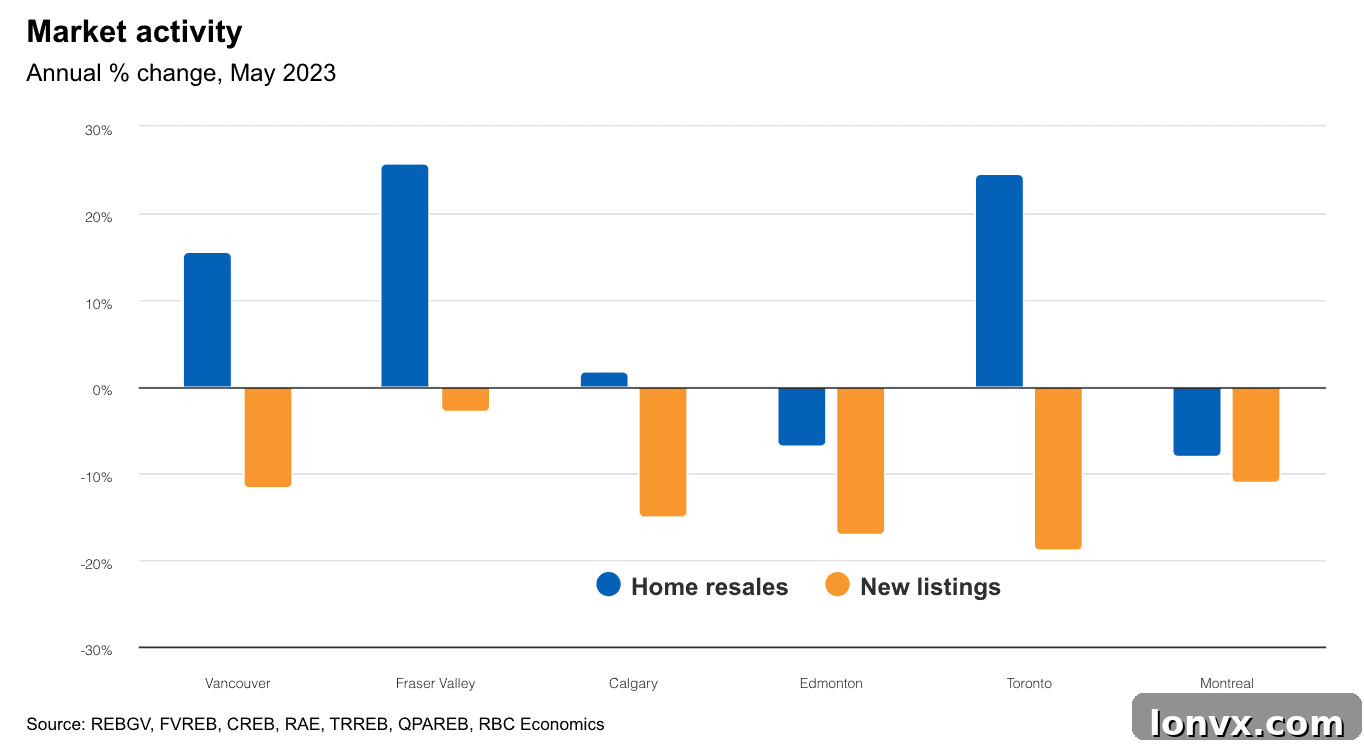
The Canadian housing market displayed encouraging signs of recovery in May, with an increasing number of sellers re-entering the market across the nation. This fresh wave of inventory marks a significant and welcome development for prospective homebuyers who have long contended with severely limited options. However, despite this positive shift in supply, the fundamental dynamics of demand and supply remain largely out of balance, as highlighted in a recent report by Robert Hogue of RBC Economics.
While the uptick in new listings offers a glimmer of hope, it has not yet proven sufficient to fully satiate the robust buyer demand that has characterized the market in recent months. The report underscores the critical need for a sustained and substantial influx of sellers over the coming months to truly bring the national housing market closer to equilibrium. Until such a balance is achieved, the upward trajectory of home prices is expected to persist, intensifying the pressure on an already competitive market.
This period of recovery is complex, marked by a nuanced interplay of factors including persistent demand, gradually increasing supply, and the looming influence of central bank policies. Understanding these intricate dynamics is crucial for anyone navigating the current real estate landscape in Canada.
Market Dynamics and The Road to Equilibrium
The re-entry of sellers into the Canadian housing market is a pivotal trend, reflecting a growing confidence among homeowners and potentially an opportunistic response to rising property values. For many months, the market was characterized by historically low inventory levels, leading to fierce bidding wars and rapid price appreciation. The current increase in listings provides much-needed relief and a broader selection for buyers, yet the intensity of demand continues to outpace this supply growth.
Achieving true market equilibrium, where the number of homes available for sale aligns more closely with buyer demand, is essential for fostering a sustainable and less volatile housing environment. The RBC Economics report emphasizes that the current pace of seller re-entry, while positive, is merely the beginning. A more significant and prolonged surge in listings will be required to temper the aggressive price gains observed across various regions. This equilibrium is not just about numbers; it’s about creating a market where transactions occur at a more measured pace, reducing the sense of urgency that has often driven prices skyward.
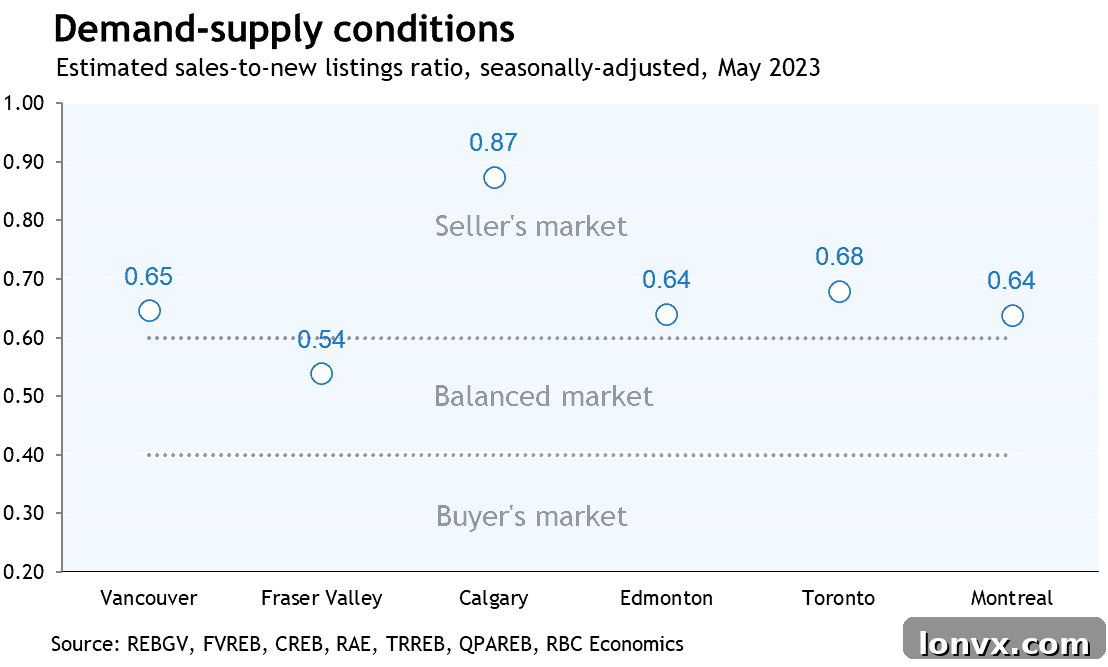
The persistent upward pressure on prices, even with more homes on the market, indicates a deep reservoir of buyer demand, likely fueled by factors such as population growth, strong employment figures, and the ongoing desire for homeownership. As long as this demand outstrips the available inventory, affordability challenges will continue to intensify, affecting a wide spectrum of potential homeowners from first-time buyers to those looking to upgrade.
Regional Spotlights: Price Gains in Toronto and Montreal
Across Canada’s major urban centers, specific trends highlight the broader market narrative. Toronto and Montreal, in particular, have experienced notable price gains, reflecting their unique market conditions and persistent buyer activity.
Toronto’s Enduring Strength Amidst Rising Listings
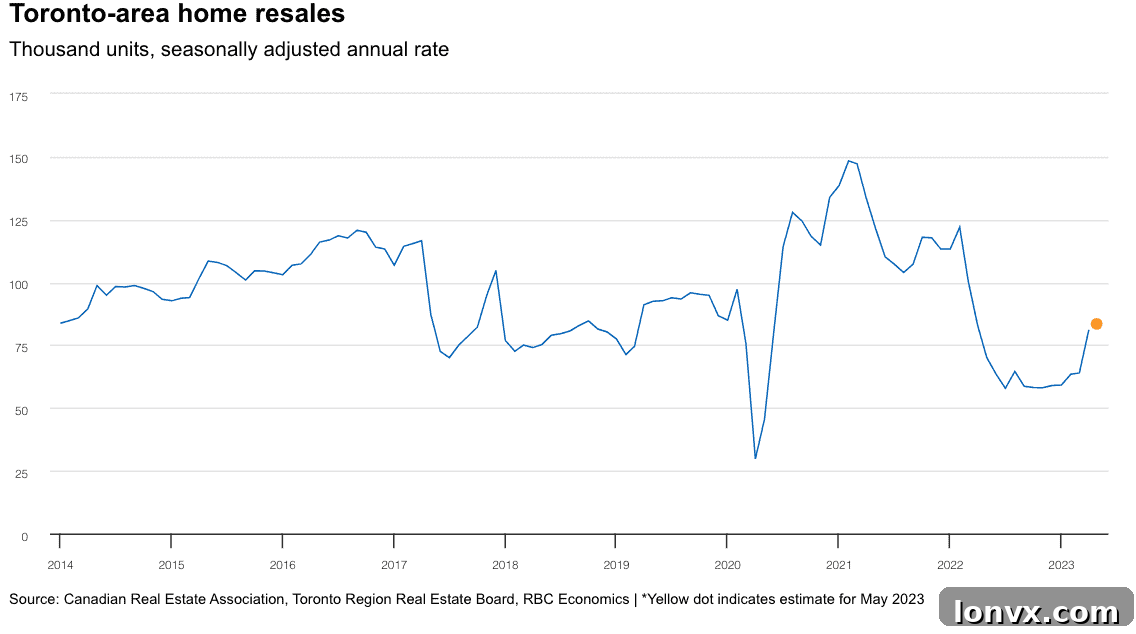
The Greater Toronto Area (GTA) housing market maintained its robust activity in May, recording a solid 5.2 percent month-over-month increase in sales. While this growth was not as dramatic as the exceptional 25 percent surge witnessed in April, it nonetheless underscored the unwavering desire of buyers to enter or re-enter the market. The consistent positive momentum points to a deep-seated demand that has been building over time.
A standout development for Toronto was the significant increase in seller participation, with new listings rising by an impressive 17 percent on a seasonally-adjusted basis. This influx of supply was crucial in partially addressing the considerable pent-up demand that had accumulated throughout the preceding year, offering more choices to eager buyers. However, despite this encouraging boost in inventory, the market remains firmly in favor of sellers. The supply increase was still insufficient to fully rebalance the market and alleviate the intense upward price pressure that has become a hallmark of Toronto’s real estate. The MLS Home Price Index (HPI) for the GTA surged by a robust 3.2 percent month-over-month, a rate reminiscent of the rapid appreciation seen during the pandemic boom. The RBC report strongly emphasizes that for the GTA market to achieve a healthier balance, a sustained and even greater influx of sellers is paramount to boost inventories and stabilize price growth.
Montreal’s Resurgent Market Sees Prices Climb
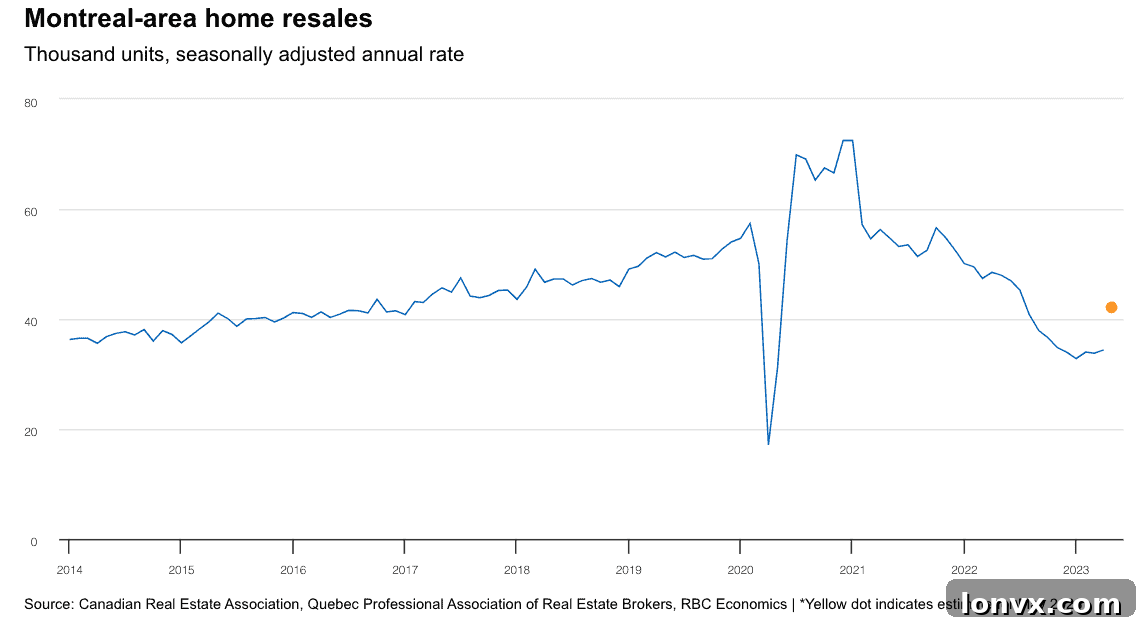
Montreal’s housing market turned a significant corner in May, marking a clear end to a year-long slide. The city experienced a remarkable surge in home resales, with Robert Hogue estimating a staggering 22 percent month-over-month increase on a seasonally adjusted basis. This represents the largest jump in over two years, signaling a powerful resurgence of buyer confidence and activity in the Quebec metropolis.
Despite more homes being listed for sale in response to the improved market conditions, the fresh supply proved inadequate to fully meet the reinvigorated demand. This imbalance inevitably led to a further increase in property values across various housing segments. Condo prices, in particular, saw the largest increase, with median prices rising by 3.3 percent month-on-month. Single-detached homes followed suit, experiencing a respectable 1.9 percent increase. The RBC report anticipates that these upward trends in both sales activity and pricing are likely to continue in the near term, as Montreal’s market gains further momentum.
Western Canadian Markets: Vancouver’s Persistent Tightness and Calgary’s Modest Relief
The housing markets in Western Canada also presented diverse yet compelling narratives in May, with Vancouver experiencing increased seller activity that still couldn’t overcome tight conditions, and Calgary finding some, albeit modest, relief from severe inventory shortages.
Vancouver: Seller Activity Rises, Affordability Challenges Persist
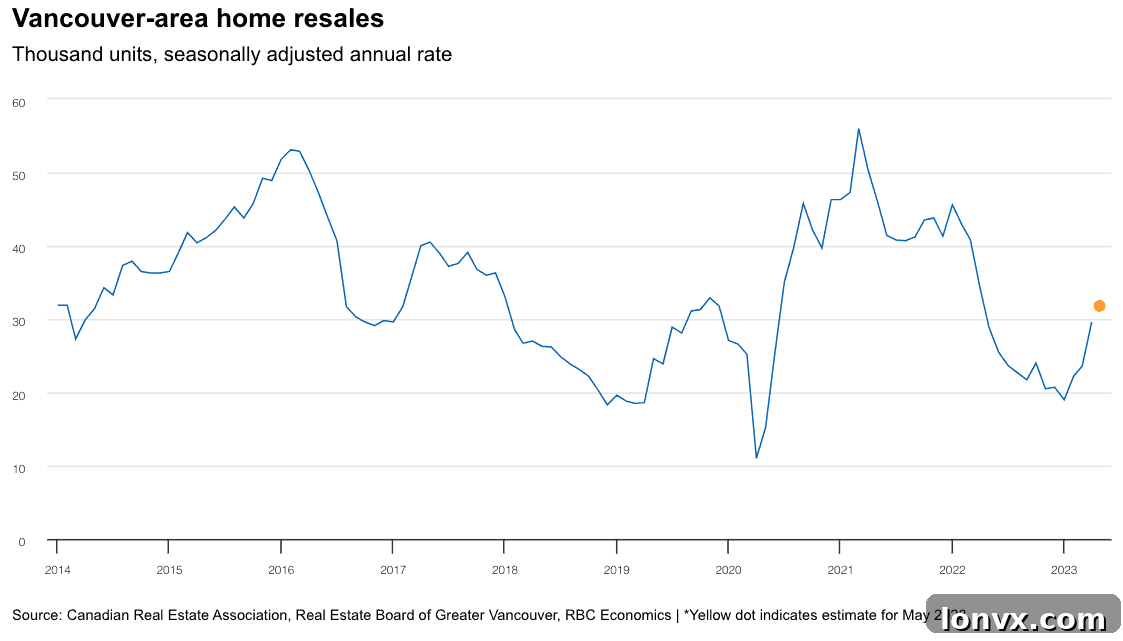
In the highly desirable Vancouver area, a growing number of sellers capitalized on the favorable market conditions in May. New listings experienced a significant jump of 15 percent month-over-month on a seasonally adjusted basis, marking the largest increase seen since January. This renewed seller confidence and influx of inventory spurred further growth in resale transactions, extending the upward trend for a notable four consecutive months. The market momentum clearly indicates a robust appetite for homes in the region.
However, despite this welcome rise in new listings, the underlying demand-supply conditions in Vancouver remain exceptionally tight. This persistent imbalance means that even with more homes on the market, buyers continue to face competitive scenarios, driving prices ever higher. Vancouver’s MLS HPI increased by 1.3 percent over April, underscoring the ongoing appreciation. Nevertheless, the RBC report cautions that the severe affordability challenges prevalent in Vancouver will likely act as a natural brake, limiting the speed of future price appreciation as a growing number of potential buyers find themselves priced out of the market.
Calgary: Significant Listings Offer Limited Relief
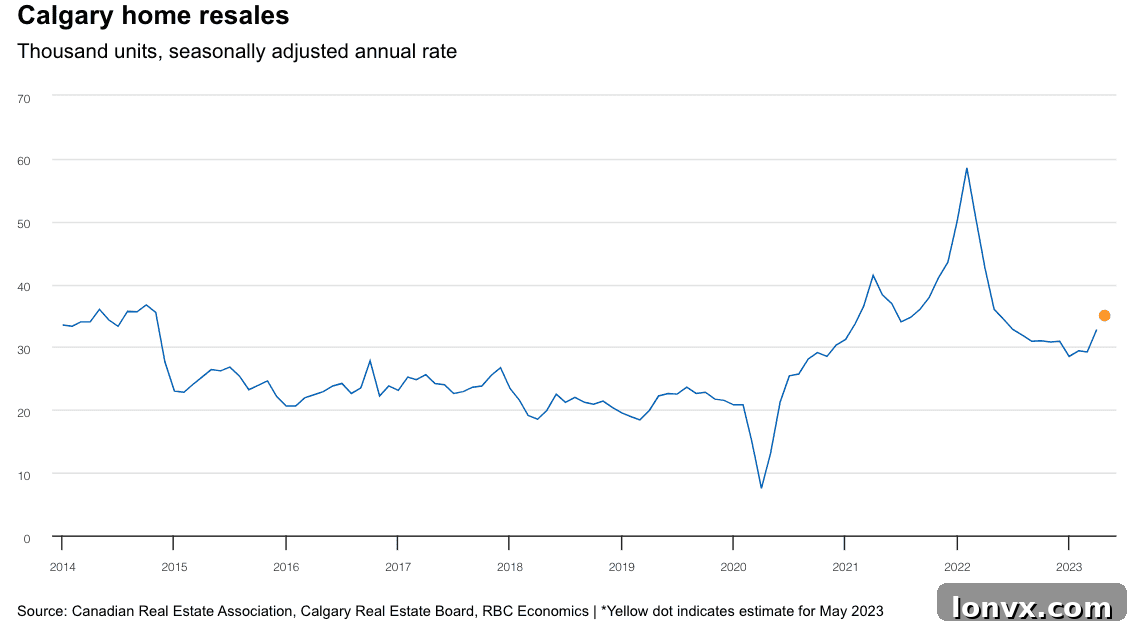
Calgary’s housing market experienced a truly significant surge in new listings during May, soaring by an impressive 27 percent month-over-month on a seasonally adjusted basis. This substantial jump in inventory provided some much-needed respite to the exceptionally tight demand-supply conditions that have characterized the city’s market for an extended period. The increased listings subsequently contributed to a healthy 6.0 percent rise in home resales, indicating a more active and fluid market.
However, Robert Hogue rightly points out that this increase in new listings followed sharp declines earlier in the year, which had pushed inventory levels to historically low points. As a result, the relief offered by May’s surge was only modest when viewed against the backdrop of the severe shortages that preceded it. The demand-supply imbalance, though slightly eased, fundamentally persists in Calgary. The city’s MLS HPI continued its ascent at a “sustained pace,” registering a 1.0 percent month-on-month increase. The RBC report anticipates that this trend of gradual but steady price growth is likely to continue in the near term, as the market gradually works to absorb the lingering demand amidst slowly improving supply.
The Impact of Interest Rate Hikes on Affordability and Sentiment
The broader economic environment, particularly interest rate policies, plays a pivotal role in shaping the trajectory of the Canadian housing market. While higher prices themselves can act as a natural stabilizer by dampening demand and incentivizing more supply, central bank actions introduce another layer of complexity.
Adding to the prevailing affordability concerns, the Bank of Canada (BoC) recently raised its key interest rate to 4.75 percent – a level not seen in 22 years. This move directly impacts borrowing costs and sends a clear signal about the BoC’s commitment to tackling inflation.
However, the immediate impact of this specific rate hike on the housing market is nuanced. According to John Pasalis, president and broker of Realosophy, the 25 basis point rate increase is not expected to directly impact the majority of current homebuyers. This is primarily because most buyers in today’s market are not securing variable-rate mortgages, which would be immediately affected by the overnight rate change.
In a social media post, Pasalis insightfully suggests that the rate hike’s most significant implications will be felt in fixed rates and overall market sentiment in the future. Fixed mortgage rates, which are tied to bond yields, have already been steadily climbing in recent weeks. Current trends in the bond market indicate a strong likelihood that these rates will continue to rise even further, making borrowing more expensive for those seeking stability in their mortgage payments.
Higher fixed rates directly translate into reduced purchasing power, making it increasingly challenging for buyers to afford homes at current prices and borrowing costs. Moreover, the possibility of another, or even multiple, increases in interest rates from the BoC could fundamentally shift market sentiment. Pasalis explains that a key factor motivating buyers earlier this year was the prevailing belief that the Bank of Canada was finished with its cycle of rate hikes, leading to a “Fear Of Missing Out” (FOMO) phenomenon in the market.
However, the increased likelihood of further rate increases, or the expectation that high rates will persist for a longer duration than previously anticipated, may effectively dampen this FOMO. As potential buyers confront the reality of higher borrowing costs and greater uncertainty, their urgency to enter the market could diminish, potentially leading to a more subdued and balanced housing environment in the latter half of the year. This shift in sentiment could be crucial in dictating the pace of the Canadian housing market’s evolution.
Conclusion: A Market in Transition
The Canadian housing market is clearly in a state of transition, characterized by a complex interplay of increasing supply, persistent demand, and rising interest rates. While May’s data offered encouraging signs of recovery with more sellers entering the market, the journey towards true balance and sustainable affordability is still ongoing. Major urban centers like Toronto, Montreal, Vancouver, and Calgary each reflect unique facets of this national narrative, from strong price gains to modest relief in inventory shortages.
The Bank of Canada’s recent rate hike serves as a potent reminder of external economic pressures on the market. While not immediately impacting all segments, its influence on fixed mortgage rates and buyer sentiment could be profound, potentially tempering the intense competition seen earlier in the year. Stakeholders across the market – from first-time homebuyers to seasoned investors – will need to closely monitor these evolving dynamics as Canada’s housing landscape continues to adapt to new economic realities.