Unlocking Canada’s Housing Potential: The Rise of Multiplexes and the “Missing Middle”
The phrase “missing middle” has become a cornerstone in contemporary real estate discussions, often mentioned alongside familiar market indicators like “a hot market” or the enduring mantra of “location, location, location.” While clichés can sometimes oversimplify, the “missing middle” phenomenon accurately reflects a significant gap in Canada’s housing landscape. This critical segment of the market, which traditionally includes housing types like duplexes, townhouses, and small apartment buildings, offers a crucial bridge between single-detached homes and high-rise condominiums. Its growing prominence in the Canadian real estate sector is largely driven by the surging popularity and legislative support for a specific property type: multiplexes.
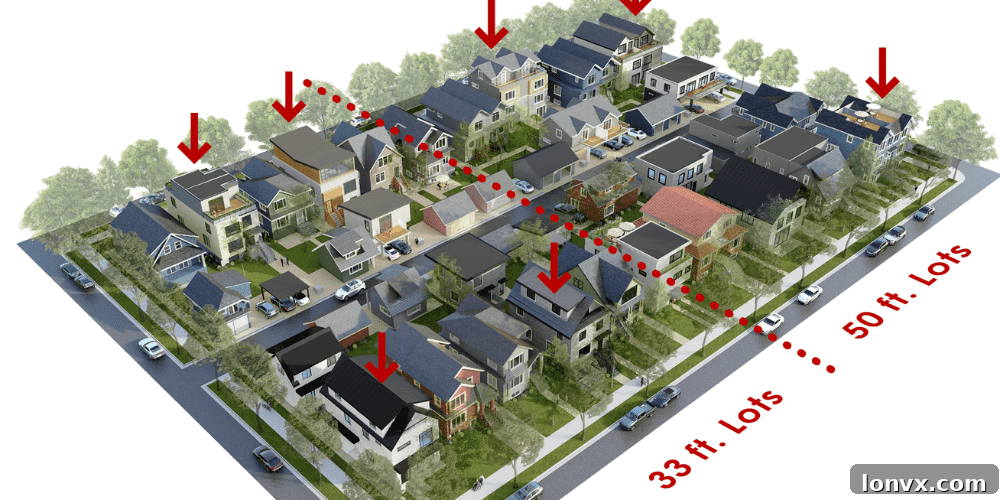
Multiplexes represent a versatile form of residential housing, thoughtfully designed to house multiple separate units within a property footprint traditionally allocated for a single-detached home. These structures typically range from two to eight individual dwellings, providing diverse living options and an efficient use of urban land. Their emergence is not merely a trend but a strategic response to Canada’s pressing housing affordability and supply crisis, offering a tangible solution for increasing density in established neighborhoods without resorting to large-scale, high-rise developments that often alter community character dramatically.
Transformative Legislative Shifts in British Columbia and Toronto
The push for multiplex development has gained significant momentum through pivotal legislative changes across Canada. In a landmark move in 2023, British Columbia enacted amendments to its Housing Statutes (Residential Development) Amendment Act, widely known as “Bill 44.” This legislation marked a crucial step towards facilitating more diverse housing forms. Coinciding with this, Toronto’s city council, recognizing the urgent need for expanded housing options, adopted its own comprehensive Official Plan Amendment and Zoning Bylaw Amendment during the same year. These amendments were specifically designed to permit the construction of multiplexes across various zones within the city, signaling a proactive approach to urban densification.
The impact of these policy shifts was almost immediate and highly noticeable, particularly in Toronto. Jasmine Cracknell-Young, Vice President of Market Advisory at Zonda, observed a dramatic increase in multiplex listings following the implementation of these new bylaws. Data from the Toronto Regional Real Estate Board (TRREB) confirms this upward trend: multiplex listings surged from 115 in 2023 to 168 in 2024, representing a substantial 46.1 percent increase. This rise underscores a growing appetite among developers and homeowners to explore these new housing forms.
Reflecting on these changes, Cracknell-Young commented, “I think because housing has become such a hot topic, we have all levels of government finally talking about it because they realize the crisis that we’re in.” This sentiment highlights a crucial realization among policymakers: that incremental, community-friendly densification strategies like multiplexes are essential components in addressing the multifaceted challenges of housing affordability and supply shortages.
The ‘Tiny Part of the Market’: Are Current Legislation Efforts Sufficient?
Despite the initial surge in listings and the positive intent behind the legislative changes, some experts believe that current policies may not go far enough to unleash the full potential of multiplex development. Chris Spoke, a seasoned builder and developer with Toronto Standard, offers a critical perspective based on his firsthand experience navigating these new regulations. While acknowledging the importance of the legislative groundwork, Spoke argues that the existing framework still presents considerable hurdles.
“So we have five residential zones in Toronto. Two of those residential zones do support multi-unit housing,” Spoke explains. However, he points out a critical caveat: “the zoning bylaws paired with the city’s Official Plan and the language of it is if there’s any new development within the neighborhood’s designation, it has to respect and reinforce the existing physical character.” This requirement, often referred to as a “character test,” can inadvertently stifle innovation and new development, even when the zoning technically permits multi-unit housing.
Spoke elaborates on the practical implications of this clause: “This means that even if the zoning technically allows for multi-unit housing, if it’s not consistent with the existing physical character, then you’re not going to get past this test.” The subjective nature of what constitutes “respecting and reinforcing” existing character can lead to prolonged approval processes, increased costs, and ultimately, a deterrent for potential developers. This bureaucratic complexity means that the anticipated boom in multiplex construction has been somewhat muted. “We’ve still not seen a lot of activity because I think the multiplex bylaw doesn’t go far enough in terms of the permissions. So it’s still like a tiny part of the market,” Spoke concludes, emphasizing that while progress has been made, more robust and unambiguous legislative support is needed to truly scale up multiplex development and make a significant dent in the housing supply issue.
Optimism Amidst Opposition: The Major Streets Study
Despite the current limitations, Chris Spoke remains optimistic about the future of multiplexes in Toronto, particularly with the momentum generated by the ongoing Major Streets Study. This ambitious initiative is specifically “focused on permitting gentle density — missing middle housing — on major streets in low-rise neighbourhoods across Toronto.” The study represents a strategic pivot, targeting areas with existing infrastructure and transit access to absorb increased population density efficiently and sustainably.
Spoke highlights the logical advantage of this approach: “These are the major arterials in the city that have bus routes on them.” By focusing development along these key transportation corridors, the Major Streets Study seeks to create more livable, transit-oriented communities. This policy shift is particularly impactful because, as Spoke notes, “this also opened up a new scale of development in parts of the city where it was not legal before.” It unlocks new opportunities for housing development in previously restricted areas, offering a pathway to significantly expand the availability of missing middle housing.
However, as with many urban development policies that introduce change, these initiatives are not without opposition. A primary concern frequently voiced by existing residents, particularly concerning the Major Streets Policy, revolves around potential increases in traffic congestion. “It’s always traffic,” shares Cracknell-Young, capturing a common sentiment among those who fear that denser housing will overwhelm existing road networks and diminish neighborhood quality of life. “They just think it’s taking up road space.”
Interestingly, Bill 44 in British Columbia directly addresses these traffic and parking concerns through innovative urban planning strategies. The legislation, in some instances, aims to reduce the influx of new vehicles into neighborhoods by eliminating minimum parking requirements for housing projects located within 400 meters of a transit stop. This forward-thinking approach recognizes that transportation accessibility is not merely a convenience but a fundamental component of sustainable urban development. By prioritizing public transit and active transportation, cities can foster environments where car dependency is reduced, mitigating congestion and promoting more environmentally friendly lifestyles. This integration of transit-oriented development principles is poised to play an increasingly significant role in the successful implementation and public acceptance of multiplex housing initiatives across Canada.
Ottawa’s Anticipated Multiplex Surge Post-2025 Bylaw Approval
The embrace of multiplex development is not confined to Canada’s western and central hubs; it’s a nationwide movement, albeit with varying timelines. Nachiket Kulkarni, an architectural designer at Architrix Studio, has invaluable experience working on multiplex projects in both Vancouver and his current city of residence, Ottawa. His observations provide a crucial geographical perspective on the pace of legislative and market evolution.
Kulkarni notes a distinct temporal lag, stating, “Ottawa would be two or three years behind Vancouver when it comes to that change.” This suggests a predictable pattern where policy innovations and market responses often propagate from leading urban centers outwards. “So whatever happens in Vancouver right now, the same change would be in Ottawa two or three years down the line in terms of multiplexes,” he explains, offering a clear forecast for the nation’s capital.
While Kulkarni acknowledges that Ottawa has already seen a significant shift towards greater multiplex development over the past couple of years, he anticipates an even more dramatic acceleration after December 2025. This timeline is critical, as it marks the expected final approval of Ottawa’s new comprehensive zoning bylaw. This new bylaw is poised to fundamentally reshape the city’s housing landscape, much like its predecessors in Vancouver and Toronto.
A key component of Ottawa’s upcoming zoning reform mirrors successful strategies implemented elsewhere. “In Ottawa, they’ve consolidated the number of zones into just six zones now, just like Vancouver did,” Kulkarni adds. This simplification is not merely an administrative exercise; it’s a strategic move to reduce complexity, increase predictability for developers, and ultimately encourage more housing construction. The City of Vancouver, for instance, implemented its “R1-1” or “Residential Inclusive” zoning designation in October 2023. This new designation replaced and streamlined a cumbersome previous structure that included various RS (One-Family Dwelling), RT (Two-Family Dwelling), and RM (Multiple Dwelling) categories, making it easier for homeowners and builders to understand and pursue diverse housing options.
Furthermore, and consistent with the broader national trend towards sustainable urban development, Ottawa’s forthcoming changes will also aim to significantly reduce parking requirements for new developments. This move aligns with the understanding that prioritizing transit accessibility and reducing reliance on personal vehicles is essential for fostering more livable, environmentally friendly, and affordable urban communities. The cumulative effect of these changes in Ottawa is expected to unlock substantial opportunities for multiplex housing, contributing significantly to the city’s efforts to address its housing supply and affordability challenges in the coming years.
The Dawn of ‘Citizen Developers’: Empowering Local Housing Solutions
One of the most exciting potential outcomes of the burgeoning multiplex movement, according to Chris Spoke, is the rise of what he terms “citizen developers.” This concept represents a democratized approach to housing development, where individuals typically outside the realm of large-scale commercial real estate—such as experienced home builders, general contractors, or even everyday homeowners—can actively participate in creating new housing opportunities within their communities. It’s a paradigm shift that decentralizes development and fosters local engagement.
“Multiplexes offer a form of development that’s accessible to people who haven’t worked professionally as developers,” Spoke asserts. Unlike the immense capital, complex regulatory navigation, and specialized expertise required for large condominium towers or expansive subdivision projects, multiplexes operate on a more manageable scale. This accessibility lowers the barrier to entry, allowing individuals with local knowledge and a vested interest in their neighborhoods to contribute directly to the housing supply. A homeowner, for instance, might convert an existing single-family home into a duplex or triplex, or develop a small four-unit building on a vacant lot, thereby adding gentle density and more affordable options without the need for a massive development corporation.
This empowerment of citizen developers holds several profound benefits. Firstly, it can lead to a more diverse housing stock, as individual developers are likely to build projects that reflect the specific needs and character of their immediate area. Secondly, it can accelerate the pace of development, as smaller projects can often navigate approval processes more swiftly than large-scale undertakings. Thirdly, and perhaps most importantly, it fosters a sense of community ownership and local solutions to housing challenges, rather than relying solely on external developers.
While multiplexes are not a panacea that will solve all of Canada’s housing problems overnight, they undeniably provide a crucial opportunity to re-imagine and approach urban density in a more nuanced, integrated, and community-friendly manner. They offer a middle ground that respects existing urban fabrics while effectively increasing housing options.
Jasmine Cracknell-Young eloquently summarizes the broader societal value of this housing form: “I think it’s a really great product form. You can have multiplexes go into existing communities and have people of different incomes and demographics able to access some of the best communities that we have.” This ability to integrate diverse populations into established, desirable neighborhoods is key to fostering inclusive cities and preventing further socioeconomic stratification. She continues, “To stop the sprawl and have more people in our existing communities where it’s possible … I hope that we will see more of them.” This vision underscores the potential of multiplexes to combat urban sprawl, utilize existing infrastructure more efficiently, and build more vibrant, sustainable, and equitable communities across Canada. The ongoing evolution of policy and public perception will undoubtedly shape the extent to which this potential is fully realized.
Image: ShapeYourCity.ca
Enjoying this article?
Get the latest REM articles in your inbox 3x week so you stay up to date on the latest in the Canadian real estate industry