The Ascent of Co-Living: Redefining Modern Urban Rentals and Community Living
The concept of sharing an apartment with roommates is by no means new; it’s a practice deeply embedded in urban living for generations. However, a new wave of visionary developers is fundamentally transforming this traditional model, introducing an innovative approach known as co-living. This evolving rental paradigm is designed not only to tackle pressing issues of housing affordability but also to cultivate vibrant social connections and a sense of belonging that are often elusive in conventional rental settings.
Co-living has swiftly transcended its initial utilitarian roots, emerging as a powerful lifestyle choice that resonates with a diverse demographic seeking more from their living arrangements. As Anil Khera, CEO and founder of Node, a global co-living developer, articulates, “Co-living is as much a lifestyle choice as a product today.” Node is poised to commence construction on its inaugural Canadian co-living apartment project in Kitchener, Ontario, signaling a significant expansion into the North American market.
Addressing Modern Urban Challenges Through Thoughtful Design
The burgeoning popularity of co-living is directly linked to its multifaceted ability to address some of the most pervasive challenges of contemporary urban life. Khera highlights these core benefits: “It is tackling housing affordability issues, tackling isolation (loneliness) issues and tackling lifestyle flexibility (by incorporating plug and play residences).” This holistic approach positions co-living as a comprehensive solution for individuals navigating the complexities of modern city living.
Khera firmly believes that co-living represents a profound shift in consumer preferences for rental housing. He anticipates a future where many urban rental properties will be compelled to integrate co-living spaces to maintain competitiveness within an increasingly dynamic market. This evolution is driven by the movement of upwardly mobile professionals relocating to new cities for career opportunities, demanding high-quality, flexible, and community-centric housing solutions.
“Our cities are not being competitive if they don’t offer quality lifestyle housing solutions,” Khera asserts. He poses a critical question for thriving metropolises like Toronto: “If you want to attract the best people to Toronto . . . how do you expect them to stay and want to contribute?” Co-living, therefore, isn’t just about housing; it’s about fostering environments that attract and retain top talent, contributing to a city’s overall vibrancy and economic health.
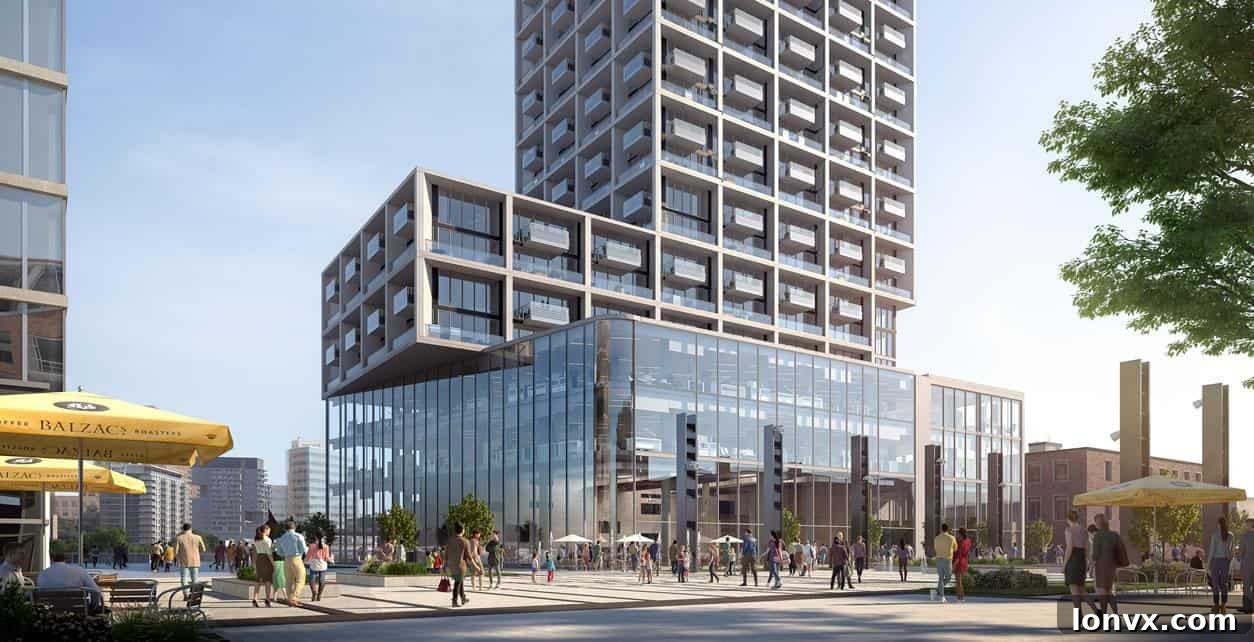
Node will soon start construction of its first Canadian co-living apartment in Kitchener, Ont.
Node’s Vision: Community-Centric Living in Kitchener
Node’s upcoming Kitchener project, slated for completion in 2021, embodies a commitment to integrated community living. While not all apartments within the development will be shared accommodations, all residents will benefit from an array of meticulously designed communal amenities. These include a spacious recreation lounge, state-of-the-art co-working spaces, and a common outdoor patio offering stunning city views.
However, Node’s approach extends beyond physical amenities. A distinguishing feature of their developments is the inclusion of “community curators.” These dedicated individuals are tasked with organizing engaging events and activities within the building’s amenity spaces, fostering organic connections among tenants. Khera emphasizes that Node residents seek a “turnkey apartment solution” coupled with a genuine sense of community. Node’s impressive global footprint already includes co-living units in seven cities across Europe and the U.S., with ambitious plans for expansion into 30 additional urban centers worldwide, underscoring the growing international demand for this innovative housing model.
Common’s Collaborative Approach: Affordable Co-Living in Ottawa
Another prominent player in the co-living landscape is Common, a New York-based developer, which is partnering with Toronto’s Dream Unlimited Corp. on a significant 24-storey co-living rental building in Ottawa. This ambitious project is integrated into a larger 34-acre mixed-use development known as Common Zibi, strategically located on the picturesque Ottawa River in downtown Ottawa.
Common will contribute 252 beds through a variety of three- and four-bedroom suites, with the largest units spanning approximately 1,200 square feet. A significant draw for prospective residents is the affordability factor: these co-living apartments are projected to be 20 to 30 percent less expensive than comparable traditional rentals in Ottawa. Brad Hargreaves, Common’s CEO and founder, highlights the thoughtful design of each suite, which provides “private nesting space” for tenants—individual bedrooms, many with en-suite bathrooms—complemented by expansive common living rooms and shared building amenities like lounges and dedicated workspaces.
Hargreaves founded Common four years ago in New York City, driven by a clear vision to address the burgeoning market for shared accommodation. He notes the substantial demand, citing that 25 million people in the U.S. currently live with roommates. “You look at the existing (living) options and the challenges those people face… A significant number of them are excited to see a new co-living situation come to the market,” he explains, underscoring the unmet need that co-living fulfills.
Beyond Affordability: Solving the Annoyances of Shared Living
While skyrocketing rents are undeniably a primary driver for the increased interest in shared living, Hargreaves points to several other societal shifts fueling this trend. These include individuals delaying marriage, a growing preference for residing in high-density inner-city neighborhoods where traditional apartments are scarce, and the simple desire for companionship in an increasingly urbanized world. Moreover, he emphasizes that co-living isn’t exclusively for young people; many tenants are in their 30s, and some even in their 40s, highlighting its broad appeal to working professionals.
Common’s philosophy is rooted in creating a superior roommate experience. “We saw an opportunity to create a better experience of living with roommates… to keep the social environment and affordability but get rid of as many of the annoyances as we can control,” Hargreaves states. This proactive approach to problem-solving is a cornerstone of the co-living model.
One of the most frequent sources of tenant disputes in traditional shared housing is apartment cleanliness. Common directly addresses this by providing weekly cleaning services for all suites, eliminating a major point of contention. Furthermore, the company furnishes Wi-Fi throughout each building and even provides essential kitchen and bathroom supplies, ranging from paper towels to toilet paper. Hargreaves identifies the sharing of these basic necessities as “a huge source of roommate disputes” in conventional arrangements, often boiling down to the classic scenario where “One person is always the one going out and buying the toilet paper.” By managing these details, Common significantly reduces everyday friction among residents.
Other logistical hurdles commonly faced by roommates are also streamlined by Common. The company takes responsibility for managing lease arrangements, utility bills, and rent collection, ensuring that no single tenant bears the disproportionate burden of administrative responsibilities. “There are a lot of details we do to make their living experience better,” Hargreaves affirms, emphasizing the comprehensive support system in place.
Who Lives in Co-Living Spaces? The Professional Demographic
Common currently manages approximately 1,000 beds across 30 co-living buildings in seven cities, showcasing its significant market presence. The demographic profile of their residents often challenges preconceived notions of shared living. The median age of Common’s tenants is 30, and a remarkable 85 percent of residents are employed in traditional office settings. Hargreaves clarifies, “They are not students, or freelancers working from home,” highlighting that co-living increasingly appeals to established professionals seeking convenience, community, and affordability.
While most members opt for a standard 12-month lease, Common also offers flexible three-month options, catering to individuals with shorter-term needs or those testing out a new city. However, the overarching goal remains to foster stable, long-term communities: “But we’re looking to create a long-term community; we don’t really serve transients,” Hargreaves notes. To ensure resident satisfaction, if a tenant finds themselves incompatible with a roommate, Common provides the flexibility to transfer to another room within a different suite, minimizing conflict and enhancing the living experience.
Marketing and Market Demand in the Co-Living Sector
Securing residents for co-living spaces involves a blend of modern and traditional marketing strategies. Khera explains that Node not only leverages social media for outreach but also engages corporate Realtors and traditional brokers who specialize in clients seeking more than just a standard apartment. He notes, “Some of the smart agents are looking at how they can help… maybe even to assist with roommate matching. There is a need for more value-add,” indicating a growing recognition among real estate professionals of the specialized needs of co-living tenants.
Khera draws a parallel between the disruptive impact of Airbnb on short-term rentals and the potential for co-living to similarly transform the long-term rental market. “I think more Realtors are seeing what Airbnb has done on short-term rentals and you are extending that concept further along on long-term rentals,” he remarks, suggesting a future where co-living becomes an increasingly mainstream offering.
In the U.S., Common manages its leasing operations in-house. The company’s dedicated marketing, sales, and leasing teams function as direct brokers, working closely with prospective renters to pair them with the co-living environment best suited to their individual needs and preferences. This streamlined process is highly effective, as evidenced by the staggering demand: Common receives approximately 15,000 applications for membership every month. As Hargreaves succinctly puts it, “Demand is high.”
Future Expansion: Toronto and Beyond
Both Node and Common have firmly set their sights on further expansion, particularly within Canada’s largest urban centers. Toronto, with its dynamic economy and competitive housing market, is high on their development radar. Common is actively planning to add 500 beds in Toronto in the near future, while Node is diligently exploring new projects within Canada’s biggest city. “We’d like to do a lot more in Canada,” Khera confirms, signaling a robust and sustained commitment to growing the co-living presence across the country.
The rise of co-living represents more than just a new housing option; it’s a response to evolving urban demographics, economic pressures, and a desire for meaningful social interaction. By merging affordability with curated communities and hassle-free living, co-living developers are not merely offering apartments, but crafting comprehensive living experiences that are poised to reshape the urban rental landscape for years to come.