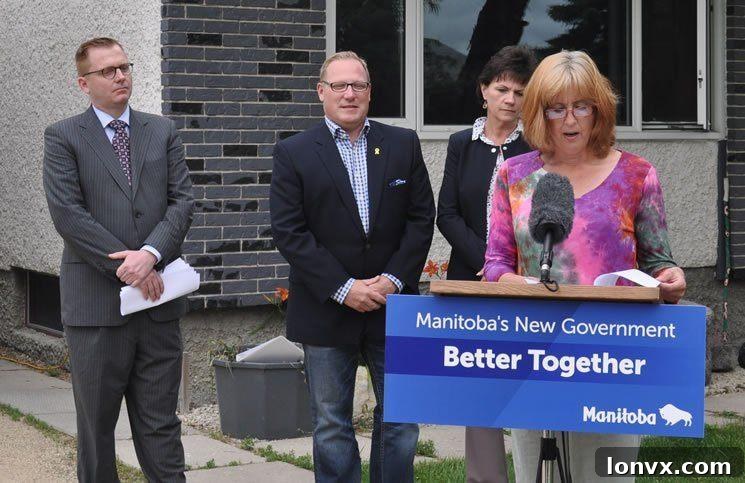
In a significant stride towards fostering equity and opportunity, Manitoba Tipi Mitawa (MTM), a distinguished non-profit organization, has recently secured pivotal government funding designed to empower Indigenous families in their journey towards homeownership. This vital initiative, a collaborative effort between the Manitoba Real Estate Association (MREA) and the esteemed Assembly of Manitoba Chiefs, underscores a deep commitment to community development and sustainable living. The recent allocation of up to $540,000 is earmarked to provide crucial support to 10 households, enabling them to transition from rental situations to the stability and pride of owning their own homes. This program is not merely about providing houses; it’s about building futures, strengthening communities, and ensuring that the dream of homeownership is accessible to a wider spectrum of Manitobans.
The announcement of this funding has been met with widespread optimism and reinforces the long-standing mission of Manitoba Tipi Mitawa. Harry DeLeeuw, co-chair of MTM, eloquently articulated the profound impact of this support, stating, “Today’s announcement will allow more Indigenous families to realize the dream of homeownership.” He further emphasized the broader societal benefits, adding, “When we help families realize this dream, we contribute to building stability and vibrancy in our communities and neighbourhoods for generations to come.” This perspective highlights MTM’s holistic approach, recognizing that secure housing is a cornerstone for personal well-being, economic advancement, and the overall health and dynamism of a community. The program aims to create ripple effects that extend far beyond the immediate beneficiaries, fostering a stronger social fabric for everyone.
The transformative power of the MTM program is best illustrated through the lived experiences of families who have directly benefited from it. Neil and Kimb Williams, proud homeowners through the MTM initiative, shared their journey in a recent news release, offering a poignant testament to the program’s efficacy. “Eight years ago, we purchased our first home through the MTM program. Prior to that we had lived in apartments, getting by, establishing our careers while raising a family,” they recounted. Their story resonates with countless families striving for stability and a brighter future. The Williams family’s experience underscores the incremental yet profound changes that homeownership, facilitated by MTM, can bring into one’s life. It moves beyond just a roof over one’s head, encompassing a spectrum of benefits.
Their testimonial continued, “The MTM program was more than a dream come true; it changed our lives, gave us a sense of ownership, pride and budgeting skills. It gave us the ability to secure our children’s futures.” This powerful statement speaks volumes about the multi-faceted impact of the program. Beyond the tangible asset of a home, MTM instills essential life skills like financial literacy and responsible budgeting, which are invaluable for long-term economic resilience. The psychological benefits—a heightened sense of pride and ownership—are equally significant, contributing to a stronger sense of belonging and self-worth. Furthermore, the ability to “secure our children’s futures” encapsulates the generational impact of homeownership, creating a foundation for stability and opportunity that can be passed down. For the Williams family, their home has become much more than just a residence; it’s a central hub for family life, as they noted, “Our home has also become the place that our extended family gathers for holidays, special occasions and care.” This highlights the crucial role of a stable home in strengthening family bonds and cultural continuity.
During the funding announcement event, David Salvatore, CEO of the Manitoba Real Estate Association (MREA), provided further insights into the comprehensive framework of the MTM program. He emphasized that the initiative is designed to offer a “hand up” rather than a mere handout, empowering families through education and practical support. “By providing financial literacy and home ownership education, and down payment assistance, Manitoba Tipi Mitawa provides a hand up that enables low-to-moderate income Indigenous families to attain home ownership,” Salvatore explained. This integrated approach ensures that beneficiaries are not just given a home but are also equipped with the knowledge and tools necessary to maintain it successfully and build long-term wealth. The focus on education is key to breaking cycles of poverty and fostering enduring financial independence, which aligns perfectly with modern approaches to sustainable community development.
Salvatore further detailed the immediate and tangible benefits of the program, particularly highlighting the concept of choice and stability. “Ten Indigenous families will gain stability by residing in the neighbourhood of their choosing.” This aspect is crucial, as it recognizes the importance of cultural connection, proximity to family, schools, and employment opportunities in fostering a true sense of belonging and community integration. The freedom to choose one’s neighborhood significantly enhances the quality of life and promotes a greater sense of agency among new homeowners. This individualized approach ensures that the support provided by MTM is not a one-size-fits-all solution but rather tailored to meet the specific needs and aspirations of each family, maximizing the potential for long-term success and satisfaction.
Building on the theme of long-term prosperity, Salvatore also underscored the significant financial advantages realized by MTM participants. “And these same 10 Indigenous families will be provided with a foundation for financial stability. Some of our Manitoba Tipi Mitawa families have already realized over $30,000 in home equity growth,” he proudly stated. This impressive statistic demonstrates the power of homeownership as a wealth-building tool. Home equity growth represents a tangible asset that can be leveraged for future investments, education, or as a safety net during challenging times. It transforms families from renters, whose payments build wealth for landlords, into owners who are actively building their own financial assets. This accumulation of wealth contributes significantly to intergenerational prosperity, helping to close economic gaps and create a more equitable society. The MTM program thus acts as a vital catalyst for economic empowerment, moving beyond immediate housing needs to address broader financial well-being.
The crucial funding for this impactful project was channeled through the federal-provincial Investment in Affordable Housing (IAH) agreement, a testament to collaborative governance aimed at addressing housing challenges across the nation. This partnership between federal and provincial governments signifies a shared recognition of the urgent need for accessible and affordable housing solutions. The IAH agreement serves as a foundational framework for various initiatives that aim to increase the supply of affordable housing units, provide rental assistance, and support homeownership programs like MTM. It represents a strategic commitment to investing in the social infrastructure that underpins healthy, thriving communities, ensuring that housing remains a priority on the national agenda and that programs like MTM can continue to make a real difference in people’s lives.
The commitment to the IAH agreement has seen significant expansion over recent years, reflecting a growing understanding of the scale of housing needs. In 2016, the governments of Canada and Manitoba jointly announced an expanded commitment, signifying a substantial infusion of resources into affordable housing initiatives. This expanded commitment represented almost $90 million over two years, providing a robust financial backbone for programs designed to tackle housing insecurity and promote homeownership. Such substantial investment highlights the dedication of both levels of government to creating lasting solutions and underscores the importance of public-private and intergovernmental partnerships in achieving ambitious social goals. This consistent and increased funding ensures that organizations like Manitoba Tipi Mitawa have the necessary resources to continue their invaluable work, transforming lives and strengthening communities one family at a time through the profound opportunity of homeownership.