As a seasoned real estate professional, you’ve likely encountered a multitude of property features, some of which come with their own unique histories and reputations. Among these, Kitec plumbing often stands out, shrouded in more myth than fact. This controversial piping material has garnered a “bad rap” that frequently precedes its actual performance, creating undue alarm among homebuyers and sellers alike.
For years, particularly in the bustling real estate markets like the Greater Toronto Area (GTA), expert home inspectors have observed that the widespread concerns surrounding Kitec piping are largely unwarranted. While its reputation might suggest otherwise, a deeper understanding reveals a more nuanced reality.
This comprehensive guide aims to arm real estate agents with accurate, up-to-date information, enabling you to dispel common misconceptions and provide your clients with clarity and confidence. By understanding the facts surrounding Kitec plumbing, you can better advise buyers and sellers, ensuring smoother transactions and informed decisions.
Here’s everything you, as a diligent real estate agent, should know about Kitec plumbing, its history, its true risks, and how to navigate properties featuring this material.
What Exactly Is Kitec Piping?
Kitec is a specific brand of cross-linked polyethylene (PEX) piping, manufactured by the Canadian company IPEX Inc. This system was widely sold and installed in residential and commercial properties across North America between 1995 and 2007. Its use spanned diverse property types, including single-family homes, condominiums, and high-rise buildings. Interestingly, while the official sales period ended in 2007, instances of Kitec installations have been observed as late as 2012, likely due to existing stock.
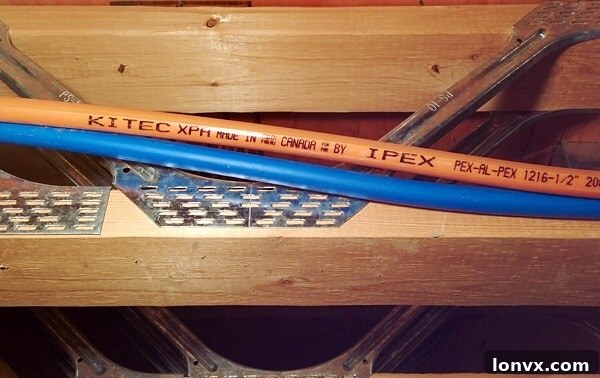
Identifying Kitec plumbing is relatively straightforward. The system typically features distinctive orange piping for hot water lines and blue piping for cold water lines. The most definitive identification comes from its brass fittings, which are usually stamped with one of several recognizable marks: “Kitec,” “KT,” or “KTC.” Other associated brand names manufactured by IPEX Inc. that were part of the same class action lawsuit and share similar characteristics include Plumbetter, IPEX AQUA, WarmRite, Kitec XPA, AmbioComfort, XPA, KERR Controls, and Plombiere Amelioree.
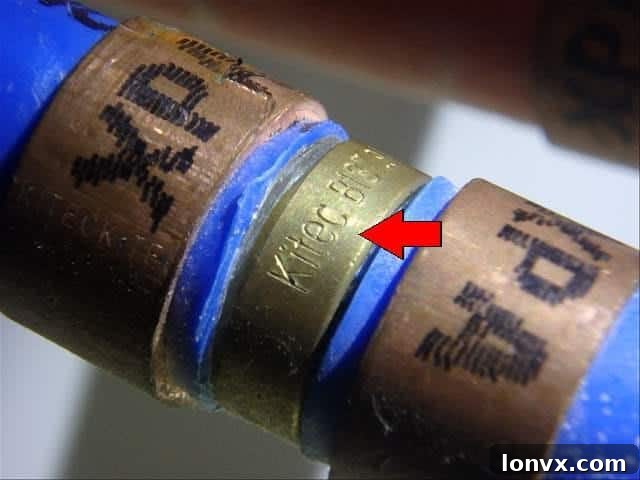
Source: Carson Dunlop
The widespread adoption of Kitec, like many building material choices, was driven significantly by economic factors. PEX piping, including Kitec, offered a compelling, cost-effective alternative to traditional copper plumbing. Installing plastic piping is considerably less expensive and often quicker than working with copper, making it an attractive option for builders and developers looking to manage project costs efficiently. Furthermore, PEX itself boasts several inherent advantages, such as flexibility, corrosion resistance (unlike copper), and a reduced risk of bursting due to freezing temperatures compared to rigid pipes.
It’s important to note that while Kitec is a specific brand, PEX as a material continues to be a highly popular and widely trusted plumbing supply in Canada and globally. Modern PEX systems have evolved, incorporating design improvements and rigorous quality controls, which underscores that Kitec’s issues were often brand- or fitting-specific rather than a condemnation of all PEX materials.
Addressing the Concerns: Unpacking Kitec’s Reputation
The primary reason for Kitec’s controversial status stems from a significant number of failures reported in the early 2000s, predominantly concentrated in the southwestern United States. These failures were largely attributed to a process called dezincification of the brass fittings. Dezincification occurs when zinc is leached out of the brass alloy, leaving behind a porous, weakened copper structure that can become brittle, crack, and eventually lead to leaks or blockages. This process was exacerbated by factors such as aggressive water chemistry (common in some parts of the US) and unusually high operating water temperatures.
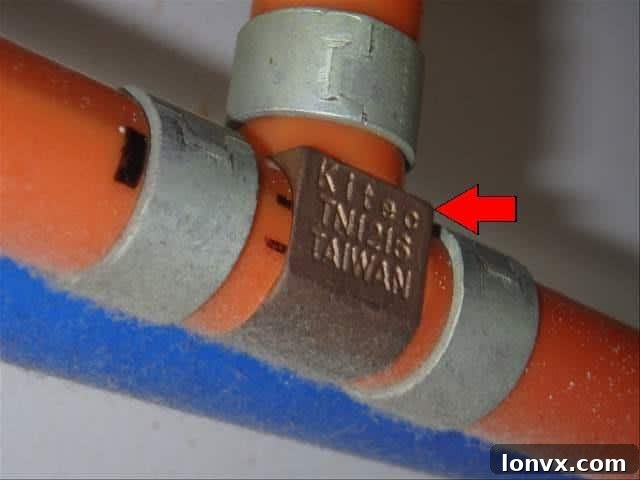
Source: Carson Dunlop
In contrast to the US experience, Canada, and specifically regions like the GTA, saw a much smaller number of failures. Expert home inspectors in these areas report encountering very few actual failures, with most isolated incidents often traceable to poor installation practices, unusually high operating pressures, or sustained abnormal water temperatures. This regional disparity highlights that environmental factors and installation quality played significant roles in the material’s performance.
Today, due to its historical issues, Kitec piping is legally considered a “material fact” in real estate transactions, according to the Real Estate Council of Ontario (RECO). This means its presence must be disclosed to potential buyers. However, it’s crucial to distinguish between a “material fact” requiring disclosure and an automatic “defect” demanding immediate replacement. Informed disclosure ensures transparency without necessarily inciting panic.
The Truth About the Kitec Recall and Lawsuit
One of the most persistent myths surrounding Kitec is the widespread belief that the entire piping system was subject to a consumer-level recall. This is incorrect. There was never a broad consumer recall on all Kitec piping. Instead, in 2005, there was a manufacturer’s recall specifically for certain Kitec *fittings*. This distinction is vital for accurate client communication. The recall primarily targeted specific brass fittings that were more prone to dezincification.
Following the issues, a North American class action lawsuit was initiated in late 2011. This lawsuit encompassed not only Kitec but also other PEX piping and fitting products manufactured by IPEX Inc., including brands like Plumbetter, IPEX AQUA, WarmRite, Kitec XPA, AmbioComfort, XPA, KERR Controls, and Plombiere Amelioree. The period for submitting claims under this settlement concluded in January 2020.
The existence of a class action lawsuit, while indicative of past problems and an agreement for manufacturer settlement, does not automatically render a product universally “bad” or unsafe. It’s a common legal recourse for consumers when a manufacturing defect or widespread issue emerges in building materials. For context, class action lawsuits have been filed against other PEX piping manufacturers (such as Zurn, NIBCO, Uponor, and Viega), against polybutylene piping systems, and against virtually every major manufacturer of roofing materials in Canada. This demonstrates that such legal actions are a standard part of the building industry landscape, rather than an isolated condemnation of Kitec alone. Understanding this broader context helps place Kitec’s situation into perspective for your clients.
Navigating Properties with Kitec: What Real Estate Agents Should Do
When you encounter a home equipped with Kitec plumbing, your role as a real estate professional is to provide accurate information and guidance. This involves understanding key inspection points, knowing when to recommend professional assessment, and managing client expectations.
Key Inspection Points and What to Look For
While a professional home inspector is essential, you can still observe some tell-tale signs of potential issues. Advise your clients to look for the following during a viewing:
- Darkening or Blistering of Pipes: Pay close attention to the piping, especially in areas near the water heater or boiler. Hot water piping is inherently more susceptible to problems than cold water piping due to thermal expansion and accelerated chemical reactions. Darkening or blistering can indicate material degradation due to excessive heat or prolonged exposure to high temperatures.
- White, Chalky Substance on Fittings: The presence of a white, chalky residue around brass fittings is a critical red flag. This substance is often an indicator of dezincification, where zinc is corroding out of the brass. This corrosion can lead to reduced water flow, internal pipe blockages, and eventually, leaks.
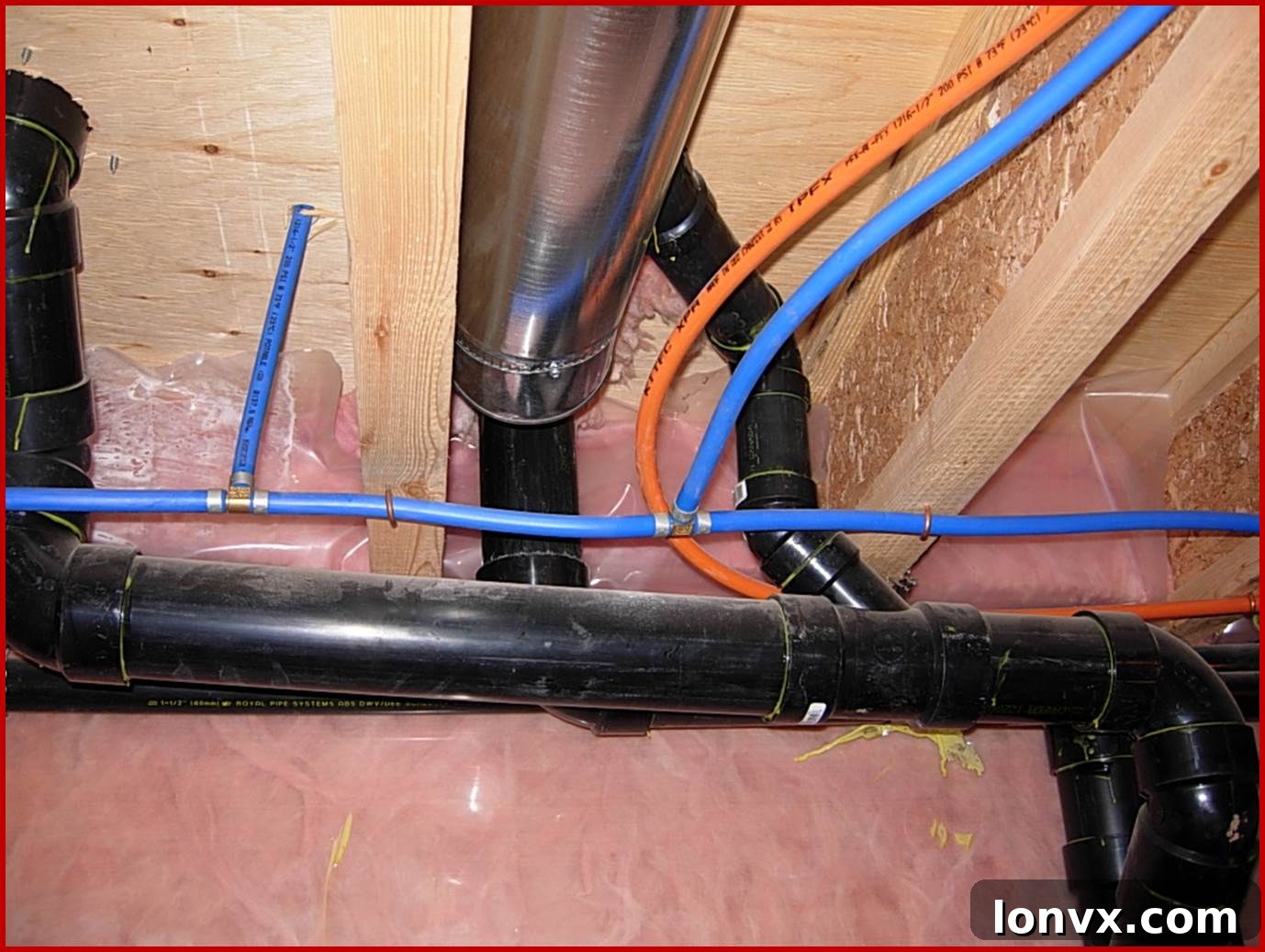
Source: Carson Dunlop
Despite the issues reported prior to the 2011 lawsuit, expert home inspectors in the GTA have observed remarkably few problems with Kitec piping in the thousands of inspections conducted. This reinforces the regional difference in performance and the importance of a professional assessment of its current condition.
The Indispensable Role of a Professional Home Inspector
Sellers are often unaware that their homes contain Kitec plumbing, or they may simply dismiss it based on its “bad rap.” A professional home inspector is invaluable in this scenario. They are trained to accurately identify Kitec-family piping in both houses and condominiums and, more importantly, to provide an unbiased, third-party opinion on the *current condition* of the piping system. Their report will detail any visible signs of wear, corrosion, or potential issues, and will recommend specific actions if necessary.
Home inspectors pay particular attention to several risk factors that can accelerate wear in any plumbing system, including Kitec:
- Hot Water Recirculating Systems: Commonly found in luxury homes, these systems provide instant hot water at the tap by continuously circulating hot water through the pipes. While convenient, this constant flow and sustained high temperatures can cause all piping materials (PEX or copper) to wear faster. Inspectors will note the presence of such systems and assess their impact on Kitec.
- Lack of Tempering Valves: Water heaters and boilers supplying PEX piping should ideally have a tempering valve (also known as a mixing valve) to control the output water temperature. Water temperatures consistently above 49°C (120°F) can put undue stress on PEX pipes, potentially accelerating degradation. Inspectors will identify if such a valve is absent or improperly set.
- Unusually High Operating Pressure: While less common, excessively high water pressure can also contribute to premature wear on plumbing systems, including Kitec.
As a real estate professional, advise your clients of the presence of Kitec-family piping and explain the potential historical issues (e.g., possible leaks due to fitting corrosion, or potential need for pipe replacement in severe cases). However, it is crucial to maintain a balanced perspective and frame it as a low risk in many Canadian contexts, especially when no signs of distress are present.
Another common myth is that Kitec piping *always* requires replacement. In our opinion, this should not be an automatic assumption. While some plumbers might proactively recommend replacement to eliminate future risk, a system showing no signs of distress, operating under normal conditions, and properly inspected by a professional may not necessitate immediate and costly replacement. The decision should be based on a thorough assessment, not on generalized fear.
Kitec in Condominiums: A Unique Challenge
While issues with Kitec are less common overall, a small percentage of condominium units have experienced problems, often linked to unusually high system temperatures and pressures within shared building plumbing infrastructure. This environment can sometimes accelerate the degradation process of Kitec fittings.
Source: Carson Dunlop
Because of these potential issues, some condominium corporations have taken proactive measures, requiring unit owners to replace their Kitec piping at their own expense. This decision is often driven by concerns over potential widespread damage to common elements, increased insurance premiums for the corporation, and the desire to maintain property values.
While many experts, including home inspectors, may disagree with a blanket requirement for proactive piping replacement when a system is objectively in good working condition, it is a reality that condominium clients must be aware of. As an agent, it is imperative to investigate the specific stance of any condominium corporation regarding Kitec plumbing. This information can typically be found in the Status Certificate and accompanying documents, such as board meeting minutes, which may outline any past issues, proposed actions, or mandatory replacement policies. Advising your clients on this potential financial burden and requirement is a critical part of your fiduciary duty.
Empowering Your Clients with Knowledge
The saga of Kitec plumbing is a prime example of how a product’s reputation can become disproportionately negative compared to its actual performance, especially when regional differences and specific risk factors are overlooked. While Kitec undeniably had its issues, particularly with certain fittings under harsh conditions, its broad condemnation often lacks proper context and empirical evidence, especially in regions like the GTA.
As a real estate agent, your ability to provide informed, balanced, and factual advice on Kitec is a significant asset to your clients. Instead of allowing the “bad rap” to dictate perceptions, utilize the insights from experienced professionals, particularly your property inspector’s report and recommendations. Their objective assessment will help separate the pervasive myths from the actionable facts.
By understanding Kitec’s history, identification, potential risks, and the appropriate inspection protocols, you can confidently guide your clients through transactions involving properties with this plumbing system. Empower them with knowledge, alleviate unnecessary fears, and ensure they make well-informed decisions based on expert evaluation, not simply on outdated or exaggerated concerns. Relying on experienced professionals who can dissect the myths from the facts is paramount when navigating building materials with such a preceding reputation.