
Quebec’s Dynamic Housing Market: A Deep Dive into Montreal and Quebec City Trends
Quebec’s real estate landscape is a vibrant and ever-evolving sector, constantly adapting to shifting economic conditions, demographic changes, and buyer sentiment. To provide clarity on these crucial movements, the Quebec Professional Association of Real Estate Brokers (QPAREB) recently released its latest market statistics for January. These comprehensive reports offer invaluable insights into the performance of the Montreal and Quebec City census metropolitan areas (CMAs), highlighting key trends that are shaping the decisions of homebuyers, sellers, and investors alike.
The beginning of the year has presented a fascinating dichotomy within Quebec’s major urban centers. While Montreal is witnessing a promising resurgence, fueled by optimistic interest rate forecasts, Quebec City has distinguished itself with particularly robust activity in its condominium market. Understanding these unique regional dynamics, alongside the broader macroeconomic influences, is essential for anyone seeking to grasp the current state and anticipated trajectory of Quebec’s diverse housing market.
Quebec City: Strong Sales Growth Led by the Condominium Sector
January proved to be an exceptionally strong period for the residential real estate market in the Quebec City region. The area experienced a significant and welcome uptick in sales activity, with a particular spotlight on the condominium sector. This segment achieved its third-best performance in 25 years, underscoring its pivotal role in driving the market’s overall growth and reflecting a distinct shift in local housing preferences and affordability dynamics.
Surging Condominium Sales Amidst Contrasting Inventory Levels
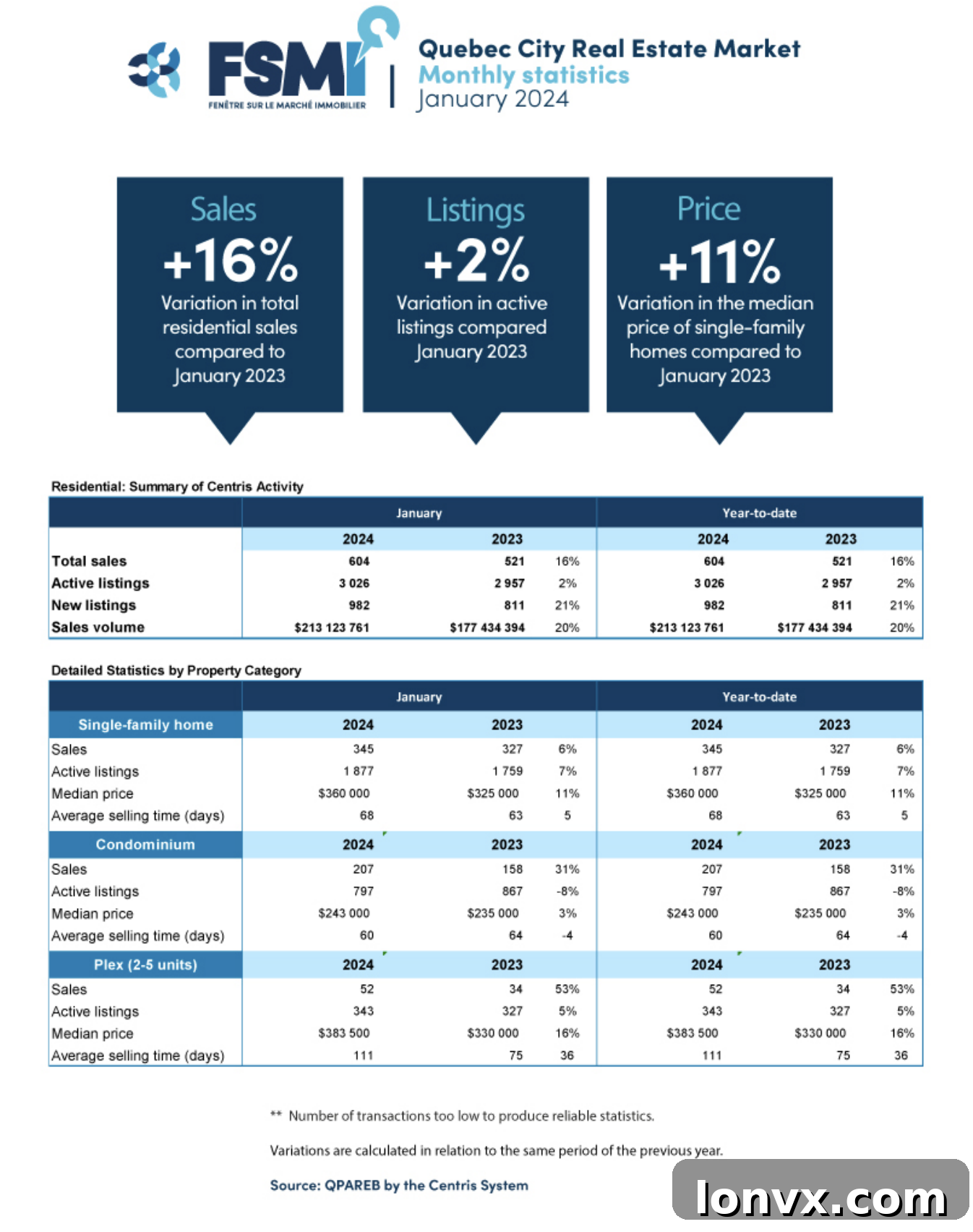
The Quebec City CMA recorded an impressive total of 604 residential sales in January. This figure represents a substantial 16 percent increase when compared to January 2023, signaling a robust start to the new year. This surge in transactional activity not only surpassed previous year’s figures but also exceeded historical averages recorded since the year 2000, illustrating a significant return of buyer confidence and market momentum. The primary driver behind this heightened activity was undoubtedly the condominium segment, which attracted considerable demand from various buyer profiles, including both first-time purchasers seeking accessible entry points and savvy investors capitalizing on market conditions.
However, the market presents a more complex picture when examining inventory levels. Paradoxically, while condominium sales soared, the overall supply of single-family homes available for sale experienced an increase. This trend stands in stark contrast to a notable decline in condominium listings, which have receded to levels not witnessed since 2010. This growing imbalance between robust demand and diminishing supply for condominiums continues to exert significant upward pressure on prices, firmly establishing a seller-friendly market environment across all property categories. Prospective buyers in the single-family home segment might find slightly more options, but competition remains intense for the shrinking pool of available condominiums, driving strategic purchasing decisions.
Plexes: An Increasingly Appealing and Affordable Investment Alternative
Charles Brant, QPAREB’s insightful market analysis director, offers a deeper, more granular perspective on these evolving trends. “At first glance, the notable 16 percent jump in sales within the Quebec City region appears comparable to the overall provincial average for January. However, this headline figure skillfully masks an exceptionally robust and sustained performance within the condominium sector—a powerful trend that gained considerable momentum towards the end of 2023 and has unmistakably carried into the initial months of the new year,” notes Brant, emphasizing the underlying strength of this specific segment.
Brant further elaborates on the socioeconomic forces at play: “The more pronounced and persistent price growth observed in single-family homes, coupled with a palpable and continuous scarcity of available properties in this highly coveted category, has consistently steered both aspiring first-time homebuyers and astute investors towards the more accessible condominium and plex markets. This strategic shift is largely driven by a pragmatic search for more attainable entry points into homeownership or more attractive investment opportunities, particularly in a landscape marked by rising property values.”
The appeal of plexes, in particular, is gaining significant and widespread traction as a viable housing and investment solution. “Plexes are increasingly proving to be an exceptionally interesting and versatile alternative,” Brant adds, “especially given that their prices remain comparatively affordable, making them an ideal candidate for group purchases. Furthermore, with rental rates across the region demonstrating a consistent upward trajectory, plexes offer the added advantage of potential rental income, which can significantly offset mortgage costs or serve as a lucrative investment return.” This dual benefit positions plexes as a compelling option for those seeking both a home and a smart financial strategy in Quebec City’s dynamic market.
Montreal: A Promising Recovery Driven by Optimistic Interest Rate Expectations
The residential resale market in the Montreal CMA experienced a decidedly strong and encouraging start to the year, showcasing a notable surge in sales activity compared to January 2023. This reinvigorated market momentum was particularly pronounced within the suburban areas surrounding the metropolitan core, signaling a promising trend of recovery that many market analysts anticipate will not only persist but also strengthen throughout the remainder of the year. This renewed vigor suggests a growing confidence among buyers and sellers alike.
Higher Sales Bolstered by Favorable Interest Rate Prospects
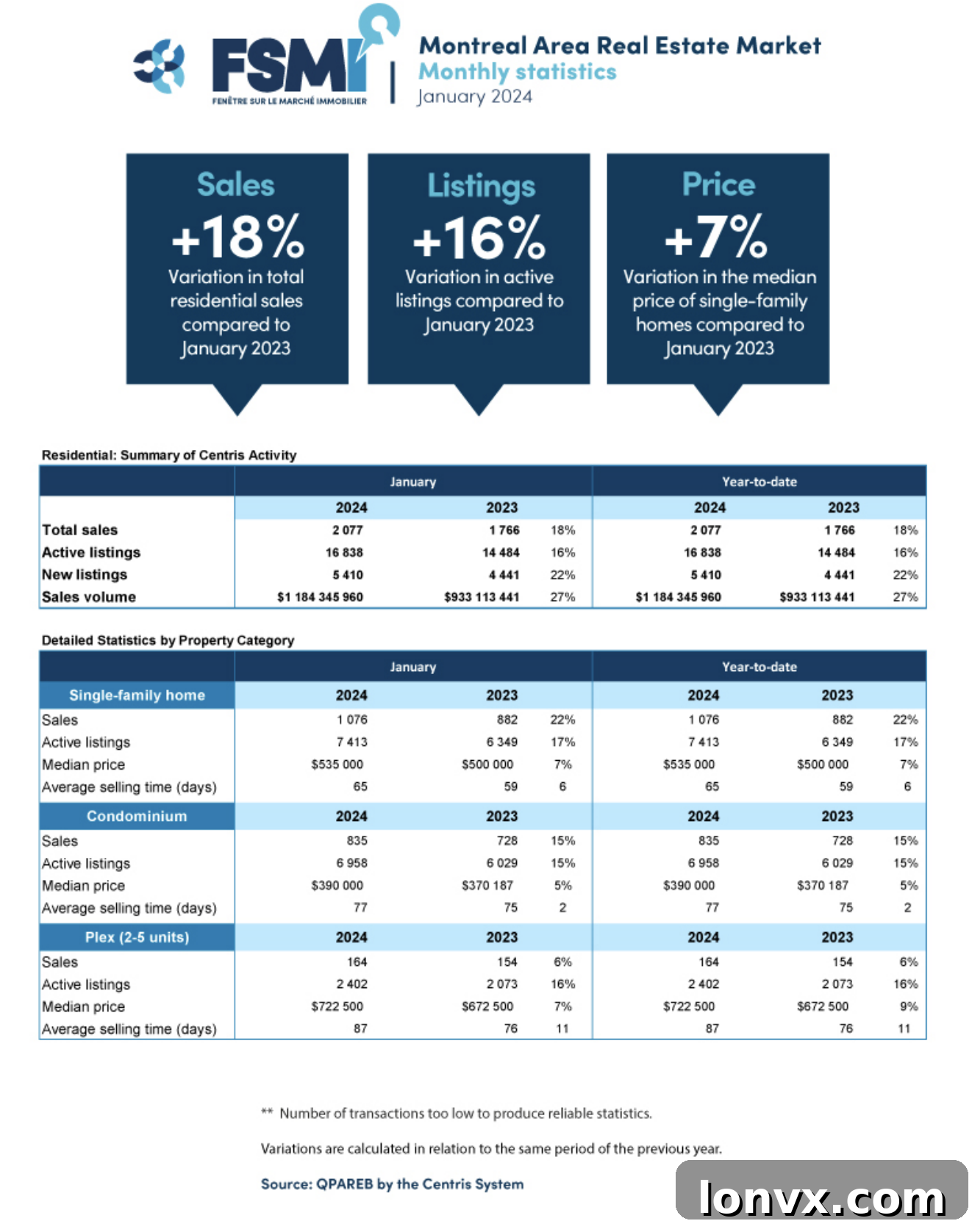
In January, the Montreal CMA recorded a total of 2,077 residential transactions. This figure represents a substantial 18 percent increase, translating to an additional 311 sales when compared to the corresponding period last year. While this level of activity, despite its strong growth, still positions the market slightly below the historical averages observed since the year 2000, the significant surge in sales is overwhelmingly attributed to the more optimistic and favorable outlook regarding future interest rates. This renewed and widespread optimism has proven to be a pivotal factor in boosting overall buyer confidence and actively encouraging a return to transactional activity across the region.
Charles Brant provides further elucidation on this crucial influencing factor: “The robust and unexpectedly strong sales performance witnessed at the very beginning of the year is fundamentally attributable to the markedly more encouraging prospects surrounding interest rates. Since the latter part of 2023, there has been a broad and consistent consensus among leading economists that the upward cycle in interest rates has effectively concluded, and that a reverse process, involving gradual rate reductions, is now widely anticipated to commence at some point in 2024. This widely disseminated and shared analysis has already been tangibly reflected in the bond markets, resulting, for all practical purposes, in a significant and highly beneficial decline in fixed mortgage rates. This shift has demonstrably created a more advantageous and accessible borrowing environment, thereby injecting much-needed vitality and positive momentum into the real estate market.” The psychological reassurance of potential rate cuts has played a profound role in bringing many previously hesitant prospective buyers back into the fold.
Navigating Economic Headwinds While Anticipating Monetary Policy Shifts
Despite the encouraging sales figures and prevailing optimism, Brant also offers a balanced perspective, cautioning about persistent underlying challenges. He meticulously highlights “several significant headwinds that continue to impede a more definitive and widespread resumption of transactional activity. We are specifically referring to the sharp and noticeable slowdown in overall economic activity and the resulting uncertainties that inevitably influence the propensity and willingness of households to commit to a significant long-term purchase such as a home.” Factors such as lingering job security concerns, inflationary pressures on daily expenses, and the broader specter of economic stability collectively play a critical role in shaping consumer confidence, potentially moderating the pace of the market’s recovery.
Nevertheless, a strong undercurrent of forward-looking optimism pervades the market. “A discernible change of course by the Bank of Canada strongly suggests that a first cut in key interest rates could very well materialize later this year,” Brant confidently states. “This anticipated and strategic shift in the Bank of Canada’s monetary policy, while not necessarily exerting a direct or immediately measurable impact on January’s specific statistics, is unequivocally perceived as a particularly positive and powerful signal. It effectively acts as a significant psychological boost well in advance of the traditionally bustling spring selling season, thereby inspiring renewed confidence among both potential buyers, who are now more inclined to act, and sellers, who are more willing to list their properties, ushering in a more dynamic period for the market.” This forward-thinking sentiment indicates that while current economic conditions present complexities, the expectation of future rate adjustments is a potent catalyst for increased market participation.
Broader Market Dynamics, Interplay of Factors, and Future Outlook
An overarching analysis of both the Quebec City and Montreal CMAs reveals a provincial housing market that is demonstrating remarkable adaptability and resilience in the face of new economic realities. While the evolving expectations surrounding interest rates serve as a common and powerful thread driving activity across both metropolitan areas, their individual responses distinctly highlight inherent regional nuances. Quebec City’s robust condominium market, for instance, speaks volumes about local affordability concerns, changing living preferences, and emerging investment opportunities within that specific region. Conversely, Montreal’s nascent recovery, particularly its pronounced strength in the suburban areas, indicates a broader re-evaluation of living spaces, evolving commuting patterns, and the continued influence of remote work trends on buyer choices.
The detailed data provided by QPAREB unequivocally underscores a cautious yet undeniable wave of optimism permeating the Quebec real estate sector. The fundamental, underlying demand for housing remains consistently strong across the province, propelled by steady population growth, evolving lifestyle needs, and a persistent desire for homeownership. The critical determinant for achieving sustained market growth and a full recovery in the coming months will hinge squarely on the actualization of these highly anticipated interest rate cuts and the broader stabilization of macroeconomic indicators. Should these crucial factors align favorably, the province could very well witness an even more pronounced and widespread resurgence in real estate transactional activity throughout 2024, moving confidently beyond the tentative and cautious recovery observed during the initial weeks of the year.
For more granular details, comprehensive statistics, and specific regional breakdowns, all interested parties are encouraged to refer directly to the official and meticulously compiled reports provided by QPAREB.
See more detailed statistics for the province and regions.