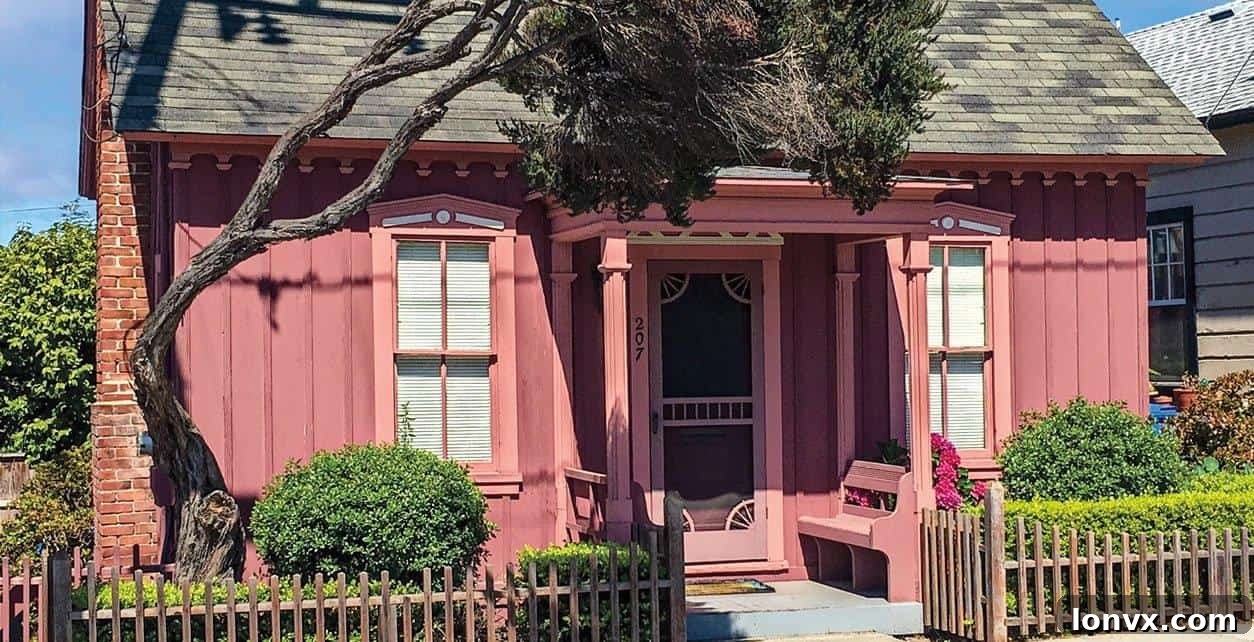
Embracing the Small Home Revolution: Lloyd Kahn’s Enduring Vision for Sustainable Living
In a world often defined by sprawling structures and ever-increasing square footage, Lloyd Kahn stands as a testament to a different way of living. Unlike the vast majority who navigate life burdened by rent or mortgage payments, Kahn has masterfully charted a unique path, largely free from these conventional housing costs. While a brief period at age 23 saw him and his wife take on a three-year mortgage for a $15,000 home, that short exception solidified his conviction. They soon sold the property, and ever since, Kahn has pioneered a lifestyle that sidesteps the typical financial obligations associated with housing, becoming a beacon for alternative living.
A Life Built on Self-Sufficiency: Lloyd Kahn’s Journey
So, what is the secret to this remarkable freedom? “I always lived in a house I built,” the renowned California-based author revealed during a presentation in Toronto, promoting his influential book, Small Homes: The Right Size. Kahn’s philosophy isn’t merely theoretical; it’s deeply rooted in decades of personal experience and hands-on construction. His life’s work embodies the principles of self-reliance and thoughtful consumption, challenging the prevailing notion that bigger is always better when it comes to shelter.

The Philosophy of Small Homes: Why Less is More
Kahn firmly asserts that the typical North American home has grown disproportionately large. Citing statistics, he points out that in the U.S., the average new single-family house in 2015 measured an expansive 2,467 square feet—a staggering 1,000 square feet larger than homes built just four decades prior in 1973. This trend, he argues, is unsustainable and often unnecessary.
His definition of a “small home” ranges from a cozy 400 square feet to a more spacious 1,200 square feet, a size he passionately advocates for. According to Kahn, the advantages of embracing a smaller footprint are multifaceted and compelling: “They are more efficient to heat and cool, cheaper to maintain, use less resources and less expensive to run overall.” Beyond the obvious financial benefits, small homes promote a more minimalist lifestyle, encouraging occupants to prioritize experiences over possessions and fostering a deeper connection to their living spaces and the environment.
A Lifetime of Self-Built Shelter: Kahn’s Personal Odyssey
Lloyd Kahn’s journey into alternative housing is as diverse as the homes he champions. Over the years, he has inhabited a remarkable array of small and unconventional abodes, including a geodesic dome, which exemplifies innovative structural design, and even a converted chicken coop, showcasing his practical approach to repurposing and resourceful living. His first foray into home construction dates back to the 1960s, a pivotal era when he also served as the influential shelter editor for the iconic Whole Earth Catalog. This popular American counterculture magazine was a groundbreaking resource, inspiring countless individuals with its focus on self-sufficiency, ecological awareness, and the do-it-yourself (DIY) ethos. Kahn’s contributions through the Catalog played a crucial role in disseminating ideas about natural building, simple living, and alternative housing solutions to a broad audience, solidifying his reputation as a pioneer in the movement.
Small Homes: The Right Size – A Tapestry of Ingenuity and Inspiration
Kahn’s latest literary offering, Small Homes: The Right Size, is a vibrant collection featuring 68 captivating examples of compact living spaces. While many of these ingenious designs are found across North America, the book also highlights a wealth of international examples, underscoring the universal appeal and practical necessity of smaller dwellings. The featured homes are a testament to human creativity and adaptability, defying conventional notions of luxury and comfort.
Global Inspiration, Local Solutions
The book’s selection ranges from delightfully plain and incredibly low-cost structures – one impressive example was built for an astounding $35,000 – to breathtaking examples of design ingenuity and master craftsmanship. Readers are taken on a visual journey through diverse architectural styles and material uses: a thermally efficient straw bale home nestled in the arid landscape of Arizona, a rustic yet elegant stone home in the sun-drenched hills of southern Spain, and a charmingly simple tin shed transformed into a cozy retreat in Colorado. Further illustrating this incredible variety are a breathtaking two-story treehouse near Seattle, offering an elevated perspective on living, and a resourceful homestead in Quebec crafted from an inspiring array of recycled materials, whose owners famously adhere to the principle of building with “as much free stuff as possible.” Each project in the book tells a unique story of vision, perseverance, and a deep connection to the environment and available resources.
The Spirit of Self-Sufficiency and Innovation
A recurring theme throughout Small Homes: The Right Size is the profound involvement of the owners themselves. Many of the featured houses are meticulously designed and painstakingly constructed from scratch by their inhabitants, embodying a true spirit of self-reliance and personal investment. These homes are situated in a variety of locales—from serene countrysides and quaint small towns to bustling large cities—demonstrating that the small home philosophy is adaptable to almost any environment. The sole unifying factor among these diverse structures is their compact floor area, proving that size does not dictate character or comfort. The book is also richly populated with compelling narratives of interesting individuals, such as a tenacious teenager in France who dedicated three years to building his own cabin in the woods, ingeniously utilizing industrial window seconds and chestnut wood sourced directly from the surrounding forest. His architectural inspiration even harks back to the 16th-century architect Philibert de l’Orme, widely regarded as the first person to author a book on self-building, connecting modern DIY enthusiasts to a timeless tradition.
The sheer variety of homes showcased in the book covers an expansive gamut of styles and construction methods. Readers will discover a solar-powered Quonset hut in California, a remarkably efficient and adaptable structure; a charming cordwood home in New York, built with an organic and unique aesthetic; an elegant octagonal cedar home nestled in the verdant Pacific Northwest, blending seamlessly with its natural surroundings; an ancient-inspired cave home in New Zealand, offering incredible thermal stability; an innovative earthbag home in Turkey, demonstrating sustainable and affordable building techniques; and a creatively converted garage in Kentucky, showcasing how existing structures can be reimagined for modern living. This diverse collection profoundly illustrates that the possibilities for small home design and construction are truly boundless, limited only by imagination and resourcefulness.
Small Homes in Urban Environments: Addressing Housing Shortages
Kahn believes that the small home movement offers practical and immediate solutions for cities grappling with severe housing shortages. He suggests several innovative approaches that can be implemented within urban landscapes. One viable option is to identify existing small houses that are in need of repair and undertake renovation projects, breathing new life into older structures and expanding affordable housing inventory. Another creative solution involves two families collaboratively purchasing a single larger house and transforming it into a duplex, effectively doubling its occupancy and utility without requiring new land development.
Furthermore, Kahn highlights the potential for building small, auxiliary structures in backyards, a concept gaining traction as “accessory dwelling units” (ADUs). These versatile structures are ideal for housing elderly parents, providing comfortable and independent living spaces close to family, or offering affordable housing for adult children who might be navigating unemployment or high housing costs. Kahn emphasizes the practical advantages, noting, “Some cities have ordinances that allow you to do that because you already have water, sewer and power, so those are three things you can do in cities.” This approach leverages existing infrastructure, making such projects more feasible and sustainable, and represents a smart, localized response to housing scarcity.
The Ever-Evolving Small Home: Kahn’s Own Residence as a Model of Adaptability
Lloyd Kahn’s personal residence in Northern California serves as a living testament to the adaptability and longevity of small home living. His home began its life as an incredibly tiny dwelling, featuring a bedroom that measured a mere six feet long by six feet wide—an embodiment of minimalist living. However, Kahn’s philosophy isn’t about rigid adherence to tiny spaces, but rather about building intelligently and adapting over time. Over 47 years, his home has organically expanded to over 1,400 square feet. “But I’ve been here 47 years. With a small home you add on to it,” he explains. This evolution showcases that small homes are not static entities but dynamic spaces that can grow and change with the needs of their inhabitants, offering a flexible and sustainable alternative to perpetually seeking larger, more expensive properties.
A Legacy of Shelter: Kahn’s Influential Book Series
Small Homes: The Right Size is the seventh installment in Lloyd Kahn’s highly acclaimed and inspiring series of books dedicated to the topic of shelter and self-built housing. This comprehensive collection forms a cornerstone of the modern DIY and sustainable living movements. Other notable titles in the series include Home Work: Handbuilt Shelter, which delves into the intricacies of various construction methods; Tiny Homes: Simple Shelter, an exploration of compact and efficient living spaces; and Tiny Homes on the Move: Wheels and Water, which focuses on mobile and aquatic dwellings. The foundational book that initiated this influential series is simply titled Shelter, a seminal work that has inspired countless individuals to reconsider their relationship with their homes and the environment.
The impact of Kahn’s books extends far beyond mere readership; they actively foster a vibrant community of builders and dreamers. “A surprisingly large group of people are motivated by these books to build their own homes,” Kahn proudly states. This engagement creates a virtuous cycle: “They send us photos and stories, which then appear in the next book.” This collaborative approach ensures that each new publication is not just a compilation of ideas, but a living document of the ongoing small home movement. For instance, eight of the homes and their passionate owners featured in Small Homes: The Right Size were directly inspired by projects and philosophies previously highlighted in earlier Shelter books, demonstrating the tangible and profound influence of Kahn’s work.
Empowering the Aspiring Builder: “You Learn As You Go”
During a lively Q&A session following Kahn’s library presentation, a man voiced a common concern, expressing deep interest in the idea of self-building but admitting he possessed no prior knowledge or experience. His question was simple yet profound: “What could he do?” Kahn’s response, delivered with his characteristic wisdom and encouragement, was equally straightforward and empowering: “You learn as you go, and you ask for help.” This advice encapsulates the ethos of the entire small home movement—it’s about embracing the process of discovery, being open to new skills, and leveraging the collective wisdom of a supportive community. It dispels the myth that building a home is an exclusive domain for trained professionals, opening the door for anyone with determination and a willingness to learn.
Embracing a Future of Conscious Living
Lloyd Kahn’s life and work serve as a powerful testament to the enduring appeal and practicality of small homes. His advocacy for self-built, resource-efficient, and adaptable shelters offers not just an alternative to conventional housing, but a pathway to greater financial freedom, environmental responsibility, and personal fulfillment. In an age of increasing environmental concerns and economic pressures, the wisdom embedded in Kahn’s philosophy—that the right size is often smaller, more intentional, and deeply personal—provides a compelling vision for a more sustainable and conscious future. His books and his life story continue to inspire a global community to pick up tools, embrace creativity, and build not just houses, but truly meaningful homes.