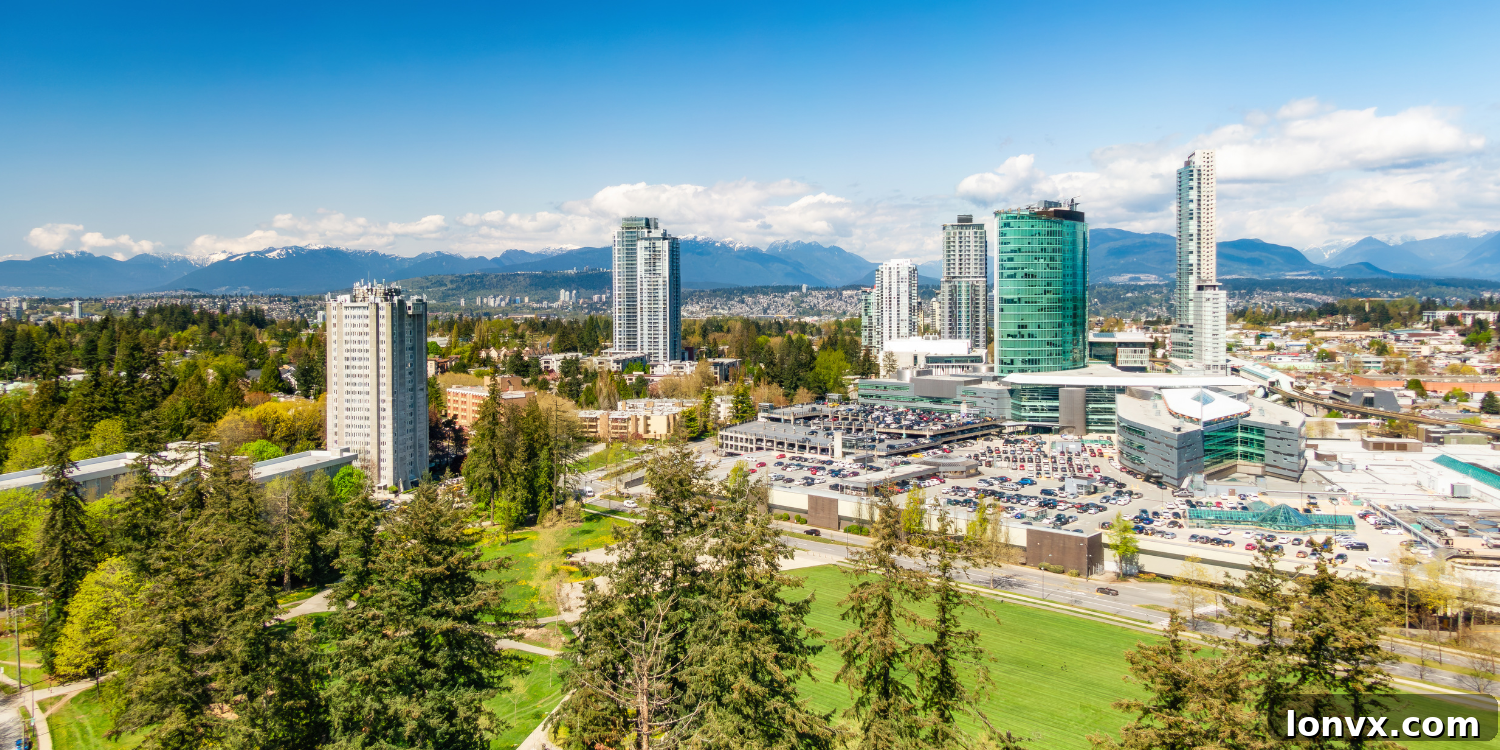
Metro Vancouver Real Estate Market Sees Significant Growth in April: Listings Climb, Prices Advance
The Metro Vancouver real estate market experienced a robust and evolving landscape in April, characterized by a substantial increase in available listings and continued upward pressure on prices across most property types. According to the latest comprehensive report from Greater Vancouver Realtors (GVR), the region recorded its highest inventory levels since the summer of 2020, providing a much-needed expansion of choice for prospective homebuyers.
Last month, the Multiple Listing Service (MLS) listings in Metro Vancouver surged by an impressive 42 percent year-over-year, reaching a total of over 12,000 active properties. This significant rise in supply marks a notable shift, potentially easing some of the competitive pressures buyers have faced in recent years. Despite the backdrop of elevated borrowing costs, the market demonstrated remarkable resilience, with sales figures showing a modest but positive increase compared to the previous year, underscoring a persistent underlying demand for housing in the region.
Inventory Surge: A Key Development in Metro Vancouver’s Housing Supply
The dramatic increase in active listings stands out as one of the most compelling narratives from April’s market data. Surpassing the 12,000-property mark, the supply side of Metro Vancouver’s real estate equation is finally showing significant momentum, a development long anticipated by market watchers. Andrew Lis, GVR’s Director of Economics and Data Analytics, commented on this trend, stating, “It’s a feat to see inventory finally climb above 12,000. Many were predicting higher inventory levels would materialize quickly when the Bank of Canada began its aggressive rate hikes, but we’re only seeing a steady climb in inventory in the more recent data.”
Delving into the specifics, April saw 7,092 new detached, attached, and apartment properties being listed for sale. This represents a remarkable 64.7 percent surge compared to the 4,307 properties listed during April of the previous year. Furthermore, this figure stands a healthy 25.8 percent above the 10-year seasonal average for new listings, indicating a strong influx of properties onto the market. Consequently, the total active listings for sale reached 12,491 properties, marking a 42.1 percent increase from April 2023 and a 16.7 percent rise above the 10-year seasonal average.
This sustained growth in inventory, especially when viewed against the backdrop of elevated interest rates, suggests a complex yet robust market dynamic. While higher mortgage rates typically cool buyer enthusiasm, they haven’t triggered a wave of distressed or forced sales, which would significantly imbalance the market. Lis further elaborated, “The surprise for many market watchers has been the continued strength of demand along with the fact few homeowners have been forced to sell in the face of the highest borrowing costs experienced in over a decade.” This observation speaks volumes about the financial stability and confidence of Metro Vancouver homeowners, preventing a potential glut of properties despite economic pressures.
Resilient Sales Activity: Demand Persists Amidst High Borrowing Costs
Despite the prevailing economic headwinds and the highest interest rates seen in over a decade, sales activity in Metro Vancouver demonstrated impressive resilience in April. A total of 2,831 residential properties changed hands across the region. This figure reflects a positive 3.3 percent increase compared to sales recorded in the same period last year, signaling a market that continues to adapt and perform in challenging conditions. However, it’s worth noting that April’s sales were 12.2 percent below the 10-year seasonal average, suggesting that while demand is strong, it hasn’t reached historical peak levels.
A crucial indicator of market balance, the sales-to-active listings ratio, stood at 23.5 percent for all property types last month. Traditionally, a ratio between 12 percent and 20 percent is considered indicative of a balanced market, where neither buyers nor sellers hold a distinct advantage. Ratios above 20 percent typically favor sellers, while those below 12 percent suggest a buyer’s market. The current 23.5 percent ratio indicates that Metro Vancouver largely remains in a seller-favored environment, although the increased inventory provides buyers with more negotiation leverage and choices than in previous periods of extreme scarcity.
The sustained buyer demand, even with higher borrowing costs, can be attributed to several factors. These include the region’s continuous appeal as a destination for both domestic and international migration, a robust local economy, and perhaps a strategic long-term view among buyers who recognize the enduring value of real estate in Metro Vancouver. The healthy absorption rate implied by the sales-to-active listings ratio suggests that newly listed properties are being purchased at a steady pace, preventing an accumulation of unsold inventory that could destabilize prices.
Benchmark Prices: A Segmented Market with Overall Growth
The overall benchmark price for all residential properties in Metro Vancouver reached $1,205,800 in April. This represents a solid 2.8 percent increase compared to April 2023 and a noticeable 0.8 percent rise from March 2024. This consistent upward trajectory in property values across most market segments underscores the underlying strength of the region’s housing market.
Andrew Lis further highlighted this trend, noting, “Another surprising story in the April data is the fact prices continue climbing across most segments with recent increases typically in the range of one to two per cent month-over-month.” This steady, incremental appreciation points to a market that is not overheating but rather experiencing sustainable growth, supported by robust demand and a gradual increase in supply.
Detailed Analysis by Home Type:
Detached Homes: Premium Segment Continues Price Appreciation
The detached home segment, often representing the pinnacle of the Metro Vancouver market, saw 814 sales in April, marking a slight 0.7 percent increase over April 2023. More significantly, the benchmark price for a detached home soared to $2,040,000. This impressive figure represents a substantial 6.3 percent increase from April 2023 and a 1.6 percent rise compared to March 2024. The strong price growth in this category reflects the enduring desirability of standalone properties, driven by limited land availability, privacy, and the aspiration for more space, making them a premium asset in this metropolitan area.
Attached Homes (Townhouses): A Popular and Growing Choice
Attached homes, primarily encompassing townhouses, demonstrated particularly strong performance in April with 580 sales, which is a robust 16 percent increase compared to April 2023. The benchmark price for a townhouse reached $1,127,200. This indicates a healthy 4.3 percent increase from April 2023 and a 1.3 percent rise from March 2024. Townhouses continue to be a popular option for buyers seeking more space than an apartment but at a more accessible price point than a detached home. Their appeal often lies in combining elements of both, making them a highly competitive segment within the current market.
Apartment Market: Navigating Affordability and Increased Supply
The apartment market recorded 1,416 sales in April, showing a modest 0.2 percent increase over April 2023. The benchmark price for an apartment home stood at $776,500 – a 3.2 percent increase compared to April 2023. However, its month-over-month price movement presented a nuanced picture, with a very slight 0.1 percent increase from March 2024, essentially stabilizing after previous gains. This moderation is a critical trend for this segment.
Lis offered further insight into this dynamic: “The one segment that didn’t see a significant uptick in prices in April was apartments, which saw only a marginal increase month-over-month. This moderation is likely due to a confluence of factors impacting this more affordability-sensitive segment of the market, particularly the impact of higher mortgage rates and the recent boost to inventory levels, tempering competition somewhat.” This suggests that while apartments remain a vital entry point into the Metro Vancouver housing market, their price growth is more directly influenced by changes in interest rates and increased supply, as buyers in this segment are often more sensitive to fluctuations in monthly carrying costs.
Macroeconomic Influences and Future Outlook for Metro Vancouver
The Metro Vancouver real estate market operates within a broader economic framework, heavily influenced by factors such as interest rates, population growth, and housing policies. The Bank of Canada’s stance on interest rates remains a pivotal determinant. While aggressive rate hikes have raised borrowing costs, the continued strength of demand in Vancouver suggests that many buyers are either adapting to these new financial realities, possess substantial existing equity, or are driven by long-term investment strategies. The ongoing interplay between interest rates and overall housing affordability will undoubtedly continue to shape market behavior.
Population growth is another fundamental driver underpinning the demand for housing. Metro Vancouver consistently attracts new residents, both from other parts of Canada and internationally. This steady influx of people inherently fuels a continuous demand across all housing segments, helping to absorb new inventory even during periods of higher interest rates and economic uncertainty.
Furthermore, local zoning regulations, municipal policies, and the pace of new construction all play a crucial role in shaping the supply side of the market. While April’s inventory surge is a positive sign, sustained increases in housing starts and efficient development processes are essential to address the region’s long-standing housing supply challenges. The delicate balance between growing population, new housing completions, and evolving consumer preferences will dictate the market’s trajectory in the medium to long term.
Navigating the Market: Advice for Buyers and Sellers
As Metro Vancouver transitions further into the spring and summer seasons, potential shifts in monetary policy from the Bank of Canada will be closely watched. Any indication of interest rate cuts could provide a further boost to demand, while prolonged holds or unexpected increases might introduce new market dynamics. The sustainability of the current inventory levels will also be critical. If new listings continue to outpace sales significantly, certain segments of the market could gradually shift towards a more balanced, or even buyer-favored, environment.
Affordability remains a central concern for many, especially first-time homebuyers and those focused on the apartment market. The slight moderation in apartment prices, coupled with increased inventory, could present burgeoning opportunities for these buyers, assuming mortgage rates do not rise further. For sellers, the expanded inventory implies increased competition, potentially necessitating more strategic pricing and targeted marketing efforts to stand out in a market with more choices.
The overarching outlook for Metro Vancouver’s real estate market maintains an essence of underlying strength, balanced by a pragmatic optimism. The market has consistently demonstrated its capacity to adapt to changing conditions, and the April report vividly illustrates a vibrant, albeit complex, landscape. Buyers are now greeted with an improved array of choices, while sellers, particularly within the robust detached and attached housing sectors, continue to benefit from strong demand.
Enjoying this article? Stay Informed with the Latest Real Estate Insights!
Get the latest articles and market updates delivered directly to your inbox three times a week. Stay ahead of the curve on the Canadian real estate industry and never miss an important trend.
For a comprehensive and in-depth understanding of the market data and full statistical package, we encourage you to read the complete release from Greater Vancouver Realtors:
Read the full GVR April 2024 Stats Package here.